
My Vision for a Better Future
If we’re serious about addressing the issues we face, a systemic transformation of our society is required
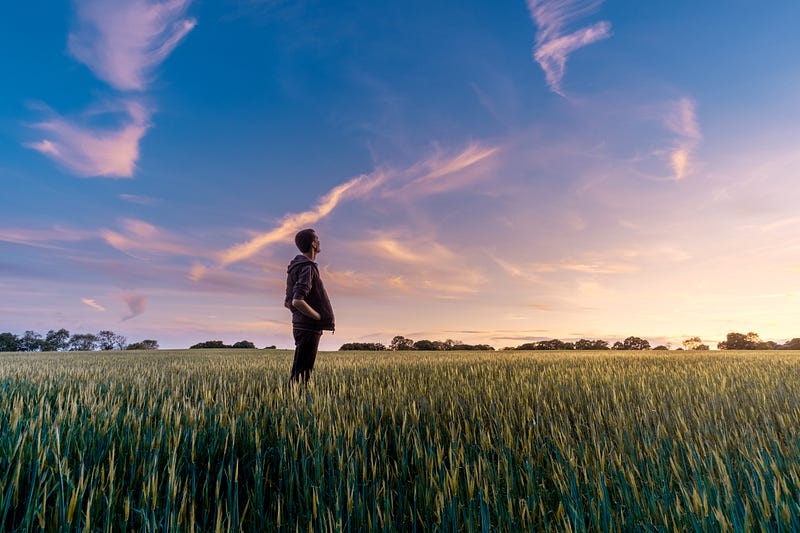
It’s the year 2100. And humans are still here. Lots of other species too. In fact, the world’s biodiversity has been on a major rebound in recent years. The lands and oceans are in recovery. Nature is beginning to find its equilibrium again after being thrown out of whack by human activity for so long.
We, humans, had to learn a very painful lesson of what happens when we live apart from nature and take it for granted, rather than live symbiotically with it as all other species are able to do perfectly well. It took us a while, but we eventually figured out how to live in a technologically advanced world while still being good stewards of our planet.
We also realized we had made our society unnecessarily complex, primarily so those in power could stay in power. So we simplified things. And we created more decentralized systems that removed many of the intermediaries that made things less efficient and excluded many people by artificially inflating costs. In the process, we empowered our communities to take action in their own ways rather than try to apply one size fits all solutions to everyone.
Reenvisioning cities
The first major transformation that took place was the transformation of our cities. They’re so unrecognizable from cities of the early 21st century that we created a new name for them: Hubs. “One connection among many,” as we like to say. Each Hub has its own unique cultural identity and flair that distinguishes it from others, but contains most of the same basic elements that are used to construct new Hubs, as needed. Hubs are designed to be mostly self-sufficient in terms of providing essential goods and services to their residents. However, they may also rely on other local Hubs that specialize in particular goods and services. But we don’t have trade, in the traditional sense, because there is no exchange of money for goods and services. More on that later…
The Hubs are built to maximize both housing density and multi-use development. You’ll find Pods (what we now call homes), food services, exercise facilities, health care clinics, and anything else you might need or want to access all within the same building or within a 15-minute walking or biking distance. But it’s certainly not all urban. In fact, most of the space within the Hubs is reserved for native vegetation as natural and urban environments are fully integrated, which helps reduce the urban heat island effect and sequesters carbon dioxide.
In addition to maximizing housing density and multi-use development, all residents within each Hub are free to pursue what activities are most meaningful to them (what we used to call work), with plenty of activities to pursue within each Hub. Therefore, there was no longer a need to commute anywhere since everything you might need was a quick stroll or bike ride away. With the rise of Hubs came the end of suburbia. The land that was once degraded and destroyed to make room for new housing or commercial development in suburban areas was given back to the Indigenous populations that once lived on those lands who knew how to take better care of them. In doing so, the land was slowly regenerated and restored through Indigenous peoples’ efforts.
Highly polluted regions that had been left behind in terms of economic development were also regenerated and restored into vibrant thriving communities through the construction of Hubs. For the first time, many of them breathed clean air and drank clean water. The standard of living for previously low-income and disadvantaged communities rose tremendously once they joined a local Hub.
All Hubs are powered by clean, emissions-free energy — primarily solar and wind. Excess energy generated is stored in large battery systems so energy can be provided throughout the night as well as during the day. Each Hub has its own microgrid further making it more self-sufficient and resilient. The complicated and unreliable electric grids of the past were replaced by these microgrids, so that even if power at another Hub went out it would not affect any other Hubs.
Sustainable, nontoxic, carbon-sequestering materials like hemp, bamboo, and cross-laminated timber are used in the construction of Pods and other Hub buildings. Every building is built to have a net positive impact on the environment and the humans that occupy them. Hubs are also designed to be zero waste where almost everything is reused or composted. In the rare cases where that’s not possible, the waste is used to provide additional energy and the carbon dioxide emissions are captured. No landfills necessary. Everything is built to last rather than to be replaced.
Water is similarly reused and recycled, as much as possible. Excess rainfall is captured and stored in underground tanks for future use. Nearly all of the mostly plant-based food is grown locally in each Hub or in the surrounding area using regenerative agriculture practices utilizing Indigenous knowledge. Any food waste is composted and added to the community gardens and rooftop gardens. These practices also help to minimize water use, sequester carbon, regenerate soils, improve biodiversity, and provide resiliency against climate impacts.
For Hubs located along the coasts, movable platforms serve as the foundation that can actuate the entire Hub up or down using satellites that provide real-time data on sea level to prevent flooding from storms and sea level rise. No need for sea walls or other artificial barriers that often made things worse over the long term. Better to go with the motion of the ocean than against it. Using these platforms also allowed Hubs to be mobile in the case of other natural disasters.
Ocean-based Hubs are constructed to be buoyant and provide a refuge for the natives of island populations who found their homes sinking into the sea. These ocean-based Hubs are designed to recreate their homelands to the highest degree possible including transporting native vegetation and animals to the Hubs.
For regions that are fire-prone, firebreaks are created around the perimeter of the Hub and fire suppression systems are strategically placed to limit any damage to structures. Prescribed burns and Indigenous fire management practices also help limit the amount of combustible fuels in the surrounding area. If the fires become too severe, the Hubs can always be moved to a safer location.
Revolutionizing transportation
Car culture was transformed into a multimodal transportation culture. Hubs on each continent are interconnected to one another through high-speed rail networks and metro systems, all run on clean energy. The rail network can get you anywhere you want and is just as fast as flying, so aviation as a form of travel has become mostly obsolete. But in cases where travel across the vast oceans is required, zero-emission electric airships (or electric ships for slower travel) can transport passengers safely without the need for any airports.
One of the strict regulations in all Hubs is that cars aren’t allowed inside. Lanes are only provided for walking and biking. But ride-sharing apps allow users to traverse from one Hub to the next or for longer road trips in self-driving EVs that pick up additional passengers along predetermined routes. Once the passengers are dropped off, the EVs self-charge at any of the ultra-fast charging networks located at each Hub, which only take five minutes for a full charge. These EVs also serve as mobile battery storage with bidirectional capabilities that provide additional backup power for the Hubs.
Since the number of cars on the roads became a fraction of what it once was, the highway system also became a thing of the past and allowed previously fragmented landscapes to once again become connected, improving biodiversity in the process.
Moving towards local governance and solving the trust issue
We did away with complex, centralized governance structures that had become highly inefficient and weren’t accountable to the people. Governance is completely localized at each Hub with a Hub Council democratically elected by the Hub’s residents.
The Hub Council’s primary directive is to ensure the efficient and equitable use of local resources for all Hub residents while carefully monitoring that sufficient resources are available to support current operations and future growth. And just as importantly, they are responsible for regional coordination and planning with other Hubs to ensure sufficient resources are readily available throughout the region. For example, a Hub with a surplus of fresh water would distribute the water to other local Hubs that might be running low. Some of their secondary directives include overseeing the design and construction of new Hub elements (e.g., buildings, gardens, transit) and being the key actors in the implementation of any changes to the Hub’s structure and charter that receive majority support by the residents.
The utilization of blockchain technology and oracle networks allowed this efficient allocation of resources to be possible. As blockchains became increasingly advanced over the 21st century, they were used to track and record all sorts of things on their digital public ledgers. Eventually, they were used to record available natural resources within each Hub’s region. Oracle networks were connected to data sources ranging from sensors monitoring stream depth to satellite imagery of forest cover. The networks provided almost real-time feedback on the availability of these resources that could then be recorded on the blockchain. The transfer of these resources from one Hub to another is also recorded on the blockchain using smart contracts.
We also use blockchains for many other applications such as voting and identity verification. This solved the major trust issue that had pervaded our society for many decades and prevented progress. A trustless, transparent, decentralized system for transacting, recording, proving, and verifying was exactly what we needed.
Replacing work with enjoyment
There are no corporations or businesses. No one trying to make a profit off the extraction of resources. In fact, there is no such thing as work. Yes, you read that correctly.
Most of the manual, intensive work that humans were once required to do has been automated. What wasn’t automated was made redundant, obsolete, or unnecessary by eliminating intermediaries and simplifying our society.
This has allowed people to pursue activities they find more meaningful. As a result, they’re able to enjoy their lives, pursue their passions, study new things, and spend time with their families and friends.
Despite not having a monetary incentive (as discussed below), people did not become lazy and sit around all day sunbathing. Turns out that the implicit social pressures of humans wanting to feel valued within a community were enough to prevent laziness. People engage in productive activities that help support the development and maintenance of the Hubs because they find it meaningful to do so. And because they genuinely care about one another and treat all living creatures as one massive interconnected family.
Everyone has skills they can contribute that are valuable, and many seek to learn new skills to provide even more value. There is a general understanding that the success of any Hub is entirely dependent on everyone contributing to make it successful.
In the past, we worked to live. Now we live to enjoy.
Abolishing monetary systems
In the early days of designing the Hubs, there was an idea of changing the monetary system from fiat to a cryptocurrency like Bitcoin. Although Bitcoin provided advantages over fiat, it did nothing to address the glaring issue of wealth inequality — and the corresponding issue of power inequality, i.e., wealthy individuals being able to exert an outsized influence over society. It turns out that the best way to address wealth inequality was to hit the global reset button and abolish the idea of wealth in the first place.
In every Hub’s charter is a clause that specifically prevents the usage of any of its resources for monetary gain. If you want to live in one of the Hubs, you must abide by its charter. When Hubs finally became the dominant form of governance across the world, the remaining financial system collapsed and drove even more people to the Hubs to escape the ruin of their failing nations.
All debts were instantly wiped clean. No more debt of developing countries owed to developed countries in perpetuity. No more racial wealth gaps.
The prior monetary system had been used to make the status quo unalterable by design. So we had to create a new design altogether.
The efficient monitoring and allocation of resources using blockchains ensured that everyone living in a Hub not only got what they needed to survive, but also more than enough to thrive and have a high standard of living. No one ever goes hungry or doesn’t have a place to sleep at night. It truly was amazing when we realized just how much could be provided to everyone when so much of the resources weren’t concentrated and hoarded at the top.
With poverty eradicated and people thriving instead of just surviving, crime was drastically reduced so we no longer have large militaristic police forces. Communities mainly police themselves and residents hold each other accountable.
One of the most important lessons we learned during this transformation was that a scarcity mindset created by a monetary system pits individuals against one another in competition and inevitably causes the more competitive individuals to wield outsized influence and power. It is the abolition of all monetary systems that truly unlocked our collective potential to rebuild our society and was one of the primary driving factors in changing human behavior to be more constructive and cooperative.
Deconstructing borders
Remember the lyrics of that old John Lennon song, Imagine, where he asks people to imagine a world without countries? Well, in the year 2100, we don’t have countries. In fact, we don’t have any real borders per se. There are no walls or fences to keep people out.
As Hubs were constructed and interconnected, there was no need for artificial barriers to separate them. National governments collapsed (and with it the military-industrial complex) as people moved to Hubs to be part of the revolution and opted out of the status quo governance systems. This allowed people to live mostly wherever they wanted (so long as the Hub had sufficient resources to accommodate more residents), which was particularly beneficial for the many climate refugees in the early days who had to flee their countries due to increasingly severe impacts from climate change. No need to jump through several hurdles and fill out tons of paperwork to seek asylum. Hubs are welcome to all, regardless of where you come from, and only require a quick identity verification to enter using your Hub Passport (i.e., a blockchain-based passport that allows you to travel to any Hub in the world). Hub Passports are issued at birth so everyone has one.
Heading in the right direction
Reenvisioning cities. Revolutionizing transportation. Moving towards local governance. Replacing work with enjoyment. Abolishing monetary systems. Deconstructing borders. These are the major transformations that took place to get to where we are now.
Things still aren’t perfect and they never will be. But we’re certainly better off than we used to be and our planet is slowly healing, which is a good sign that we’re on the right track. When we finally stopped believing that real change would come from the set of conditions that created the issues in the first place, we were able to reimagine our society in a way that actually addressed the root causes rather than just treating the symptoms.
Does my vision for the future sound too utopian to you? Or maybe it sounds dystopian to those that prefer the status quo?
Regardless, it has become abundantly clear that we need to start thinking more systemically about the challenges we face as a society, rather than thinking tinkering with the existing systems will get us to where we need to be. In order to rethink how our society and systems can be constructed, we need to let our imaginations run wild. What may seem impossible to create now, could be completely feasible and realistic in the future, but it first requires a vision for what that future should look like.
I’ve discussed before the importance of vision and storytelling, which have been seemingly missing from most mainstream conversations about the climate crisis we find ourselves in. There’s a reason why I devoted an entire section of the Climate Conscious publication to talk about vision, and hopefully my own imaginative futuristic story helps explain why.
Our world leaders make pledge after pledge to reduce emissions, but with little follow-through in terms of action. Continued inaction or lack of sufficient action will only lead to further devastation. We don’t have to follow that path. But when we talk about solutions to the climate crisis, we can’t approach them in a piecemeal fashion. We need a collective vision to guide the direction of these solutions and ensure that they benefit everyone, rather than a select few. And if our solutions only help to reduce emissions without addressing the many other issues we face from wealth inequality to racial injustice, then we will have squandered an amazing opportunity to create a much better society.
So I call upon other visionaries to share their stories here on Climate Conscious of how we can create this better society. With a collective vision of the future, we can inspire real action and begin to turn this vision into reality by working together at the community level.
Special thanks to the late Jacque Fresco, the founder of the Venus Project and an amazing visionary in his own right, for helping to inspire some of the ideas for my own vision for the future.
If you enjoyed this story, then you might also enjoy reading:
To address the crises we face, we all need to work together and contribute our knowledge, ideas, and skills. If you share my vision of building a better future together, then please consider subscribing here to stay connected and be notified when I publish a new story.