
Indigenous People Can Save the Planet
Will we listen and work alongside them or continue to assume we know better?
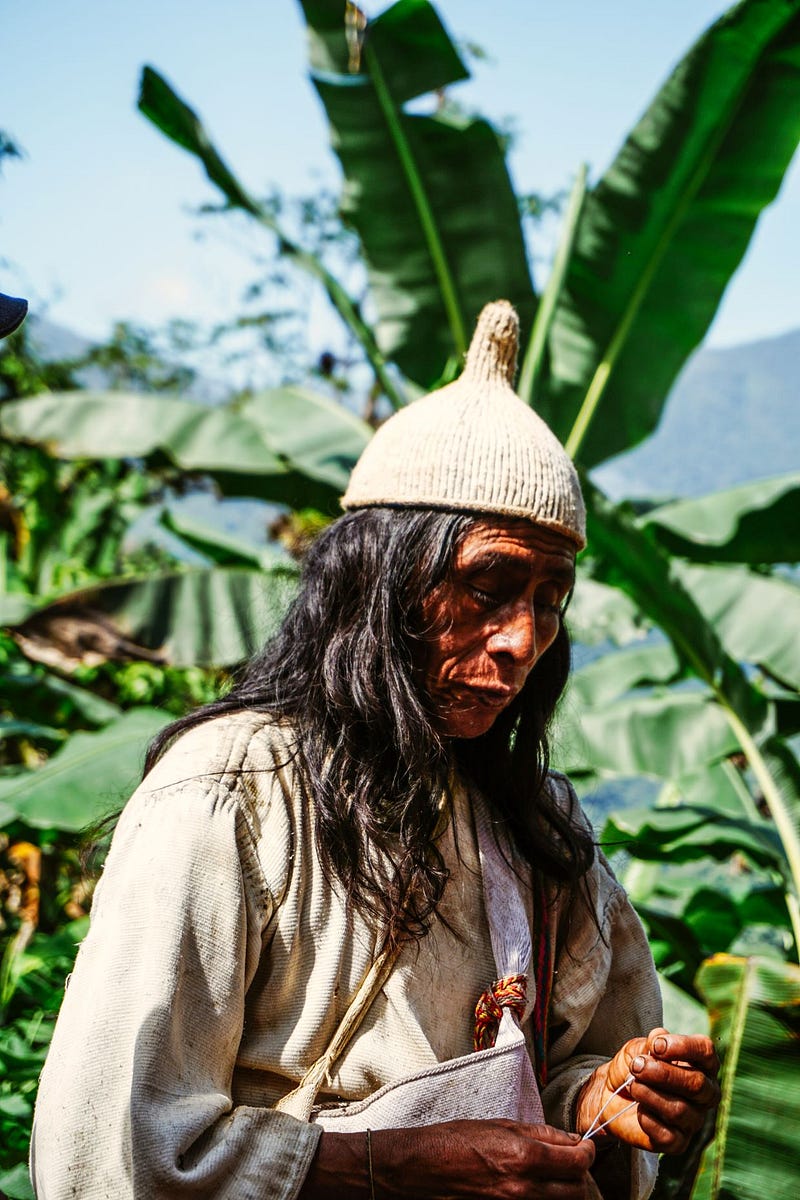
“We must pay close attention to those with another imagination: an imagination outside of capitalism, as well as communism. We will soon have to admit that those people, like the millions of indigenous people fighting to prevent the takeover of their lands and the destruction of their environment — the people who still know the secrets of sustainable living — are not relics of the past, but the guides to our future.” — Arundhati Roy, author and activist
For centuries, Indigenous people have been subjected to centuries of genocide, land theft, wiping out food sources, water pollution, and forced migration onto land no one else wanted — then pillaging that land for minerals and fossil fuels. But now, governments are starting to realize that Indigenous peoples may be the ones with the knowledge needed to save the planet.
To many people, it may seem ironic that our fate may now rely on the very people we have inflicted so much harm upon. And it's reasonable to wonder why they would help us, after all the racism and other atrocities they have had to live with for so long. I agree with that logic, but I also think Indigenous people won’t do this for us. Instead, they will do it for Mother Earth, whom they have been trying to protect all along. We are the ones that must allow them to do what is necessary. We must provide resources for what they need to be successful, and work collaboratively. It’s likely that at times we will be most helpful by getting out of their way.
Why should we believe they have the answers?
The International Labour Office in Geneva has an excellent resource booklet called Indigenous Peoples and Climate Change. In it, they provide the ultimate proof of Indigenous people's superior ability to take care of the earth, as they have throughout time: “… although indigenous peoples account for an estimated 5 percent of the world’s population, they care for and protect nearly 22 percent of the Earth’s surface and 80 percent of the planet’s remaining biodiversity.”
How is it that this population is so adept at preserving so much biodiversity? There are many theories, but the one most often cited is their connection to the land, which unlike the rest of us, they have never lost. From birth, they are taught to respect the land and all living things. They learn how to listen and observe weather and climate patterns. Long before our recent interest in practices like regenerative agriculture, they were already using these techniques.
Meanwhile, the rest of us, raced towards convenience, and technology to enhance our lives. While many feel their lives are better because of these things, suicide rates, worldwide hunger, and the ever-worsening climate crisis show differently. Just as many people recognize they lost touch with childhood dreams and creativity, similarly over generations we have lost almost all connection with nature. Fortunately, Indigenous people retained that connection, and the Earth is still telling them what she needs.
Positive movement
In the US:
One of the most prominent partnerships is with the University of Oregon. Partnered with the Affiliated Tribes of Northwest Indians, the Bureau of Indian Affairs, the USDA Forest Service Pacific Northwest Research Station, and the North Pacific Landscape Conservation Cooperative have formed the Tribal Climate Change Project.
The website provides details of fascinating projects on climate change, and how it disproportionally affects Native Americans. It also includes a database of ideas and projects tribes are using on climate change issues. Some examples are: “Swinomish Climate Change Initiative, Nez Perce Carbon Sequestration Project, Coquille Climate Change Action Committee, Lummi Nation Renewable Energy program, and relocation issues among Alaska Native tribes.”
In Canada:
The Indigenous Guardians Pilot program began with an initial grant of $25 million for the First Nations, Inuit, and Metis tribes. “The Pilot Program supports Indigenous rights and responsibilities in protecting and conserving ecosystems, developing and maintaining sustainable economies, and continuing the profound connections between Canadian landscape and Indigenous culture. The Pilot Program will inform a long-term approach for a potential National Indigenous Guardians Network.”
Some of the things the program is doing include recording Indigenous knowledge, conservation planning, species protection, and habitat threat abatement.
In Australia:
Indigenous ranger projects in Australia provide employment to Indigenous peoples utilizing their “traditional knowledge combined with conservation training to protect and manage their land, sea, and culture. This includes activities such as bushfire mitigation, protection of threatened species, and biosecurity compliance.” As with the University of Oregon plan, the Indigenous peoples work with various groups to provide education by sharing traditional knowledge of the environment and our fragile ecosystems.
We must do more, sooner
“Indigenous people believe that Man belongs to the World; civilized people believe that the World belongs to Man.” — Daniel Quinn, author
There are other programs across the world that acknowledge and utilize precious Indigenous traditional knowledge to save our planet. While it’s encouraging that there are numerous examples of forward movement, there is so much more we need to do. There is so much that needs to be done in order to not get to the ever-approaching point of no return in this climate crisis.
It’s not only time to listen to Indigenous peoples, it’s time to allow them to have the land, resources, and assistance they need to succeed. We can’t afford to dedicate insignificant amounts of money, even if in the millions of dollars, to “research” how Indigenous peoples centuries of knowledge can help us. The planet is in distress and natural disasters are costing billions of dollars in damage and lives.
We can’t continue to act as if we alone have superior knowledge that will save us. It’s time to get rid of our superiority complex and lean on the centuries of knowledge passed on by Indigenous peoples. They have a proven record of taking care of our planet and its many plant and wildlife species. We, on the other hand, have a track record of destroying life with our advances.
To learn more about Indigenous peoples and the roles they can play in healing our environment listen to the podcast For the Wild. The host, Ayana Young, features Indigenous guests doing the work of saving our planet and advocating for their tribes. One in particular that resonated with me is episode 205 about the devastating 2019 Australian fires. For centuries, Indigenous peoples used “Ancestral fire regimes” to prevent such occurrences. The Rangers program previously mentioned is an example of using this knowledge.
Environmental activist Hindou Oumarou Ibrahim gave a TED Talk that explains why we should listen to Indigenous peoples much better than I have below.


