
Meaning Discovery: The “Communication — Content — Message” Thematic Space
A Case Study
This post is part of the “Meaning Discovery” series. You can find more related posts below:
- The Thematic Matrix Canvas and Meaning Discovery Canvas
- Meaning Discovery: The “Moment — Present — Future” Thematic Space
- Meaning Discovery: The “Object — Self — Other” Thematic Space
- Meaning Discovery: Two Thematic Triangles
- Meaning Discovery: The “Journey — Challenge — Response” Thematic Space
- Meaning Discovery: The “Perspective — Opportunities — Resources” Thematic Space
- Oliver Ding: My Twelve Creative Moments of 2023
- Life Discovery: Significant Insights Analysis
- The Art of Situational Note-taking (Introduction and Index)
- The Curated Mind Toolkit (v1.0)
Oct 25, 2023, I made the first version of the Meaning Discovery Canvas. On Dec 12, 2023, I used “Value — Truth” to replace “Individual — Collective”. I also started collecting some materials for case studies.
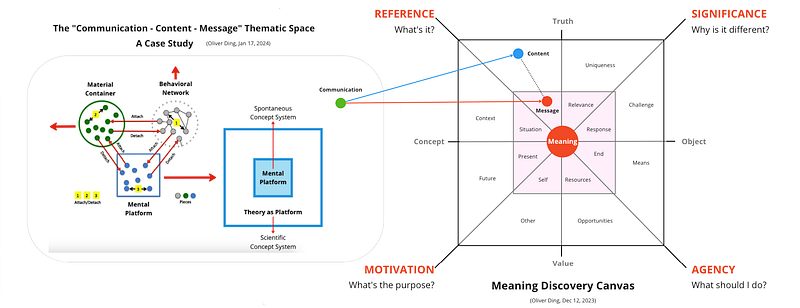
This post aims to introduce the “Communication — Content — Message” Thematic Space.
1. Materials and Models
Materials are pieces of experiences from my real-life events for my case studies.
The Meaning Discovery Canvas is a knowledge framework or knowledge Model.
Each case study happens within a Thematic Space between Materials and the Model.
Some case studies also used Knowledge Frameworks which are Models. For example, I introduced the Opportunity Formula in Meaning Discovery: The “Perspective — Opportunities — Resources” Thematic Space.
How to represent the Thematic Space?
I selected one theme from the Materials and two from the Model to make a thematic triangle to frame the thematic space. The diagram below is an example. More details are in Meaning Discovery: The “Moment — Present — Future” Thematic Space.
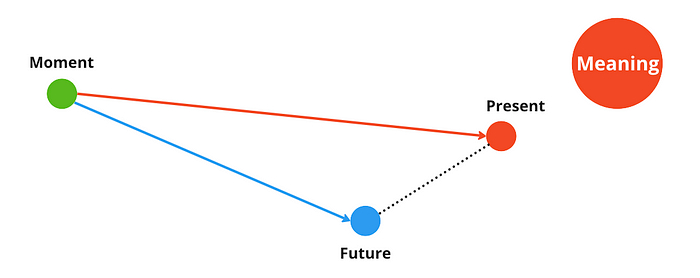
“Moment” refers to a short indefinite period. I used it to refer to the Immediate Situational aspect of Materials.
“Present” and “Future” are two blocks of the Meaning Discovery Canvas.
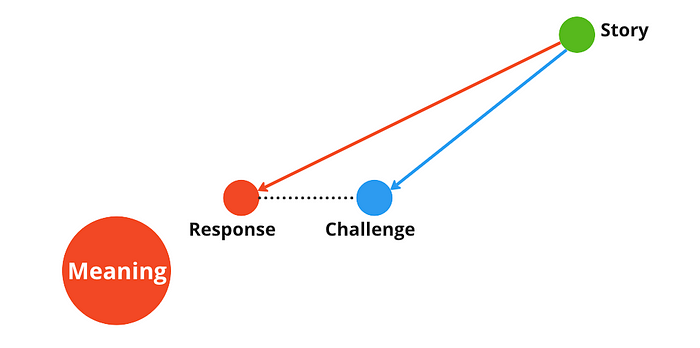
For some case studies, the immediate situational aspect is not the primary focus. For example, Life Meaning Discovery engages with the long-term development of stories and themes. We could use “Story” to frame a new thematic space. See the example below.
This article focuses on the “Communication — Content — Message” Thematic Space.
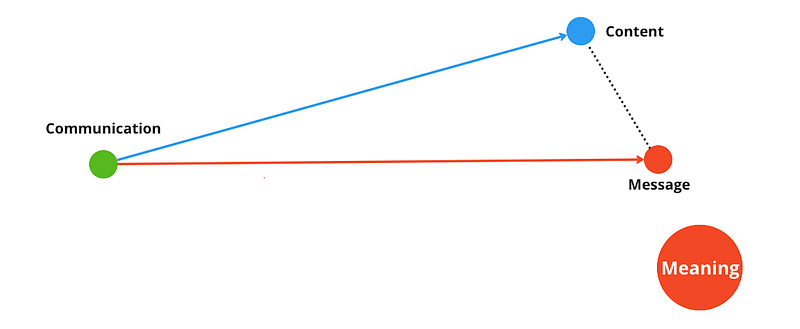
The “Content — Message” Mapping is located in the REFERENCE Area.
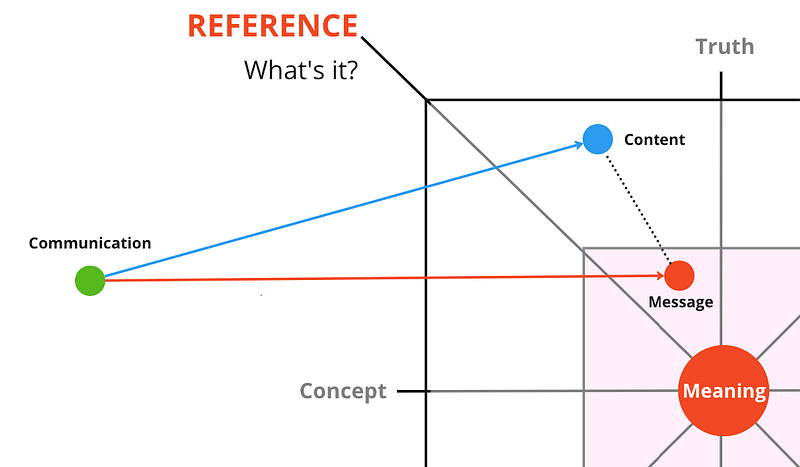
The “Content — Message” Mapping is related to everyday life communication. For the Meaning Discovery Canvas, I defined three types of communication:
- Type #1: Word-related Communication
- Type #2: Concept-related Communication
- Type #3: Communication about other Objects
Type #1 is about using language. This is not my primary focus because my interest is knowledge engagement.
Type #2 is more than about using language because we have to consider the whole concept system as the context of an individual concept.
Type #3 can be about Knowledge Frameworks, Diagrams, Videos, Tweets, Maps, Tools, and other objects. For every object, there is Content that describes it, and there is a Message that mentions it.
2. The Concept of “Mental Platform”
On Nov 4, 2023, I made the diagram below and used a new term “Mental Platform”.
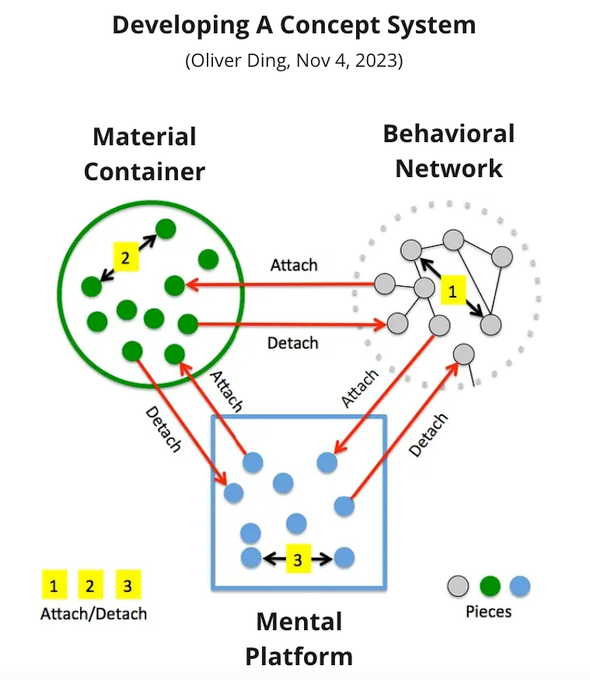
My original tweet was very short and simple:
Developing A Concept System for an innovative product
A concept system is a set of ideas. It appears in three forms:
1. Mental Platform: How do you think? 2. Behavioral Network: How do you do? 3. Material Container: What do you make?
Where did it come from?
It came from the diagram below.
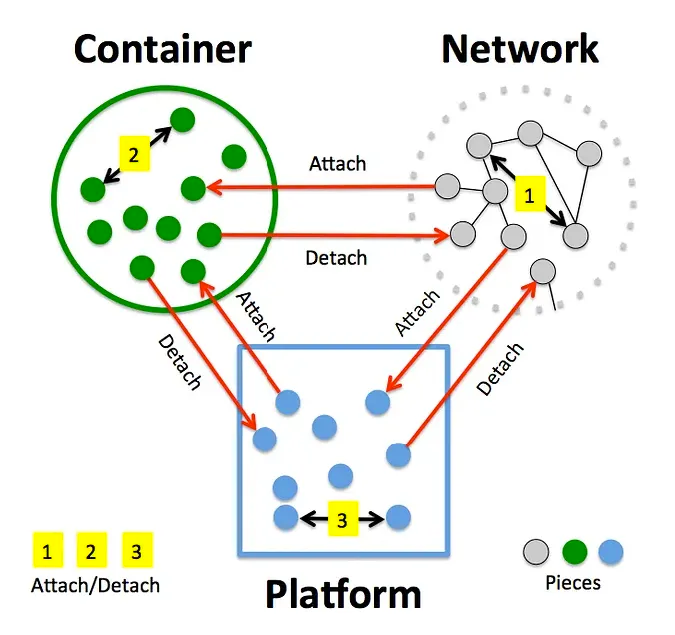
The above diagram is the landscape view of the Ecological Practice Approach.
On Nov 4, 2023, I adopted it to discuss developing a concept system and coined three new terms:
- Mental Platform: How do you think?
- Behavioral Network: How do you do?
- Material Container: What do you make?
It means the process of Developing A Concept System is not only about thinking, but also about doing, saying, and making.
This view is also called the Ecological Approach to Social Cognition. You can find more details in Themes of Practice: Concept, Activity, and Cognition.
3. “Mental Platform” and “Theoretical Platform”
From Nov 4, 2023, to Nov 22, 2023, I continually worked on the above model.
Though my original purpose was to develop a model for discussing Developing Products, my recent mental focus moved back to Knowledge Innovation.
In the direction of Developing Tacit Knowledge, Knowledge Engagement, and Knowledge Innovation, I connected “Mental Platform” to “Theoretical Platform”.
The notion of “Theoretical Platform” came from my 2021 book (draft) Platform for Development: The Ecology of Adult Development in the 21st Century.
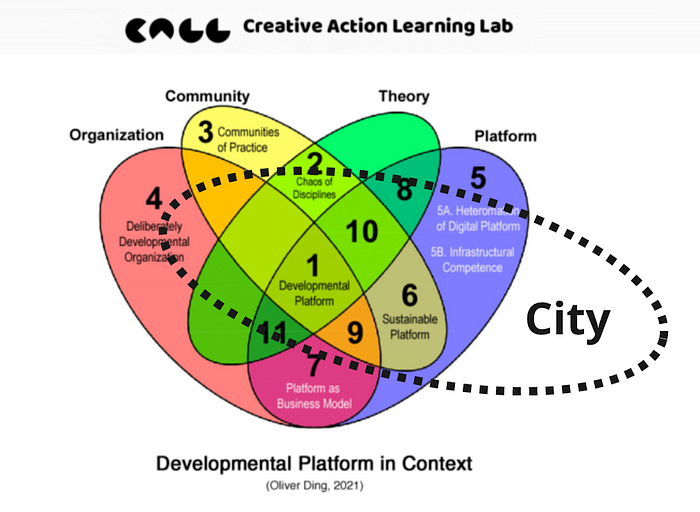
The book defined a concept called “Developmental Platform” which refers to a social environment that could strongly support adult development in various ways. I also discovered five types of Developmental Platforms.
- Organization
- Community
- Platform (Technological Platforms)
- Theory
- City
An established theory, a theoretical tradition, or a school of thought, could offer people supportance in knowledge engagement. So we perceive some theories as Theoretica Platforms.
Moreover, if we connect it with the activity of Developing Tacit Knowledge, then we should define a subject concept that corresponds to the objective concept Theoretical Platform.
- Theoretical Platform: an objective concept, a public concept system
- Mental Platform: a subjective concept, a personal/private concept system
Since a theory is a (public) concept system, the mental platform is a (personal/private) concept system too.
You can find more details in Situational Note-taking: Mental Platform as Evolving Concept System.
4. The Evolving Concept System
I pay attention to two fields: Knowledge Engagement and Product Engagement. Both two fields share the same pattern of developing a concept system. However, they have different complexities in the stage of Continuous Objectification.
For a theorist, the Objectification of Concepts is very simple. He/she only needs to write a book! However, for a startup founder, the Objectification of Concepts is quite complicated because he/she needs to build a team and make a real product or a service.
On Nov 25, 2023, I used the field of Product Engagement as the context of Continuous Objectification. Based on this setting, I made a new version of the Evolving Concept System. See the diagram below.
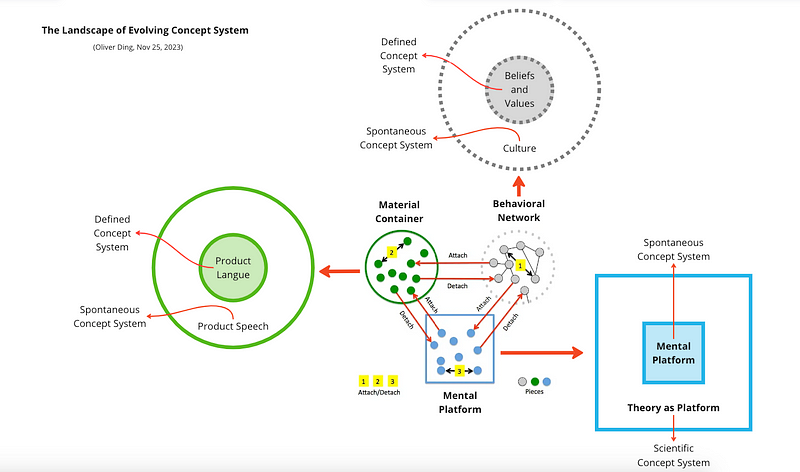
I used three types of concept systems to develop the above framework.
- Spontaneous Concept System
- Scientific Concept System
- Defined Concept System
You can find more details in A Possible Theme called “Spontaneous Concept System”.
I used “Spontaneous Concept System/Defined Concept System/Scientific Concept System” to explain three parts of an Evolving Concept System.
It means the process of Developing A Concept System is not only about thinking, but also about doing, saying, and making.
Let’s see the part of “Mental Platform”:
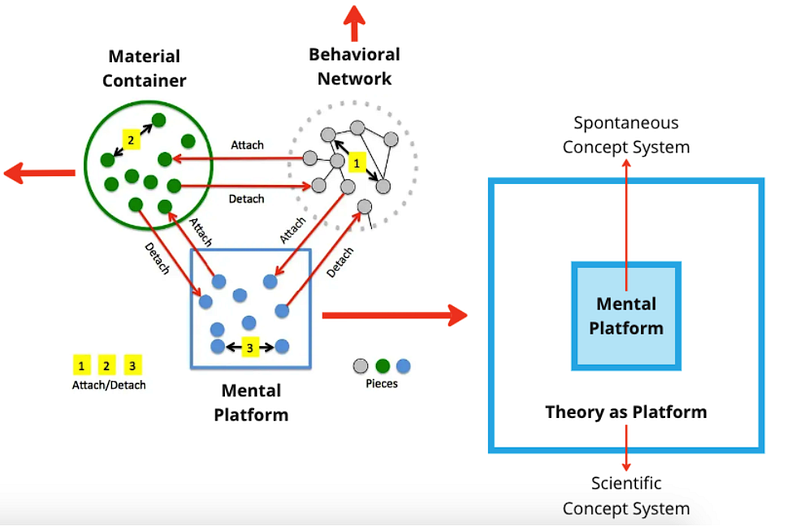
- Theory as Platform: an established academic theory is a Scientific Concept System. A founder learns some ideas from a Scientific Concept System or many theories. In this stage, an academic theory is perceived as a developmental platform that supports his/her lifelong learning and cognitive development.
- Mental Platform: Finally, he/she curates ideas into a meaningful whole and develops his/her Spontaneous Concept System about a particular possible product. Since his/her goal is to build a successful innovative product, the Spontaneous Concept System could be understood as a Mental Platform that supports his/her activities.
On Nov 30, 2023, I wrote a long article titled Mental Platform: The Evolving Concept System. You can find more details about the other two parts in the article.
5. What does the concept of “Mental Platform” mean?
On Nov 4, 2023, it was just a metaphor. It only meant the message of “How do you think?”.
On Nov 22, 2023, it connected to “Theoretical Platform”. In this way, it became a theoretical concept with a context.
- Theoretical Platform: an objective concept, a public concept system
- Mental Platform: a subjective concept, a personal/private concept system
On Nov 25, 2023, it was associated with “Spontaneous Concept System/Defined Concept System/Scientific Concept System”.
- Theory as Platform: an established academic theory is a Scientific Concept System.
- Mental Platform: Finally, he/she curates ideas into a meaningful whole and develops his/her Spontaneous Concept System about a particular possible product.
Now we have a working definition of the concept of “Mental Platform” for the field of Product Engagement.
Can we use “Product Concept System” to replace “Mental Platform”?
Yes. We can.
However, the concept of “Mental Platform” connects to the concept of “Theoretical Platform”. This means it connects to the Platform Ecology project. See the diagram below.
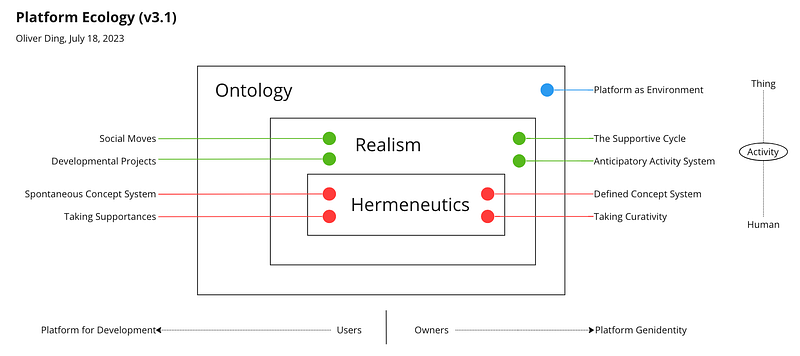
The Platform Ecology (v3.1) framework considered “Spontaneous Concept System/Defined Concept System/Scientific Concept System” as a member. You can find more details in Platform Ecology (v3.1).
Now you see my private Message behind the Content of the concept:
“Mental Platform is a perfect term for the Platform Ecology project!”
Moreover, The Evolving Concept System is a bridge between the “Mental Moves” project and the “Social Moves” project.
- Mental Moves is about developing concept systems which refers to Mental Platform
- Social Moves is about Behavioral Network and Material Container
In this way, we consider the Platform Ecology project as a sub-project of the Social Moves project. See the diagram below.
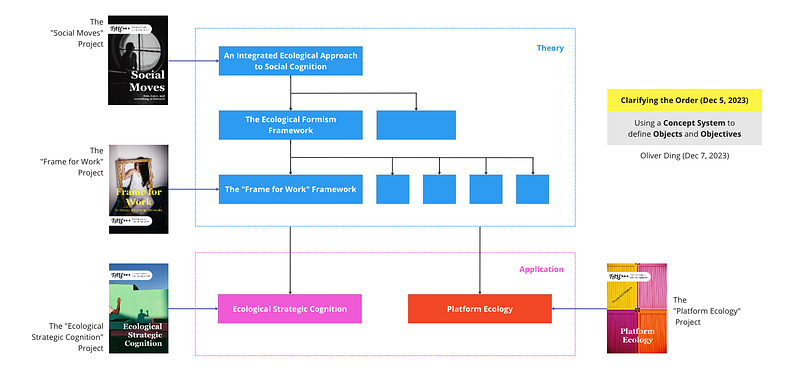
You can find more details in Social Moves: Weaving the Mind and Clarifying the Order.
6. The Insight
What kind of insight can we learn from this case study?
Words and Concepts are Signs that represent meanings for understanding and communication.
For Word-related Communication, we only need to pay attention to the common sense of language.
However, we have to use a different way to deal with Concept-related Communication, especially in the Early Discovery phase of Product Engagement and Knowledge Engagement.
It requires a “Slow” approach to understanding the Situational Meaning of a concept in different moments.
In this way, we can Grasp the Concept in the Early Discovery phase.
Related Articles
- Situational Note-taking: The idea of “Meaning Matrix” — Oct 17, 2023
- Situational Note-taking: The Thematic Matrix Canvas and Meaning Discovery Canvas — Oct 25, 2023
- Situational Note-taking: The idea of “Thematic Matrix +” — Nov 19, 2023
- [Creative Diagramming] Graphic Space Affordances, Thematic Space, and Possible Paths — Oct 31, 2023


