Situational Note-taking: The Thematic Matrix Canvas and Meaning Discovery Canvas
Making a new canvas for developing tacit knowledge about “Meaning”
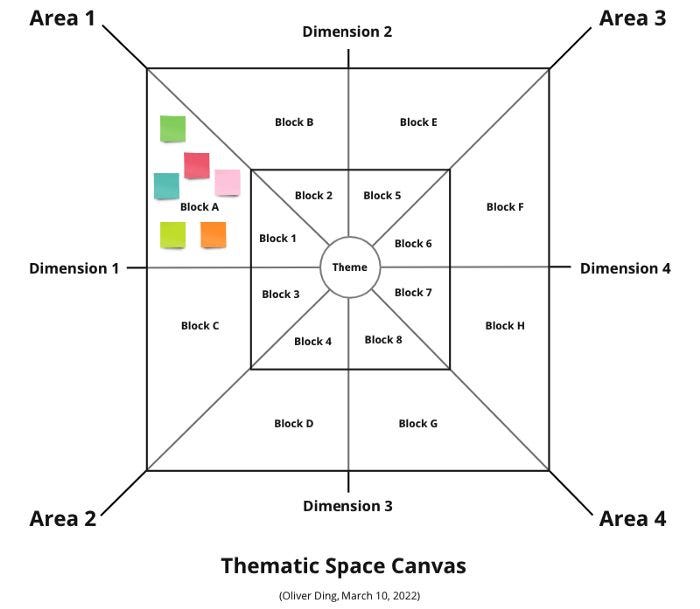
The above canvas was originally called Thematic Space Canvas.
Since Thematic Spaces became a primary theoretical concept, I renamed the canvas Thematic Matrix Canvas.
It is a meta-canvas for Developing Tacit Knowledge.
It led to the following canvases:
- The Knowledge Discovery Canvas
- The Spark Space Canvas
- The Statue Space Canvas
- The Life Discovery Canvas
- The Optimal Context Canvas
- The Lifesystem Development Canvas
You can find more details in A Meta-canvas for Developing Tacit Knowledge.
The Spatial Structure of Thematic Matrix Canvas
A meta-canvas is an abstract canvas that doesn’t tie to any domain. The goal of designing a meta-canvas is to highlight a unique spatial structure for designing domain-specific canvases.
I use abstract terms such as “area”, “dimension”, “block”, and “theme” for the meta-canvas. See the diagram below.
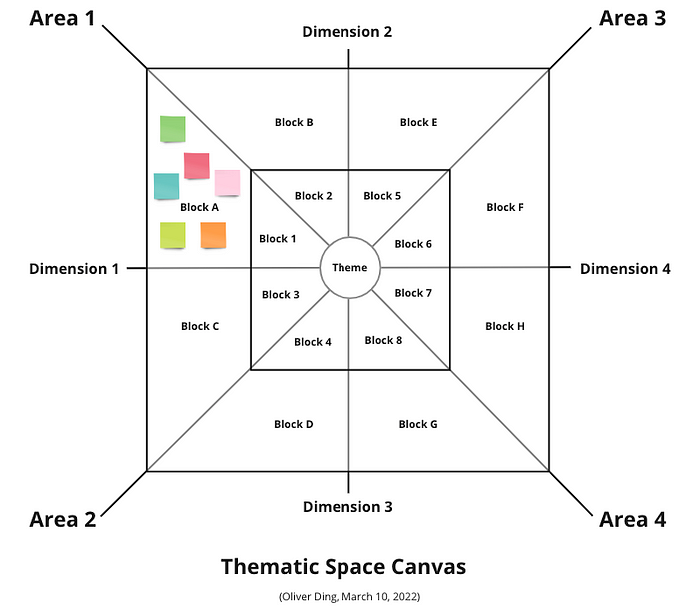
The Thematic Matrix Canvas is not a simple 2x2 matrix for building a typology, but a multiple-dimension model for visualizing a holistic view to sense-make a dynamic meaningful whole. You can find more details here: The Notion of Thematic Spaces.
The Thematic Matrix Canvas’ spatial structure is designed with the following aspects:
- Four Significant Areas
- Four Dimensions
- Two Subspaces: Inner Space and Outer Space
- Eight Pairs of Blocks
- A Primary Theme
The uniqueness of the Thematic Matrix Canvas is that it adopts the perspective of Activity Theory and considers the whole process of using the canvas as an activity. Moreover, it uses Inner Space and Outer Space to represent the “Internalization — externalization” principle of Activity Theory.
For the Developing Tacit Knowledge, I call it “Objective — Subjective” Knowledge Curation. While Objective Knowing refers to Outer Space, Subjective Knowing refers to Inner Space.
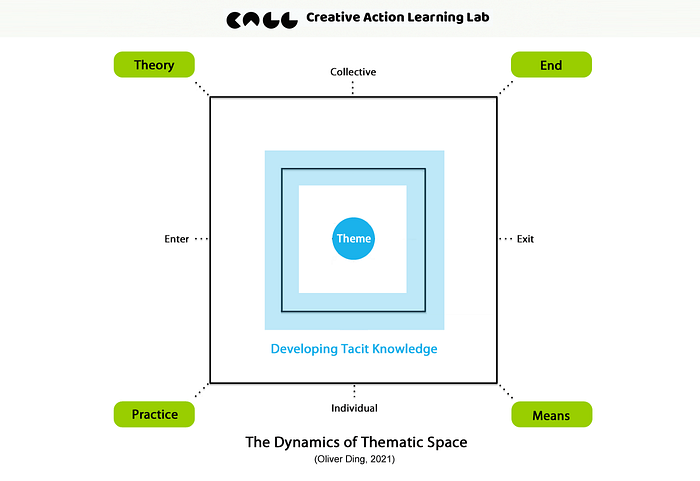
For other canvases, I defined other aspects of Inner Space and Outer Space.
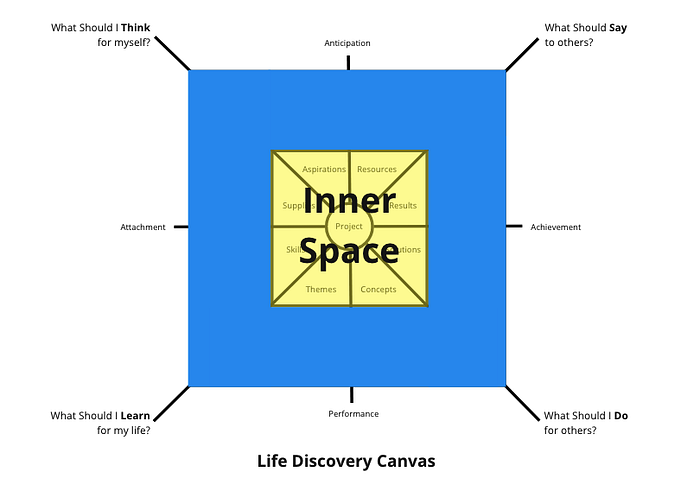
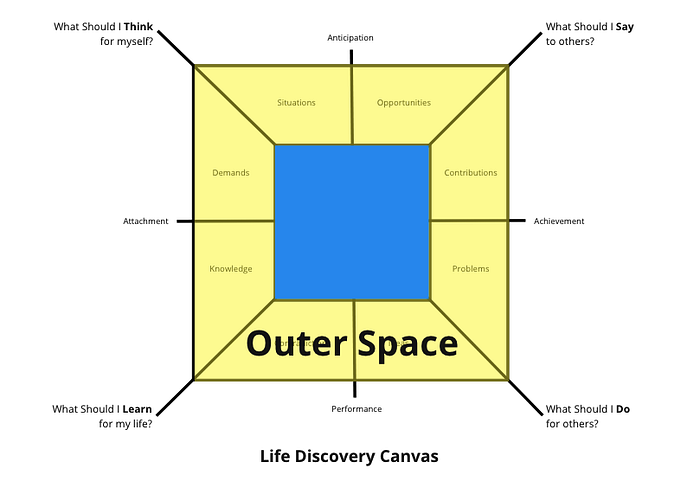
The Thematic Matrix Canvas has 16 blocks that offer spaces for pasting notes. For example, the picture below is an example of Mapping a Thematic Space called “Center”. If you use a large-size canvas, you can directly put notes inside blocks.
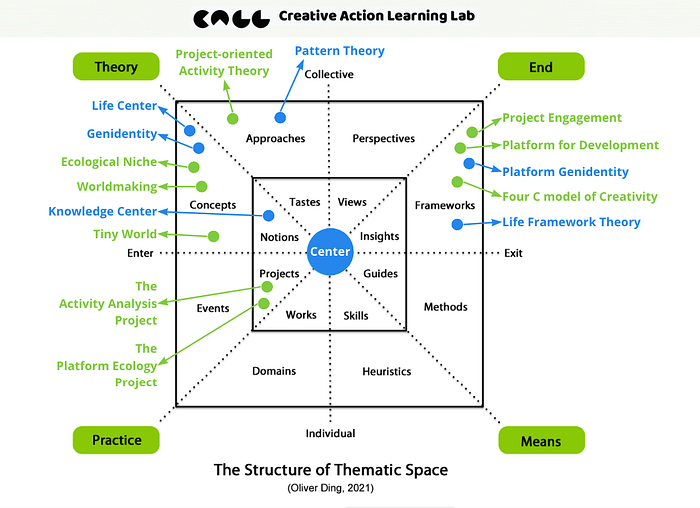
You can find more details about the spatial structure here.
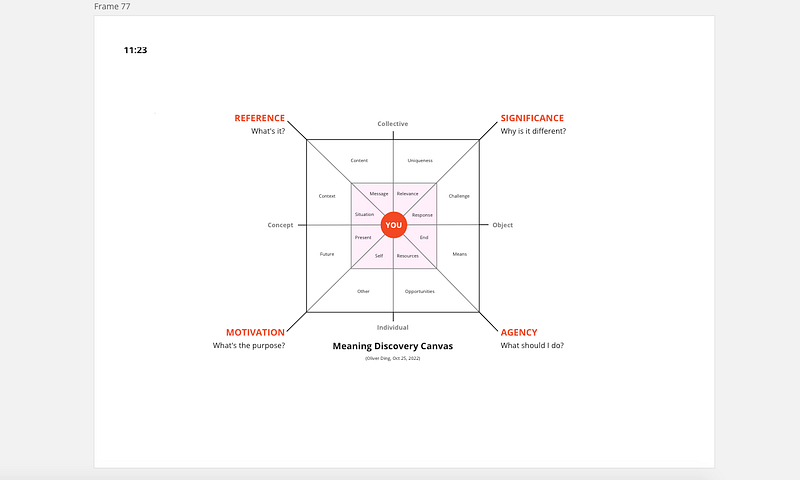
The Meaning Discovery Canvas
This morning I attended a LinkedIn Live event called Meaning, Semantics and Semiotics (Craft-Building Series #61).

At 8:20 a.m., I made a visual note. See the picture below.
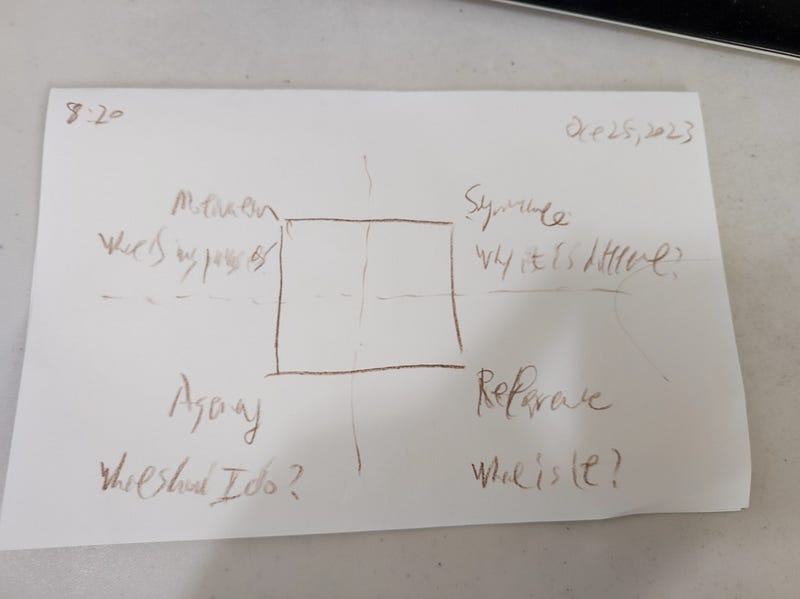
I just captured several keywords for making a new Thematic Matrix Canvas.
- Motivation: What’s the purpose?
- Agency: What should I do?
- Significance: Why is it different?
- Reference: What’s it?
These four keywords can be used to define four areas.
At 8:25 a.m., I added more keywords to the note.
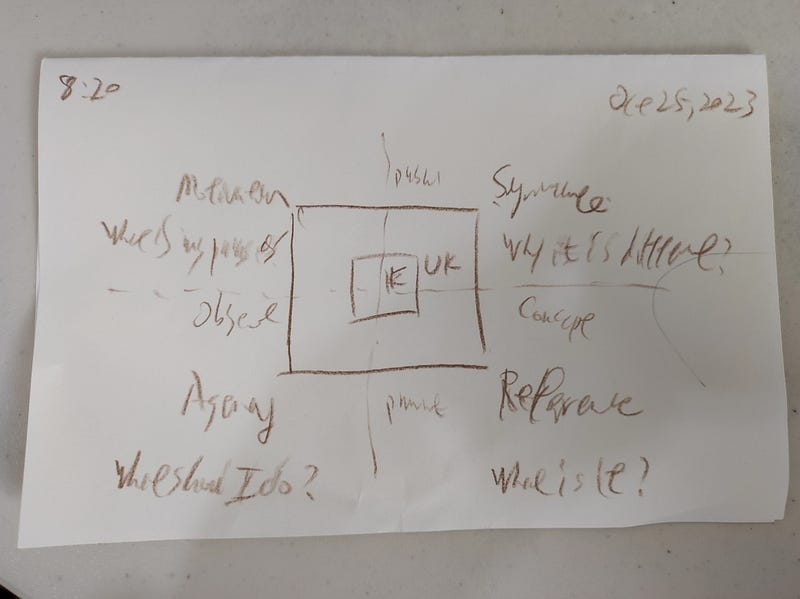
I used “K” and “UK” to refer to “Known” and “Unknown”. I wanted to use them to define Inner Space and Outer Space.
I also selected several keywords for defining four dimensions:
- Object
- Concept
- Private
- Public
At 11:00 a.m., I moved to Miro and made the final version. See the picture below.
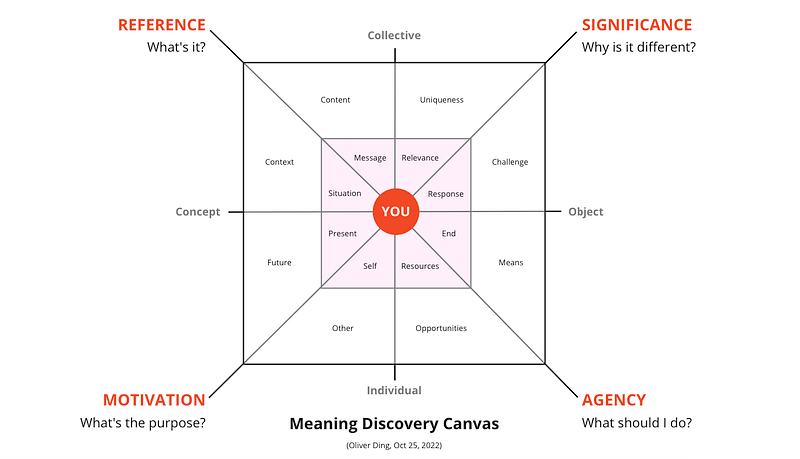
How did I make it?
Making A New Thematic Matrix Canvas
See the screenshots below
11:00 a.m.
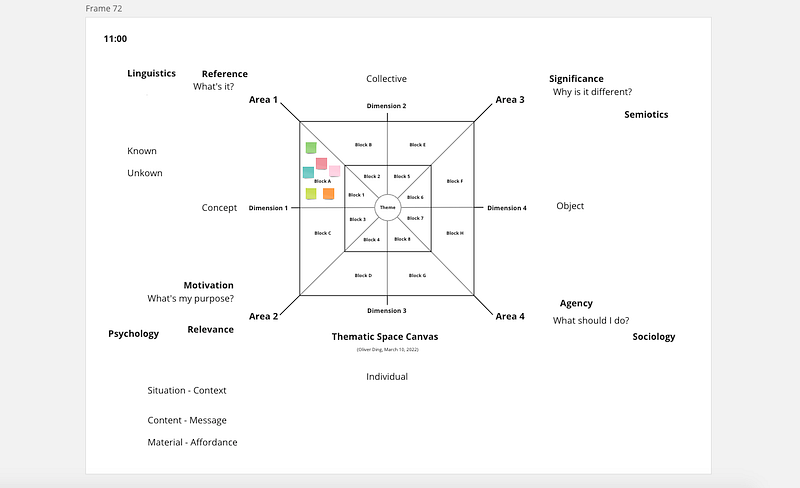
11:04 a.m.
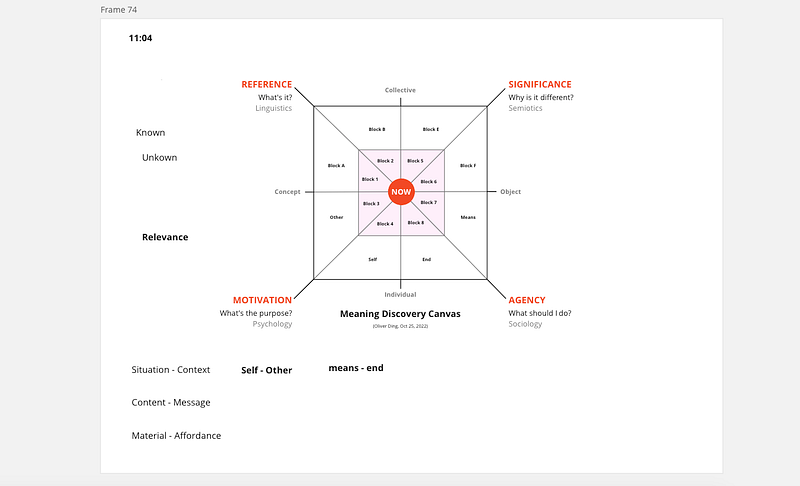
11:11 a.m.
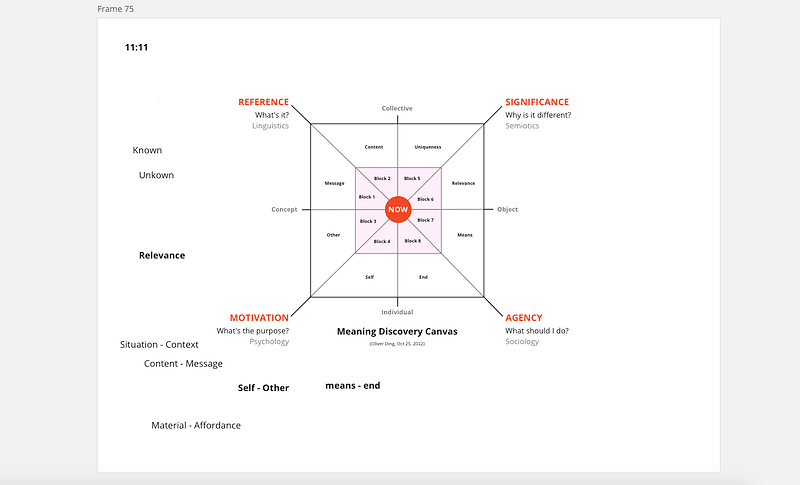
11:17 a.m.
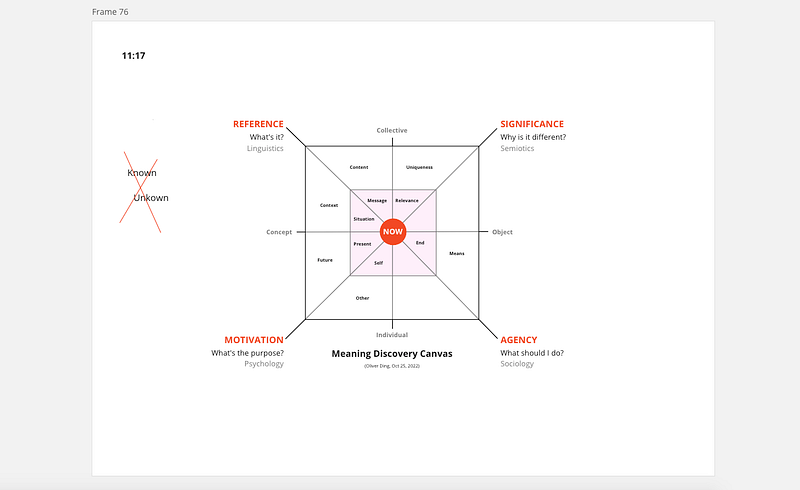
11:23 a.m.