
Kachina Dolls: Ancient Spirits, Modern Art
How these ritual figures were recognised as the embodiment of traditional wisdom and a definitive expression of Surrealism…
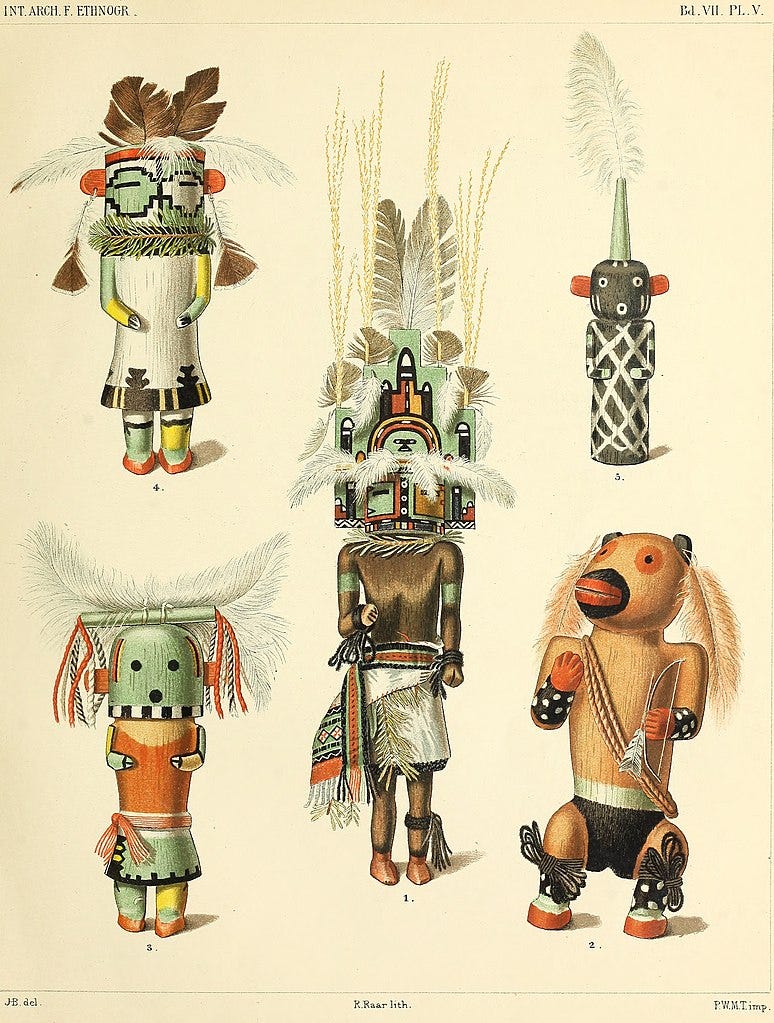
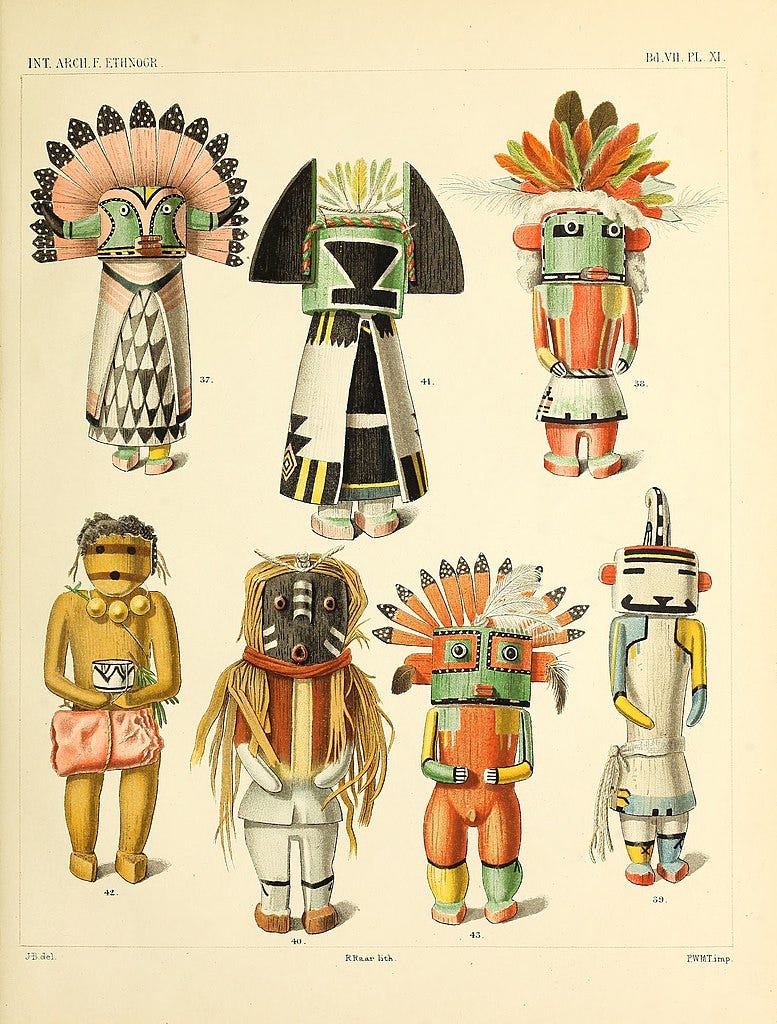
Kachinas represent the spirits of living things encountered in the real world as well as natural phenomena and sometimes more advanced abstract concepts. They inhabit a realm of varied ancestral ‘ghosts’ who hold essential ancient wisdom and bring blessings to their descendants.
Central to some native American belief systems, particularly those of Hopi, Zuni, & other Pueblo peoples, Kachinas are benign elemental spirits that join with the souls of dancers during specific rituals connected with seasonal changes. They bring rain from the sky and all forms of fertility from the land.
The cultures who practice Kachina traditions believe that they reside in the afterlife where they are joined by the souls of the departed. To the Hopi, Kachinas are emissaries from that Other Realm, a non-corporeal world overlaid upon physical geography, linking the land with the spirit world and the afterlife. That meeting place between worlds is said to be around the San Francisco Peaks of Arizona.
The Kachinas commune with their communities via narrative dances performed by initiated men wearing costumes and masks specifically made for the ceremony. It’s believed that during the dance, the men open themselves to the spirits and actually become the Kachina that they wear the semblance of. For the duration of the ceremonies, they are one and the same.
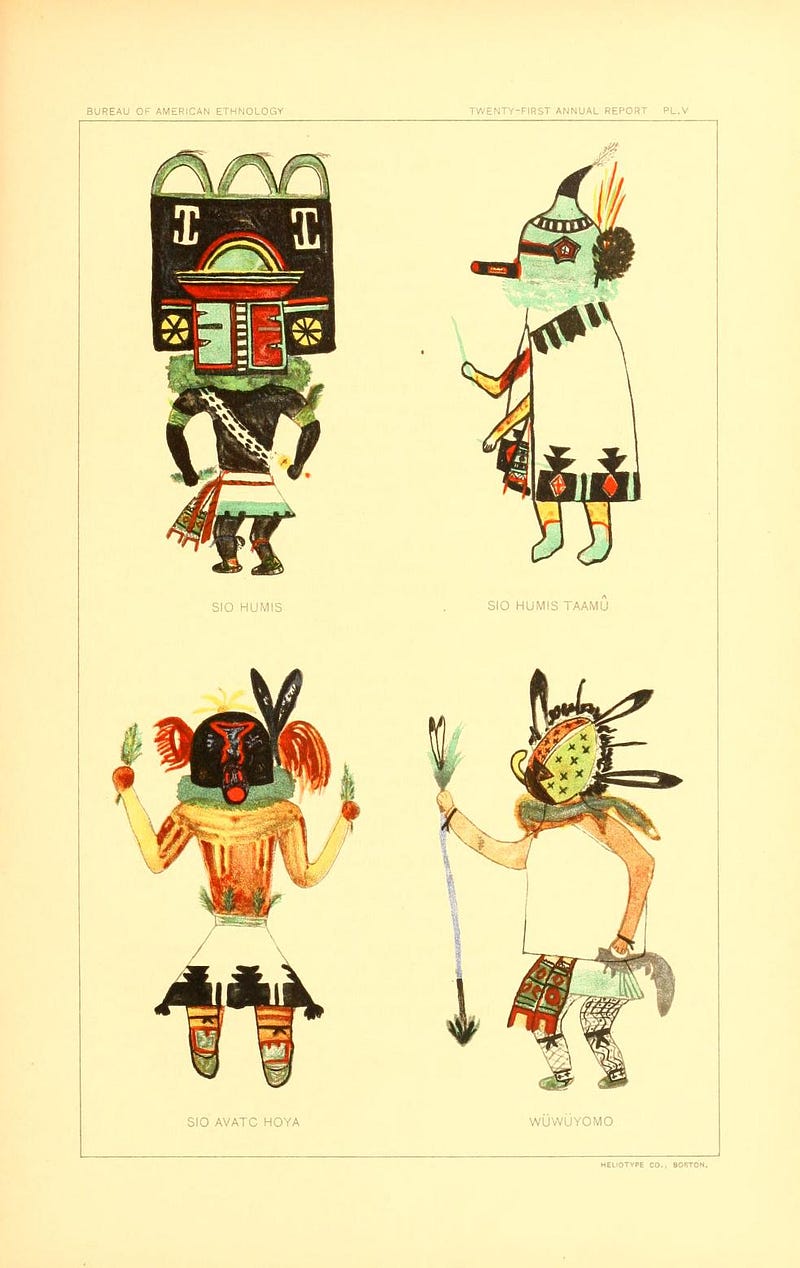
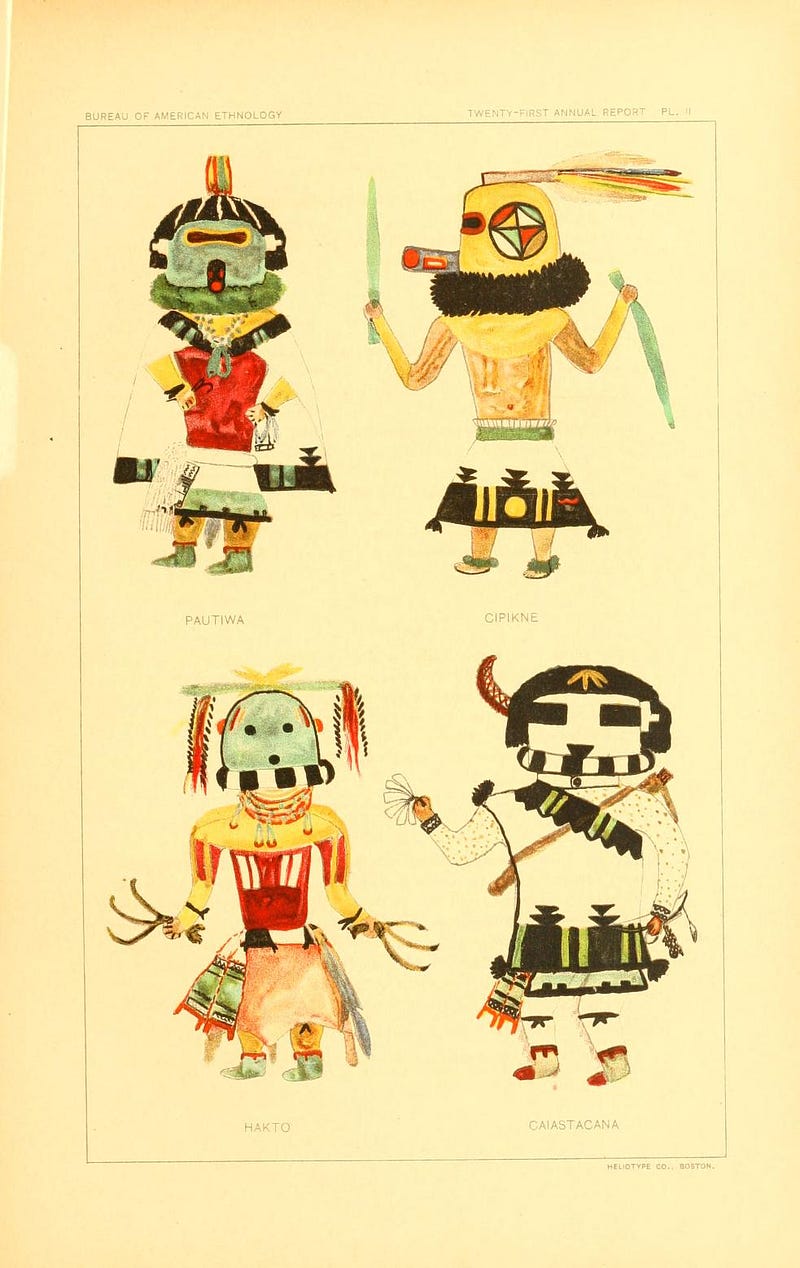
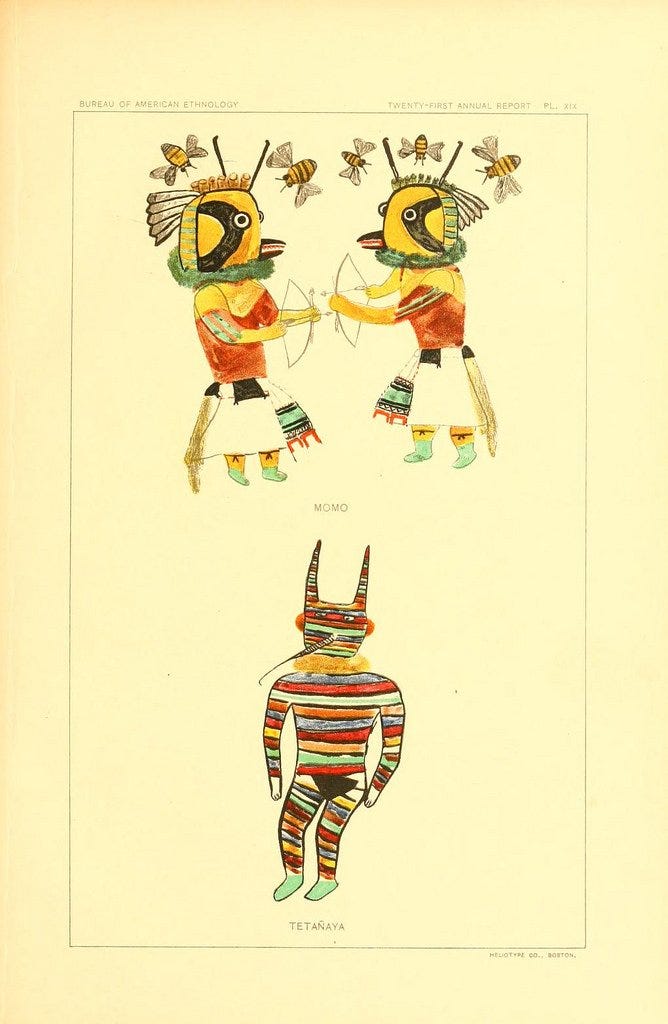
A Kachina ceremony is everything to the community and involves everyone present. It’s a history lesson, a commemoration of the ancestors, an educational conference, a display of artistic skill, poetry, song, dance, interactive theatre, circus, comedy, and farce. It shares characteristics with many traditional events around the globe such as Buddhist ritual dances, passion plays, harvest festivals, village fêtes, and Halloween.
In honour of the link between the domain of the ancestors and the living land, the rituals usually begin in a subterranean cave or excavated circular chamber known as a Kiva. Although only men wear the carved masks and full garb of the Kachinas, women also don specially designed costumes decorated with meaningful symbols and join in, channelling dynamic spiritual and natural forces through their colourful wands.
Major Kachina festivals occur to mark the cycle of the seasons. The first of the year is the ‘Bean Ceremony’ — the Hopi Powamuya — performed in February. This starts as the sacred beans germinating in the Kiva begin to sprout, welcoming the spirits back to the land with their gifts of fertility and abundance.
The Kachina calendar concludes around the summer solstice ceremonies — the Hopi Niman — thanking the spirits and seeing them safely back to their Otherworld abodes. The parades of Mexico’s Day of the Dead festivals share these sentiments and may be linked to common prehistoric origins as archaeological evidence suggests the making of similar wooden icons and painted stone artefacts have a long history in central America.
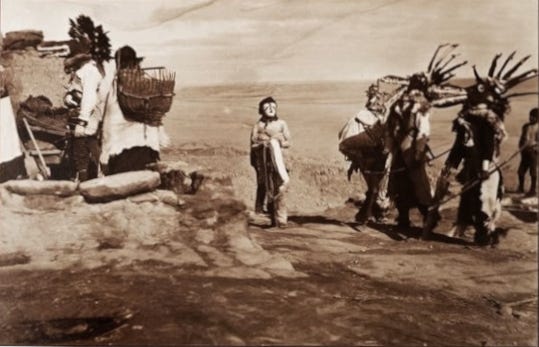
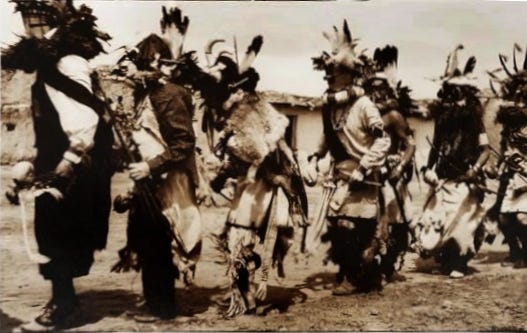
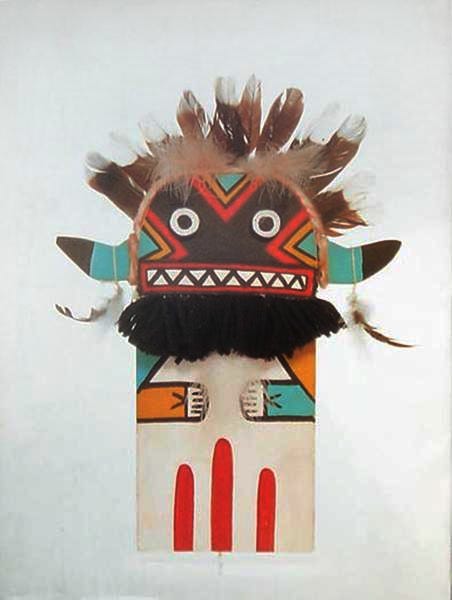
As part of the festivities, specially carved effigies of appropriate spirits are gifted to girls as conduits for the Kachina wisdom. Like the dancers, these ‘dolls’ are vessels for the Kachina to inhabit and are ritually imbued with the essence of a particular spirit. Usually carved from cottonwood roots, they’re decorated with prescribed motifs and patterns painted using natural pigments derived from the plants and minerals associated with the Kachina spirit they represent.
The masks and effigies are revered religious artefacts. It’s considered culturally disrespectful and sacrilegious to remove them from the region of their origin. After their appearances in the Niman, the ceremonial masks are either disassembled completely or have their painted decoration scraped off prior to storage in the village’s Kiva. The Kachina figurines become family heirlooms and are cared for in the home as spirit conduits until enlivened again every Kachina-season. Sometime in the mid-nineteenth-century, initiated Hopi and Zuni carvers began to make unimbued, replica Kachina dolls to meet the demand of collectors and the increasing tourist trade.
Joseph Mora, the multi-disciplinary artist, photographer, illustrator, historian, and bona fide cowboy lived with the Hopi during the first decade of the twentieth-century. He immersed himself in their culture, learned their language and beliefs. Through detailed watercolours and photographs he recorded much of the disappearing Kachina tradition including masks, costumes, and ritual dances. Some of the authentic vintage Kachina figures that still turn up at auctions today originated in his personal collection. Mora’s Kachina paintings and prints are still sought after by collectors, though he’s equally well-known for his public art, popular cartoons, illustrated maps, educational posters, and album cover designs.
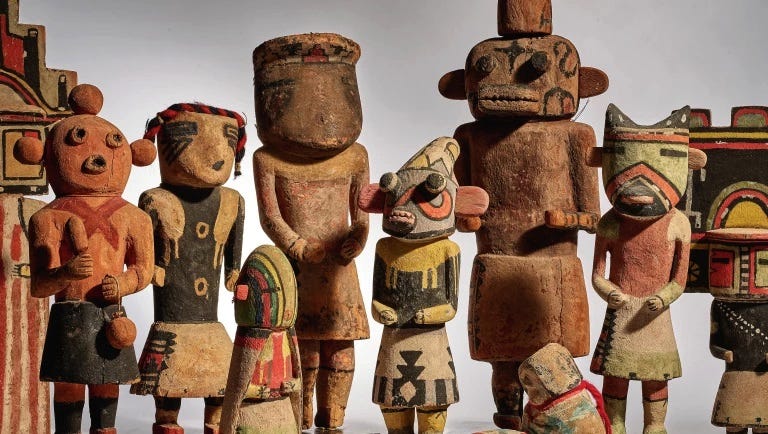
At the close of the nineteenth-century and into the mid-twentieth, the Fred Harvey chain of tourist hotels and restaurants were instrumental in bringing the art of Kachina to the broader public. In an attempt to preserve the traditional crafts and present culturally appropriate gifts in their outlets, they purchased the figures from authentic native american makers. However, their labels failed to acknowledge individual artists, simply crediting ‘The Hopi Villages’.
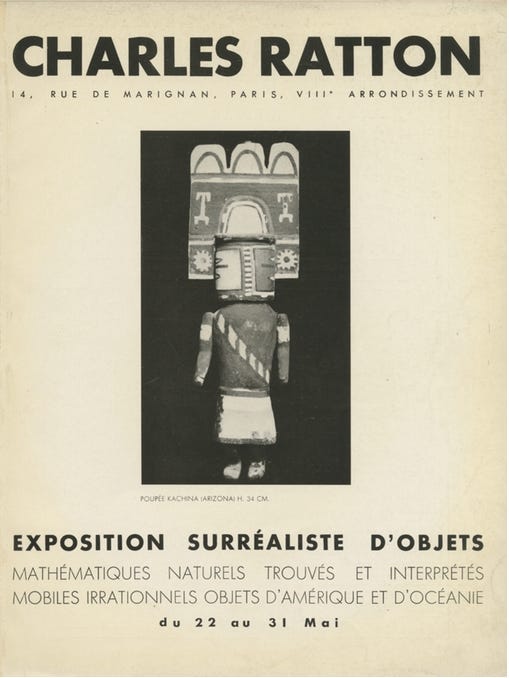
The figures and their decorative motifs struck a cord with the emergent trends of Modernism, driving developments in abstraction, and an influence on Cubist sculpture is clear. For the influential 1936 Paris exhibition, Surrealist Objects, André Breton chose a Kachina from his collection for the poster. Surrealism was perhaps the first Post-Modern movement to, at least partially, define itself by claiming antecedents and acknowledging universal themes expressed in art from ancient and underrepresented cultures. The decision to feature the Kachina may also have been for ‘diplomatic reasons’, not to favour or disgruntle other exhibiting artists.
Breton, who wrote the Surrealist Manifesto, began collecting Kachinas in the mid-1920s, fascinated by the belief system that produced them and their formal iconography relating to a spiritual realm that coexisted and influenced our shared reality. To him, this was a near definition of the central theme of Surrealism. He shared this interest with a growing circle of associates who also began collecting Kachinas, notably Marcel Duchamp and Max Ernst.
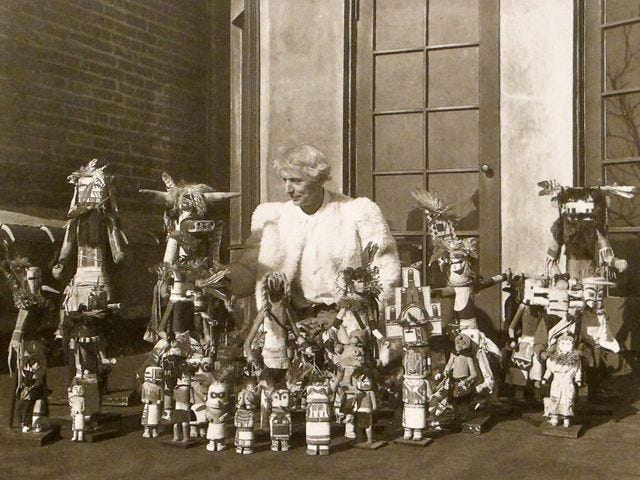
Ernst even named his dog ‘Kachina’ and reputedly bought-up the entire stock of Kachina figures from the Fred Harvey Grand Canyon outlet during a visit in the early 1940s. The influence is obvious in his contributions to the 1944 Imagery of Chess exhibition staged at New York’s Julien Levy Gallery.
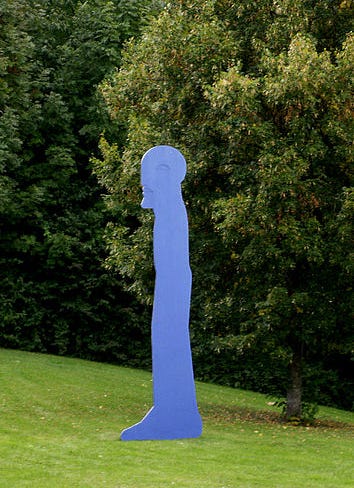
Since then, many and varied artists have found formal, contextual, and spiritual inspiration in Kachinas. German artist, Horst Antes has openly integrated figurative styles and aesthetic influences from native American art including Kachinas to such an extent that an illustrated monograph, Kachina Figures of the Pueblo Indians of North America from the study collection of Horst Antes, was published to supplement major exhibitions of his work in the 1980s. He was attracted to the concept of the figure representing a physical interface with the unbound non-corporeal imagination, spirit, or what William Blake called our ‘poetic genius’…
The art of Navajo weaver, Hosteen Klah is also discussed by Remy Dean in Signifier.
* All images are used with license, or presented here for educational purposes under fair usage policy.


