Medium Writers Challenge | Reentry
In the Vulture’s Circle: Black Commerce Endures During the Age of COVID
Black personhood has never been able to enter American capitalism, making discussions of reentry disingenuous.
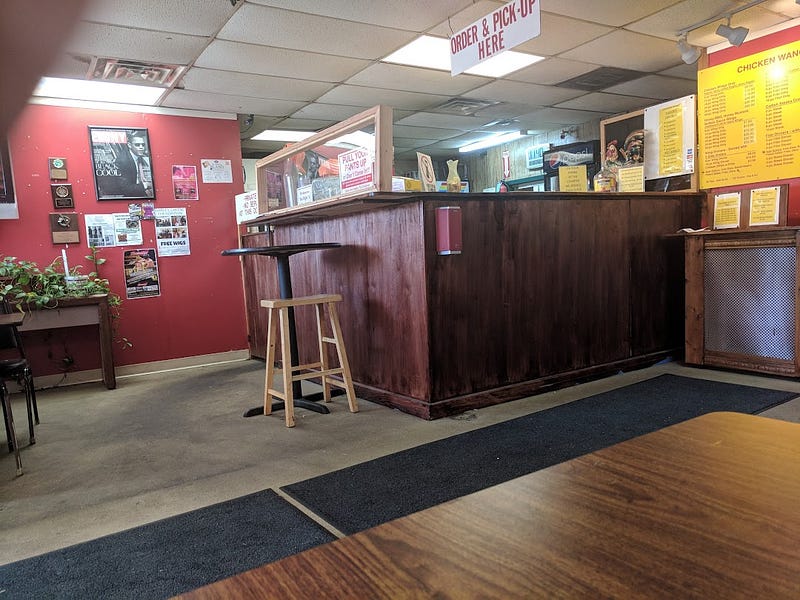
As we Rebuild the Rock into an equitable community of opportunity for all, we unite when we strategically address our economy. Over 60 years after the integration of the historic Central High School, racial wealth gaps along with economic immobility remain too prevalent. We must honor our rich civil rights history by acting with urgency to address these ills.
--Mayor Frank Scott of Little Rock, State of the City Address, March 25th, 2021.
“We Ain’t Got No Damn Burgers”
By the autumn of 2020, the pandemic had ground my tastes buds smooth. I have always been the chef of my family. The fatigue of new fatherhood and the ennui of cooking meals day after day since the world closed last March was beginning to depress me. My wife and I were so paranoid that we did not consume any takeout since our last date where we feasted on quail and steak; we were doing everything possible to protect our six-month-old and did not want COVID slipping past our defenses with an order of salmon and tuna nigiri. We treated our home like a planet we had to keep sterile from foreign pathogens.
Over time, that mood of sterility passed on to all the dishes I would cook. I normally would season food till the ancestors told me to stop. Harriet Tubman would vesper through the back door as I slapped cumin, smoked paprika, and parsley on meat and whisper “that’s enough, child,” informing me it was time to fry or roast whatever I was making. But I had been adding inappropriate amounts of cayenne, habanero, and even my Carolina Reaper pepper flakes to dishes. We were slowly introducing baby to solids and my wife was not going to have me introduce napalm to the infant’s palette due to tedium making me deaf to the ancestor call. She finally recommended I go to our favorite chicken spot to pick up dinner.
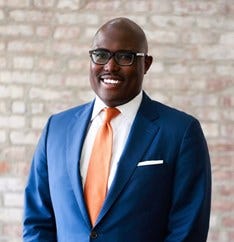
We discovered Chicken Wangz when we first moved to Little Rock. We rented an apartment in tony Maumelle, where we drove past a wing shack that reminded me of the best hood chicken spots in New York City (Kennedy Fried Chicken, y’all) and the delicious gas station food she would get during her youth in rural Helena, AR. When we moved to the suburbs and I took a principal job, we learned that Chicken Wangz was a small, Black-owned franchise with another location in southwest Little Rock, where most Black people live. It was in the John Barrow community, which had both housing projects and the Baptist Health Medical Center. The joint’s location was on my way home. After my monthly school board meetings that ended north of 8PM, I would stop by to grab some spicy fried wings, fries, and breaded okra.
In my Northerner way, I never asked the owner his name. In his Southern way, he remembered all about me; my name, what I drove, when I repeated suits, how my wife was doing in medical school, what my school’s basketball team needed to do to win their next game, and who my barber was. On the nights when he wasn’t busy, we’d often talk about the state of the Black community while we waited for my wings to finish frying. He was older, with a few gold teeth and an avuncular, crusty demeanor. He loved to curse and hated all nonsense. On one of those nights, the phone rang. He picked it up:
“Hello, Chicken Wangz!”
He fell silent as he listened to the customer. “What?” he asked incredulously as he glanced at me with a look of annoyance. “Nigga, we named ‘Chicken Wangz.’ We ain’t got no damn burgers!” he exclaimed as he hung up gently.
“Hal, you a principal. Please make sure these kids can read before they call me with this bullshit,” he chuckled as he rang up my order. A large sign at the register said, “No cell phones.” I always respected it, and now realized it was there for the owner to build rapport with his clientele. I kept on coming back because he knew so much about me.
Black capitalism is a myth. It is better to focus on Black commerce, the small businesses my people ache to reenter.
I wanted to let him know I had a son since I left the principalship and COVID shifted our universe forever. But when I arrived at the spot, it was closed. I looked inside the glass doors and saw that the register’s kiosk was repositioned to only allow one person in at a time. He had pushed it directly to the entrance. It appeared as if he was trying to survive a zombie apocalypse. His efforts were for naught. I couldn’t find any signs of life in the building. There were no scents of peanut oil or spicy Slap Ya Momma seasoning anywhere in the air. One of my favorite restaurants—a safe, delicious, Black space—would be dead when I fully reentered the world.
It was a season of harrowing for the world. Earth is millions of souls lighter. I feared what I would find once I started patronizing Black businesses again. Instead, the story of Black economics and Black power surprised me with a trait I should have known we had all along—resilience. What I found point to a potential new world where Black commerce can flourish, where we can dispense notions about reentering a society we’ve never been allowed into and finally make our way in on our own terms.
In the Vulture’s Circle
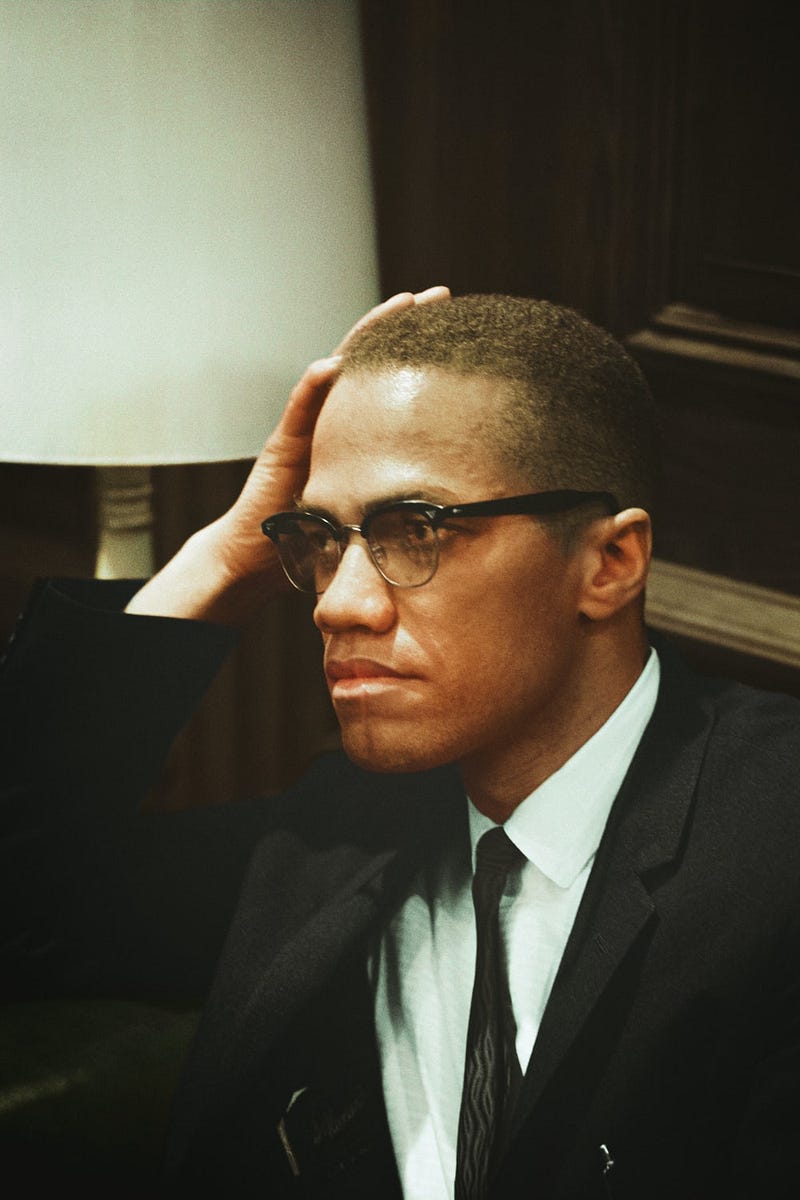
“You can’t operate a capitalistic system unless you are vulturistic; you have to have someone else’s blood to suck to be a capitalist,” Malcolm X quipped in his famous speech at the Audubon Ballroom in 1964. Vultures fly in circles over their prey, a shape that does not allow exit without their voracious attention. From the founding of the nation, Black personhood has been the prey of choice for capitalism. We were slaves that could not even claim legal ownership over our blood, veins, arteries, capillaries, and hearts. We were trapped.
After our personhood was established in 1865, the circling of their hunt took different geographical forms. In the South, my ancestors were politically disenfranchised into debt peonage. If they traveled North, or West, then they were redlined out of securing mortgages and economically depressed by rampant job discrimination. “The exclusion of free people of color from the mainstream American economy began as soon as Black people emerged from slavery,” Heather McGhee, author of The Sum of Us: What Racism Costs Everyone and How We Can Prosper Together noted when examining the nation’s history of housing discrimination Black people who trekked during the Great Migration up to the Great Recession, the last economic crisis the nation faced before the pandemic.
Given that most Americans hold their wealth in their homes, the Great Recession ended up being an extinction-level event for many upwardly mobile Black families. Before the crisis, Black families seeking to buy a house were often targeted with subprime loans. “A 2014 review of the pre-chase mortgage market,” McGhee reported, “found that when controlling for credit score, loan-to-value, debt-to-income ratios, and other risk factors, Black and Latinx homeowners were 104 percent and 78 percent, respectively, more likely to receive high cost mortgages.” Our home financing system has been structurally racist since our freedom. It is designed to leave us weak in our monetary bones so that in times of crisis and market retraction, vultures have an easier time acquiring subsistence; they want the marrow. White supremacy designs such weakness to spread across time and space. A report from the Social Science Research Council states that “the Great Recession will continue to impact black families more severely in the future in terms of lost potential wealth. By 2031, white wealth is forecast to be 31 percent below what it would have been without the Great Recession, while black wealth is down almost 40 percent.” Economic crises, for Black personhood, is a dooming in both the present and whatever future we can build for our families, no matter where we go.
The U.S. Census reported that the average American lives about 27 minutes away from their jobs. I imagine that commute is shorter for Black folks, given the segregation the American experience mandates. That segregation often gives Black communities vigor in the forms of our favored businesses—barbershops, salons, entertainment establishments, and chicken shacks. But vulturisitc capitalism is the story of space, both personal and cosmic, white supremacy seeks to write. Economic crises will both come after the homes and the businesses. Vibrancy in the vulture’s circle still makes you prey.
The COVID crisis thus enacted a familiar story for Black commerce. “While the overall decline is noteworthy, different among closure rates across racial and ethnic groups are even more striking,” Claire Kramer Mills and Jessica Battisto wrote in an August 2020 paper on behalf of the Federal Reserve Bank of New York. “Black businesses experience the most acute decline, with a 41 percent drop…in contrast, the number of white business owners fell by 17 percent.” They credit such a steep decline with the beforementioned influence of racial and commerce segregation. Mills and Battisto researched the data and found that 40% of all Black businesses are “concentrated in just 30 counties, roughly one percent of all counties in the country.” They correlated those counties with where the coronavirus was most rampant at the time and found that 10 of those counties also had the highest amount of infection rates. “Given the high geographic concentration of firm activity and the Black population in general,” they concluded, “business disruptions in these particular places can have outsized effects on African American well-being at large.”
The racial structure of our nation ensures that our businesses lack financing and cushioning to survive lean times. Over a century of housing discrimination and redlining ensures that we live cloistered together and poorer. When COVID arrived on our shores, it caused both an epidemic of business closures and illness. These outcomes were not accidental, but the logical consequence of a country that places Black personhood under the wing’s shadow.
You cannot reenter a society you never were allowed to truly enter. Black personhood, however, created a hopeful diaspora within our space, one that connects us across three continents.
The Scotch Bonnet Pepper
At a rating between 100,000 to 350,000 on the Scoville Scale that measures the spiciness of peppers, the Scotch bonnet pepper is among the hotter of its species. It is a New World crop botanists believe is indigenous to South America. Due to the triangle trade, it eventually found its way into the Caribbean and West Africa, where it has become a staple for pepper sauces and pastes. Despite possessing the fiery traits of nuclear fission, it also has a distinctly sweet flavor I find addictive. Scotch bonnet peppers are the key ingredient in Jamaican cuisine, where it adds smokey and savory flavor to jerk dishes. As a Black man of New York City stock, I spent my teens visiting my favorite Jamaican spot once a week for a large order of jerk chicken with rice and peas. Despite working to recreate the dish myself, I could never get a hold of the peppers to make it authentic when I moved to Arkansas.
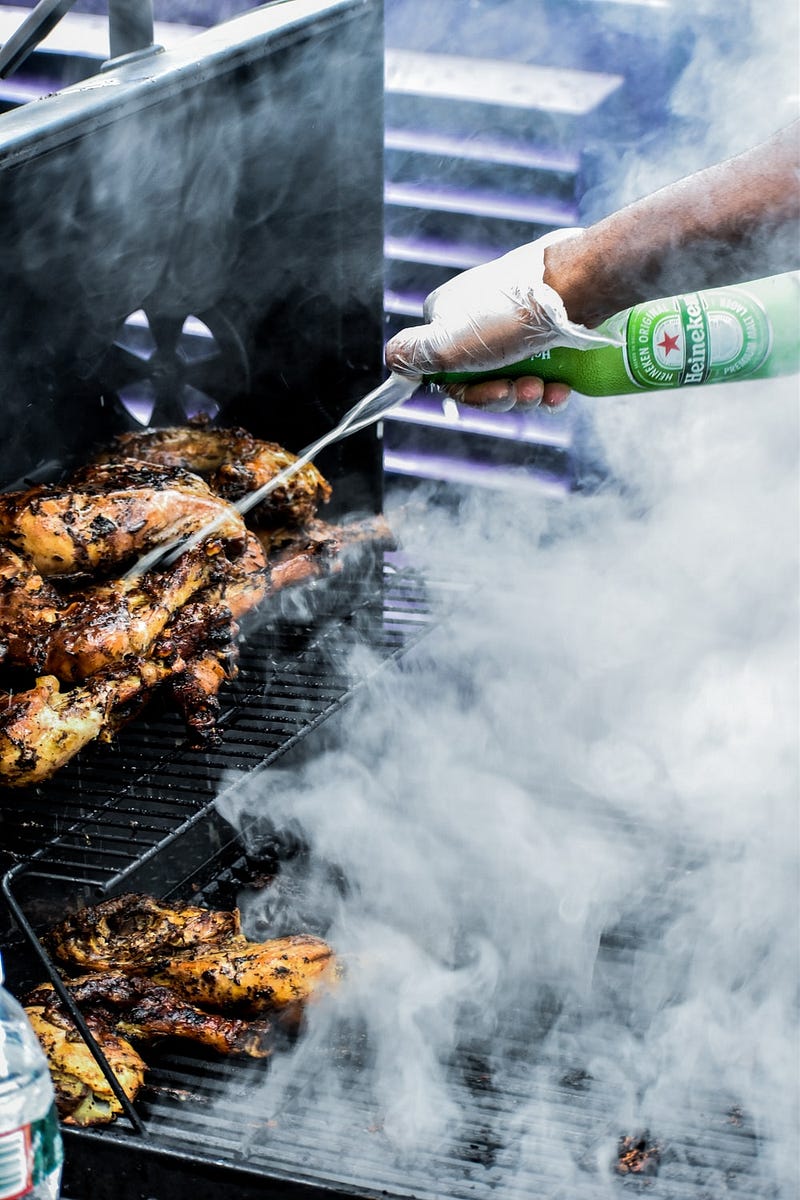
The diaspora loves jerk chicken. Our tastes thus mean that you can always find a Jamaican spot in any city where we represent a critical mass of the population. Little Rock threatens to become a chocolate city in the next few decades, so there were two. My preferred spot was Taste of Jamacia on Rodney Parham, a two-minute drive from the city’s fanciest cigar bar. Their portions were generous. During Saturday evenings, they would have a DJ who played reggae—the Bob Marley and lover’s rock type, not the daggering dancehall of Bounty Killer and Beenie Man I grinded my adolescence away on at bashment parties within Flatbush and Canarsie. They had the connect for Scotch bonnet peppers and, in the Before Times, I’d visit frequently to get my fix of jerk chicken done properly.
I became a full-fledged Pfizer Pharaoh in April and experienced, between then and July’s invasion of the Delta variant, a reentry into Black communal life. Since my taste buds inform my community, I immediately made a beeline to Taste of Jamacia for jerk chicken and a few Red Stripes. The signage was still up when I arrived. The interior, however, had changed. There was no more reggae music floating from the speakers. The place was empty. It had been converted into one of those oddities of the South—a soul food restaurant, where people who did not have mommas or grandmas who knew how to make it came to eat.
I got depressed and stood at the counter for a while staring at the collard greens and baked macaroni and cheese that I could tell from the texture had at least three cheeses in it. It all looked good, like the dishes I had been cooking for the past year. I was waiting, however, for the ghosts of the diaspora to welcome my reentry of jerk chicken infused with the pepper of my most savory fantasies. Finally, I asked the elder behind the counter:
“Hey, what happened? This used to be a Jamaican spot.”
“They couldn’t hold on,” she said. “Business slowed down too much during the pandemic. They were renting from us, so we decided to give it a try.”
A moment of grief. They couldn’t hold on. I was rattled that I did not know till it was time to mourn.
“They had oxtail, but we have oxtail too! You want some?”
“No thank you, ma’am,” I sighed as I sulked out in my Timberland boots. Timbs are not made for sulking, but for stomping. I felt defeated.
Black Capitalism, Black Commerce
In March of 2020, producers Timbaland and Swizz Beatz launched the first round of Verzuz, a competition where two musicians steeped in Black music go head-to-head over 20 tracks to see which artist has the most entertaining discography. It is the singular artistic achievement of the pandemic. It was first broadcasted over Instagram before the ambitions of the format outgrew the technology. While the most recent productions still play on the ‘Gram, the two producers shill the Triller app as the preferred software for streaming the competitions. Diddy has also thrown in his support, having his vodka brand Ciroc be the primary sponsor that the rappers sip on stage.
Proxima Media, a media firm based in Los Angeles, owns Triller. Its owner, Ryan Kavanaugh, is white. He has made recent moves rooted in the white gaze to improve the profitability of Tiller and, consequently, the visibility Verzuz has in the American zeitgeist. The app recently hosted the exhibition fight between Floyd Mayweather and Jake Paul. The owners have also bought on Snoop Dogg as a partner who commentates during their fight events as well. Under Kavanaugh’s leadership, Mike Tyson had a comeback bout with Evander Holyfield, with more spectacle on the way.
White supremacy links the illusion of Black capitalism to our celebrities. Suited, white businessmen see kindred spirits, or marks, in the rappers and celebrities who have attained wealth through their talents. Despite the glitz, it is still the vulture’s circle. Our music and bodies, even in a public health crisis, are mere profit. In the last Verzuz, rap supergroups the Lox and DipSet went toe to toe in Madison Square Garden. DipSet member Jim Jones recently took to Twitter to announce he was suffering from COVID. Art became capital, and capitalism demands Black bodies and health to function. The vulture feeds.
Black personhood will generally not decry the entertainers who have graduated into celebrity. White supremacy’s ontological view of Black success, however, downplays the necessary endurance which serves as fertilizer for its exploitation of our spirit. Before they were legendary rappers and fighters, Black celebrities were street poets begging for studio time and angry young men who need a ring and an outlet. Nowhere in this story is a political challenge to capitalism. This is because we do not own the means of production and thus must cater to the whiteness of the owners. Black capitalism is a myth. It is better to focus on Black commerce, the small businesses my people ache to reenter.
The diaspora loves jerk chicken. Our tastes thus mean that you can always find a Jamaican spot in any city where we represent a critical mass of the population.
Over a year after COVID shuttered the nation and harshly targeted Black businesses and health, researchers noted Black people were founding businesses within their communities with signficant numbers. Four economic researchers for The National Bureau of Economic Research (NBER) reported in May 2021 a rebound in Black business after a pandemic-induced retraction. “Overall, we find more than a 20% increase in new business registrations in 2020 compared to 2019,” they noted, using the metric of startup formation rate (SFR) as their measurement. The researchers then controlled for geography. They noted that in New York City, both the Bronx and Brooklyn had higher SFRs than their surrounding, whiter boroughs and communities. “ZIP codes including a higher proportion of Black residents, and in particular higher medium income Black neighborhoods, are associated with higher growth in startup formation rates,” they concluded.
The economists assigned causation to the stimmies. To help Americans endure the pandemic, the Trump and Biden Administrations signed off on legislation to put money directly in citizen’s pockets. The CARES Act and subsequent bills shored up unemployment funding at the state level and gave American citizens thousands in stimulus dollars. Combined with the wave of business failures and unemployment that marked the beginning of COVID’s march across the nation, many unemployed Black people used the funds to chase their dreams of owning their own commerce. In an article for the New York Times, Catherine Fazio of Boston University remarked “It feels significant that we saw this big response in neighborhoods where it doesn’t typically happen. When you remove those gateways that have worked in some ways to limit access for certain communities, then you really do unleash potential.” The potential she talks about is a release from the vulture’s circle where capitalists fly over and exploit Black personhood. In a sense, the stimmies and increase unemployment benefits were a reparation to Black folk. And with that repayment came entrepreneurship.
The NBER researchers feel this unintended experiment provides a model for improving Black commerce:
“While neither the CARES Act nor the Supplement Act were specifically aimed at encouraging new business formation, both provided broad-based economic relief across demographic and geographic lines that were independent of historical inequities in access to entrepreneurial capital. All these mechanisms and potentially others may be working against the persistent racial inequalities in entrepreneurship, changing the incidence and overall trend of Black entrepreneurship during the COVID recovery.”
Here is a way to step out of the vulture’s circle of capitalism with our bodies intact. We would not have to rely on the capitalistic motives that even the most successful and banked Black entertainers seek out so that creative ventures like Verzuz can increase their reach and profitability. Instead, the funding would create a world where, after a year of isolation, white citizens can reenter into a world of independent Black commerce and creativity. Black personhood will then finally enter, for the first time, American society consistent in the only way capitalist respect—through business ownership. While capital will always be important, small businesses like Chicken Wangz and Yea Mon would be the mortar that gives Black communities their vibrancy.
Rebuilding the Rock
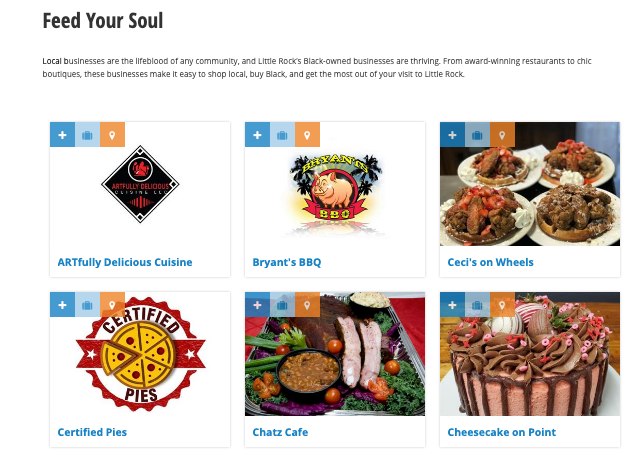
Certified Pies is one of Arkansas’ Black businesses that emerged from the pandemic. These entrepreneurs decided to reenter a society slammed by COVID by opening up a form of commerce that adds soul to dough, mozzarella cheese, and tomato sauce.
They bill themselves as the state’s first Black-owned pizzeria. My wife and I began seeing ads on Facebook toward the end of spring. After learning they were Black-owned, we called in and placed an order for their meatiest pizzas and some wings. Certified Pies does not have a permanent location yet; instead, they operate on Thursdays, Fridays, and Saturdays out of a kitchen space they rent on Markham Street. I threw on some grey sweatpants and a leather jacket to go pick up our order and found a long line of cars waiting in the back alley where the kitchen’s entrance is located. All the customers were Black; all the employees were Black. They promptly brought out my order and in 20 minutes my family and I reentered the city’s culinary scene by chomping down on some of the best pizza we’ve ever had in the South.
Little Rock’s municipal website proudly displays them on their Black-owned restaurant page titled “Feed Your Soul” in honor of the pizzeria’s meteoric success. The city’s mayor, Frank Scott, makes it his business to promote these victories. Elected in 2018 as the city’s first Black executive, Scott promised, in the Before Times free of plague, bold moves to support Black businesses. In his platform, he committed to creating a diverse business purchasing plan that “sets meaningful goals for diverse business participants and real enforcement of those goals.” He pledged to partner with organizations such as minority chambers of commerce to promote the development of Black business, and to create centers for job training and placement in the poor, Black geographic strongholds that is east of Interstate 30 and south of Interstate 630. To support these efforts, he hired a Chief Equity Officer to oversee these projects.
Reentry is an infantile concept.
COVID did not cave his ambitions. “We will lead by example by increasing our minority- and women-owned business vendor span, by working to provide access to educational opportunities for local small businesses to receive the technical systems that they need to be prepared to access a bank or a banker and then, again, to focus solely on the skills gap and innovation,” he said in a July 2020 interview with Arkansas Money and Politics. “Our goal always is to connect the city with the economy irrespective of a minority or not, because what’s good for south of 630 and east of 30 is good for north of 630.” A former banker himself, Scott understands the challenges Black entrepreneurs have with accessing financing. “There is an array of Black businesses from what one would call the underbanked to the banked. And so, the goal in any city is to ensure that you have an equitable economy…when we have an equitable economy, we focus on the needed services to help bridge the skills gaps and the technical assistance to help those that are underbanked to become bankable.” Scott did not ask to become a mayor during a pandemic. Yet he is determined to see through his audacious agenda, seizing on the zeitgeist of racial injustice and taking advantage of the Black entrepreneurial spurt that federal funds have facilitated.
On March 25th, 2021, Scott gave a lavishly produced State of the City address that live-streamed on YouTube. He used the George Floyd and Jacob Blake protests of the previous summer to make the case as to why economic justice in Little Rock matters. “Our city remains divided, physically by manufactured boundaries like the I-630 and economically by systemic disparities,” he said. “This has resulted in a city split between north and south. I know the numerous gifts of those living south of 630 and my neighborhood in Southwest Little Rock. But those hardworking residents too often lack the resources to let their gifts shine.” He then proposed a political transformation of how the city’s ward politics delegates power to its citizens. “After last year’s Census efforts, we have an opportunity to redraw our wards to reflect the united city we strive to be. Instead of homogenous wards with arbitrary boundaries like I-630,” he spoke, “our proposed wards will reflect the overall makeup of our city. I’m asking the city board to ensure our wards look like microcosms of our diverse city.” Scott, in those sections of his addressed, linked economic justice for Black commerce to overhauling how the city’s structure delegates power.
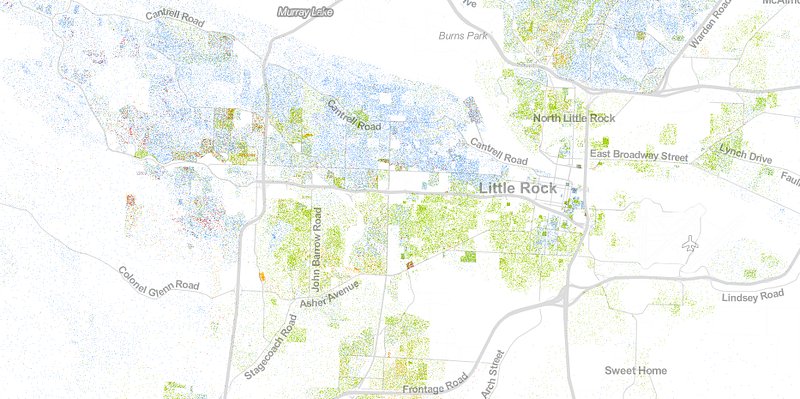
Little Rock has seven wards. Wards 3, 4, and 5 are geographically positioned above I-630 and west of I-430; they are whiter and wealthier than any other political territory in the city. Ward 1 is split between the Black, poor East End community east of I-30 and the white River Market and South of Main Street neighborhoods. Ward 6 has a similar split between the Black communities south of I-630 such as John Barrow (this is where Chicken Wangz is located) and the newly developed, manicured suburbs of West Little Rock. Only Wards 2 and 7 are exclusively south of I-630 and are nearly all Black. The consequence of the current state of political districting means that white people—and by extension, white supremacy—control the ward directors of the city, whom Scott needs to pass his ambitious reforms.
The vultures noticed and took flight.
They worked to enforce their control of the circle when Scott tries to do things such as getting a one-cent tax increase to fund his platform initiatives. Vice Mayor Lance Hines of Ward 5, for example, stated to KATV in May 2021 that he could not support Scott’s tax increase because it only supports the Black people south of I-630 and east of I-30. “This is set up as an adverse sale tax that doesn’t include the whole city. For someone who talks about unity this is the most disunifying effort I’ve seen.” Hines told reporters. To further dig into the conservative tropes of a Black leader disunifying the polity, he also claimed that Scott sought to defund the police.
Black commerce successes like Certified Pies are an example of how we break the vulture’s circle. White supremacy would have you believe that Black people would waste any redistributed monies given to them. The data the pandemic produced, however, showed that we would form our own institutions once we got cash that put us above subsistence living. Scott’s proposals would continue to break that circle by institutionalizing that support. A free market cannot do this; government support is necessary. And so Malcolm X’s vultures took wing and are working as hard as possible to prevent a reentry where Black commerce finally gets the 40 acres they need to thrive and survive future downturns.
By Way of Wynne
Reentry is an infantile concept. In our current age, it is rooted in the childish belief that all peoples have access to the same opportunties. White people use the term to assure themselves they will come back to a society where its structurally racist systems are intact. Black people, however, cannot reenter a space they never were allowed access. The concept reeks of an ontological immaturity that can only come from believing we all have equal access to the gifts of the American Revolution and the Civil War.
Geometry teaches humanity that you cannot leave or reenter a circle. By its nature, it traps whatever is inside around its 360 degrees. Vultures understand this mathematical logic, which is why they spiral their prey. Brother Malcolm knew this was the train of thought that white supremacy had concerning Black personhood. Their tools are a compass wrapped around my folk. Slavery, sharecropping, convict leasing, redlining—it creates a territory where white supremacy can swoop down and ravish my people. The pen is the answer white supremacy has regarding the critical question of the West—what to do with our Black people?
Black personhood asks a better question. How do we live and love in the West, a civilization that did not have our living and loving in mind when white people created it through the triangle trade and slavery? Our ancestors answered by always driving us to get the space that our former enslavers promised us. Nearly 260 years after emancipation, we still seek our promised 40 acres and a mule that General William Sherman felt would settle the debt of the bondman’s lash. The acres are our homes, safe spaces we can raise our families free from the gratuitous violence that claimed the lives of Abner Louima, Patrick Dorismond, Sean Bell, Trayvon Martin, Michael Brown, Korryn Gaines, Alton Sterling, Walter Scott, Terrence Crutcher, Tamir Rice, Freddie Gray, Breonna Taylor, Botham Jean, George Floyd, Jacob Blake, Bradley Blackshire, Eugene Ellison, Daunte Wright, and Charles Smith Jr.
Breaking the vulture’s circle is linked to the other part of what we were promised—the mule. Black capitalism is not work. Verzuz, despite the service it gave in linking Black culture internationally in a pandemic where we could not hold each other, is not work. It benefits the white capitalists who see a chance to keep it in the circle and take as much mana and money from it until only bones remain. Black commerce is the work. The work is the foundation of the small businesses and restaurants that connect my people to each other. It gives us the independence needed to stand on our own feet and, like the Scotch bonnet pepper, to connect the diaspora with the formerly enslaved and the formerly colonized in a mass of Blackness, the color of the universe.
Death is a spiritual process in which the deceased communicate to the living. To this day, I mourn Chicken Wangz and A Taste of Jamacia. I called Chicken Wangz’s number several times the other day in the hopes of a resurrection. I needed fried chicken and, back on my social isolation tip to guard my son against the Delta variant, was ground down too much to cook it myself. I called three times and a message about the number being out of service told me to continue my mourning. I hope the cranky owner still shares an earthly space with me. I pray he is an elder who is simply biding his time. If he is not, he will somehow come back. Ancestorhood taught me that lesson.
I have a video saved on my iPhone of the last night I spent at a Taste of Jamacia, of the DJ playing lover’s rock while a couple danced. I watch it when I want to feel the burn of jerk chicken. A few weeks ago, my wife felt my mourning and researched to see if there were any other Jamaican spots where I could get my fix. She found a place called Yea Mon and sent me the address in West Little Rock. I reentered my truck, the closest approximation I get to a hermetic seal when I travel these pandemic streets. 12 minutes later, I entered a restaurant with a Black man wearing a Yankees fitted.
Vulturisitc capitalism is the story of space white supremacy seeks to write.
I had to ask if he was from New York. He confirmed that he was, born and raised in Flatbush. We began discussing the intricacies of Jamaican cooking. “Young people too impatient,” he told as he fixed my double order of jerk chicken with rice and peas. “You gotta stay by the food and watch it. You gotta watch it and from the look of it you know it is ready. You don’t need a recipe, just an instinct.” More ancestorhood here. The Maroons would let him know when the food was good.
“How did a NY dude make this way down here to Rock Town?” I asked him after I shared my story of my reverse Great Migration. He pointed to a woman who was shifting in and out from the back.
“That’s my wife. She somehow ended up in NYC by way of Wynne, AR. We met, fell in love, and when it came time to retire, she told me that Arkansas would be a great place to settle. I researched the tax policy and the politics of the city and agreed with her. We opened up during the pandemic and we are doing pretty fine now.”
This was it—living and loving in the West. A circle broken.
This is the fourth of four essays I have written in response to the Medium Writers Challenge. These stories are meant to be read in a particular order to help the themes between them resonate fully. Please use the links below to continue reading the series!
https://readmedium.com/the-scar-of-the-west-on-blackness-and-space-personal-and-cosmic-5a732e8e6155
https://readmedium.com/how-do-black-people-memorialize-the-afterlives-of-slavery-3619e86a216


