Medium Writers Challenge | Death
How Do Black People Memorialize the Afterlives of Slavery?
In life and death, segregation is the political will of the West. This is how America memorializes white death and how Black personhood developed our own way.
“…if museums and memorials materialize a kind of reparation (repair) and enact their own pedagogies as they position visitors to have a particular experience or set of experiences about an event that is seen to be past, how does one memorialize chattel slavery and its afterlives, which are unfolding still? How do we memorialize an event that is still ongoing?”
— Christina Sharpe, “In the Wake: On Blackness and Being.”
I am the only Northerner in this house. Black folk with country accents sit in the dining and living rooms while eating on catered fried chicken and green beans served on paper plates. Hierarchy determined who got seats. The older folks got the chairs and couches while the children retreated to bedrooms to eat. After Granny made sure they didn’t leave chicken bones and juice from the beans on the rugs and blankets, they then went to play in the front yard. We were repasting and wore different shades of blue in remembrance of her husband, who passed after resurgent cancer. Paw-Paw’s family came from all over the nation to bury him. I was the only one, though, reared above the Mason-Dixon, a wintry city boy. I thus was detached from many of the stories his extended family shared about how Paw-Paw tilled the soil.
When he returned from being drafted into the Vietnam War, Paw-Paw took up his family’s trade of farming. Many of the older members at the repast reminisced about Paw-Paw working a tractor in the Arkansan heat during his youth. Most of them had left the state due to the hope of political freedom and to escape the debt peonage of sharecropping. Paw-Paw stayed. Over time and against all historical odds, he and Granny came to own some acres out in Lake View, his tiny hometown a few miles away from Helena. It is a hamlet of nearly 800 Black folks built on the banks of Old Town Lake, a man-man structure created when the state built levees to protect the county from the anger of the Mississippi River. The water there is primordial, teeming with crappie and catfish, always reminiscent of a time when it was connected to a larger flow. The soil, as all dirt in the Arkansas Delta, is fertile. Paw-Paw’s land represents the basis of small, modest wealth for my wife’s side of the family. He got his metaphorical 40 acres. He also loved the crappie he plucked from Old Town Lake. He would fry his catch and eat it with white bread and Louisiana hot sauce.
Helena’s leaders have made tourism of their condensing of space and time.
Lake View is the halfway point between Helena and Elaine, a town where one of the largest massacres of Black folk in the nation took place. In 1919, Black sharecroppers and white allies came together in a church to try to organize against the landowning class for fair wages and accounting practices. Under the eyes of God, they attempted to secure a fairer financial future. A group of white men caught word of it and fired into the church. The Black folks inside defended themselves and fired back, killing one of their assailants. Consequently, the state government sent 500 troops to round up the Black men in the church. These troops instead killed Black men, women, and children indiscriminately. “Historians conservatively estimate the dead at 200, while some contemporary counts reach over 800,” Olivia Paschal for Facing History wrote about the killings. Paw-Paw was born in 1942, less than a generation since the slaughter. His family, who sharecropped land in Lake View, made sure he know what had happened in Elaine.
It took, however, over a century for Arkansas to memorialize that massacre beyond making it a vague standard in their social studies curriculum. Era4.4.AH.9–12.1 of the Arkansas History Grades 9–12 Social Studies Curriculum Framework states that teachers and students must “investigate social, economic, and political reforms of the Progressive Era in Arkansas from multiple perspectives using a variety of primary and secondary sources.” The document makes no reference to the tragedy of Elaine, despite interracial organizing being a hallmark during said era. The massacre was something I learned about when I was taking graduate coursework to earn my provisional teacher certification. I knew I had to teach about it. Yet when I taught the lesson, all my students already knew. It was passed down from their parents, who heard it from their parents, who heard it from their parents who were young when white men from three neighboring states descended into Phillips County like locusts and reaped hundreds of Black lives. Black personhood begets that knowledge. There is only one way to be Black, and that is to live within proximity of the gratuitous violence white supremacy inflicts.
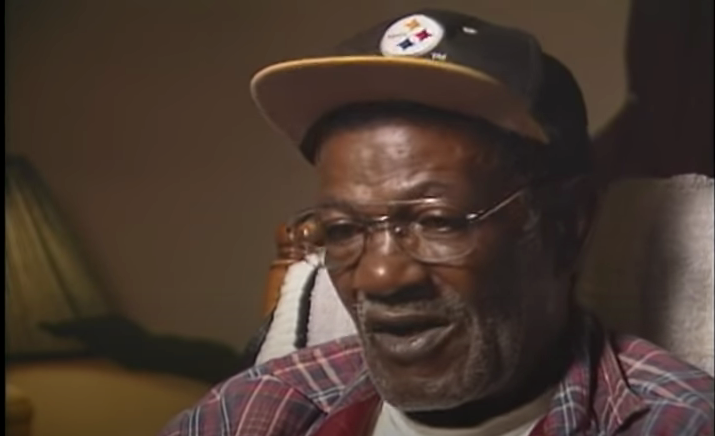
Paw-Paw was born 23 years after the Elaine Massacre, when it would still be in the living memory of Phillips County’s Black folk. Despite that, he came to own the land he farmed. The stories his family told at the repast about his tilling of the soil are his legacy. His eventual ownership of his farm defied white supremacy at a time where it still used violence to prevent such outcomes.
Death in the rural South means holding on to the spirits of white men while denying the ghosts of Black personhood that stalk the soybean fields, which used to be thickets of canebrake and acres of cotton during the antebellum age. Properly memorializing Paw-Paw, and Elaine, and all the Black lives that worked in that town and passed on, means grappling with a question scholar Christian Sharpe posed in her book In the Wake: On Blackness and Being. “In the midst of so much death and the fact of Black life as proximate to death, how do we attend to the physical, social, and figurative death and also to the largeness that is Black life, Black life insisted from death?” she pondered. How do we honor Black life in a way that also acknowledges our closeness to the Reaper, ordained by white supremacy?
We must make meaning out of the space white people force us to share with violence. Dying is a physical process that produces a corpse. Death, however, gives us more. It gives us memories. Our relationship with the dead becomes a memorial, their passing unchanging but our emotions shifting as we constantly evaluate what the deceased did while they were here. White death often gives us physical memorials such as museums and battlefields, statues and holidays. Given that segregation is the political will of the West, Black personhood memorializes death differently in our sense of ancestorhood. Answering Sharpe’s inquiry means considering the unique ways white people and Black folk consider space and time.
I try to answer her question by driving down U.S. Highway 61. Known as the “blues highway,” the road connects Helena to Memphis by a northern drive and the major Mississippi Delta towns such as Clarksdale and Cleveland in its southern path. In my remembrance of Paw-Paw and Elaine, it is the path I imagined white men took to pour into Philips County in 1919. If you are driving from Memphis, you would drive south for about an hour, passing through the casinos of Tunica and fields of produce that fall off the edge into the horizon. The road is flat. Your car will detect no ancient tectonic rages in the form of hills as you drive. Eventually, you will make a right turn at Route 49, which takes you past Lulu and the Isle of Capri casino. You drive over a bridge that becomes hazardous in freezing weather and enter Helena in that manner, where you are greeted with a memorial of who the town considers the region’s most honored dead.
There is only one way to be Black, and that is to live within proximity of the gratuitous violence white supremacy inflicts.
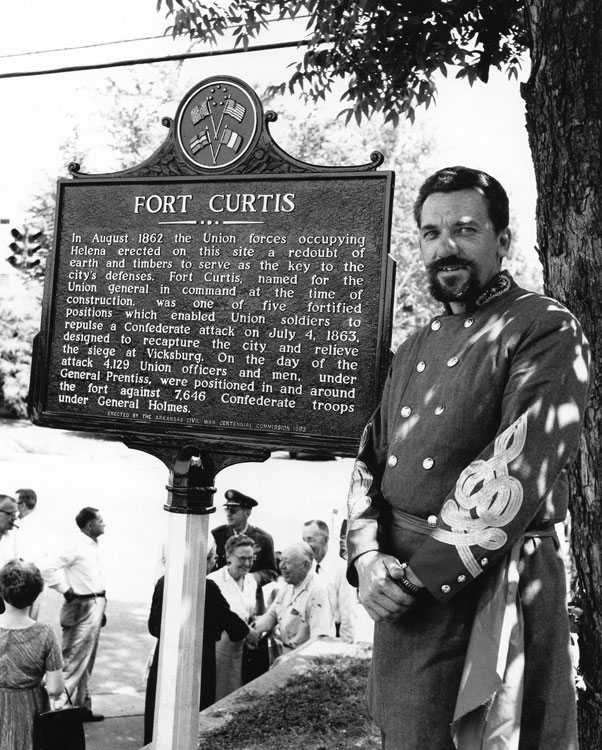
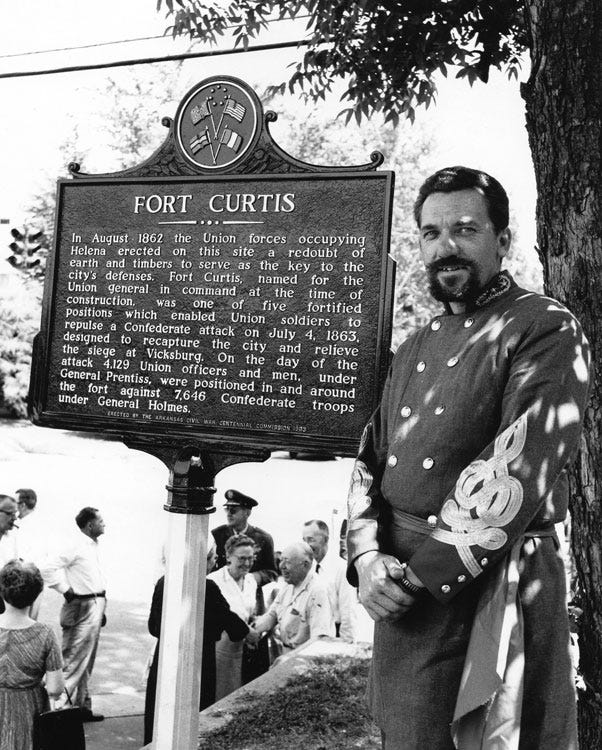
Helena’s leaders have made tourism of their condensing of space and time. If you make a right as you get off the bridge — the Arkansas Welcome Center will be at your 12 o’clock — you will make a right on what eventually becomes Biscoe Street. Drive slow and look to your right at the newly paved sidewalk. Soon, you will come across Freedom Park, a part of the Heritage Trail that is Helena’s contribution to Civil War memory. Further down Biscoe Street is Estevan Hall, an antebellum structure used by Union forces as a field hospital during the Battle of Helena. The Moore-Hornor Hall lies further down Biscoe Street alongside a newly renovated senior home, the town’s library, a shuttered housing project, and the charter school I used to teach at and where I met my wife. Union forces also used it as a hospital. At this time, you should have also begun noticing signs that direct you to the town’s Confederate cemetery. Your eyes also should have caught an artificial, hilly structure held up by wood beams, with cannons atop. It is a replica of Fort Curtis, the fortification the Union built to hold the town for the duration of the war.
The batteries are harder to find. Helena is built on Crowley’s Ridge, a rare point of elevation in the Arkansan Delta. The hills now provide idyllic views of the town and the Mississippi River. During the Civil War, however, the elevation allowed for the Union to set up cannons. The cannons created a chokepoint on the Mississippi River, part of their overall military strategy of first starving the South and then killing enough of their white men to break their traitorous spirit. Most of the battery sites are now on private property, with street markers to commentate their blasting of Confederate ships and men so that the Union would remain whole.
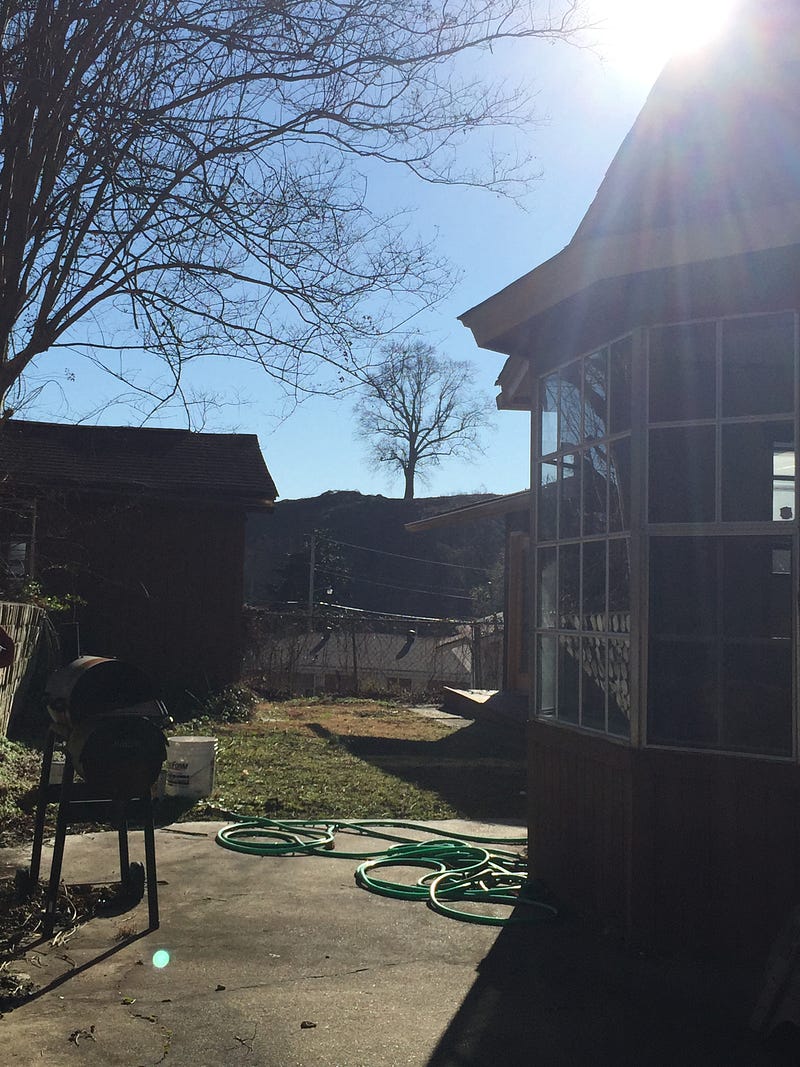
Granny’s house is only a few minutes' walk from Battery B, on Liberty Street. At the wake, I realized that the memorials Helena built do not recognize the many Black slaves who lived in the town. Helena’s leadership made the town a Civil War memorial for profits and tourism. But the entire American system — and by that, I mean white supremacy, and capitalism is a product of that hegemony — only accomplishes this by deemphasizing Black life and death. If Black life was memorialized, then the town would be forced to consider the plight of my ancestors. The town — the space — that white people North and South considered strategically important was also a large, open-air, forced labor camp. White people give themselves memorials. Black personhood passes down our stories, from elder to child.
Of the many Civil War sites Helena’s website advertises, only one is dedicated to Black culture. Local businessman Abraham Miller and his wife Eliza established Magnolia Cemetery, a Black cemetery and burial site for some of the soldiers who fought in the Civil War. In the penumbra of battle strategies and memorials that white people flock toward so they can forget the liberational bent of the Civil War, the only way Helena knows how to recognize the Blackness of the conflict is to look toward my dead ancestors. As Sharpe noticed, Black life must be close to Black death for it to become important to white people.
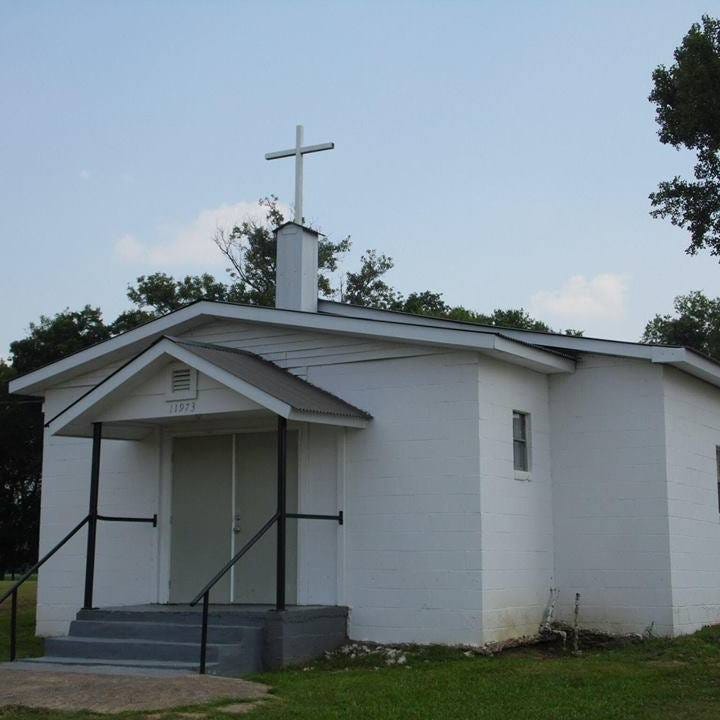
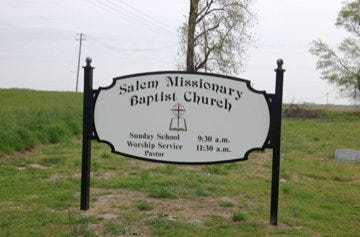
I do not know if any of my wife’s descendants were interred at Magnolia. Her family, however, has a dedicated burial ground. Salem Missionary Baptist Church was built on the outskirts of Lake View, on unincorporated land alongside Route 44. Paw-Paw is buried there alongside my wife’s ancestors. We held the funeral in the gymnasium of what used to be Lake View High School, which the town maintains for community events. The school, however, educates no children any longer. Per Arkansas’ COVID regulations, all the seats were six feet apart. Nearly all mourners wore masks. After the service, we drove out to Salem. The graveyard’s grass was damp with drizzle. Two soldiers were on hand to give Paw Paw his military honors. Once the coffin was bought to his burial plot and Granny was seated, one of the soldiers played “Taps.” They approached the coffin and removed the flag draped over it. With practiced ceremony, the soldiers folded it tight and presented it to Granny. “We thank him for his service,” one said crying as Granny, veiled, accepted the gift from her nation.
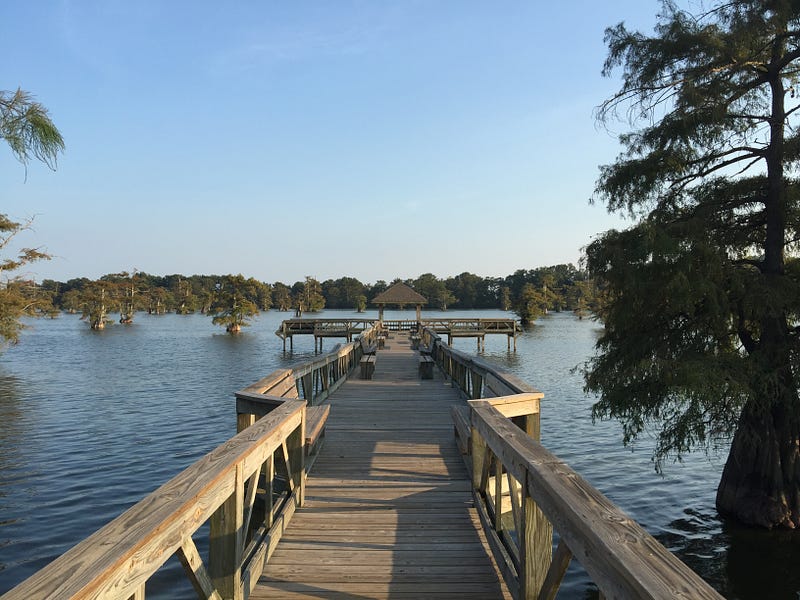
After Paw-Paw was lowered into the ground to rest, I walked amongst the other tombstones. The markers on some of the faded graves showed that his clan had been buried on these grounds since the late 19th Century. It was at this church that I reentered Christianity — not for evangelical reasons, but because my wife made clear she would not date men who were not churched and I felt God wanted us to be together forever. A mile down the road was a pier that jutted into Old Town Lake. Nearly a decade ago, after a long service at Salem, I presented my wife with her engagement ring there and she accepted. I hope her nearby ancestors approved. Our engagement reveals the only way to be Black in America — to have white supremacy gloss over this history, the violent history Paw-Paw defined by owning the soil he tilled; to continue to worship at the house of his ancestors, to birth my wife’s mother who continues to live in Helena, so that a Northerner could one day travel, fall in love, and continue his legacy by giving him a great-grandson.
Paw-Paw passed on the morning of my son’s first birthday. A few weeks before he transitioned into history, the family traveled to visit him at the Veteran’s Affairs hospital in Memphis. Most of them drove north on U.S. Highway 61 to get there. Because of COVID precautions, my son and I were not able to go in to see him one last time. We sat in my truck as my wife went in with her momma, where the doctors told them all we could do now was ease his pain. When presented with the choice of either staying in hospice care or going home, he was adamant about passing on his property. We were all too distressed for me to process the importance of his request at the time. But with a gut filled with cold chicken, and in conversation with those who knew him in the vigor of his youth, I realized now the transgression he wanted to mark with his passing. He defied the afterlives of slavery and, in rebellion to the violence in Elaine that was in his living memory, got him some land that stays in the family. White people want to forget this badly. His death and burial were the memorials — the question — that our sense of ancestorhood seeks to answer. How do Black people live and love in the West, a civilization that did not have our living and loving in mind when white people created it through the triangle trade and slavery?
He was descended from traitor’s soil. He is now buried on his own land.
This is the third of four essays I have written in response to the Medium Writers Challenge. These stories are meant to be read in a particular order to help the themes between them resonate fully. Please use the links below to continue reading the series!
https://readmedium.com/the-scar-of-the-west-on-blackness-and-space-personal-and-cosmic-5a732e8e6155