Medium Writers Challenge | Space
The Scar of the West: On Blackness and Space, Personal and Cosmic
Black personhood is the parchment of the universe in which white people chart their stars. A tale of Blackness, fatherhood, and surviving a pandemic year.
“The scars of these plantations can be seen from space.”
— Michael Twitty on the second episode of Netflix’s “High on the Hog,” commenting on the slave construction of the rice paddy fields in the Lowcountry of South Carolina
At first, we tried to deny that Wuhan had shifted the universe. I have not traveled deeply, and thus get a lot of my understanding of the space humans inhabit from news sources and social media. Toward the beginning of January 2020, both began ringing about a new pathogen infecting and killing Chinese by the score. Soon it was doing the same to other nationalities, and then Americans. I tried to be unconcerned by the virus overtaking the cosmos. I was focused on my own planet, y’all. My son was going to pop out of the womb in four months. I was busy shrinking my concerns to make sure he popped out into a world we created that was filled with love and financial stability. Forget the universe. I had to terraform my planet for new life. I settled into a new, remote job that paid bank. My wife — the Doctor — and I set up his nursery. We tried to make ourselves feel that the space between Wuhan and Little Rock could not be breached by a virus.
On March 11th, Arkansas detected its first case of COVID in the town of Pine Bluff. The town, like many towns in the Delta region, is majority Black. One of the state’s few HBCUs is in that town. The news hit me like a meteor. I was angry at the invasion of this disease so close to a citadel of Black personhood. The universe was talking to us, I felt, and it wasn’t talking nice. None would be spared.
Old Glory has always had stars on it to communicate the cosmic aspirations of white supremacy.
You see, I had spent the last 35 years of my life learning how to navigate this universe white supremacy has built over 400 years. I had done so with educational and material success. I was the first man in my family to graduate college; I was the only person in my family to complete graduate school. I was a homeowner. I have a LinkedIn with a ton of contacts all over the educational world. I did good from a kid from New York City’s gutter, who did a bid in DUMBO’s Farragut Projects and made the transition to a Southern lifestyle in Arkansas. Now I was adding a young’n to the mix, another sign of my stability and the next quest in my journey to populate my planet.
But March changed that. Within a week, both the World Health Organization and the Trump Administration declared COVID to be both a pandemic and national emergency. The Doctor predicted things would get shut down. We hit up Samantha’s Tap Room downtown for some roasted quail and steaks, the final time we would eat out for 14 months. By that point, It was hard to focus as we both mentally adopted a virologist’s vision. Every person was a vector, every yawn or sneeze in the restaurant a spreader event that threatened the next generation in my wife’s stomach who stayed bear-hugging her bladder.
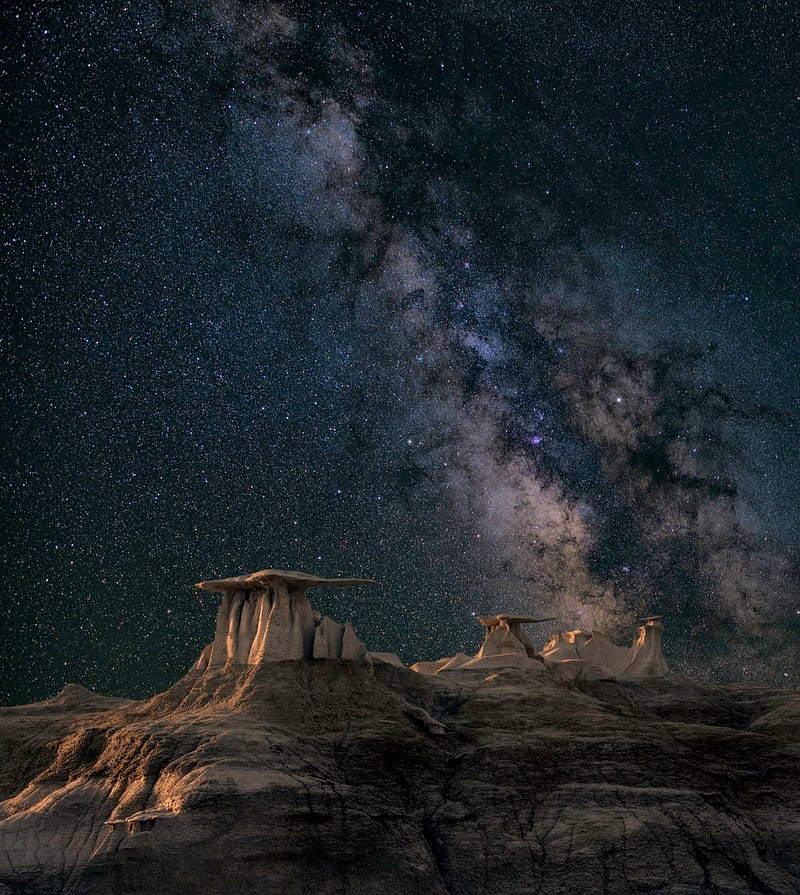
My soul is only going to occupy this space for like 80, 90 years tops. My success in being happy, and passing that happiness down to my son, means understanding that Blackness is on a cosmic scale. I say this to decenter whiteness. Blackness is not the planet that revolves around the sun of whiteness — it’s the other way round. My time in pandemic living would confirm that view. For white people, Blackness is the wormhole toward their redemption and the black hole for all their fears. They look up to the sky and respond to us. We inform their political and social universes.
To them, there is only one way to be Black. It is the theme writ upon the cosmos. Look up at night. Space is black. White people call my people Black. Our skin color, our political identity, is the parchment of the universe. Our diaspora is linked solar systems, our homes, planets. All white supremacy can do is try to throw up stars. Some want to join us and shine. Others want to burn us. We cannot have space to ourselves, no matter how hard we try. Our only purpose for them is to write their story upon us.
Me? I’m just trying to get my infant upon his feet. Because for me, the universe revolves around the son. But the times would not let me ride the pandemic out in a domestic fetal position. Instead, I spent the year confronting the pandemic and the stories white people tell about my people.
Because of my baby, I did it mostly sleeplessly.
After that last delicious and anxious date, the Doctor and I shut down nearly all our travels into public spaces. No more restaurants. No more museum trips. We stopped our drives down to the country to visit her parents and deaded hitting up Movie Tavern for chipotle hot wings and giant steins of whatever seasonal Samuel Adams they had on tap. We instead spent our time giving in fully to our nesting instincts, and examining our coughs and body aches for any sign of disease.
But I suited up with astronaut precision whenever I had to run to Kroger or the liquor store. We needed food and I refused to endure a pandemic sober (the Doctor had no choice in the beginning). It was colder at the time, so I got to put on my sweaters and leather jackets. The jeans were Levi and dark, the boots, classic Timberland constructs. I kept hand sanitizer in the jacket’s inner pockets. The Doctor had gotten hold of some cloth masks at the time that was UNC powder blue. It was too cold for such brightness. It clashed with my dark fashion palate. I instead ordered some black masks that complemented my drip. My body is my most personal space and I like to goon it up with streetwear. You must understand — DipSet was my favorite rap group growing up, and I learned from Cam’ron and Juelz Santana that your outward appearance had to match your inner confidence. It also was my way of asserting that I would not compromise my Blackness in the white suburb I now was bringing my son into. This ‘hood is now my space, folks.
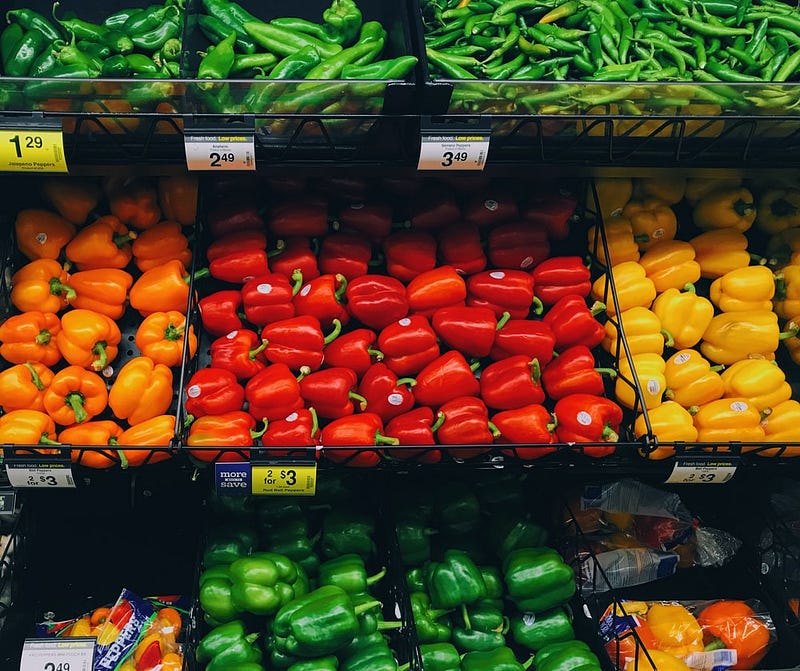
Despite my attention to my outfits, the sparse amount of Black people I ran into at Kroger knew I was going through it because of my obtusely-angled hairline. Barbershops were a no-no. My fellow Black folk sometimes dressed as nice as I did, fancy with no place to go. But there were also mothers caught up in the family flow with t-shirts and leggings picking up frozen meals for their school-age, homebound children; elderly Black folk in the supermarket’s scooters who kept far away from us but wanted to be closer. At this time, there were no Black kids in public; given that I’ve spent my entire career up to the pandemic working in public schools, I was perturbed. All of our hair was out of place and out of line. It would be some time before we felt safe attending to that aspect of our bodies.
There were white people, too, and the supermarket was the only time I would see them in public until it came time to throw Donald Trump out of office in the fall. I have learned to watch them carefully. It is stargazing, in a sense — me trying to read the messages of constellations.
I’ve never learned how to tell how white people are emotionally feeling by the state of their hair, though.
Stars have an imperial nature. After the Big Bang created everything, celestial clouds of dust and gases began swirling around each other. Over time, gravitational forces bound these materials together. Movement creates heat, and over cosmic ages this motion becomes the engine that makes stars hot and shiny. They thus must obtain their composition by absorbing and condensing materials from the black of the universe.
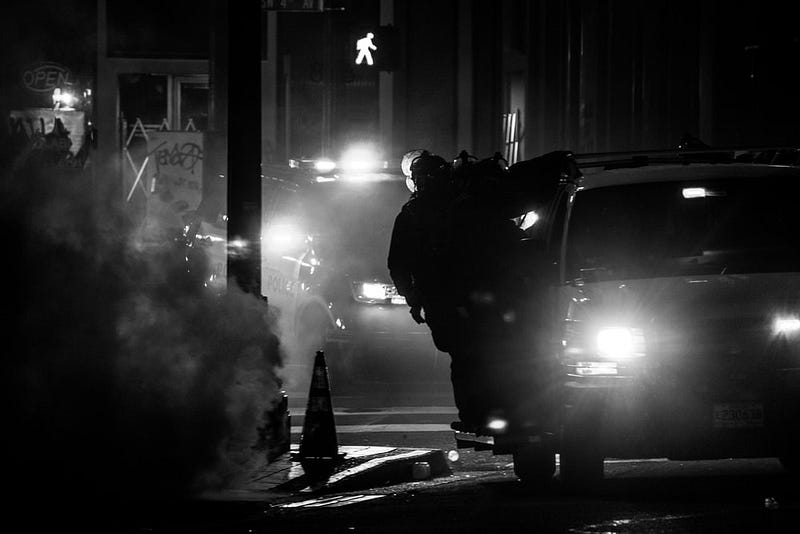
My son was born in mid-May over the course of 14 hours and on May 25th, Derek Chauvin asphyxiated George Floyd for about nine minutes. The nation — and by that, I mean white people mainly — went nova with sustained protest. I could only watch as they took to the streets, masked up, and refused to leave.
I always felt it ironic that Portland, one of the whitest cities in the nation, became a focal center for both the protests and the Trump Administration’s draconian response. The white people there spent their summers in the streets getting beat up by white police and right-wing white militias. Just like stars, they pulled materials from Blackness for their own purposes. Again, we are the wormholes toward their redemption and the black hole for all their anxieties.
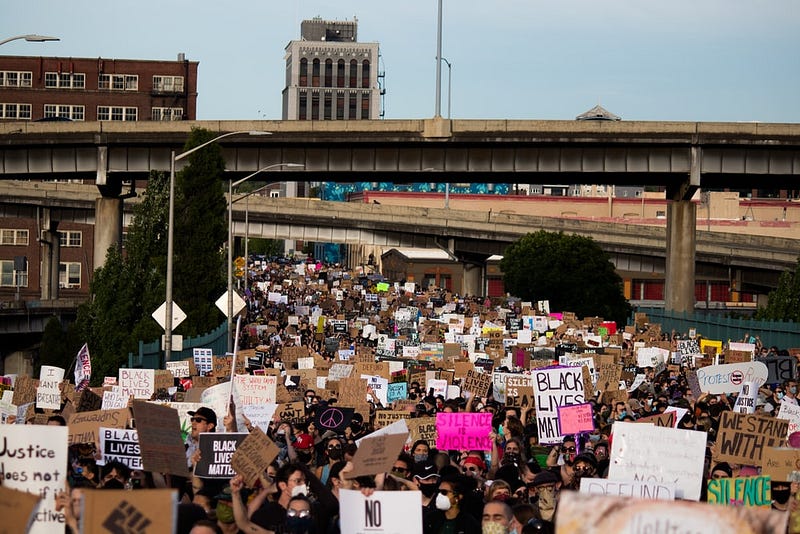
Their behavior manifested itself silently in my community. Little Rock and its suburbs pride themselves as being the liberal center of a state gone rabid red. Throughout that summer, I saw so many white people donning Black Lives Matter gear. It was absorption of my people’s slogans and colors. Black Lives Matter shirts and masks; Black Lives Matter decals on their Yukon XLs and Highlanders. Yet none of them would ever make eye contact with me.
During that summer, only one white person said something to me. I was in the frozen food aisle, getting some cheesy garlic bread to compliment a spaghetti dinner I was going to make later that week when a high school-aged white girl saw my t-shirt with a Black Power fist. “I like your shirt!” she exclaimed behind her mask as she bounced on with her business. Again, there was no eye contact.
But the Black people in the supermarket continued to look me in my eyes. As tradition demands, the older ones nodded downward toward me. The youngbloods nodded upward. Black folk have always communicated the state of our space by our hair, whether they be permed, natural, Afro’ed, or Caesar-cut. We all had entered a singularity where our hirsute tops offended Blackness and geometry. We communicated so through our eye contact and the upward glances at the sad state of our hair. If possible, we would have followed up that eye contact with daps and affirmations to keep our heads up.
Instead, I went home after every food shopping session to hold my son. He couldn’t move on his own yet, and I cherished the lack of mobility. I got to hold him and know that, at least for some time, he couldn’t traverse the universe and potentially be another George Floyd. His space was simply between my arms and the Doctor’s bosom.
This is the story the Doctor and I have rehearsed telling my son on the importance of stargazing and what it means for his space in this nation once he gets old enough to understand words, sentences, history, and cosmology:
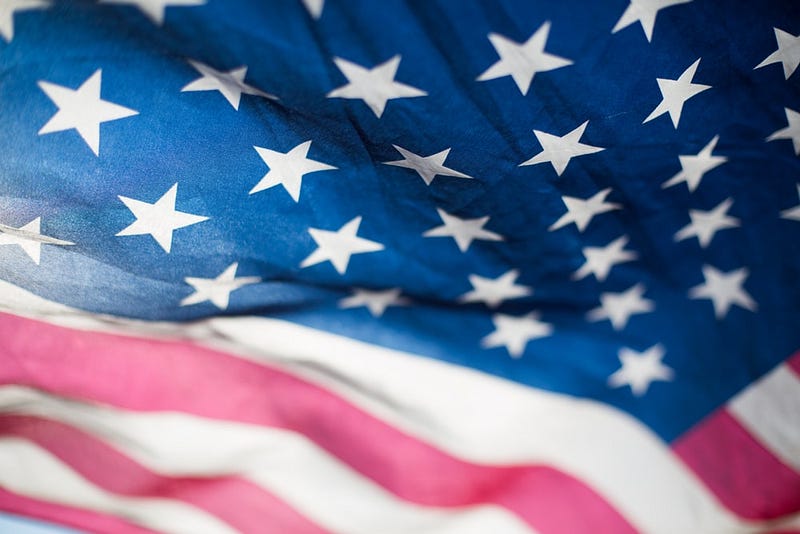
Old Glory has always had stars on it to communicate the cosmic aspirations of white supremacy. Each star represents a state, or white people’s aspiration to project their views of freedom and democratic government onto the celestial bodies. Space is black. They wanted to write the future of their nation on Blackness. When Francis Scott Key wrote the Star-Spangled Banner, he imagined this land protected by the intelligent design that put every star in its rightful place. “Blest with vict’ry and peace may the heav’n rescued land,” he wrote, placing the nation where a slave society existed within the purview of the divine. As the United States expanded westward, white men displaced and killed the indigenous populations they encountered. In their place sprung plantations and the labor of the enslaved. Throughout the 19th Century, white men would add a star to their flag, hoisting up a new state and how they made it into the cosmos — a heaven rescued land built in bondage!
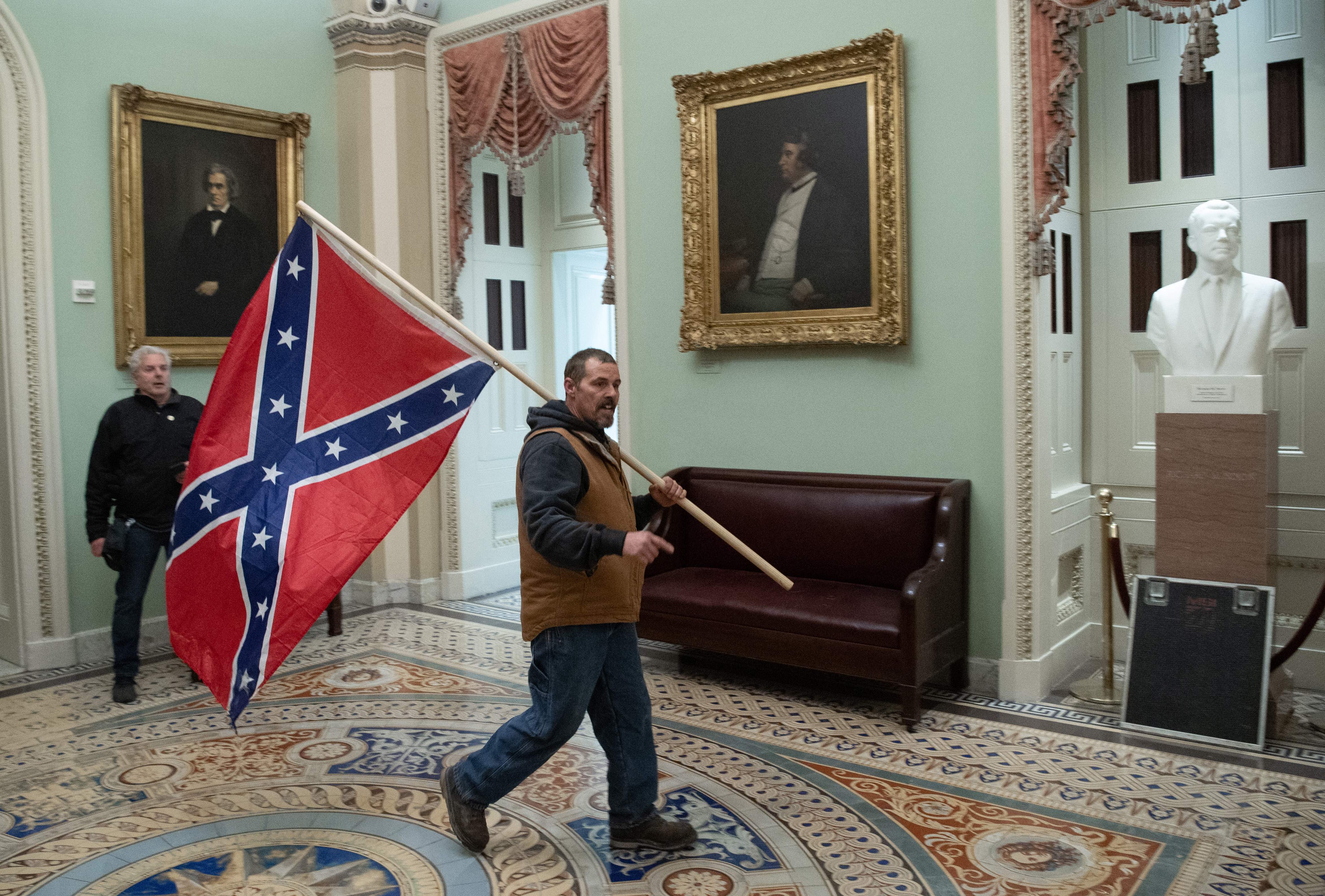
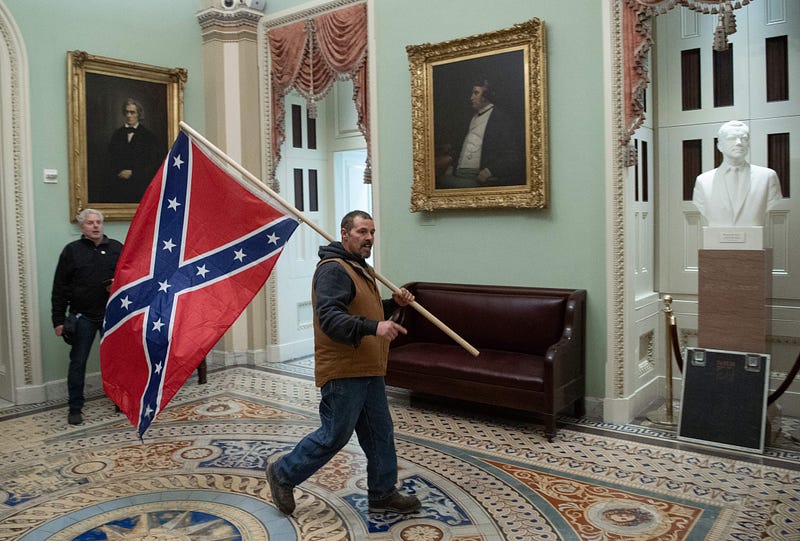
Those enslavers attached themselves to the nation’s cosmic symbology so much that they took it with them and fermented a rebellion that made the context of American expansion the subject of American existence. They started a war to preserve slavery so they could continue to place their stars in the universe, but with unmistakable clarity on the method they would use. Slavery now, and slavery forever. Their battle standard also included stars in an X-shaped pattern. That flag is the scar of the West — an astral emblem of slavery.
Stargazing, my son. Watch the stars. Watch the white people around you.
Our nation’s history is why Stacy Abrams’ revenge was necessary. Remember — stars pull materials from the universe so they may shine, and the universe is Black. In one of the former rebellious states, Abrams ran a strong campaign to become the state’s first Black and female governor. Her white opponent, who at the time held the office in charge of managing the state’s elections, purged many voters from the rolls. This man worked in the American tradition of stripping people of their right to vote while Abrams operated in the spirit of her people’s history by having to win through overcoming all odds. He tugged away at our franchise. That pulling away was intended to engine the machine that put him in power.
He won. But Abrams got her comeuppance two years later when her organizational efforts led to Democratic victories in both the presidential and senatorial elections. She ended the epoch of the Age of Trump in where he possessed the White House.
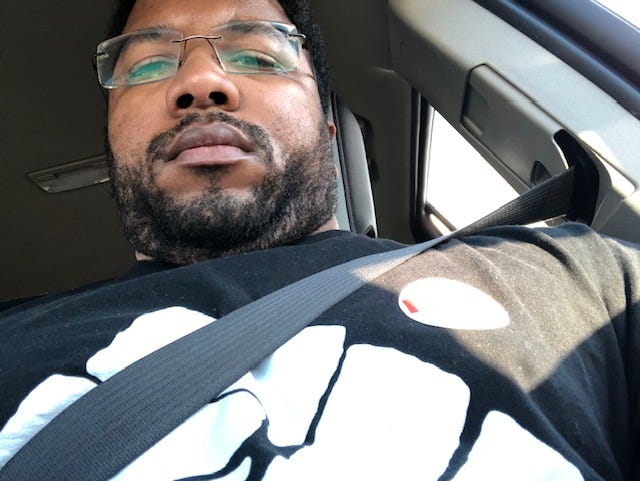
For election season 2020, I suited up again in my astronaut attire to do my part. I donned my Timbs with dark blue Levi jeans, my Black shirt with a Black Power fist, and a matching black disposable mask. I’d only normally leave my planet to go to Kroger. It was hot. The sun and stars were shining brightly that season. I think it was in the high 80s. Arkansas had enacted voter suppression in the form of voter ID laws and other nonsense.
But I am the color of space. All space, including the voting booth, was my cosmic right. Beforehand, the Doctor and I discussed the risk-reward ratio. Would the voting site enforce social distancing? Should I bring my own touchscreen pen so I can use the electronic machine without making surface contact? Would poll watchers consider my Black Power shirt to be electioneering? Were we willing to jump through all the ropes Arkansas established to cast an absentee ballot?
Practicality and ego won out. We moved to a suburb so that these questions wouldn’t inhibit our behavior. I also wanted to be able to tell my son that I ventured out beyond our planet, into a field of finicky stars, disease, and voter suppression to fight for his future — the right to keep your planet small and safe.
The pandemic had made our family feel like extraterrestrials.
We were tired. The Doctor had returned to work six weeks after our son was born because, as a first-year medical intern, her FMLA had not kicked in yet. Work kept me busy and, blessedly, homebound. Our son quickly outgrew swaddling and a few weeks of night flow on the Doctor’s part quickly had us supplementing our dwindling energy tanks with coffee at all times of the day. So we plotted and we all isolated ourselves with the goal of spending Thanksgiving and Christmas together.
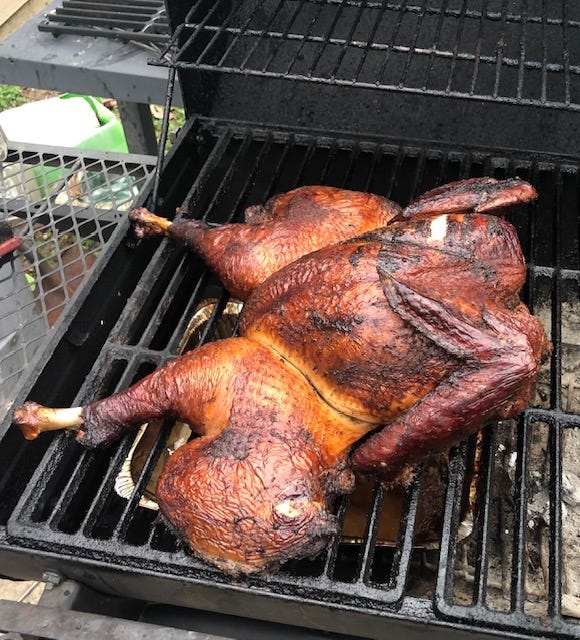
The holidays were filled with reset relationships and soul food. My in-laws experienced the physical joys of being grandparents for the first time; my sisters-in-law, who before were former high school Civics students of mine, played with my son and realized that they were now the aunties of the family. They stayed on our planet for Thanksgiving, where Pops — uneffusive and rural proud — and I smoked both Montecristos and a turkey that he said “besides my roasted turkey, was the best I ever had.” The Doctor and I both wanted our son held a particular way and made sure everyone knew it and did it, our first taste of parental authority. For Christmas, we left our planet to visit my wife’s throneworld—her family’s ancestral seat of Helena, AR. Her parents made their famous seafood dressing with crab and shrimp. We got wine-drunk playing Black Card Revoked on Christmas Eve, told all other family members they could only FaceTime while baby was in the house, and spent the morning opening our gifts for our son and watching him taste-test them all in the customary infant way. Throughout both holidays, the grandparentals roasted me for my unkempt hair and beard. “Just shave it all off,” Pops groused as he rubbed his bald head. I had become the Black hillbilly of the family.
That time reminded me of the other safe spaces out there in the universe, the care in which Black people build their planets. Though it was promised as a reparation, we worked to get our own 40 acres. The weeks ahead would also remind me of the dangers of traveling beyond it, from immediate and existential threats.
2021 began with a cough, fatigue, sickness, and insurrection.
The baby woke up one day fussy, congested, and with a cough that haunted me in every room I carried him. I had taken the first week of the year off work to rest and for that one day, was anguished by his sickness.
The Doctor woke up the next day barely able to move, a painful cough echoing from her bronchial tubes. She immediately got tested and got a positive reading of COVID back within 24 hours.
Upon the news, I immediately slowed my breathing. I wanted to ration air. The Doctor and our son needed as much as possible.
I gave her ibuprofen to ease her aches and used a syringe to give baby the infant’s version. In the times where panic overtook my psyche, I stepped outside into the chilly January air and lamented our immediate condition.
I was comforting baby and on my computer on January 6th when angry white men and women, incensed by their outgoing president, sacked the Capitol. They broke down the doors and called the Black police who tried to stop them niggers. White men wearing Thin Blue Line patches used sticks and flagpoles to beat up police. As they shouted “Stop the Steal,” they sought out Democratic legislators for violence and killing. By the end of the day, I was sweating from further anxiety and fatigue. I communicated the day’s events to my wife, who laid in bed barely able to move. The Doctor hacked and nodded and went back to sleep. I focused on comforting the baby and trying to figure out how to prepare him for life beyond our planet—for a universe that used white supremacy to launch its stars into the final frontier.
Depending on which white person you talk to, the Blackness of the universe is thus either a wormhole to their redemption or the black hole for all their anxieties.
White supremacy cannot leave my people alone because our cosmic endurance vexes them. We are the hue of the universe and despite all of their taking, our station has not shifted. This country has formed star after star and told itself it was the proper thing to do. But Blackness is the parchment of the cosmos, the black paper all stories of history are written upon. We know how they did it, and our spatial endurance reminds them that slavery is the scar we can see from space. Some feel guilty. Others get mad.
Two images from the insurrection stick with me. The first is of Kevin Seerfried walking through the halls of the Capitol with the scar of the West over his shoulder. The second was the noose the rebels built outside the building. Both signs are pentagrams for Black personhood. It was the evidence every conscious Black person needed to confirm the racial animus as the basis of the riot. White people were violently defending why they placed stars on their national symbols. From the ways they launched themselves in space, they could see how their national expansion was consecrated by calloused fingers picking cotton. Their carrying on was not a denial of their history. It was an assertion that how their forefathers built the nation was not just a necessary evil, but a moral good that secured their place in the cosmos. They mourn their scar fiercely.
I never developed symptoms of COVID.
In the months after the insurrection and my family’s recovery, the white folks at Kroger stopped wearing their Black Lives Matter clothing. Black people started wearing more of it. We all finally took care of our hair after Pfizer and Moderna dropped their heat on the American public. As we relaxed a little and began easing up on mask-wearing, I could finally confirm that the eye contact from my people also contained smiles. We resumed casual convos in the produce section. We were enduring and were ready to begin sharing our Black spaces again.
Yet whiteness continues to restrict access to their space. I have spent the last few months writing about how voter suppression laws are coming into force where Republicans control statehouses and the governor's mansions. Their stars cannot abide Blackness in the universe that isn’t on their terms. I know that many of them consider my people’s political survival a way to teleport them to temporal salvation. But the ones in power see my people’s rise as a black hole for their anxieties. Thus, my storytelling for my son continues as to how he is going to need to behave in order to thrive.
He is still planet-bound, though the Doctor and I have expanded his area—he is walking now—so that he can access and explore different rooms of the house safely. He says “Momma” all the time now, and clings to me whenever I enter the room. His vaccinated family visits often and tells him tales of the universe he is going to inhabit one day. He is told stories of working the fields one day where he will picking peas in the rural summer heat, of swimming pools and college, of drives to visit his maternal family in Charlotte soon, and how one day he’s going to have to displace the stars of white supremacy so that he can claim his own space.
He’s going to have to write his story on the parchment of the universe and be mindful of the stars that insist he scribe something different. But all he needs to remember is how we worked around the scar of the West and how we all gathered for his birthday, after a year of death and suffering. For the adults, it was a reentry into a world that had shut down. But for him, it was his first restaurant where he enjoyed his smash cake and we wondered, and hoped, that he would grow and expand his space in a way that honored Black personhood.
This is the first of four essays I have written in response to the Medium Writers Challenge. These stories are meant to be read in a particular order to help the themes between them resonate fully. Please use the links below to continue reading the series!
https://readmedium.com/how-do-black-people-memorialize-the-afterlives-of-slavery-3619e86a216