The Dignified Child: In Her Music, Sade Answers the Great Question of the West
How do Black folk live and love in the West, a civilization that did not have us loving each other in mind when white people created it through the triangle trade and slavery? Sade’s time in Jamaica and beyond shows how she tries to answer this question.
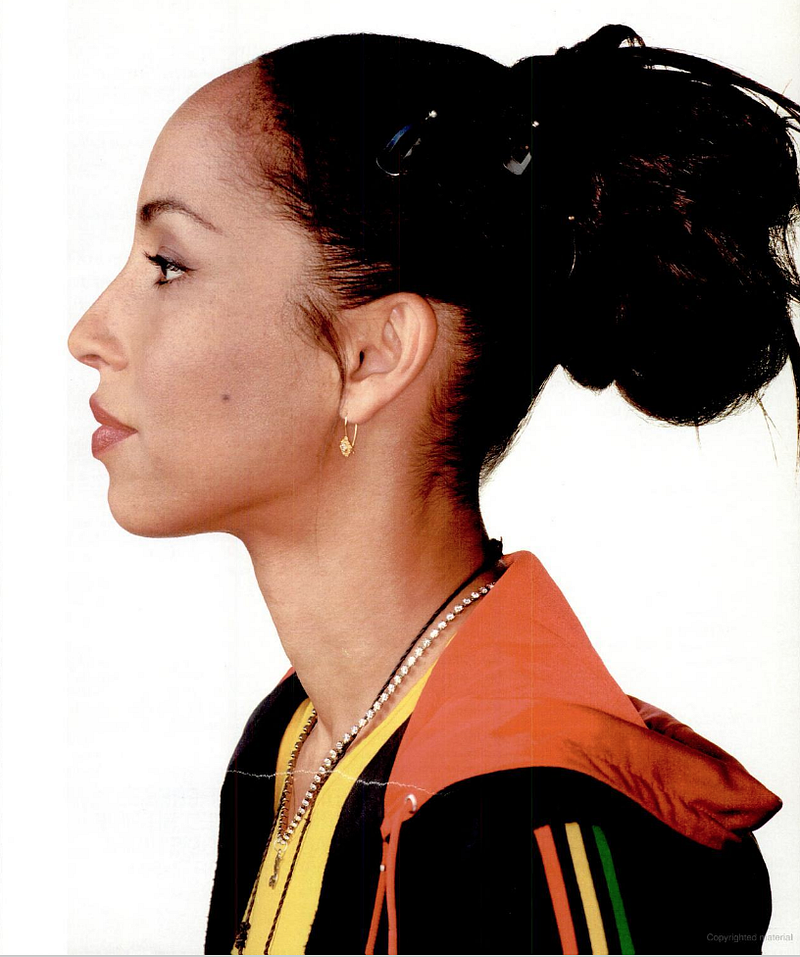
On a muggy summer evening in Jamaica, 1997 — between her albums Love Deluxe and Lover’s Rock — police in Kingston arrested Sade and her lover.
Sade and Jamaican reggae producer Bob Morgan were driving that night when police attempted to stop them. Sade chose to speed up and try to evade them instead. Eventually, they stopped and were arrested. Sade then allegedly cursed out the arresting officers. She soon absconded the nation and did not show up to any court dates. In 1998, the Jamaican government issued an arrest warrant for Sade, which remained in effect until 2002.
The Jamaican incident remains at the zenith of all the tabloid fodder concerning the Empress. Despite not releasing an album in five years, Sade still occupied an enormous space in pop music. Her first four albums — Diamond Life, Promise, Stronger Than Pride, and Love Deluxe — were hugely successful. Fans of all colors flocked to her calm charisma, which she portrayed as chilled as a Riesling for brunch. The Jamaica incident threatened to heat her persona to something unrecognizable, but something far easier for Western audiences to consume concerning Black love. Her chase by the police and her cursing them out means that folks all over the West can read and program her reaction to love without a struggle.
Sade’s instinctive response to hardship is gravitas.
Black music has always provided a rejoinder to the great question of the West — “What to do with Black people?” This question has dominated so much of Western politics and culture since the early 19th Century. Our musical output — especially the blues, rock, and R&B — has focused more on the inquiry regarding how to be Black and whole in the West. Love is central to our existence of Black personhood. It remains the central emotion we explore in our musical output. Our rejoinder has always been “How do we live and love in the West, a civilization that did not have us loving each other in mind when it created itself through the Triangle Trade and slavery?”
Love is the most human state of grace. Within its context, we can heal, forgive, and rejoice. There is space both for dignity and passion. Black love, however, evolved in the context of bondage, Jim Crow and drug wars and incarceration — political institutions designed to strip the dead and dying of dignity, and only to offer passion; love brightly, for you never know when the state will take it away. How, however, to express this love? Sade’s Jamaican episode presents a prism of the quest, daring, and growth demanded of Black love — and the alternative path that she deigned to take in her music.
“They Gotta Listen to the Blues”
Sade’s view of black personhood, or when she has specifically sung about it, has been one of self-respect. Her poise in the face of the hardships she sang about, along with her skin color, caused Black personhood to make the Claim. This is despite her downplaying the role of race in her life in interviews and the lack of explicitly mentioning race in her music.
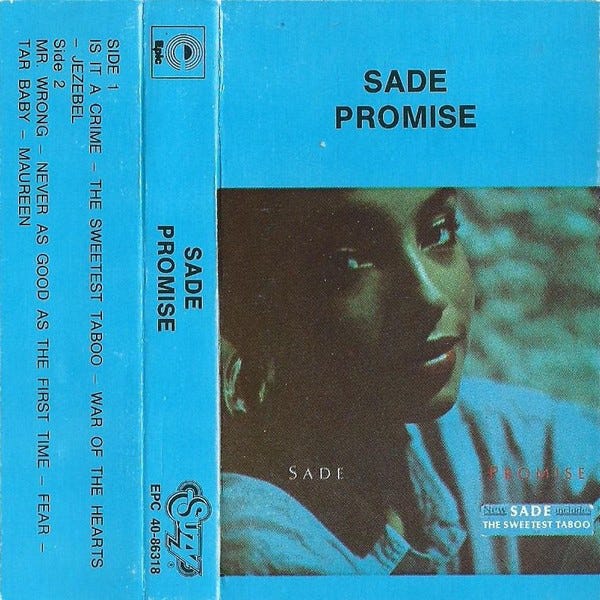
In her early music, the Empress dances around the topics of race. Diamond Life contains a single, oblique reference to race in its closing track, “Why Can’t We Live Together?” Using the words of a different artist — the song is a remake of a Timmy Thomas track — Sade signs that “no matter what the color, you still are my brother.” On Promise, Sade slowly whispers about race before shouting about it. She makes a reference to Africa on “Is It a Crime” when she croons that “her love is wider/wider than Lake Victoria.” On “The Sweetest Taboo,” she references the quiet storm, a genre of R&B pioneered by Black folk.
How do we live and love in the West, a civilization that did not have us loving each other in mind when it created itself through the Triangle Trade and slavery?
“Tar Baby” focuses on Sade, most probably, reflecting on her mother and father giving birth to her. She conveys the shock of a woman birthing a melanited child to her parents (Grandma came to see/ Something she could not believe/ How could her girl be/So naïve) and the guilt of revealing it in this way (the secret she conceived). In the end, however, comes dignity and endurance;
A golden thread inside of the web/
That I got caught in/
Oh, it’s a lover’s revenge, but out of the pain/
Come the best things you see/
From a less than ideal situation comes love and all the stamina that it requires.
Skipping Stronger Than Pride due to its lack of racial references, Sade dances around race on Love Deluxe with “Feel No Pain” and “Pearls.” The first song does not explicitly mention race. Yet Sade engages in language that lets us know she is referencing black folk. An unemployed family “sings the blues” and she sings for the world to realize “the ghetto’s all around.” Despite the economic hardship, the only acceptable response for the unemployed is dignity;
There’s nothing scared/
Breathing hatred/
We have to face it/
Not one can take it/
And feel no pain…/
“Pearls” is a homily concerning endurance and love. Sade sings the story of a mother in Somalia scrounging for rice to fend her child — “Each grain carefully wrapped up/pearls for her little girl.” Though the song perhaps her most famous line — “It hurts like brand new shoes” — , the common coda is a call to spiritual values as the mother labors to feed the child.
Throughout Sade’s early work, composed dignity is the state of grace that allows the folk she sings about to continue loving through betrayal, heartbreak, and hardship. Maintaining it made a quest of love. It is possible, she communicated, to get back up and try again through the grey. To have a Black woman sing this so passionately and consistently resonated across the pond. African-Americans, hungry for said dignity, ate it up and, at least till the last track played on a Sade tape, submerged themselves into her easing, chamomile-tinged vibe. Sade communicated that while we are not responsible for what ails through the world, love should compel us to walk good through it all. She takes the focus off the question of the West, and allows Black personhood to understand how she approaches her state of grace through the normal pains and travails of loving another human being.
“He Was Such a Dignified Child”
The tears run swift and hard/
And when they fall/
Even, even the comfort of a stone/
Would be a gain/
Sade, “Slave Song”
Sade’s experiences between 1992’s Love Deluxe and 2000’s Lover’s Rock caused her to begin explicitly discussing race in her interviews and addressing it in her music. She never strayed from what she felt the appropriate response was — dignity. While she stops avoiding what 400 years of Western history have done to Black personhood, she still advocates for the same self-assured response.
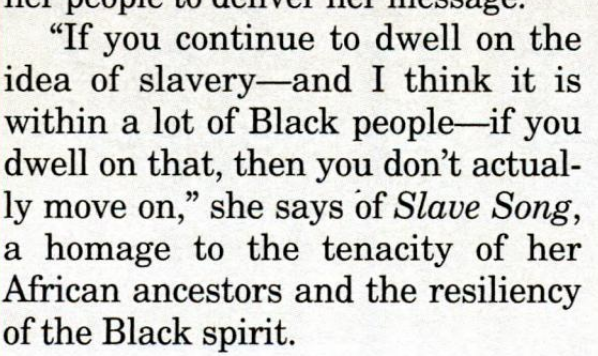
She talks about writing “Slave Song” in promotional interviews leading up to the release and working of Lover’s Rock. In a December 2000 issue of Jet, she claims that “Slave Song” mirrors these sentiments in a 2001 issue of Vibe. “It’s a big issue to address in a song,” she noted. Drawing from Bob Marley’s “Redemption Song” as an influence allowed her to hone the tune’s overall message. “Oftentimes when people despise somebody, they become exactly like the person they despise, then ultimately they despise themselves. The song is about remembering what our predecessors had to endure to get us where we are. Just to keep that in mind- the real, real struggle.”
In “Immigrant,” she again offers up what she feels is the proper response to racism. The song, Sade says in the Vibe interview, forces on “what my mother told me about how, when my father first came to England, they’d be shopping and she’d notice how the guy in the store didn’t want to touch his hand. That affected me a lot. It’s something I’ve always remembered from being quite young.” She paints a vivid picture of her father, walking good in the face of indignity;

In his brown shoes/
His short suit/
His white shirt/
And his cuffs a little frayed/
Coming from where he did/
He was such a dignified child/
“The song is about how dignified that older generation was,” she says. “We just see this old guy, but that’s an intelligent person who has not been able to fulfill his potential and has made the best of what he’s had. The song is like a salute to them.”
Sade’s instinctive response to hardship is gravitas. Sade’s catalog makes a powerful, artistic case that keeping yourself is the best way to move throughout life and that no amount of travail should have you come out of yourself.

Sade showed no shifts in her solutions. Keeping yourself was, and remains, key to how Black folk need to love themselves in the shadow of the West. Her output between Love Deluxe and Lover’s Rock, however, evinced an increased awareness of the structural bars that prevent the full flowering of Black life and dignity. What did she encounter in that interregnum that led to deeper engagement with the great question of the West and her dignified response to it?
King Alpha and Omega Way
Then ah who gi di ghetto youth gun/
Fi dem roam all di street every day and night?
Sizzla, “Hard Ground”
Sizzla’s Black Woman and Child was released in 1997 by VP Records. A legendary reggae artist, he was paired with producer Bob Morgan. In the dancehall scene, Morgan was given the sobriquet Bobby Digital due to pioneering electronic sounds with reggae riddims. Sizzla’s album, fueled by Morgan’s musicianship, is filled with lyrics honoring Black activists like Marcus Garvey. His music shows the side of dignity that has long been punished in Black personhood — the anger that arises when your social and political conditions do not honor your existence as a sapient being.
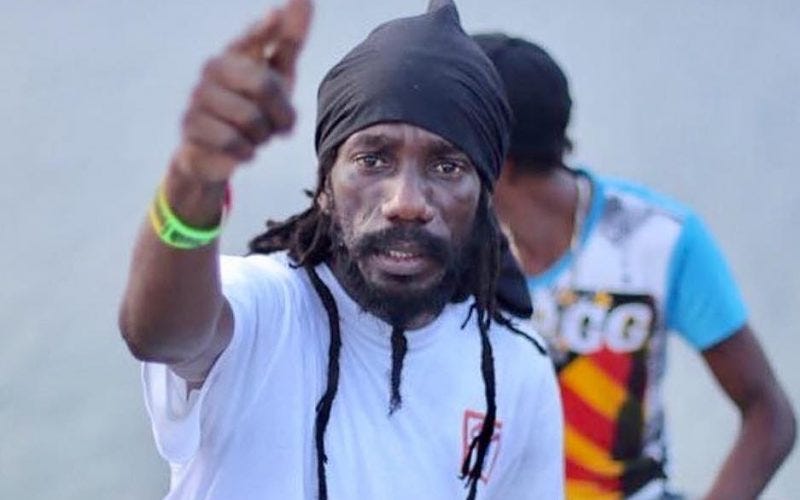
The album expounds on the themes of spiritual reggae — closeness with Jah, the ails of the youth in the ghettoes of Kingston, and blaming both politicians and the British metropole for Jamaica’s condition. “Yuh see the Prime Minister know what a galong/ A dem sell out di yutes to the queen a England” he croons in “One Away.” Slavery and colonialism remain at the tip of Sizzla’s frontal lobe.
His lyrics also juxtapose his love for Black women alongside anger for the conditions they live in. She walk along the streets of diamond today/ Black and beautiful mi hear the ghetto youths ah say” he croons on “Princess Black.” On the title track, he evokes a figure familiar to Harlemites, Jamaicans, and Black History buffs who preached pride and organization:
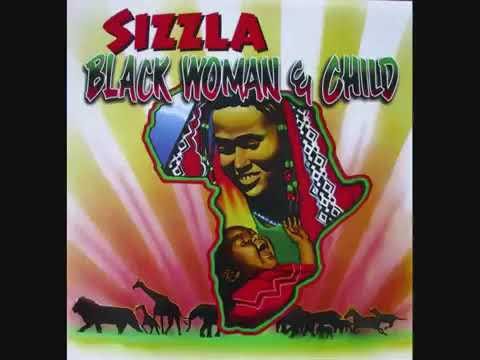
Who will trod upon the road just to make things great/ You and yuh children, I see them in front yuh face/ I say keep them close, as you increase their faith/ Marcus Garvey dun say, a him save the future fi days/
Sizzla rails against the social conditions he is forced to find and maintain love within. Author Marilynne Robinson wrote that “love is holy because it is like grace — the worthiness of its object is never really what matters.” It’s a spiritual sentiment that weaves its way through Western policies. As an example, marriage, which serves as the West’s sanctioned arena of love, is protected in court via spousal immunity and other legal mechanisms (in fact, one can see how the great question of the West- “what to do with our Black people?”- answers itself through its legal doctrine regarding marriage; the lack of recognition of extended family, the lack of respect non-married family units are given in court; disproportionate sentences for non-violent offenses that serve to disintegrate family units).
“So if yuh see mi an di yutes dem trodding thru/ Dats King Alpha and Omega way” he sings in “One Away.” Based on his music, Sizzla is a man capable of deep love and dignity just like Sade.Despite that, he chooses his targets and claims anger toward the social conditions in his nation as the emotion that brings him closer to God — King Alpha and Omega. He could never be Sade’s father from her “Immigrant.” He realizes that having a self-possessed dignity means nothing in a political and colonial context that makes the flowering of romantic love and all that is needed — a job, money, safety from violence — unendingly dangerous.
Black personhood is not concerned with answering the Great Question of the West.
Reggae and its’ son, hip-hop, has focused a great deal of its output on the structural conditions that Black folk endure in Kingston, Harlem, Watts, the Black Belt, the Mississippi Delta, Southside Chicago, Southwark, Liberty City, and the 17th Ward (this is not meant discount the output of musicians like Marvin Gaye or Gil-Scott Heron, but a statement about each genre’s preoccupations). In learning more about Sade’s exposure, I can’t help but to believe her time in Jamaica added complexity to her worldview. She lived there for a while and probably saw firsthand the structural inequities born of racism and colonialism. She found a lover in Morgan, and they bore a child together under the Caribbean sun. For a gigantic fan of hers who has been writing for the better part of years to understand her music more critically, all I can read into her development are reasons why I adore her evermore.
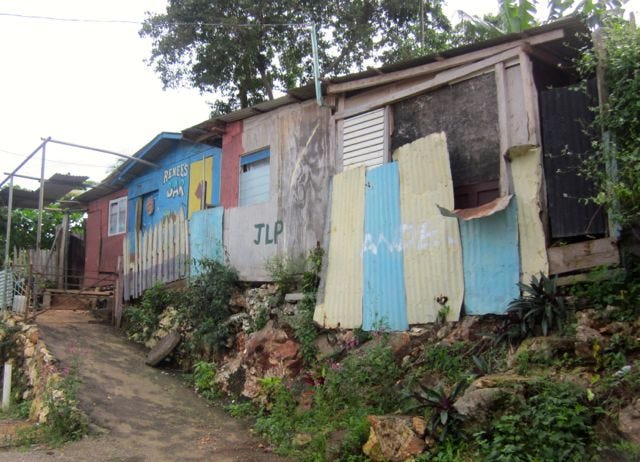
Despite that, I am probably reading way too much into that muggy night in Kingston, one of the few documented instances of Sade coming out of herself. This is my nature. I am slave to the same tabloid impulses of the media in that evening in Jamaica; what is different is that my love of Black personhood, and my fandom for the Empress, compels me to make a legend of her life. At the same time, I am familiar enough with the folklore of my people to see how her music, and her time in Jamaica, constitute patterns of thought common with my diaspora.
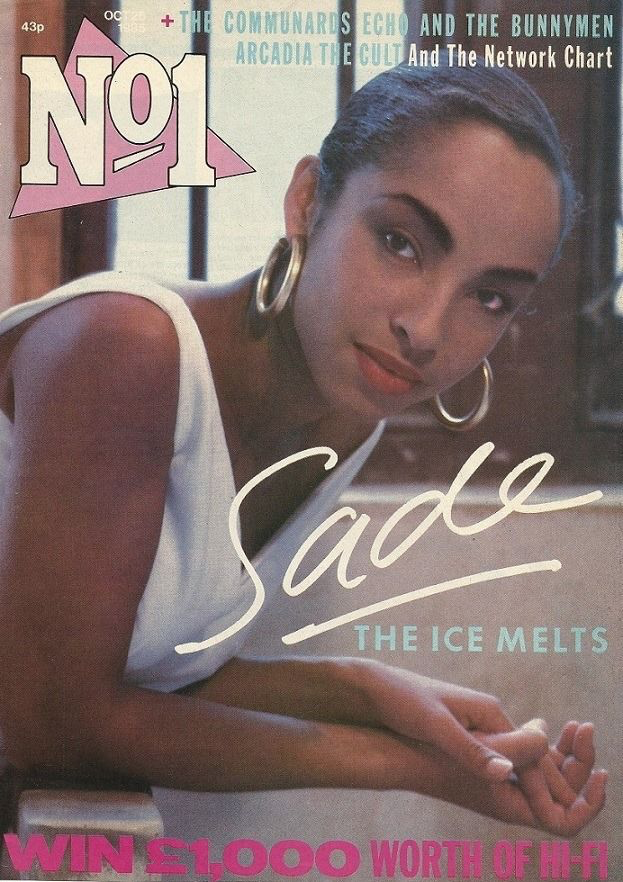
Do we keep our upper lips stiff, and our eyes stoic when we suffer in love, and employment, and racism? Do we show that we are above such earthly pains and are determined to live? Or is anger and action better ways to have the world notice us? I can see so many shades of Black history within Sade’s and Morgan’s incident with the police, and the music that came before and after; W.E.B. DuBois and Booker T. Washington; Ida B. Well’s love for her people and how her advocacy for them, in her dignified clothing, had her driven from her home; Martin versus Malcolm; James Baldwin’s conception of the granite toughness of love — all the way up to Beyoncé’s musical output and political gestures. Sade lives within that pantheon and I want, with clarity and truth, to understand her place in it, to understand her stance toward the great question of the West — “What will we do with our Black people?” I want to understand her response to the more relevant question- “how will we Black people learn to love within such a system?” and the life experiences that informed her answer.
Black personhood knows the West will wrestle with this question until, like the pyramids and the aqueducts of Rome, it stands ruined in history, with our successors wondering why it preferred destruction over working through its contradictions and sins. We do not bother with an answer. Black personhood is not concerned with answering the Great Question of the West, as we know the solution is not completely in our hands. Rather, we ask “how shall we live within this great question? What form shall our dignity take, so that when it all ends, we can say we have kept ourselves?”
Sade, through her music, offers her answer over speakers and headphones.
If you are interested in more Sade writing, please read The Claim: Sade’s Early Years and her Complicated, Conflicted Blackness!