
I became more creative when I stopped processing notes
It happened when I was reading this article by Ev Chapman.
I had been working on my own note-taking system for years, and it was BEAUTIFUL. Complex and smart. It had all the fancy settings I could have dreamed about. And all I had to do was process notes.
Processing notes for me was the act of rewriting, tagging, linking and tidying highlights inside my system.
But the reality was:
- I had not produced a single piece of content in weeks.
- I was spending most of my time tagging and tidying highlights in my system.
- And I was running out of excuses.
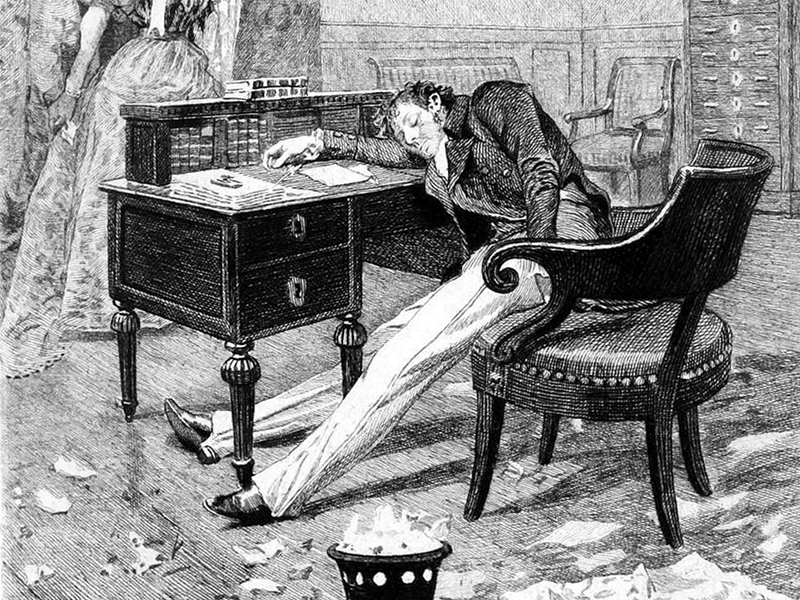
I could feel the overthinking starting. But I was reluctant to change things after all the time and effort spend in creating my smart system.
So to face my dilemma, I decided to challenge myself. I wouldn’t abandon my system. I would just stop processing notes for 4 weeks. And see what happens. I could still come back to it if it didn’t work out.
I tweeted about it — to make it official — and the challenge was ON.
4 weeks, no processing.
Here’s what happened.
Week 1 — “This is harder than I thought”
I’m not going to lie, the first week was more challenging than I had hoped.
I was still using my system — so highlights would come in and add themselves to a list. The initial idea was to mimic Ev’s writing inbox and open this list every day and start writing from a random note. I had even set up a random note generator thanks to this brilliant hack by Matthias (alias @MFreihaendig on Twitter).
But :
- The random generator was really slow (and the more notes I added, the slower it would become)
- Random was boring — and my highlights didn’t spark particularly inspired content
- Because I was still in my system — I was getting this urge to tidy it, all the time
So I came up with an easier solution : because all my highlights were going through Readwise anyway — I would use Readwise daily highlights as a random generator.
Readwise is a service that allows you to save highlights from a lot of different sources. And the daily highlights are a selection of highlights you’ve made in the past (not quite random, but close enough).
You can get two month for free via my affiliate link.
I would develop the ideas I found interesting in my journal. And if it amounted to something, I would create a note from it (and put it in the slip box). And if that was an important enough note, I would create content about it.
I did not publish anything that week. But I wrote quite a bit in the slip box.
Week 2 — “Oh, this is… exciting”
Week 2 is when things really started to happen.
I was writing quite a bit in the slip box. Which lead me to outline a couple of pieces of content. And each outline brought me new ideas.
It was exciting.
But the biggest surprise was that it didn’t feel rushed. I was spending time with my ideas. Without worrying about what else needed to be sorted out. And what other sources I could link to this idea.
It was pretty liberating.
Also, because I radically simplified the system, my screen was much cleaner. No more abundance of Notion properties and roll-ups and columns and such. Which meant — I could write easily from any device. Including my phone.
I was free to write from anywhere.
I also realized that week that because my system was so light — I wasn’t tied up to a single note-taking app for the rest of my life, and could easily switch to another one if needed.
My work was safe.
By the end of the week, I had published 2 articles, a newsletter and a podcast.
Week 3 — “Is it really that easy?”
I have not been writing this much or this well in ages. And I’m someone who was writing a daily email as well as publishing two videos a week at some point.
I found myself writing everywhere when inspiration struck.
At the museum. In the bus. On a walk.
Writing became a practice again. Not something I have to do. But something I want to.
What’s more — I started to trust myself. If a thought I have doesn’t fit in a piece of content, I leave it in my journal. I write about it. But I don’t feel the need to classify it. I trust myself to remember when the time is right. Or to let go if it’s not useful.
Readwise was still prompting me ideas. But, I hardly touched my slip box this week. I went straight from my journal to content. And sometimes I didn’t even go through my journal.
It felt easy. Effortless.
I published 3 articles, and 3 newsletters this week. (And drafted a couple more).
Week 4 — “I can’t stop”
I have established a habit, and I now feel excited when I open my phone or my computer to write. And I have started to notice some other surprising consequences.
I realized this week the biggest and most profound change is that I’m now writing about my own ideas.
It’s not about classifying who said what and how that relates to what someone else said. It’s about what I think. And I suspect that is, in huge part, why creating content is easier. I’m not a teacher spitting facts. Wikipedia does that better than me. I’m a human being thinking and sharing.
Another surprising consequence is in my content consumption.
I’ve always been an advocate of learning ‘useless’ things. But I find myself less and less interested in how-to-write content and consequent themes. And I suspect that’s because I have made sense of the principles by applying them. There is surely still a lot to learn. But I feel like the code started to crack itself. I’ve started to explore a wider set of themes.
I have not even opened the slip box this week. Didn’t rely on Readwise for inspiration. I even spend a whole day doing nothing else than making art and walking.
And yet I have drafted about 5 articles, published 3, send 4 newsletters and a podcast.
The 4 weeks have come to an end, so what now?
As you might have guessed, somewhere along the third week, I archived my old system. And I don’t see myself going back to it ever again. At least, as a system to create content.
Stopping processing notes was the catalysis I needed to realize I was over-complicating things. And it had big and small benefits that have changed my relation with creativity:
- It helped me produce more content in a week than I was in a month (and better content too)
- It stopped me from overthinking about other people’s opinions and insights, and start distilling my own
- It gave me a general sense of freedom, both in how and where I write
- It freed up a lot of my time
- That I now want to use to expand on a wider set of topics
- I don’t see the system as an objective anymore (it’s not about adding more notes, it’s about thinking and writing).
It burst a bubble I was trapped into.
What I expect in the future
Fresh out of a challenge, armed with a new idea, it’s easy to get over-excited.
So I reflected on what I expect the future of my note-taking to look like, and here’s what I predict:
- I won’t be consistent with HOW I use the system (and that’s OK). Some days I expect to use my journal more, other days maybe I’ll need to make connections in the slip-box.
- There will be more productive times than others. I won’t always write X articles per week.
- I will probably have a lot of unfinished drafts, so I might need a place to put those.
But, as I often say, “No problem? No problem”. I won’t start working on solutions to problems I don’t yet have.
Special thanks to Ev Chapman and Matthias — big big inspirations. And if you want to keep following my adventures, I am semiregular on Twitter.


