
How to Play the “Turn Your Life into Fun Games” Game
When describing my background, I often say that I am a non-gamer, in other words, someone who plays games, and especially video games, very occasionally and prefers spending their free time doing activities other than games. And after turning my life into games continuously for several years now, I am still a non-gamer in the traditional sense.
But I don’t seem to be able, or willing, to stop turning my life into fun games. On the contrary, I find myself designing and playing my self-motivational games more and more, both in times of joy and those of being upset.
I have contemplated why this could be, and have even given interviews on it, but recently I discovered a game mechanic, which could explain why I am so engulfed in turning my life into fun games.
Game mechanics provide “a construct of methods or rules designed for the player to interact with. … A game designer’s main role is to come up with game mechanics that are engaging enough to either entertain a player or give them an impacting and worthwhile experience.” — Game Designing
Note to any game and gamification designers: This core mechanic of games is well-known to you, but I am a non-gamer playing the role-playing game of an anthropologist studying, among other things, these still new and exotic, for me, game design and play cultures.
Thus the discovery of this core mechanic was a eureka moment for me.
“The eureka effect (also known as the Aha! moment or eureka moment) refers to the common human experience of suddenly understanding a previously incomprehensible problem or concept.” — Wikipedia
Here is this game mechanic:
“At the heart of your game’s design, there are core mechanics and the core gameplay loop. In short, it’s the main activities that structure the entire design, and the players engage in repeatedly, in a looping sequence. It’s part of the essence of the game, something you cannot remove without fundamentally altering the experience.
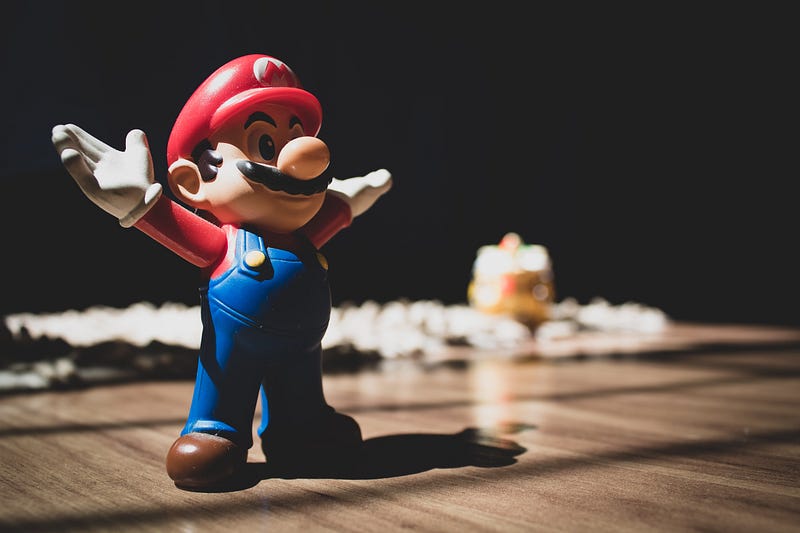
“In the original Mario, this would be walking, running, and jumping. The various enemies, bosses, and environments stem from the core mechanics. They are here to surprise the player, challenge his skills, and keep the experience fresh. In other words: to exploit the core loop to its fullest, and add extra depth to the experience.” — Game Analytics
After learning about the core game (or gameplay) loops, I realized that Self-Gamification, and thus also each challenge, project, or activity turned into a self-motivational game, has a specific core gameplay loop too.
In fact, it has two. They are closely related to the three approaches, which Self-Gamification brings together into one strong synergy.
Here is the main Self-Gamification loop:
- Become aware (assess) → play the “Anthropology of Now Game”;
- Take the small step → play the “Kaizen Game”;
- Appreciate (celebrate) it → play the “Appreciation Game.”
And the first step of awareness, or the “Anthropology of Now Game,” has a gameplay loop of its own:
- Become aware of your starting point: your circumstances at this moment, how you feel, and the state of your mind.
- Remind yourself of your goals and dreams for each task. What is the win-state there?
- Identify the smallest and most effortless step that will take you on the path from your starting point towards the goal of your challenge, project, or activity “game.”
- Recognize at any given moment the fun ways or elements to take and appreciate both small steps (that bring you experience points, for example), the intermediate goals (the levels in your games), and reaching the goal (the win-state).
The fact that each of our lives is so surprising and multi-dimensional let me “exploit the core loop to its fullest, and add extra depth to the experience” of Self-Gamification naturally, without me needing to force anything.
The only thing I need to do is to be willing to see what is in front of me as a game and actually play those games, including the design and appreciation “games.”
This was an excerpt from my book Gameful Isolation: Making the Best of a Crisis, the Self-Gamification Way. I hope you enjoyed it. If you would like to get access to the vlog accompanying the book then check out this page: victoriaichizlibartels.com/gameful-isolation/.
And here is the video to the excerpt above and to the following story:
Related stories:
P.S. To keep in touch, subscribe to my newsletter, Optimist Writer.
About the author:
Victoria is a writer, instructor, and consultant with a background in semiconductor physics, electronic engineering (with a Ph.D.), information technology, and business development. While being a non-gamer, Victoria came up with the term Self-Gamification, a gameful and playful self-help approach bringing anthropology, kaizen, and gamification-based methods together to increase the quality of life. She approaches all areas of her life this way. Due to the fun she has, while turning everything in her life into games, she intends never to stop designing and playing them.


