
Let’s Celebrate Our Ability to Be Kind
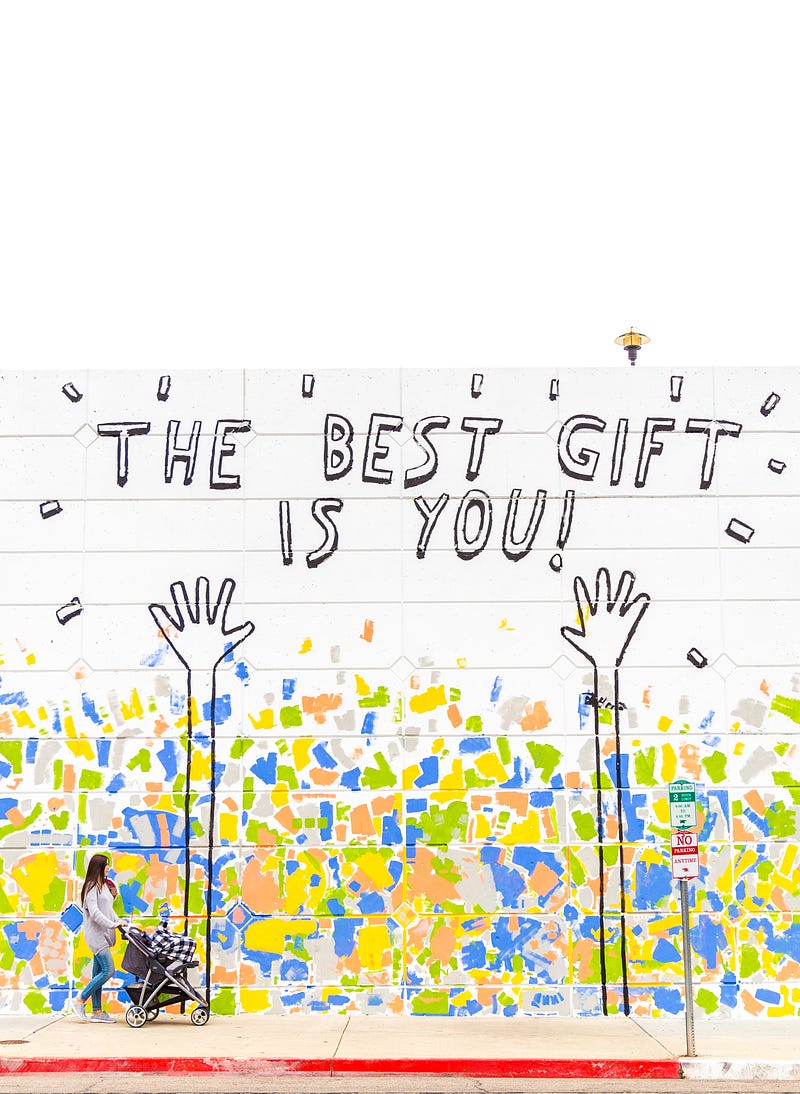
When my son was two or three years old, he taught me a sweet lesson of self-compassion, love, and pride.
He did or said something sweet that day, as he often did, and still does. Warmed by his gesture, I smiled and said, “Honey, you are so sweet and kind!”
Niklas looked at me, beaming, and said in a celebratory voice, “Yes, I AM sweet and kind!”
This sentence was not uttered in surprise or as an argument. Instead, it sounded like a celebration. The pride in Niklas’ face was unmistakable.
After this little lesson of self-awareness and self-love, I observed such pride and celebrations of one’s own achievements — especially connected to doing something sweet and kind and praised for it — in many small children.
I wonder if I did the same when I was small.
With time we learned to be almost ashamed when someone praises us for being kind and doing something sweet.
My children tell me every evening — when we wish each other good-night — that I am the best mom in the world. It is one of their many beautiful ways to show me how much they appreciate me.
I often answer, “I am trying.” I also say, “Thank you! You are the best for me, too.” But the thought lingers, “I shouldn’t be proud of them calling me the best. I still make many mistakes as a mother.”
Is it the impostor syndrome talking? It might be.
Admittedly, trying our best is all we can do, and we all strive to become better, but aren’t we already the best versions of ourselves?
We’ve all heard or read the famous quote by Oscar Wilde:
Be yourself; everyone else is already taken.
That is probably another of a big list of paradoxes of human life. We are the best we can be because we can’t be any different at this moment. We can choose what to do at the next moment. But this moment is perfect (= done) as it is.
And still, we can grow and strive to do so.
But we need to give ourselves a break once in a while. We need to learn to appreciate ourselves, and we need to practice being kind to ourselves.
Here is why.
Kindness to others starts with being kind to ourselves.
Compassion starts with self-compassion.
Appreciation and pride for other people start with the recognition and satisfaction of our abilities to be kind, honest, and of service.
And this appreciation should be expressed even more for the demonstrations of those.
But how can we do it?
When I think of that sweet story with my son, I know that he experienced pride at the moment he confirmed that he had been sweet and kind.
Yes, it is all about experiencing self-love, joy, and happiness of being alive and being capable of doing kind things.
What is experience?
Here is how the Cambridge Dictionary defines experience:
“(the process of getting) knowledge or skill from doing, seeing, or feeling things.”
It is not about talking about it or trying to prove it. Simple knowledge is enough.
Why do we deny ourselves this knowledge? Maybe because we strive to be humble. But does being humble mean denying ourselves the knowledge that we can be and are actually kind? No, I don’t think so.
The definitions of pride and humbleness prove so.
Here they are:
Pride, according to the Cambridge Dictionary, is:
“a feeling of pleasure and satisfaction that you get because you or people connected with you have done or got something good.”
Humbleness means
“the good quality of not being proud or not believing that you are important.”
The pride in the definition of humbleness is about believing in being important or above others. But pride and celebration of our own worth are not about us being important and above others, but about having a warm feeling for our abilities and demonstrations of kindness and doing something good.
I am hugely grateful to have discovered the possibility of turning my life into fun games. Celebrations and pride are natural in games, and not many will criticize you for being proud of your achievements in games.
I record my points, stars, and other non-material rewards (like donuts and sometimes other self-drawn pastry), many of which never get into the hands or sight of anyone else than myself. I might also mark my achievements with a little dance or a fist pump, “Yes, I did it!” or small celebrations with my family (like high-fives with my children and a kiss from my husband). These recordings and mini-parties help me feel well in myself and make the flow of kindness and generosity more joyful and effortless than it had ever been before.
Thus, dear friend, I invite you to celebrate your acts of kindness and sweetness. Find your own way to appreciate and celebrate them. And then watch how with practice, you will find the ease to celebrate the achievements and acts of kindness of others, regardless of their size and meaning.
— Victoria
If you enjoyed reading this story, you might also like this one:
P.S. To keep in touch, subscribe to my newsletter, Optimist Writer.
About the author:
Victoria is a writer, instructor, and consultant with a background in semiconductor physics, electronic engineering (with a Ph.D.), information technology, and business development. While being a non-gamer, Victoria came up with the term Self-Gamification, a gameful and playful self-help approach bringing anthropology, kaizen, and gamification-based methods together to increase the quality of life. She approaches all areas of her life this way. Due to the fun she has, while turning everything in her life into games, she intends never to stop designing and playing them.


