
The Real-Life Role Playing Games
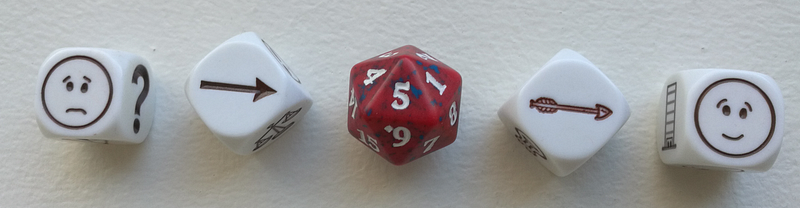
Let’s address the first of the three tools that Self-Gamification brings together. This tool is anthropology, which is
“the scientific study of the origin, the behavior, and the physical, social, and cultural development of humans.” — Free Dictionary
When applied to myself (I’ll address this idea in a second), this approach helped me to discover my many quirky thought patterns. These can be so much fun when observed non-judgmentally and with open-minded interest.
I discovered I had the idea that I didn’t want to learn to play Role-Playing Games (RPG), because I judged them as being too complex.
Only recently, I became aware that we all play many different Role-Playing Games every day.
“A role-playing game (sometimes spelled roleplaying game; abbreviated RPG) is a game in which players assume the roles of characters in a fictional setting.” — Wikipedia
You could say we all have real-life role-playing games. We are parents, children to our parents, bosses, employees, students, assistants, and many more. And many of these roles overlap every day. Especially now when we are together with our families at home, helping our children with homeschooling, working, supporting our elderly parents by calling them many times a day, maintaining a household, cooking, and so much more.
In Self-Gamification, too, we play specific roles. These are the roles of designers and players of our self-motivational games, which are the projects, activities, or challenges we turn into games.
“A self-motivational game is a real-life project or activity that you adjust in such a way that it feels like a fun game with which you are eager and happy to engage, both in terms of its design and the playing of it.” — Victoria Ichizli-Bartels, Self-Gamification Happiness Formula
But there is another Role-Playing Game, which I’ve loved playing ever since I heard about it.
I learned about this possibility from award-winning authors, seminar leaders, radio show hosts, and dear to my heart friends, Ariel and Shya Kane. Here it is:
“You can create a game where you pretend you are a scientist or an anthropologist discovering the way that a particular culture functions or operates. Don’t take anything that you discover personally. It isn’t personal. Many of your prejudices were absorbed from the culture you grew up in, and unconsciously you have internalized these cultural values without the benefit of seeing whether they are honestly true for you.” — Ariel and Shya Kane, Working on Yourself Doesn’t Work
So along with the other roles you take on during the day, I suggest that you play the anthropologist’s role-playing game.
In a role-playing game,
“players take responsibility for acting out [their] roles within a narrative, either through literal acting or through a process of structured decision-making regarding character development. Actions taken within many games succeed or fail according to a formal system of rules and guidelines.” — Wikipedia
Here is the “formal system of rules” for an anthropologist’s role in, what I love calling, the “Anthropology of Now Game”:
- When you observe the world outside you, truly listen, which means
“actively listening to another with the intention of hearing what is being said from the other’s point of view.” — Ariel and Shya Kane, Working on Yourself Doesn’t Work.
The Kanes also suggest that you listen both with your ears and eyes.
- When you observe the dynamics inside you, in other words, your feelings and thought processes, become aware that you are not your thoughts or the voice you hear in your head.
“You are not your voice. You have a voice. And when you can make the distinction between the one who listens and the voice, you get control over the mechanical nature of life.” — Ariel and Shya Kane, Practical Enlightenment
- Be kind, honest, and helpful to others and yourself. While writing Gameful Healing (Book 2 in the “Gameful Life” series), I found this idea in Toni Bernhard’s How to Live Well with Chronic Pain and Illness. She describes how she applied a pearl of wisdom to relationships not only with those around her but also with herself. This wisdom was the famous
“Buddha’s teachings on skillful speech; he said that we should speak only when what we have to say is true, kind, and helpful.” — Toni Bernhard, How to Live Well with Chronic Pain and Illness
- Be open-minded and curious about everything that is happening inside and outside of you.
- Actively engage in this moment of now, and in the life of the culture you are primarily studying, i.e. your life.
- Don’t judge what you observe either inside or outside yourself (your brain).
- Don’t judge the judging (neither judging of the judging nor the judging of complaints, or complaints about complaints).
Here are a few more words of guidance. Observe that you are studying multiple cultures. You interact with the world, even during lockdown, regularly. The people around you — those in your home, or with whom you interact remotely — have their own different cultures.
But even just you, as one person, will embrace multiple cultures. They can be found in all those roles I mentioned at the beginning of this article. A parent’s culture is very different from a co-worker’s culture, and when you start judging or resisting one or the other, they can clash.
In this case, remind yourself that anthropology today is non-judgmental.
“One foundation of anthropology is the comparative approach, in which cultures aren’t compared to one another in terms of which is better than the other but rather in an attempt to understand how and why they differ as well as share commonalities. This method is also known as cultural relativism, an approach that rejects making moral judgments about different kinds of humanity and simply examines each relative to its own unique origins and history.” — Cameron M. Smith, Anthropology For Dummies
In the “Anthropology of Now Game,” we assume the role of active and engaged anthropologists, studying multiple cultures at this moment: both outside and inside us. We are multi-dimensional beings embracing numerous cultures, depending on what we are up to or how we feel (or think we feel).
Being a non-judgmental and super interested anthropologist will help you observe thought processes that might lead to those clashes between the roles you assume during your day. And the rule of not judging will help you to bypass them.
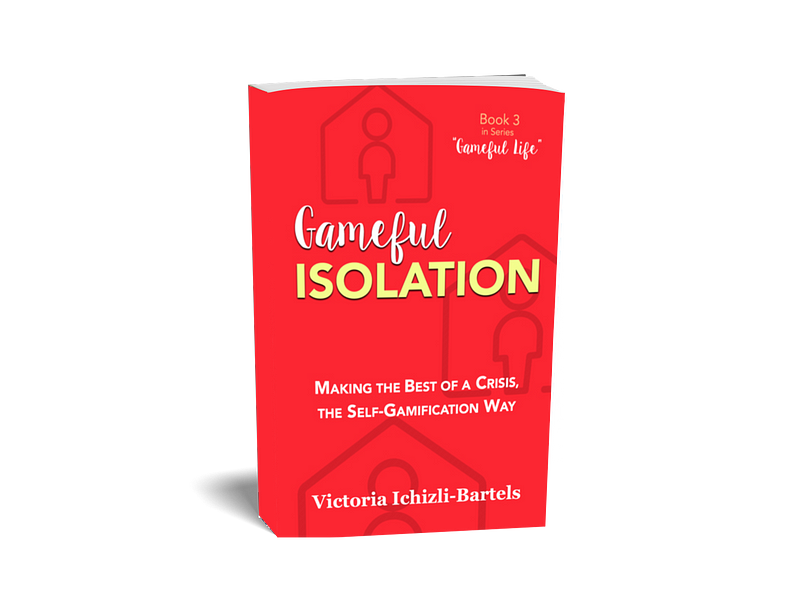
This was an excerpt from my book Gameful Isolation: Making the Best of a Crisis, the Self-Gamification Way. I hope you enjoyed it. If you would like to get access to the vlog accompanying the book then check out this page: victoriaichizlibartels.com/gameful-isolation/.
And here is the video to the excerpt above:
We all had plans for the year 2020. Some of us planned to travel, others to make bold career moves. None of us expected the COVID-19 pandemic, social distancing, or the lockdown of many countries worldwide.
But they happened.
Most of us are staying at home and trying to make the best of it. Many show compassion and camaraderie in these troubled times. Wanting to contribute something of her own, Victoria created the book and video series Gameful Isolation.
In this little book, Victoria shares Self-Gamification, the method she devised that unites anthropology, kaizen, and gamification to form a novel, gameful approach to life. She shares many personal anecdotes of using this universal tool to master the challenges we all face during these times of crisis.
By reading this book, you will learn:
- The reasons for turning our lives into games, especially now during the COVID-19 pandemic;
- About the three approaches that make up Self-Gamification;
- How to play the “Anthropology of Now” Role-Playing Game;
- About procrastination and the brain’s fight-or-flight response;
- How to bypass upsets one small step at a time, and why it works;
- How to use fun as a compass, and games and play as inspiration;
- How to be both the designer and the player of your self-motivational games;
- The role of feedback systems and rewards in Self-Gamification;
- About Self-Gamification gameplay loops, and more.


