
How Our Skin Ages — A Cellular View
Resolution at the level of single cells reveals specific proteins correlated with skin aging
Written in our skin
Entering the realm of old age requires sacrifice. Many processes in our body change when we have lingered in adulthood for a while.
The extent of those changes is quite individual and depends on, among others, genetics, metabolism, lifestyle, and environment. Still, as we age our immune function declines, the risk for cancer increases, muscle turns flabby or disappears, joints creak, connective tissue loosens, and memory is no longer what it used to be. Even our microbiome and body shape change.
Our skin changes as well.
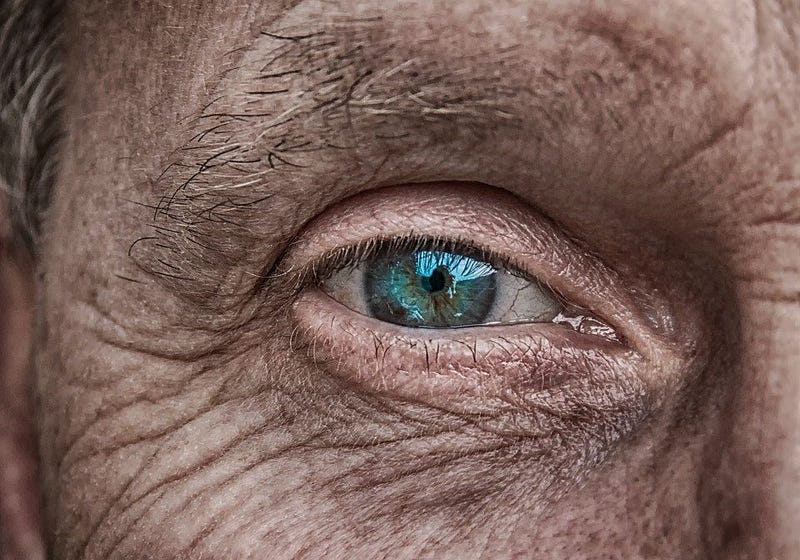
What was once smooth becomes wrinkled. Our skin also tends to become thinner as we age (we shed skin cells all the time, and most old bodies can’t keep up with making new ones).
Part of this is simply exposure. More time on earth means more UV exposure, more contact with potentially abrasive chemicals, and so on.
But, there are biological processes at play too. Less stem cells, as alluded to earlier, is one.
In the skin cells themselves unwanted changes occur too.
Into the cells
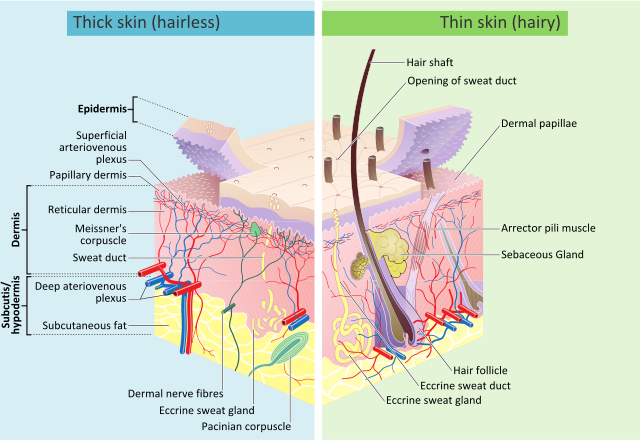
Our skin has three layers, from top to bottom: the epidermis, the dermis, and the hypodermis.
Since the epidermis is the layer that comes into contact most with the outside world, it’s a good place to start unraveling the cell-level processes of skin aging.
Enter a new study.
The researchers performed single-cell analysis on eyelid skin samples from young (18–28 years), middle-aged (35–48), and old (70–76) people.
They used a relatively recent method that allowed them to analyze all the mRNA in the sampled cells. mRNA is the intermediate between gene and protein — DNA is ‘transcribed’ into mRNA, which, in turn, is ‘translated’ into a sequence of amino acids, aka a protein. Measuring this mRNA can tell you which genes are expressed and how ‘active’ they are.
First, this analysis allowed the scientists to see an increase in chronic inflammation, as well as in photoaging-related (for example, UV exposure) damage. Not unexpected, really.
Second, they were able to identify two key transcription factors (proteins that can regulate gene expression, the term is also used for the DNA sequence that codes for these proteins) involved in skin aging: HES1 in fibroblasts and KLF6 in basal cells. It turns out that, as we age, the genetic machinery in our cells makes less of these transcription factors. Which is annoying, because this:
…not only compromised cell proliferation, but also increased inflammation and cellular senescence…
And:
…decreased self-renewal potential and promoted senescence phenotypes including increased inflammation. Thus, these key factors may serve as the drivers underlying epithelial attrition and dermal atrophy and skin aging.
But, thirdly, the researchers tested if there is a way to keep the levels of those transcription factors from dropping too precipitously.
They looked at ways to maintain decent levels of HES1 in fibroblasts, cells that make collagen and the matrix in which cells are embedded. Basically, good skin fibroblasts = less wrinkles.
And, hurrah, they found that:
…quercetin delayed cellular senescence not only in UV-irradiated primary human dermal fibroblasts but also in HES1-deficient human primary dermal fibroblasts.
(Incidentally, quercetin also makes an appearance in this review on anti-aging compounds.)
Quercetin is a flavonoid, or a plant polyphenol. As this suggests, many plant foods contain a natural anti-wrinkle compound. Some particularly rich sources are: rocket, red onions, kale, cowpea seeds, and green chili peppers.
Worried about wrinkles? Eat your veggies.


