
The Hidden Stem Cells That Can Strengthen Aging Muscle
A subset of muscle stem cells can be preserved into old age and prevent age-related decline
Stem cells and aging
We all begin life as a single fertilized cell. That cell, though, has to develop into a full-fledged human being with many different organs and tissues, each of which is composed out of different cell types.
How do we go from one cell to many different types of cells?
Stem cells are cells that can differentiate into many different cell types. As embryo, we have plenty of pluripotent stem cells that can develop into all of the body’s cell types.
As we age, though, the number of stem cells drops precipitously.
Pluripotent adult stem cells are quite rare, restricted to bone marrow and a few other tissues. Most adult stem cells are multipotent (restricted to a specific ‘lineage’ of cells, for example, different types of muscle cell) or unipotent (only able to become one specific cell type).
With every year that passes, our collection of adult stem cells becomes a little bit smaller. This is one of the reasons why it becomes harder to recover from injuries or illness. Our body’s already limited capacity to regenerate (we’re no salamanders, after all) dwindles even further.
Old muscle, new muscle?
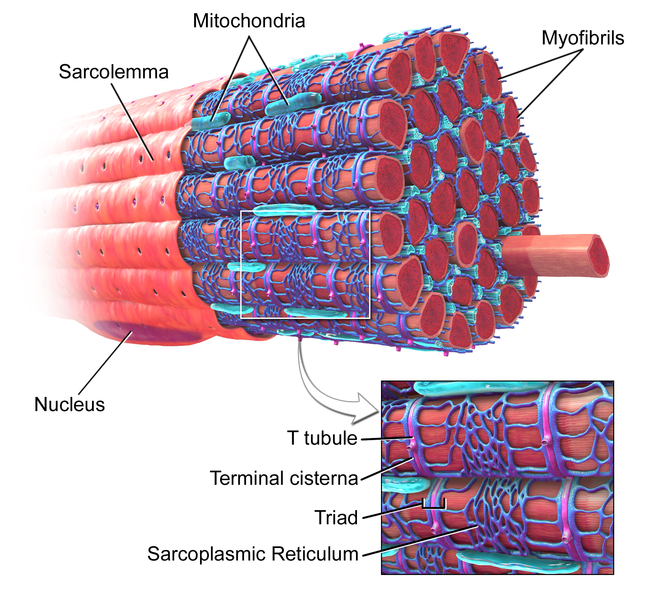
One tissue in which this decrease in stem cells is noticeable, is muscle. The older we become, the harder it is to maintain our muscle mass. Sarcopenia, in fact, is a condition of age-related muscle wasting (there are other factors that come into play, such as physical activity, nutrition, hormonal changes…).
A new study (in mice) now suggests a way to preserve a modest stock of high-quality muscle stem cells well into old age.
In muscle tissue:
…stem cells (also known as satellite cells) are quiescent for most of their life. In response to injury, these quiescent cells activate, expand and acquire distinct fates, with some differentiating and forming new myofibres and others self-renewing to replenish the homeostatic quiescent stem-cell pool.
The researchers observed that muscle stem cells are present in two forms: one that expresses a lot of CD34 (a transmembrane protein), and one that expresses less. The muscle stem cells with plenty of CD34 are ‘genuine’, with all the stem cell properties we want. Those with only a little CD34 are ‘primed’, with more restricted capabilities.
An interesting and unexpected finding is that some genuine muscle stem cells make it into old age:
…show that the genuine stem-cell state is preserved into old age through active repression of gene programmes characteristic of the primed state.
The bad news is that, the older the mice get, the higher the chance is that their genuine stem cells switched to a primed state, which, in the words of the authors, “causes regenerative failure”. Doesn’t sound good.
Next, the researchers showed how this happened. Activation of the enzyme Akt inhibited FoxO, a transcription factor that regulates the activity of several genes. To support their hypothesis that the inactivation of FoxO led to the genuine to primed switch, they inhibited FoxO in young mice:
FoxO inactivation deteriorates the genuine state at a young age, causing regenerative failure of muscle, as occurs in geriatric mice.
Hold on. What about the opposite? If inactivating FoxO switched muscle stem cells to from genuine to primed, what happens when we add FoxO?
Glad you asked.
Interventions to neutralize Akt and promote FoxO activity drive a primed-to-genuine state conversion.
The authors conclude:
These findings reveal transcriptional determinants of stem-cell heterogeneity that resist ageing more than previously anticipated and are only lost in extreme old age, with implications for the repair of geriatric muscle.
Now, mice muscles are not human muscles, and aging affects a lot more than muscle tissue, but maybe this could lead to new insights that can prevent muscle-wasting. This, in turn, could enable better mobility and longer independent living.
The road from mechanistic findings in animal models (such as in this study) to tried and tested applications in human beings is long. But hey, better muscles might help us walk that road…