avatarGunnar De Winter

Free AI web copilot to create summaries, insights and extended knowledge, download it at here

1738

Abstract

g certain cancers.</p><p id="585f">But, it seems that our own bodies can make substances that can help cancer spread.</p><h1 id="01c7">MMA helps tumors</h1><p id="2524"><a href="https://www.nature.com/articles/s41586-020-2630-0">A new study</a> found that MMA (<a href="https://en.wikipedia.org/wiki/Methylmalonic_acid">methylmalonic acid</a>, and not mixed martial arts, in this case) accumulates in our blood as we age.</p><figure id="abd0"><img src="https://cdn-images-1.readmedium.com/v2/resize:fit:800/0*6bdoWo2SI0Af_yln.png"><figcaption>MMA (Wikimedia commons, Fvasconcellos)</figcaption></figure><p id="df23">MMA is a by-product of the digestion of proteins and fat. In small quantities, it is necessary for the energy production in our cells. The researchers, however, found that MMA accumulates in the blood of older people. Fortunately, the people aged over 60 in the study, with increased MMA concentrations, did not show signs of ill health.</p><p id="6ed1">But, what the researchers did find was that when they exposed human cancer cells to the blood serum of this older group, those cells began showing traits of metastatic cancer cells (the ones that spread through the body). Also important was that the presence of large blobs of lipid (fat) were needed for MMA to enter cells and do its evil deed.</p><p id="f0f8">The fact that the people in the study were — thankfully — cancer-free means that MMA does not induce cancer, but helps it spread when it has developed (the chance of which also increases with age, as we’ve seen). Hence, old age does not only increase your chances of developing cancer, but also of having that cancer spread throughout your body.</p><h1 id="312a">Age and MMA</h1><p id="3b93">MMA’s detriment

Options

al effect appears to be linked to its ability to affect gene regulation. MMA upregulates a gene called <i>SOX4</i>. This gene is known to be involved in both embryonic development and cancer progression.</p><p id="4732">Why does MMA increase with age, though?</p><p id="4890">We’re not entirely sure.</p><p id="87c2">We know that high MMA is an indicator of vitamin B12 deficiency, and levels of vitamin B12 tend to decrease with age. But, in the study, the scientist found no correlation between B12 status and MMA concentration. So, that’s probably not the main factor.</p><p id="adaf">Another possibility is diet. As mentioned, MMA is a byproduct of protein digestion. And <a href="https://www.ncbi.nlm.nih.gov/pmc/articles/PMC3988204/">lower protein intakes are associated with less cancer in the 65 and younger population (but the reverse is true for the older population, nutrition is complicated)</a>. How this links MMA with age, however, is not clear, which is why the link between eating (plenty of) protein and cancer still needs a lot more research.</p><p id="8abf">(Don’t ban all protein from your diet, please. In fact, don’t ban any specific macronutrient — protein, carb, fat — from your diet. We need all three. Don’t go overboard on one either, moderation is key.)</p><p id="3a2b">What this study does show us, though, is that there is a link between age, MMA, and cancer metastasis. As such, it presents MMA as a potential therapeutic target.</p><p id="e9b5">In the fight against cancer, we need all the weapons we can get.</p><p id="3105">_________________________________________________________</p><p id="bd77">For more science/writing/general madness, feel free to say hi on Twitter (@evolveon).</p></article></body>

Old Blood May Help Cancer Spread

A substance in the blood of old people may promote cancer metastasis
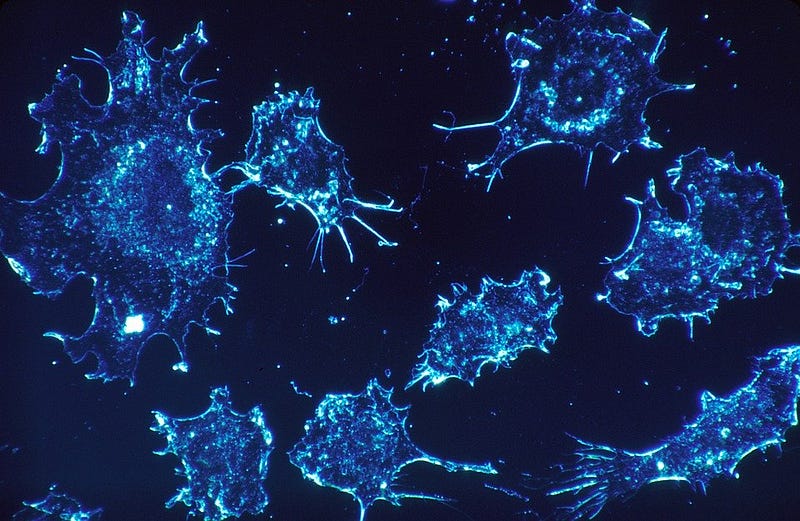
(Pixabay, skeeze)

Age and cancer

For the majority of cancers, the chance of occurring rises significantly with age. After all, more time equals more mutations. And more mutations equals a higher chance that something goes wrong in our cells, potentially leading to uncontrolled cell division, aka cancer.

Mutations are a ‘natural’ (quotation marks matter) consequence of the fact that our DNA copying mechanism is not 100% accurate. Every cell division carries the potential for an ‘error’, or mutation. (Not all mutations are bad, though.)

However, there are also external substances that can cause mutations. UV light is a well-known one. It’s no coincidence that increased exposure to UV light (such as blaring sunlight or, even worse, tanning beds) is strongly linked to an increased chance of developing skin cancer. Other external factors, such as air pollution and processed meat, are also linked to a higher chance of developing certain cancers.

But, it seems that our own bodies can make substances that can help cancer spread.

MMA helps tumors

A new study found that MMA (methylmalonic acid, and not mixed martial arts, in this case) accumulates in our blood as we age.

MMA (Wikimedia commons, Fvasconcellos)

MMA is a by-product of the digestion of proteins and fat. In small quantities, it is necessary for the energy production in our cells. The researchers, however, found that MMA accumulates in the blood of older people. Fortunately, the people aged over 60 in the study, with increased MMA concentrations, did not show signs of ill health.

But, what the researchers did find was that when they exposed human cancer cells to the blood serum of this older group, those cells began showing traits of metastatic cancer cells (the ones that spread through the body). Also important was that the presence of large blobs of lipid (fat) were needed for MMA to enter cells and do its evil deed.

The fact that the people in the study were — thankfully — cancer-free means that MMA does not induce cancer, but helps it spread when it has developed (the chance of which also increases with age, as we’ve seen). Hence, old age does not only increase your chances of developing cancer, but also of having that cancer spread throughout your body.

Age and MMA

MMA’s detrimental effect appears to be linked to its ability to affect gene regulation. MMA upregulates a gene called SOX4. This gene is known to be involved in both embryonic development and cancer progression.

Why does MMA increase with age, though?

We’re not entirely sure.

We know that high MMA is an indicator of vitamin B12 deficiency, and levels of vitamin B12 tend to decrease with age. But, in the study, the scientist found no correlation between B12 status and MMA concentration. So, that’s probably not the main factor.

Another possibility is diet. As mentioned, MMA is a byproduct of protein digestion. And lower protein intakes are associated with less cancer in the 65 and younger population (but the reverse is true for the older population, nutrition is complicated). How this links MMA with age, however, is not clear, which is why the link between eating (plenty of) protein and cancer still needs a lot more research.

(Don’t ban all protein from your diet, please. In fact, don’t ban any specific macronutrient — protein, carb, fat — from your diet. We need all three. Don’t go overboard on one either, moderation is key.)

What this study does show us, though, is that there is a link between age, MMA, and cancer metastasis. As such, it presents MMA as a potential therapeutic target.

In the fight against cancer, we need all the weapons we can get.

_________________________________________________________

For more science/writing/general madness, feel free to say hi on Twitter (@evolveon).

Science
Health
Future
Cancer
Medicine
Recommended from ReadMedium
avatarAuthor, D. Denise Dianaty
Citrus Cake

My son’s favorite birthday cake

5 min read