
Here Is Why You Need to Start Simple When You Turn Your Life Into Games
Every brilliant game design had a simple start.

A question
I have a question for you.
On a scale of one to ten (ten being the biggest, and one the smallest), how would you grade your curiosity and enthusiasm for turning your projects and activities, or even your whole life, into games?
Take a piece of paper or open a page in a text-editor and record your score.
If it is less than five, close the browser window with this article and continue with your day.
But I suspect that if you got to this paragraph and continue reading, it is at least five and probably even higher.
In which case, go ahead and turn your life into games. But …
Start simple
But start simple. Take just one project you escape from or procrastinate.
Play the 5 Minute Perseverance Game with it, for example. This game’s rules are straightforward. You take a project or activity in the game. You have to pursue the project for at least five minutes a day. If you do it, you earn a point. If you don’t, then you lose the point to your procrastinating self. And if you persevere for less than five minutes, you got half a point with the other half going to the procrastinating part of yourself.
You can read more about this game in the following article:
For longer-term goals, make rounds of at least a week but ideally a month. You need to gain experience with these games before modifying the design or extending the approach to others.
Remember to be playful and gameful with your designs.
Be playful with shorter tasks too. For example, when you clean-up in the kitchen, imagine you are a Super Mario or Princess Peach on a secret mission to save your pans and spoons from the evil fat-monsters. Whatever is fun, think of it.
When these games become boring, then either add new game elements to your project games (if they are not completed yet) or extend your self-motivational and gameful approach to other projects as well. Or both.
On the other hand, if you notice that the design for your self-motivational games — projects and activities turned into games — and especially the feedback systems become too sophisticated, then you might be escaping other projects you want to pursue but are scared of.
When you escape into the game design
Here is a valuable lesson I learned from designing self-motivational games. If the apps or designs I use to gamify my life require too much time to use, maintain, develop, or adjust, and I take them too seriously or too precisely (for example, when designing the feedback systems and recording my points), then I am escaping other things, including those I want to do. That is why I try to keep these — and the process of adjusting them as my interests also change — as simple and fun as possible.
It’s worth repeating: Start simple.
I want to add another aspect to it. If you were to jump straight into some of my current self-motivational game designs (some of them are featured in the story quoted right here below), they might appear complex and sophisticated.
However, this complexity and multi-dimensionality grew incrementally. I started by taking a design I already had and making one small adjustment at a time. It all started with the 5 Minute Perseverance Game, then grew into something I called Project (“Crush”) Management Game. Finally, the Balance Game embraced all areas of my life, maturing gradually as I played it.
Let your self-motivational game designs go through a similar evolution. Start with something simple.
The following story might help you with some ideas:
Thank you for reading!
I hope you enjoyed this article. What were or are some of your self-motivational game designs? I’d love to hear about them in the comments.
A note to this article:
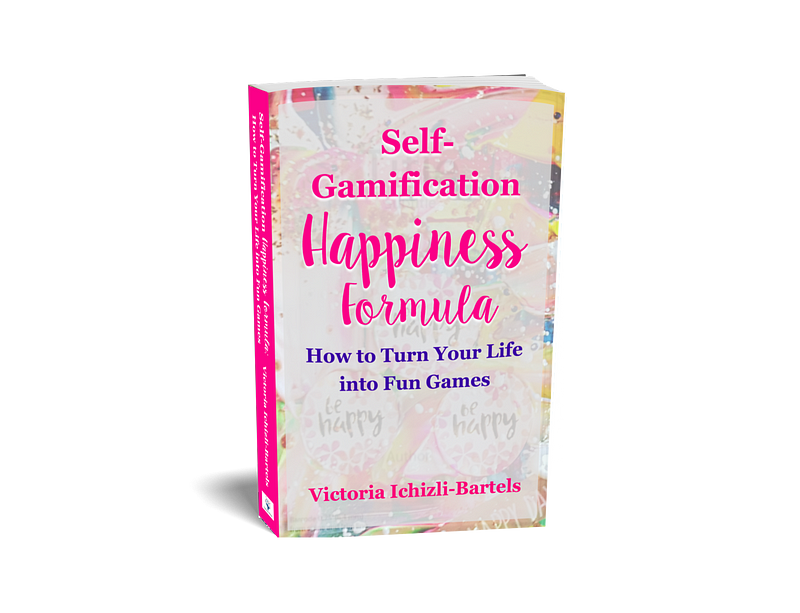
It is a modified excerpt from Self-Gamification Happiness Formula: How to Turn Your Life into Fun Games.
Related articles:
P.S. To get an “awareness booster” that will help you disentangle any tough project and a short story that could provide for that first advice of taking time off your stagnating project, subscribe to my newsletter, Optimist Writer.


