
How to Classify Tasks Based on What We Think and Do
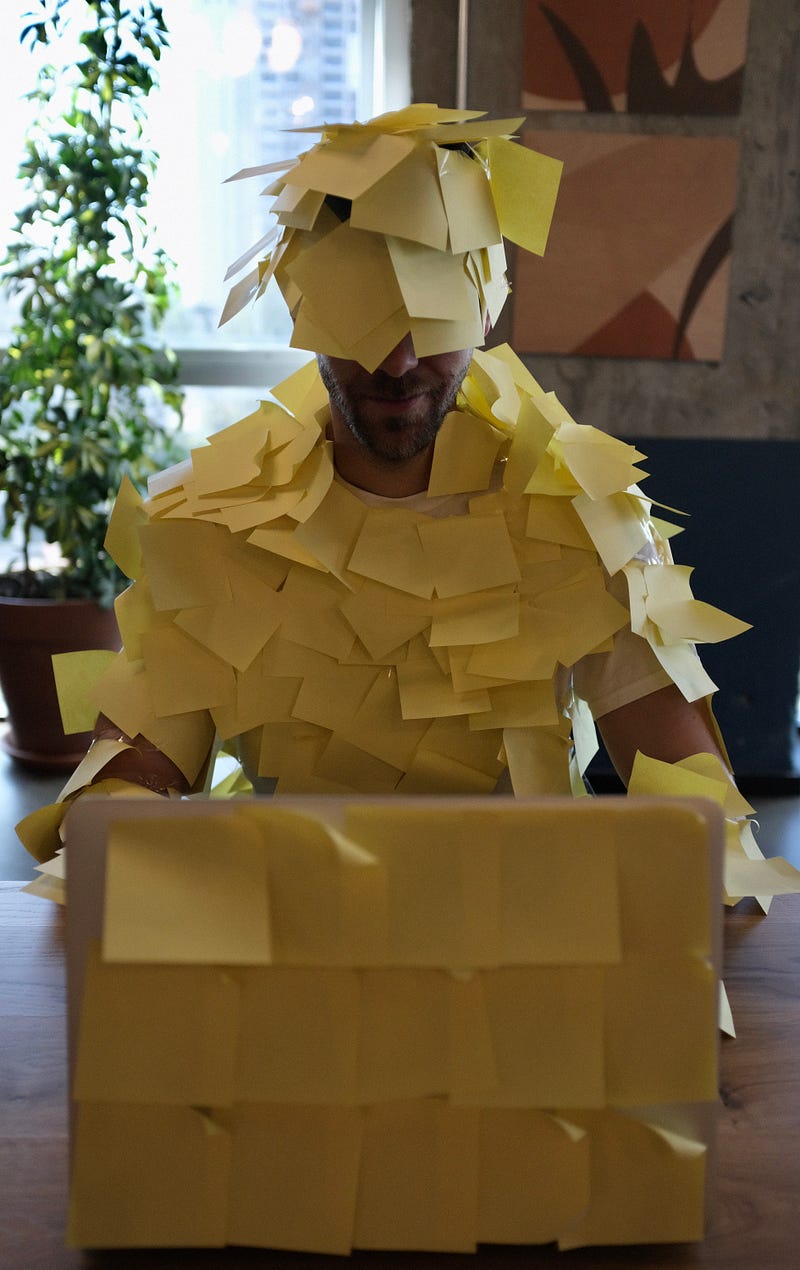
You can turn any project or activity into a game — both at work and at home.
But there is another aspect to what we can or should gamify (turn into games). I discovered that most satisfaction comes when I turn those tasks into games that appear tricky or tough. A task seems tough and overwhelming when I resist it. Turning those tough tasks into enjoyable and fun activities helps me melt my procrastination and increase my desire to “play” them. That is the actual fun of Self-Gamification.
Let’s look into this a little more.
Many of us have learned at various points in our lives to classify our projects and tasks into urgent and non-urgent, important and unimportant. I learned and tried to apply this system multiple times too.
While turning my life into games, and by observing myself and the world around me non-judgmentally, I discovered that there are only two types of projects and tasks depending on how I treat them.
I either:
- escape from them, or
- escape to them.
That is it. Nothing more.
There is, of course, psychological research about how and why we behave in various situations. Human behavior is so complex that there are numerous scientific disciplines studying and trying to explain it.
Thus, it is even more amazing to realize that, independent of the causes for our actions, we treat whatever we want or have to do in only two ways:
- We either avoid them (in other words, we don’t do them), or
- Do them while escaping from other things.
Escape-from tasks
What are the tasks and projects from which we tend to escape — those we procrastinate about before attending to, or avoid forever? What are these?
When I considered what these were for me, I realized that there were again two types, or sub-types, of projects and tasks, independent of whether they had to do with work, my family and friends, or myself.
My thought processes determined these two sub-types of escape-from tasks, and this is how I thought of them:
- Sub-type 1: I either felt that I wanted to do them very much, but didn’t have time for them, or
- Sub-type 2: I thought I didn’t want to do them but had to do them.
Here are some examples of the tasks I wanted to do but thought that I didn’t have time for (sub-type 1):
- I wanted to spend more time writing my works-in-progress during the day but I couldn’t because I had so many other things to do.
- I wanted to learn and speak better Danish (since I live in Denmark).
Here are examples of the tasks I needed to do because I had committed to them, but claimed or thought that I didn’t want to do them (sub-type 2):
- I didn’t like doing bookkeeping for my business, but I had to.
- I didn’t like working out or doing any kinds of sports, but I had to because it was better for my health.
While practicing Self-Gamification, I discovered something surprising that now sounds logical and revealing to me. The tasks we “have” to do must also be something we “want” to do. Otherwise, we wouldn’t keep them around, but would give them up entirely after some time. We can become aware of this by recognizing that they are, in fact, parts of the more significant projects or goals we want to achieve. Such as preparing for exams to get the degree we want.
Escape-to tasks
Now, let’s consider the things that we escape to. The things that we choose to do before those discussed in the previous section. Let’s take a look at the projects and tasks we blame for our procrastination of escape-from tasks.
I discovered that here, there are also two sub-types. There are “obvious” and “productive” escape-to tasks.
The obvious are those we describe as, “I deserve a break, so I’ll do that instead of what I planned to do.”
These could be, for example, watching TV or random videos on YouTube, reading a book for leisure, playing an online game, staying in bed, spending time on social media, surfing the internet, etc.
And the second type is productive activities, but not necessarily those that are urgent or necessary to reach our set goals. Instead, these are beneficial but non-urgent, and things we might attend to when we “should” be doing other more pressing activities or those we claim we want to do.
For me, that used to be doing laundry (or in the absence of it, other household chores). If I was finding it a challenge to write an article or a blog post or a book chapter or to compile advertising copy for my books and services, I sometimes followed the impulse to go and check if there were enough dirty clothes to wash or any clean and dry laundry to fold.
Others might choose, for example, gardening before any other things they have to do. Or, if you work in an office, you might find yourself re-structuring the folders on your shelves (or in your computer file system) or some similarly useful but not necessarily urgent activity.
Escape-from and escape-to tasks can switch places
While reading (listening to / watching) the above, you might have found it difficult to differentiate clearly between escape-from and escape-to activities, when thinking of your own.
This could be because the activities we escape from can become those we escape to, and vice versa, depending on our state of mind.
The first time I noticed this myself was when I was putting off laundry, but checking the accounts for my business almost daily. There were rarely income and expense entries every day for my one-person business, but I let the laundry grow into a considerable mountain nonetheless.
How can this classification help you?
You might have felt a little uncomfortable looking at what you escape from and escape to, and at the complexity of your thought processes. So why do it?
The purpose is to give you a simple approach by which to study your behavior toward various projects and activities, as well as your thought processes, anthropologically — in other words, non-judgmentally.
This will make you aware that you procrastinate about not only the things you think you don’t want to do but have to, but also the projects you believe you cherish.
Awareness of your escape-from and escape-to projects and activities, in various situations and states of mind, can help you design your Self-Motivational Games in such a way as to create an enticing challenge. Beyond that, you can give yourself more rewards for your escape-from projects and activities, and limit the rewards for escape-to activities.
For example, I limited points to a maximum of one per day for doing laundry. If I gained a point for it on a particular day, doing more laundry wouldn’t earn me any more points. This motivated me to return to writing, and the other activities I feared and procrastinated about, as I could gain more points for those instead. Giving myself a point for each tiny bit of a task I procrastinated about, for example, for writing a paragraph of my book or working for a few minutes on another escape-from project, made those tasks more attractive and effortless to accomplish.
If an escape-to task switched places with an escape-from task, then I adjusted my Self-Motivational Game accordingly, for example, when laundry and bookkeeping switched places. I reserved a spot on my calendar for each Friday to check my business and private accounts, and update my business books and personal expenses. Until Friday came, I wouldn’t get any checkmark (or point) for doing this task. Now I was free to do the other tasks I had on my to-do list, like laundry, for example, which had become an escape-from task.
The text above is an excerpt from Gameful Project Management: Self-Gamification Based Awareness Booster for Your Project Management Success (Gameful Life Book 1). For the whole video series click Gameful Project Management.
P.S. To keep in touch, subscribe to my newsletter, Optimist Writer.
About the author:
Victoria is a writer, instructor, and consultant with a background in semiconductor physics, electronic engineering (with a Ph.D.), information technology, and business development. While being a non-gamer, Victoria came up with the term Self-Gamification, a gameful and playful self-help approach bringing anthropology, kaizen, and gamification-based methods together to increase the quality of life. She approaches all areas of her life this way. Due to the fun she has, while turning everything in her life into games, she intends never to stop designing and playing them.


