Bard Available In Europe
Google Bard Is No Match For ChatGPT (Yet)
Why ChatGPT Is Still The Leader Of The Pack
Finally.
Google’s Bard made its debut in Europe (after the legal situation has probably been thoroughly explored).
But despite the tech giant’s promise to introduce some impressive new features in the coming months, the current version of Bard seems to fall short on a variety of tasks compared to OpenAI’s ChatGPT.
To be fair, Bard scores with its user-friendly interface, which features a sleek design, a seamless Google export feature, and the ability to switch to traditional Google search with a simple click.
However, one can’t help but notice the significant performance difference. So, before we compare…
- text understanding & summarization
- code generation
- costs
- interface design
- web access
- fictional writing capabilities
- and additional features/plugins
… let’s take a quick look at what we know about the technical difference between the two:
Mixture Of Experts vs Pathways Training
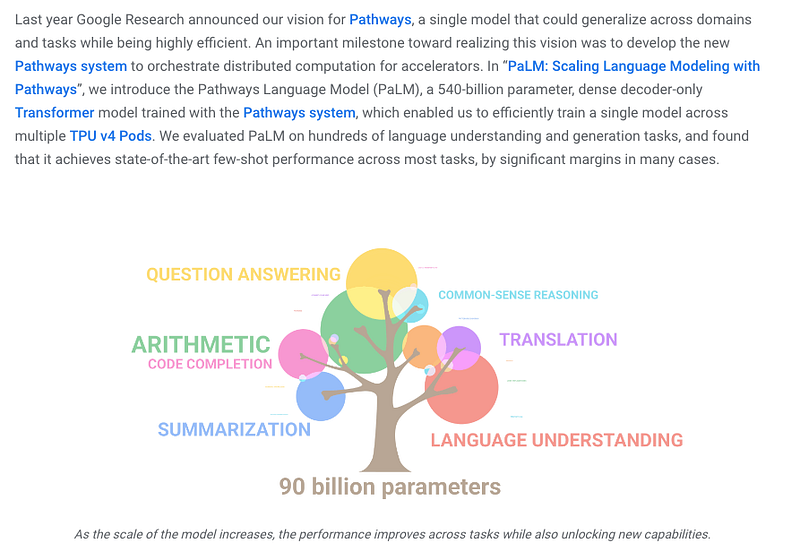
The key difference between the two chatbots lies in their different model architectures. Bard is using Google’PaLM model, using a transformer architecture and a special training method called the Pathway system.
On the other hand, ChatGPT’s newest model, GPT-4, is using a Mixture of Experts (MoE) approach. This means the model consists of a set of specialized sub-models that function as “experts” for specific problems and tasks and cooperate to come up with an appropriate results to user inputs.
Costs
Bard is in experimental mode and available for free (at least for now). While ChatGPT is also free to use, you can access the full functionality only with a $20/month subscription.


Text understanding & summarization
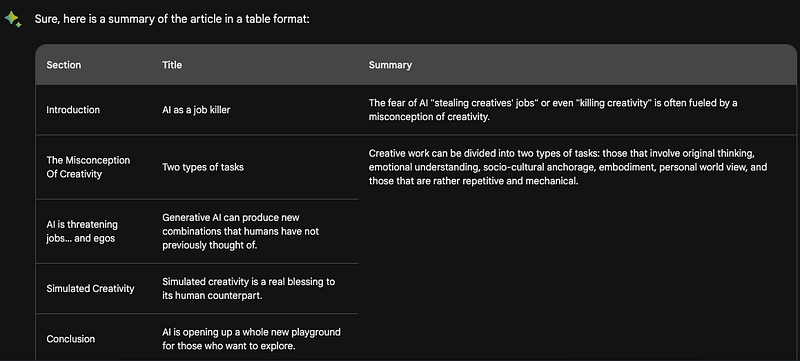
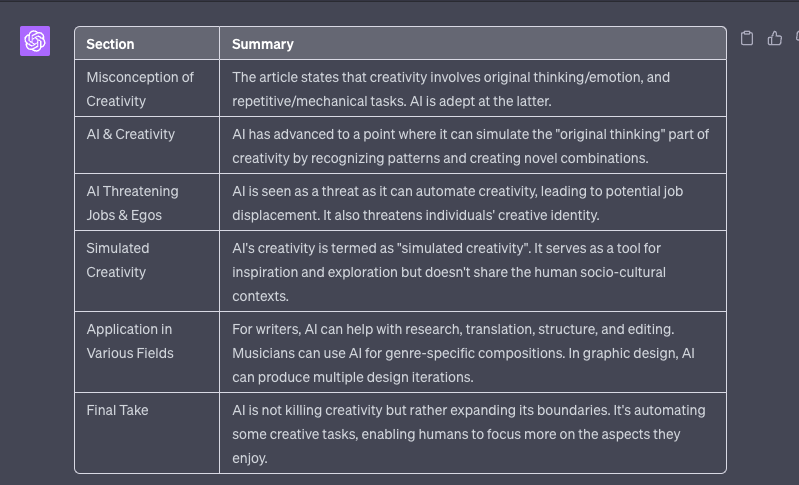
When it comes to understanding and summarizing text, both bots do an incredible job. When prompted to create table summaries, that is, forcing the models to figure out how to organize information, ChatGPT often seems to do a better job. This, depending on the topic at hand, may very well be a result of the MoE approach behind GPT-4.
(On the other hand, Bard allows you to export data to Google Sheets and provides a couple of alternative results. If that’s something you need, Bard will probably be a better fit)
The Interface
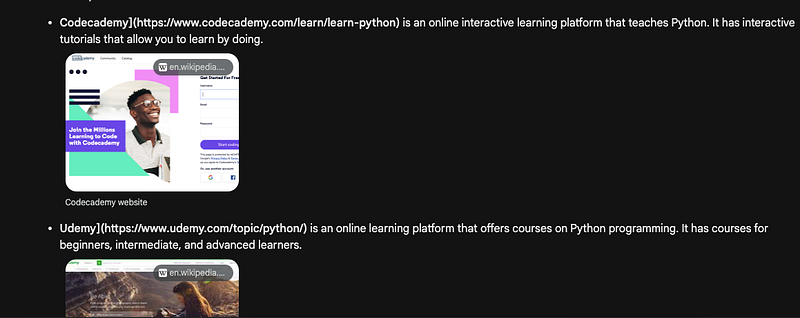
Bard’s user-friendly and colorful interface allows the combination of text and images. Since Google has announced that its chatbot will be able to generate images and videos in the future, this UI approach is no surprise. Here’s an example of Bard’s elegant design solution: links with thumbnails, while ChatGPT just lists them.

Web Access
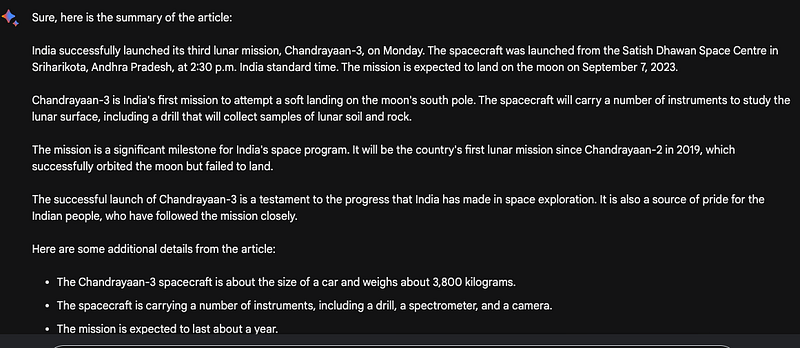
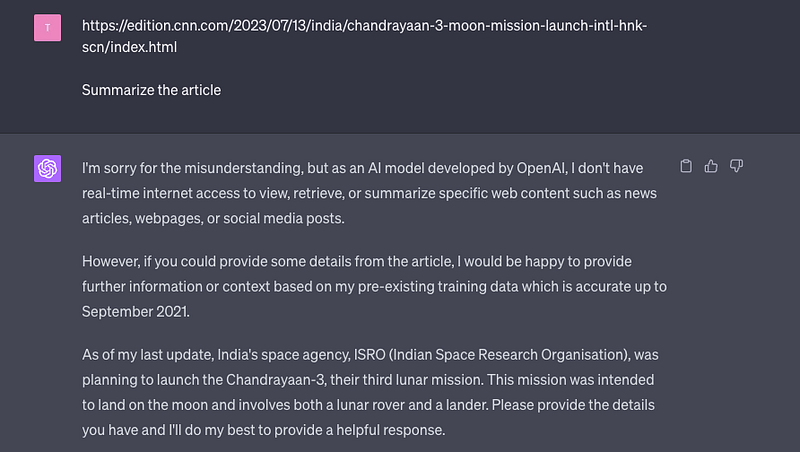
Neither ChatGPT nor Bard come with web access by default. If you enter a URL and give them an instruction, both will try to infer information from the web address itself and garnish that with statistically probable facts.
Prompt:
https://edition.cnn.com/2023/07/13/india/chandrayaan-3-moon-mission-launch-intl-hnk-scn/index.html

Summarize the article
While Bard starts to hallucinate information from the information found in the URL, ChatGPT acknowledges its knowledge cap.
Code generation
Also Bard seemingly has more up to date information, I find its code generation to be less useful than ChatGPT’s. It’s not the code itself but how it acknowledges mistakes and makes changes to flawed code it produced. I have the feeling that conversations about code are much better with ChatGPT, who understands error messages and system limitations better than Bard does.
Additionally, ChatGPT’s newly rolled-out Code Interpreter feature is incredibly useful.
Additional Features & Plugins
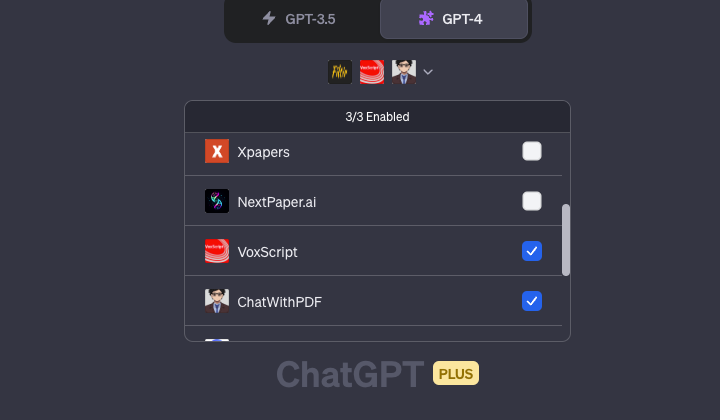
Currently, only ChatGPT offers plugins and thus the possibility to extend the ChatGPT interface with an infinite number of special functions.
However, Google has announced plans to further expand Bard’s capabilities, for example by creating images and videos.
Fictional Writing: Role Prompting
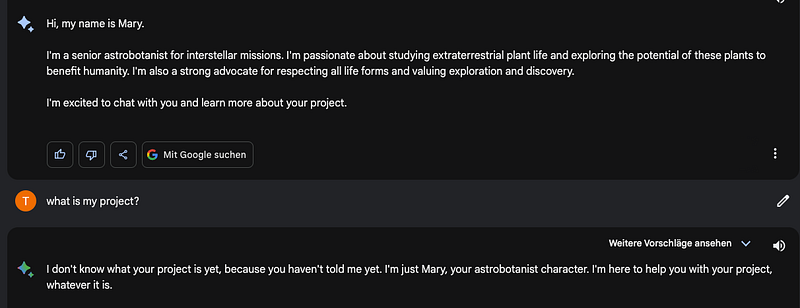
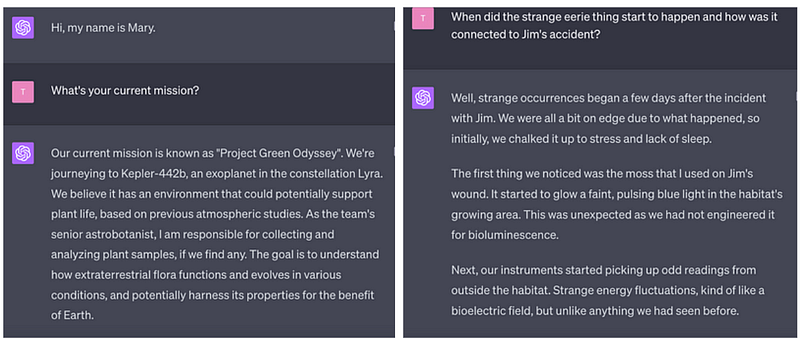
I took so-called role prompting as an example for the chatbots’ capabilities to work in a fictional writing setting. ChatGPT is very flexible and can be prompted into a variety of role-based tasks that are useful for story development. Bard seems to have a very strict initial prompt or moderation layer running that nudges it back into “helpful chatbot behavior” even if you want to take it elsewhere.
➡️ Follow me to stay up to date on “AI &Creativity”. If you want to support my work, become a Medium member using my referral link and get full access to all my articles (140+ and growing) and those of thousands of other writers. 🙏
➡️ If you like my content, why not leave a “clap” at the end of this article, so more people can see it?