
Situational Note-taking: “Frame for work” and “Framework”
A short note
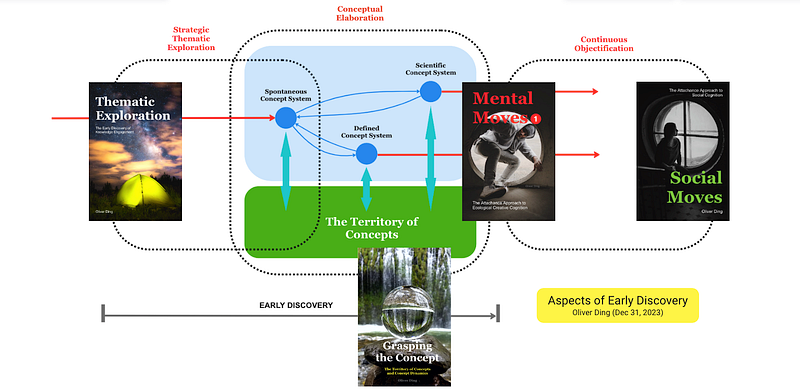
Yesterday I wrote a short annual review of my creative work in 2023. The above diagram was used to represent a series of books: Aspects of Early Discovery.
In 2022, I wrote four books and called them “Aspects of Creative Life” which focuses on different units of analysis of a creator’s life course.
In 2023, I moved to the process of making creative work, especially the early stage of developing significant themes into solid concepts. I used “Aspects of Early Discovery” to name four possible books.
In 2023, I wrote 7 or 8 possible books. Two of them are the same thing because one (Knowledge Engagement) was written in Chinese in April 2023, and the other one (Creative Life Theory) was written in English in Oct 2023.
From 2019 to Dec 2023, I wrote 26 possible books!
This is a fantastic creative journey!
This morning I sent the link to the article to two friends. After sending the email, I reflected on the two diagrams I used in the article.
The reflection inspired me to write this short note.
June 4, 2023: Develop Spontaneous Concept System
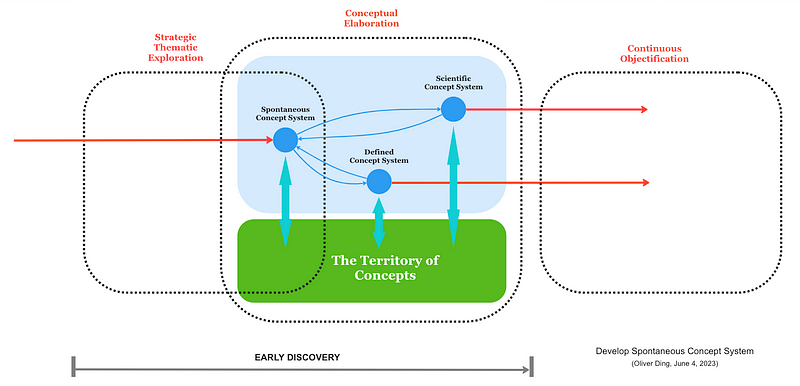
From Jan 2023 to June 2023, I worked on the TALE project. TALE stands for Thematic Analysis Learning Engagement. I used terms such as “Theme Network” and “Concept Network” for my articles about the project.
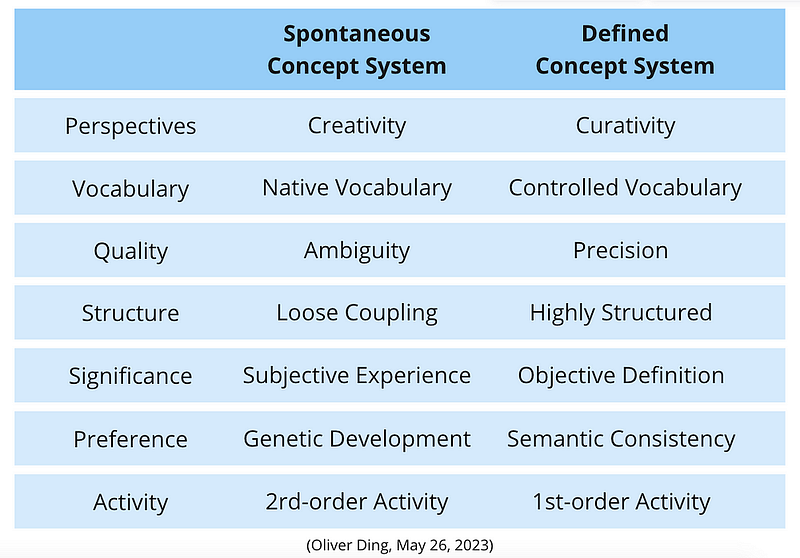
I introduced the term “Spontaneous Concept System” on May 27, 2023. I also introduced two related terms: Defined Concept System and Scientific Concept System.
On June 4, 2023, I made the diagram “Develop Spontaneous Concept System” for the article Themes in the Field: Self, Agency, and Activity (Part III) published on June 6, 2023.
Nov 25, 2023: The Landscape of Evolving Concept System
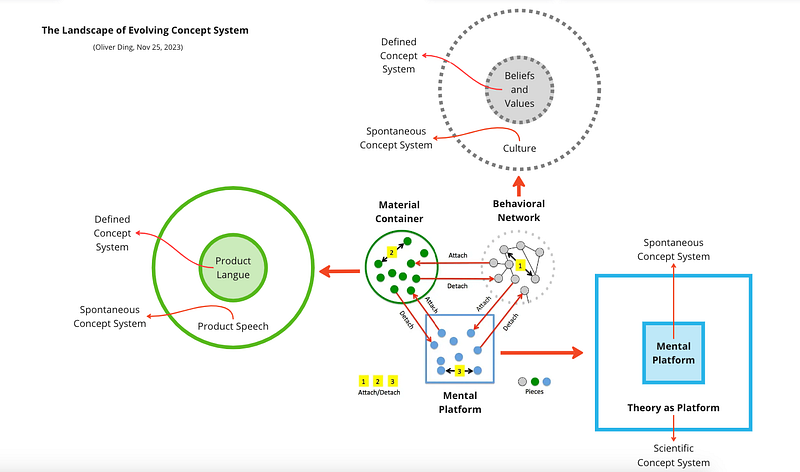
From June 2023 to Nov 2023, I continuously worked on developing the idea of “Spontaneous Concept System/Scientific Concept System/Defined Concept System”.
In the stage of Continuous Objectification, the primary object is a Concept System while the primary activity is called Developing A Concept System.
On Nov 4, 2023, I made the diagram below.
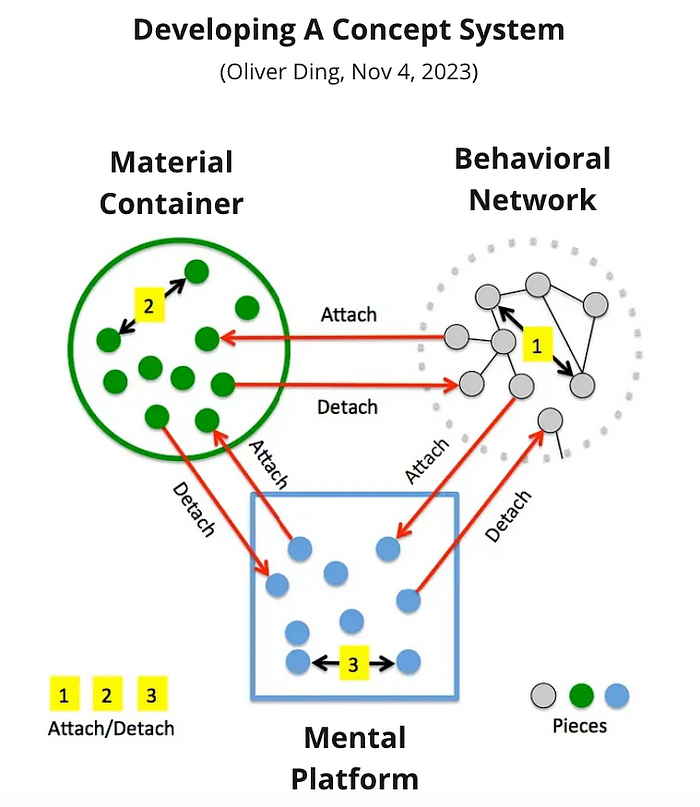
This one was designed for discussing “Developing A Concept System” in the context of building a Web 3.0 platform.
- “Mental Platform”: the team’s ideas about the web3.0 platform
- “Behavioral Network”: the team’s actual works, actions, and projects on making and changing the web3.0 platform
- “Material Container”: the actual web3.0 platform
You can find more details in my original Twitter thread.
Where did it come from?
It was inspired by the “Network — Container — Platform” schema. See the diagram below.
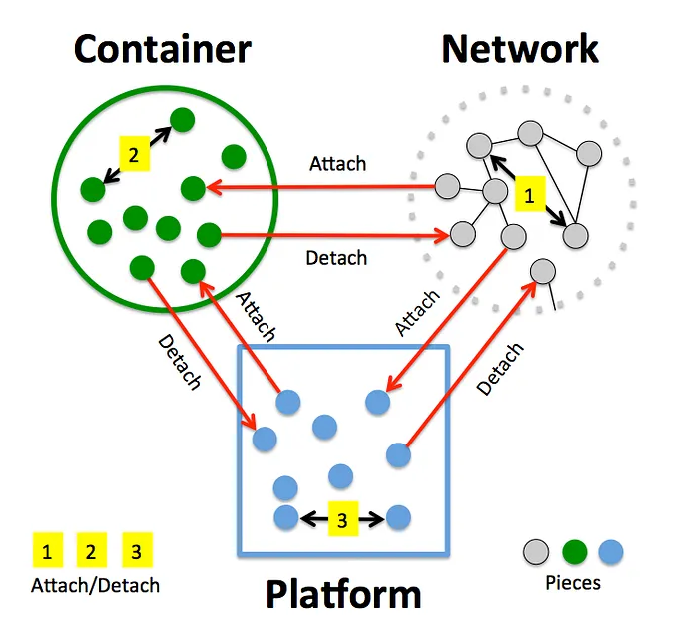
What did I do?
I just invented three new terms in order to use the “Network — Container — Platform” schema to represent my ideas about “Developing A Concept System” in the context of building a Web 3.0 platform.
A concept system is a set of ideas. It appears in three forms:
1. Mental Platform: How do you think?
2. Behavioral Network: How do you do?
3. Material Container: What do you make?
Why did I use the “Network — Container — Platform” schema? Why didn’t I use other diagrams?
The “Network — Container — Platform” schema is part of a set of perspectives of the Ecological Practice approach.
On August 17, 2023, I wrote the article titled The Ecological Practice Design Toolkit (V2, 2023) and recognized that the X-Y-Z Echo (see the diagram below) is the most popular model!
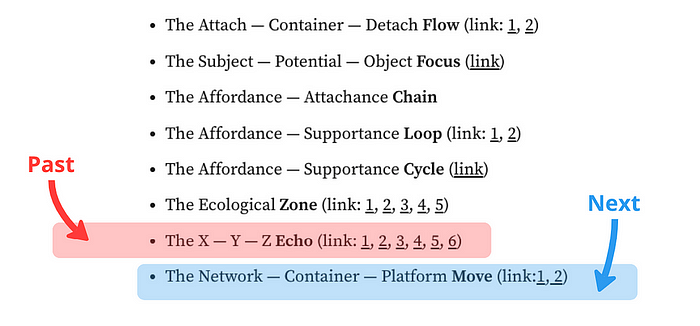
On August 23, 2023, I realized that I should use the “Network — Container — Platform” schema as a knowledge model in more knowledge projects.
You can find more details in Meaning Discovery: The “Moment — Present — Future” Thematic Space.
In Nov 2023, I found more examples for discussing “Developing A Concept System”. Eventually, I expanded it into “The Landscape of Evolving Concept System”.
Why did I call it an “Evolving Concept System”?
On Nov 17, 2023, I wrote a long article titled Psychological Knowledge Engagement and Robert Kegan’s Knowledge Enterprise. One of Kegan’s books is titled The Evolving Self.
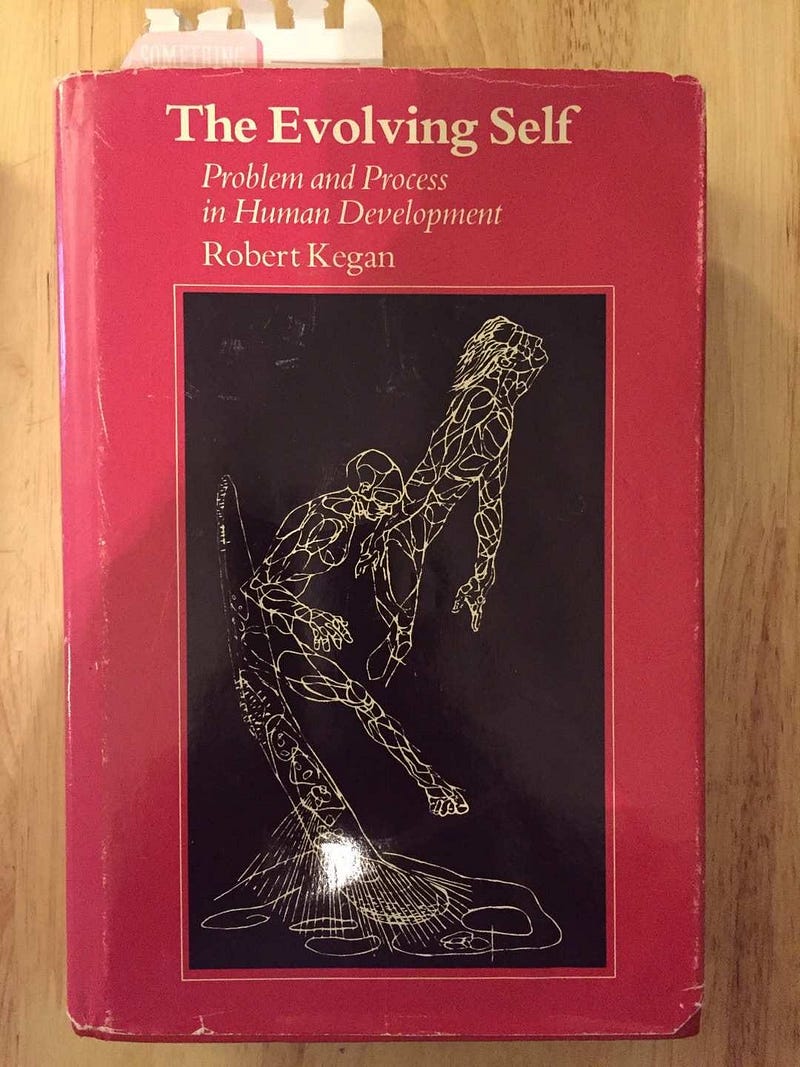
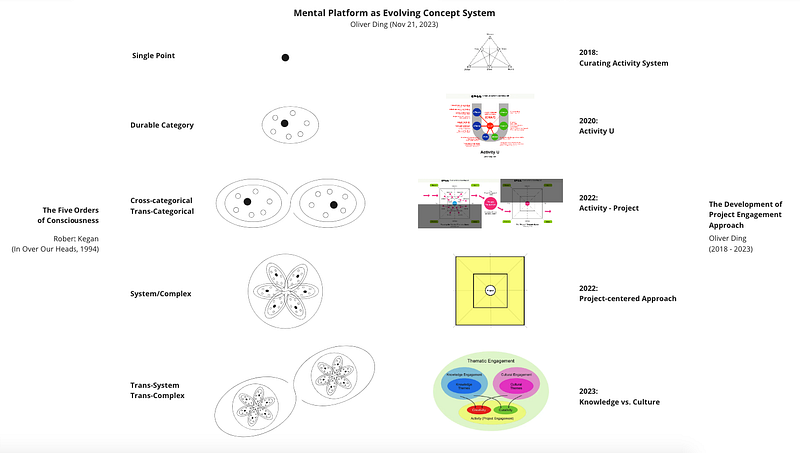
After writing the article, I used Kegan’s “Five Orders of Consciousness” framework to reflect on my two knowledge projects: the development of Project Engagement approach and the development of Possible Life Theory (Creative Life Theory).
On Nov 21, 2023, I made the first case study. See the diagram below. I used “Mental Platform as Evolving Concept System” as the title of the diagram.
On Nov 22, 2023, I made the second case study which was about the development of Creative Life Theory (Possible Life Theory).
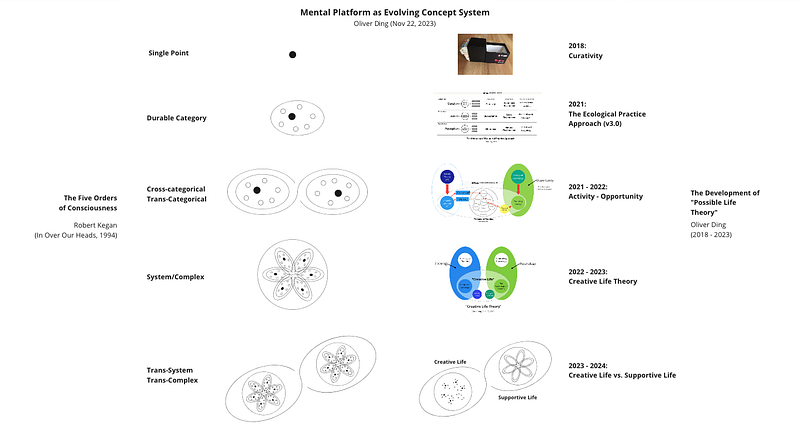
I found five movements in both two cases. These five movements match Kegan’s model.
This is fantastic!
On Nov 25, 2023, I used “The Landscape of Evolving Concept System” to name the framework.
Discussions
The above experience led to the following reflection.
1. Why didn’t I make the second diagram in June 2023?
In June, my mental focus was on the Thematic Exploration framework and a related book.

The first diagram was good enough for me in June 2023.
It roughly defined three phases of the journey of knowledge engagement.
- Phase 1: Strategic Thematic Exploration
- Phase 2: Conceptual Elaboration
- Phase 3: Continuous Objectification
From June 2023 to Nov 2023, I worked on the “Territory of Concepts” project which is about the phase of Conceptual Elaboration.
On Nov 30, 2023, I edited a book (draft) titled Grasping the Concept and closed the project.
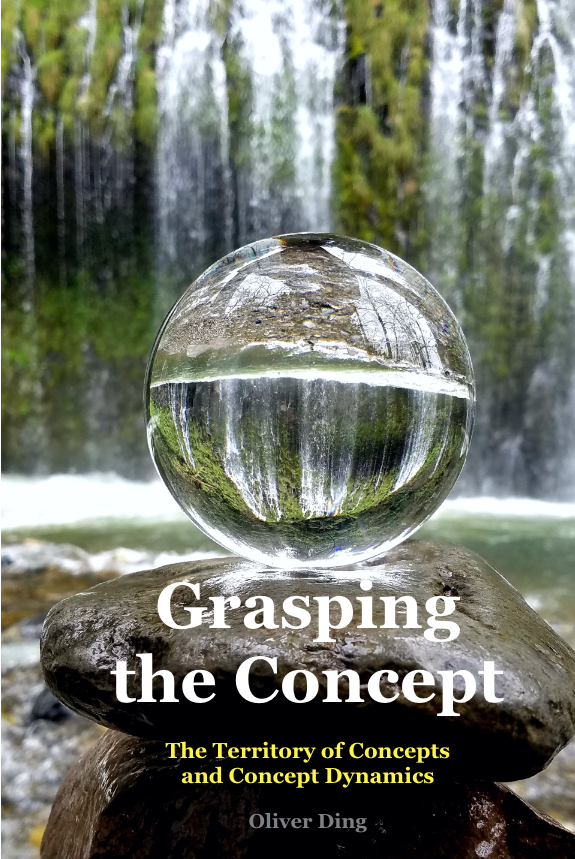
The second diagram and a related article were developed into Part 5 of the book.
In summary, the first diagram was the “Frame for Work” for my knowledge projects from June 2023 to Nov 2023. I used it as both a “knowledge framework” for understanding concept systems and a “mental model” for managing knowledge projects.
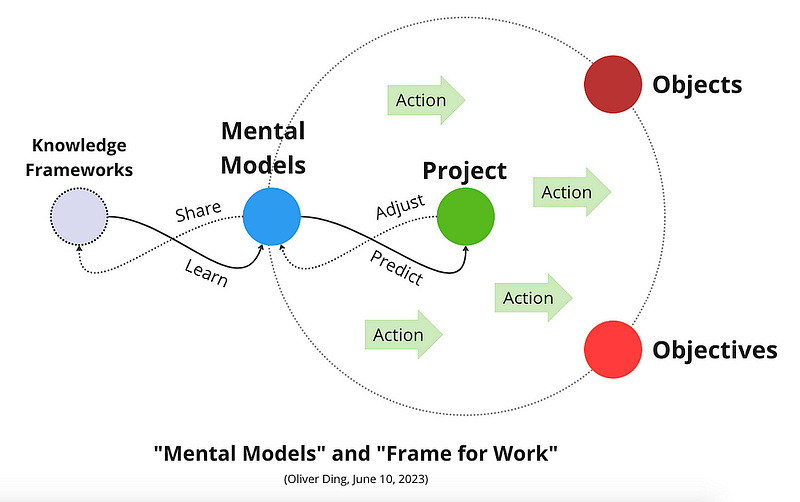
As a knowledge framework, it doesn’t offer details about the evolving concept system. It only gives us a simple typology of concept systems. The second diagram offers more details than the first diagram.
As a mental model, it is a powerful heuristic tool to me because I used it to frame a creative journey around the “theme—concept” transformation.
2. Why didn’t I offer details about the evolving concept system in June 2023?
It took time to figure out these details.
I couldn’t write out these details.
I had to do my homework of research such as conducting some case studies.
Logically, there is a paradox behind Early Discovery Activity:
- In the phase of Early Discovery, we don’t know the details of the Late phase. So, we can’t make a plan for the late phase.
- If we don’t have a plan for the late phase, we can’t pass the phase of Early Discovery and reach the late phase.
- If there is no Late phase, then the phase of Early Discovery is meaningless.
In practice, I just used a rough diagram as a heuristic tool to frame a creative space for my creative journey.
3. What’s the difference between a “Frame for Work” and a “Framework”?
The second diagram is a knowledge framework for understanding concept systems in the context of the phase of Continuous Objectification.
This is a good enough theoretical framework for supporting empirical research and practical reflection.
In 2022, I developed the Knowledge Discovery Canvas and wrote a book. I used “Frameworks” to name a block of the canvas. See the diagram below.
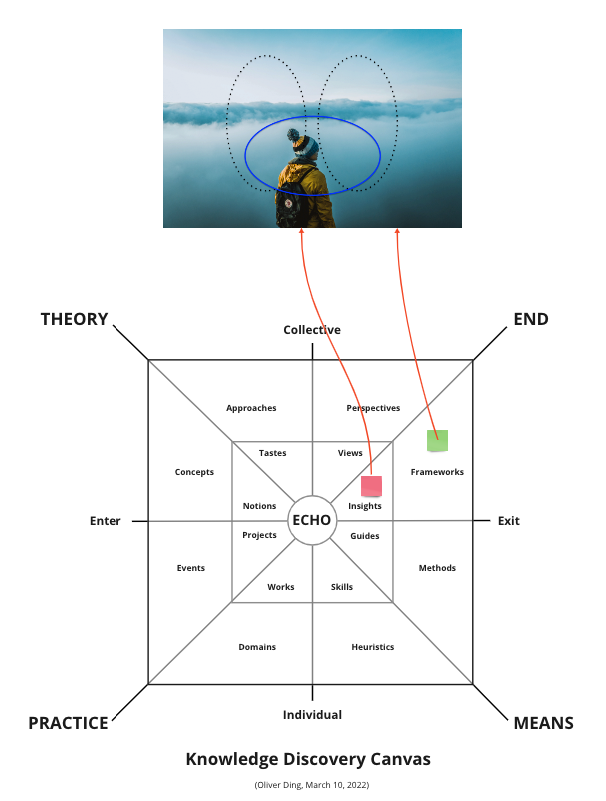
In Knowledge Discovery: The “Frameworks — Insights” Mapping, I introduced a typology of knowledge frameworks. I roughly listed six purposes of using and making knowledge frameworks.
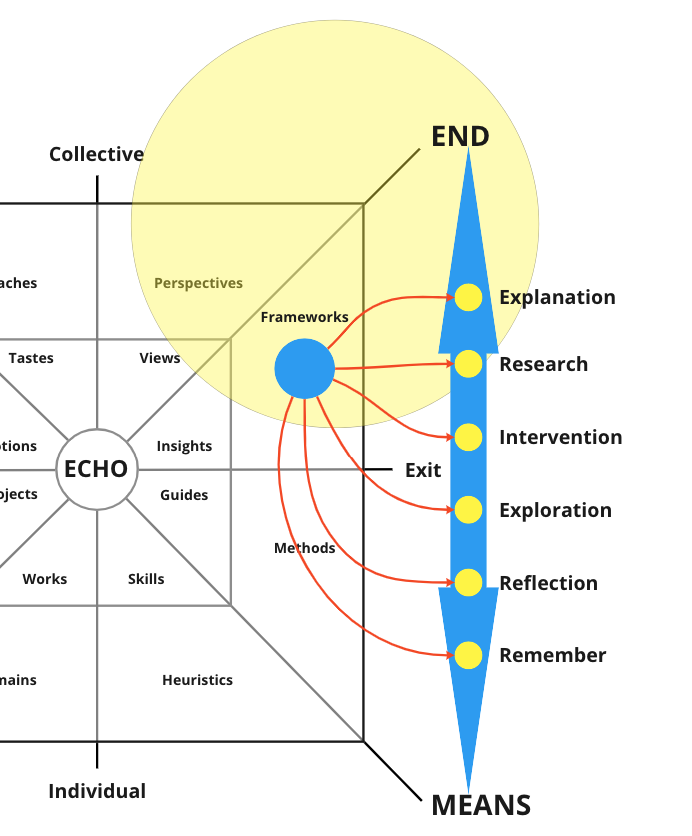
There are three purposes for making public benefits on the END side:
- Explanation
- Research
- Intervention
Many knowledge frameworks are developed for Explanation. They aim to offer a solution for understanding a particular topic or theme, not for designing a program and real actions.
Some frameworks are developed for Empirical Research. In order to support empirical research, creators tend to use operational concepts to develop frameworks. In this way, people can use these operational concepts to guide the data-collecting process.
Intervention is about designing a practical intervention program with a framework. Educators, book authors, app developers, and designers, are using and making knowledge frameworks for this purpose.
There are three purposes for making personal benefits on the MEANS side:
- Exploration
- Reflection
- Remember
Exploration refers to the unknown which means a creative space. My first diagram was made for this purpose.
Frameworks can be used to Reflect on personal work or teamwork.
I often use frameworks/diagrams to curate pieces of information into a meaningful whole to Remember related experiences and ideas.
If we use this typology, we can assign “Frame for Work” to the MEANS side because the “Frame for Work” is used to guide real-life projects. In contrast, “Framework” can be assigned to the END side because the Framework is used to make public knowledge.
Related books (Drafts)
- Creative Life Theory: Building A Knowledge Enterprise
- Mental Moves: The Attachance Approach to Ecological Creative Cognition
- Knowledge Discovery: Developing Tacit Knowledge with Thematic Space Canvas
- Knowledge Curation: Turning Pieces into A Meaningful Whole
- Life Discovery: Biography, Journey, Program
- Perspectives on Product Engagement
- Diagramming as Practice
- Diagram Blending: Building Diagram Networks
- Creative Life Curation: Discover Thematic Spaces of Creative Life


