avatarOliver Ding

Free AI web copilot to create summaries, insights and extended knowledge, download it at here

2001

Abstract

with the following basic unit of a thematic space. I designed the basic unit for the AAI project.</p><figure id="d463"><img src="https://cdn-images-1.readmedium.com/v2/resize:fit:800/0*cNKO8rsA3vUoy5Xt.png"><figcaption></figcaption></figure><p id="c861">The above basic unit represents a thematic space in a three-layer structure:</p><ul><li>Creative Life Story</li><li>Creative Theme</li><li>Knowledge Model</li></ul><p id="8747"><b>Creative Life Story</b> refers to an interesting real-life story from a person’s creative life.</p><p id="d314"><b>Creative Theme</b> refers to a theme behind a creative life story. Each story is associated with a theme that defines a thematic space.</p><p id="d7bd"><b>Knowledge Model</b> refers to a knowledge framework for understanding the thematic space.</p><p id="58a5">This three-layer structure was designed for <a href="https://www.activityanalysis.net/aai/">the Activity Analysis & Intervention (AAI) program</a>.</p><p id="ee5b">I discovered 8 thematic spaces from my recent creative life and placed them around the Knowledge Discovery Canvas.</p><p id="e6e0"><b>Enter:</b></p><ul><li>Situational Note-taking</li><li><b>Early Discovery</b></li><li>The Thematic Exploration Framework</li></ul><p id="bb27"><b>Exit:</b></p><ul><li>Life Reflection</li><li><b>Late Bloom</b></li><li>The Creative Life Curation Framework</li></ul><p id="caf9"><b>THEORY:</b></p><ul><li>Theoretical Integration</li><li><b>Spirit of Unification</b></li><li>The Knowledge Curation Framework</li></ul><p id="4daf"><b>PRACTICE:</b></p><ul><li>Value Circle</li><li><b>Knowledge Center</b></li><li>The Project Engagement Framework</li></ul><p id="68cf"><b>END:</b></p><ul><li>Frame for Work</li><li><b>Applied Psychological Science</b></li><li>The Meaning Matrix Framework</li></ul><p id="5a4f"><b>MEANS:</b></p><ul><li>Diagram Blending</li><li><b>Thematic Spaces</b></li><li>The Ecological Creative Cognition Framework</li></ul><p id="7885"><b>Individual:</b></p><ul><li>Mental Mo

Options

ves</li><li><b>Self-awareness</b></li><li>The Ecological Creative Cognition Framework</li></ul><p id="c2c3"><b>Collective:</b></p><ul><li>Social Moves</li><li><b>Structured Social Support</b></li><li>The Platform-for-Development Framework</li></ul><p id="1694">A knowledge model can be assigned to more than one thematic space. For example, the Ecological Creative Cognition Framework was assigned to “Thematic Spaces” and “Self-awareness”.</p><p id="9f9d">I also use the AAI program and the Life Discovery Canvas to frame these 8 thematic spaces.</p><figure id="99be"><img src="https://cdn-images-1.readmedium.com/v2/resize:fit:800/0*pan3mHh-tJT4SHil.png"><figcaption></figcaption></figure><figure id="e26b"><img src="https://cdn-images-1.readmedium.com/v2/resize:fit:800/0*u-oTjvdb_qp_0jVe.png"><figcaption></figcaption></figure><ul><li>The AAI program defines two types of analysis: First-order Analysis and Second-order Analysis.</li><li>The Life Discovery Canvas defines four areas of life discovery: THINK, LEARN, SAY, and DO.</li></ul><figure id="e81e"><img src="https://cdn-images-1.readmedium.com/v2/resize:fit:800/0*810YCDnYijNu7zvn.png"><figcaption></figcaption></figure><p id="451e">The primary themes of my Creative Life are Creative Work and Meta-knowledge about life and work.</p><p id="3ffb">First-order Activity Analysis (DO and SAY) is about Creative Work. I placed four thematic spaces into this category because they are all about Creative Work (DO and SAY).</p><ul><li>Value Circle</li><li>Theoretical Integration</li><li>Frame for Work</li><li>Life Reflection</li></ul><p id="475a">Second-order Activity Analysis (THINK and LEARN) is about Meta-knowledge about life and work. I placed the other four thematic spaces into this category.</p><ul><li>Mental Moves</li><li>Social Moves</li><li>Diagram Blending</li><li>Situational Note-taking</li></ul><p id="60d7">This is the first round of exploring potential thematic spaces with the Knowledge Discovery Canvas.</p></article></body>

Creative Life Curation: Discover Thematic Spaces of Creative Life

A new method of using the Knowledge Discovery Canvas
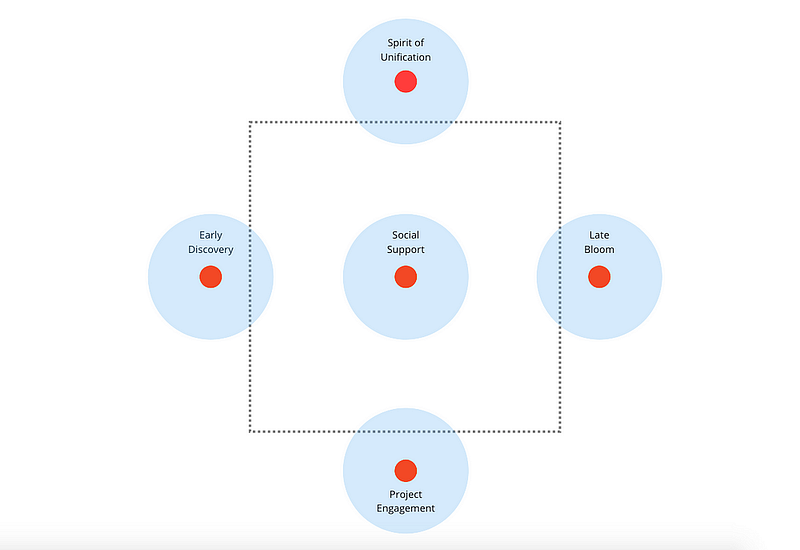
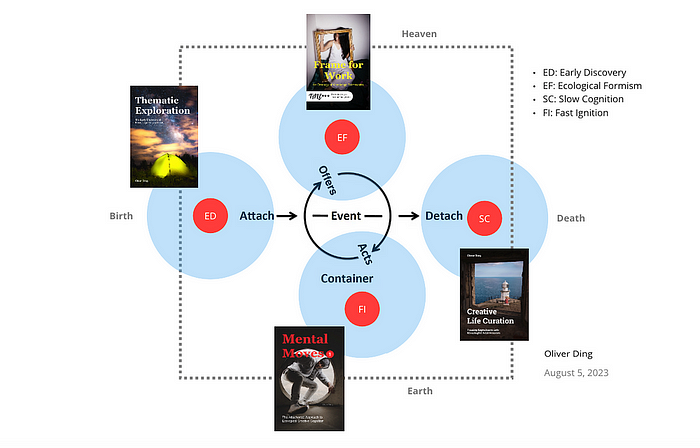
Two weeks ago, I worked on the Activity Analysis & Intervention (AAI) program and ran an AAI project to help a knowledge creator reflect on his journey of knowledge engagement and discover potential creative themes for the future. I used the Knowledge Discovery Canvas to discover several thematic spaces and placed his creative thematic network around the canvas. I didn’t use the canvas in its official way but used its white space for exploring potential thematic spaces.

To keep the client’s privacy, I applied the diagram to my own Creative Life.

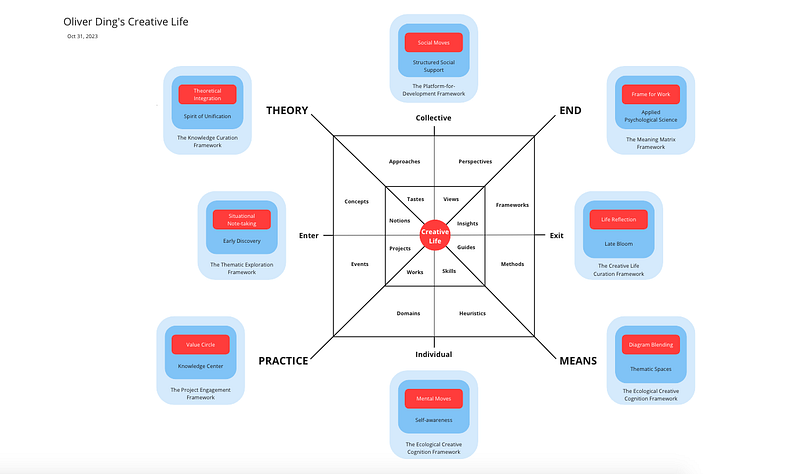
On Oct 5, 2023, I discovered 5 thematic spaces from my Creative Life. See the diagrams below. You can find more details in CALL: The Development of Creative Life Theory (2020–2023, Part 7).
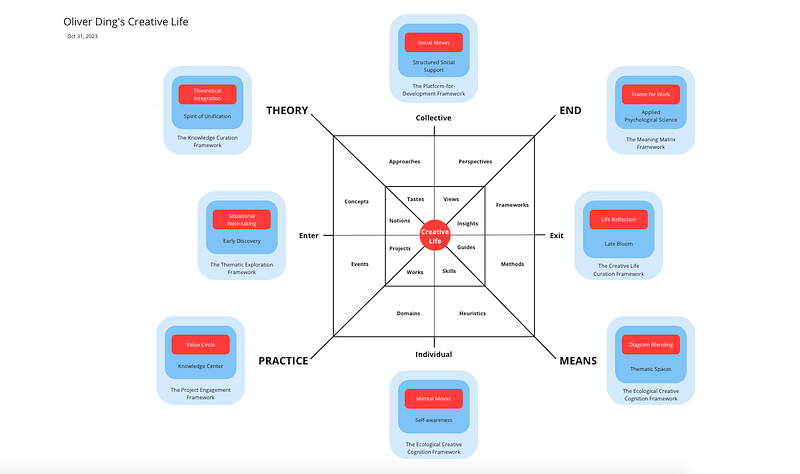
By using the Knowledge Discovery Canvas, I discovered more thematic spaces from my Creative Life. See the diagram below.
Let’s start with the following basic unit of a thematic space. I designed the basic unit for the AAI project.
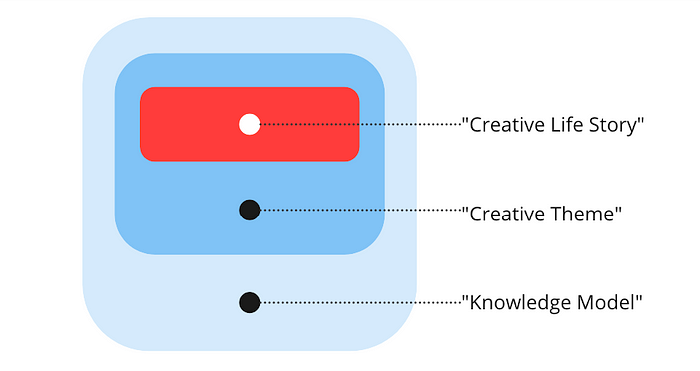
The above basic unit represents a thematic space in a three-layer structure:

  • Creative Life Story
  • Creative Theme
  • Knowledge Model

Creative Life Story refers to an interesting real-life story from a person’s creative life.

Creative Theme refers to a theme behind a creative life story. Each story is associated with a theme that defines a thematic space.

Knowledge Model refers to a knowledge framework for understanding the thematic space.

This three-layer structure was designed for the Activity Analysis & Intervention (AAI) program.

I discovered 8 thematic spaces from my recent creative life and placed them around the Knowledge Discovery Canvas.

Enter:

  • Situational Note-taking
  • Early Discovery
  • The Thematic Exploration Framework

Exit:

  • Life Reflection
  • Late Bloom
  • The Creative Life Curation Framework

THEORY:

  • Theoretical Integration
  • Spirit of Unification
  • The Knowledge Curation Framework

PRACTICE:

  • Value Circle
  • Knowledge Center
  • The Project Engagement Framework

END:

  • Frame for Work
  • Applied Psychological Science
  • The Meaning Matrix Framework

MEANS:

  • Diagram Blending
  • Thematic Spaces
  • The Ecological Creative Cognition Framework

Individual:

  • Mental Moves
  • Self-awareness
  • The Ecological Creative Cognition Framework

Collective:

  • Social Moves
  • Structured Social Support
  • The Platform-for-Development Framework

A knowledge model can be assigned to more than one thematic space. For example, the Ecological Creative Cognition Framework was assigned to “Thematic Spaces” and “Self-awareness”.

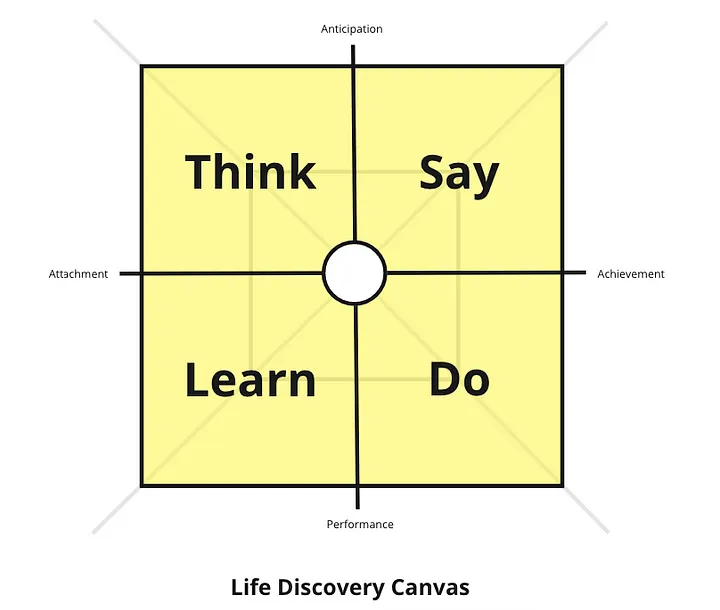
I also use the AAI program and the Life Discovery Canvas to frame these 8 thematic spaces.
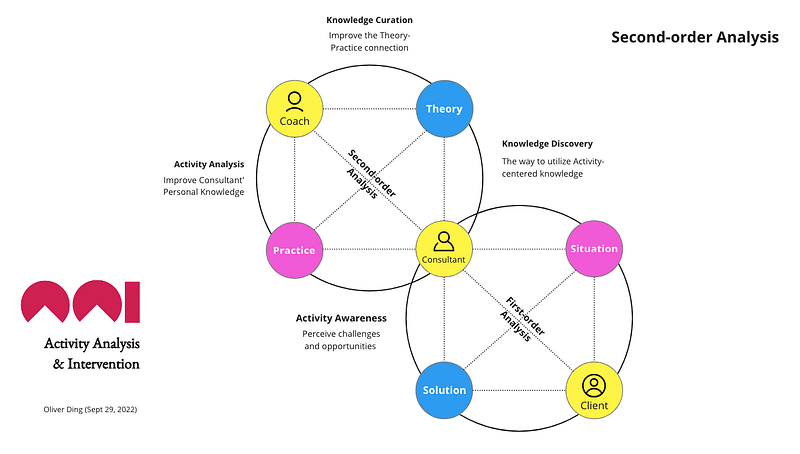
  • The AAI program defines two types of analysis: First-order Analysis and Second-order Analysis.
  • The Life Discovery Canvas defines four areas of life discovery: THINK, LEARN, SAY, and DO.
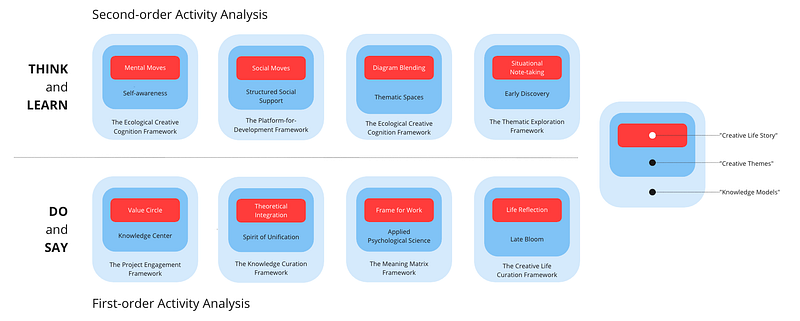
The primary themes of my Creative Life are Creative Work and Meta-knowledge about life and work.

First-order Activity Analysis (DO and SAY) is about Creative Work. I placed four thematic spaces into this category because they are all about Creative Work (DO and SAY).

  • Value Circle
  • Theoretical Integration
  • Frame for Work
  • Life Reflection

Second-order Activity Analysis (THINK and LEARN) is about Meta-knowledge about life and work. I placed the other four thematic spaces into this category.

  • Mental Moves
  • Social Moves
  • Diagram Blending
  • Situational Note-taking

This is the first round of exploring potential thematic spaces with the Knowledge Discovery Canvas.

Life Reflections
Recommended from ReadMedium