
Meaning Discovery: The “Moment — Present — Future” Thematic Space
A Case Study
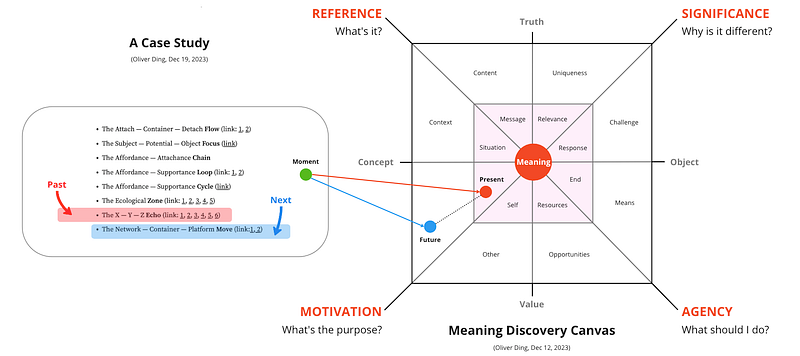
The above diagram is a case study of the Meaning Discovery Canvas.
On Oct 25, I made a new canvas for discovering Meaning.
On Dec 12, I used “Value — Truth” to replace “Individual — Collective”. I also started collecting some materials for case studies.
Today I’d like to share one case study about the “Present” and “Future” blocks.
This case study also introduces a new method of discovering thematic spaces around the Meaning Discovery Canavs and the Thematic Matrix Canvas.
1. Materials and Models
For my case studies, Materials are pieces of experiences found from my real-life events.
The Meaning Discovery Canvas is a knowledge framework or knowledge Model.
Each case study happens within a Thematic Space between Materials and the Model.
How to represent the Thematic Space?
I selected one theme from the Materials and two themes from the Model to make a thematic triangle to frame the thematic space. The diagram below is an example.
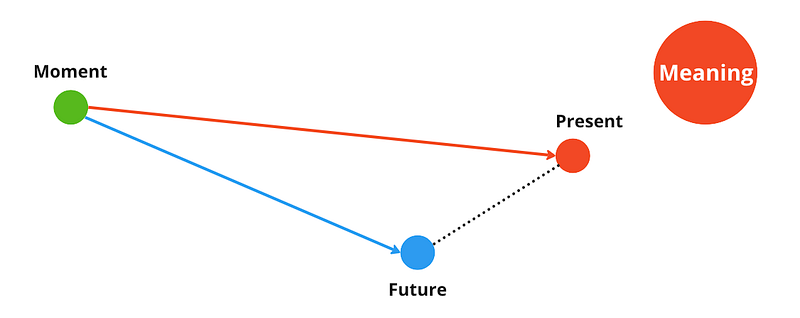
“Moment” refers to a short indefinite period. I used it to refer to the Immediate Situational aspect of Materials.
“Present” and “Future” are two blocks of the Meaning Discovery Canvas.
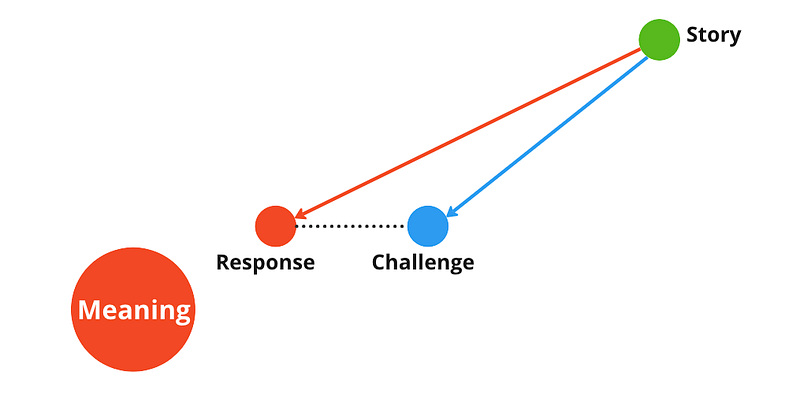
For some case studies, the immediate situational aspect is not the primary focus. For example, Life Meaning Discovery tends to engage with the long-term development of stories and themes. We could use “Story” to frame a new thematic space. See the example below.
This article will use a Moment as an example.
2. A Moment
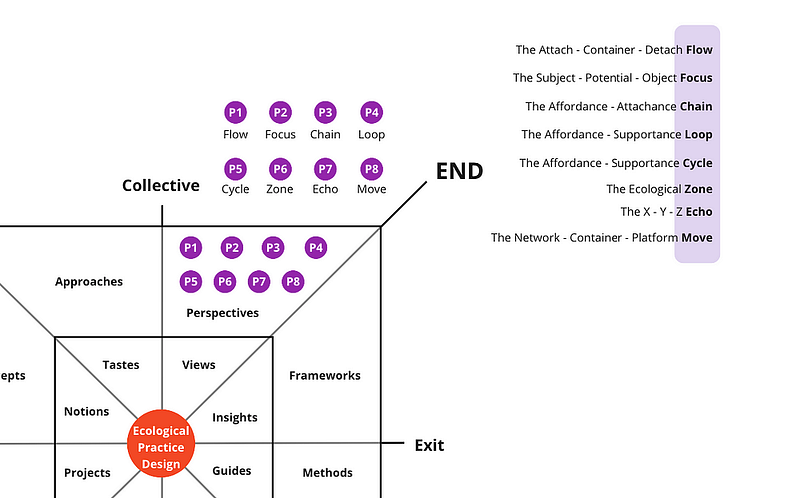
On August 15, 2023, I used the Knowledge Discovery Canvas to reflect on the Landscape of the Ecological Practice Design approach. See the diagram below.
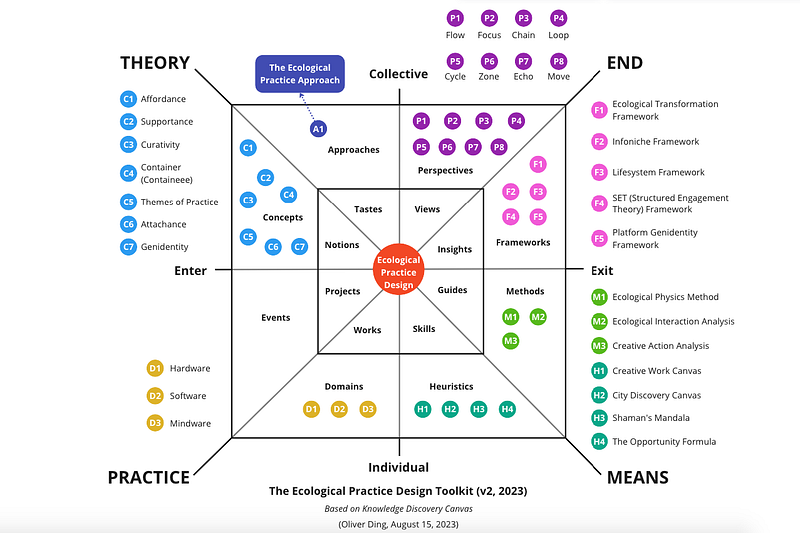
I also wrote a long Thematic Reflection Report about it. You can find more details in The Ecological Practice Design Toolkit (V2, 2023).
Let’s pay attention to the set of Perspectives.
I have applied these Perspectives to many projects. I also wrote some articles about them. See the screenshot below.
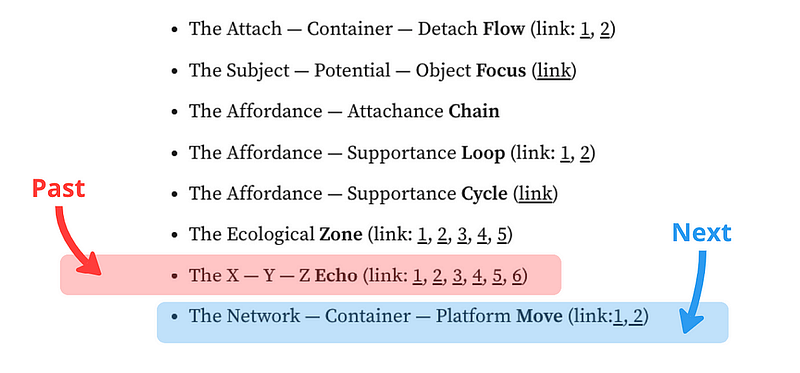
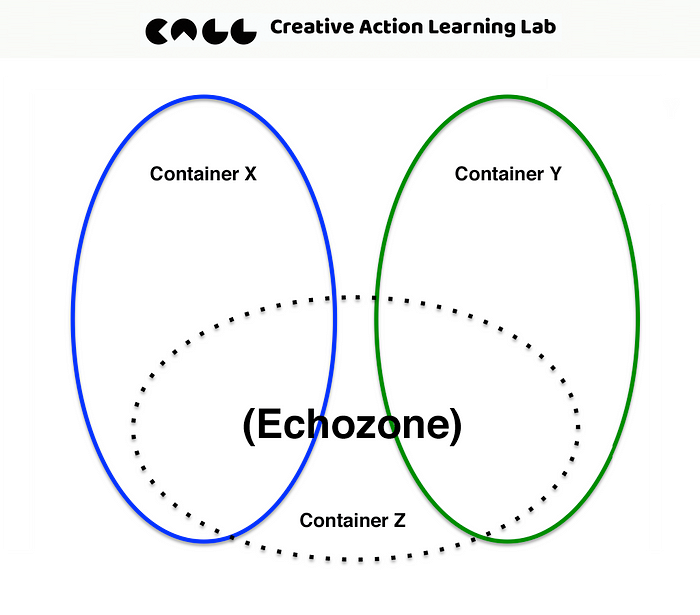
On August 17, 2023, I wrote the article titled The Ecological Practice Design Toolkit (V2, 2023) and recognized that the X-Y-Z Echo (see the diagram below) is the most popular model!
In fact, the Network — Container — Platform Move offers a large view for understanding the concept of Attachance. See the diagram below.
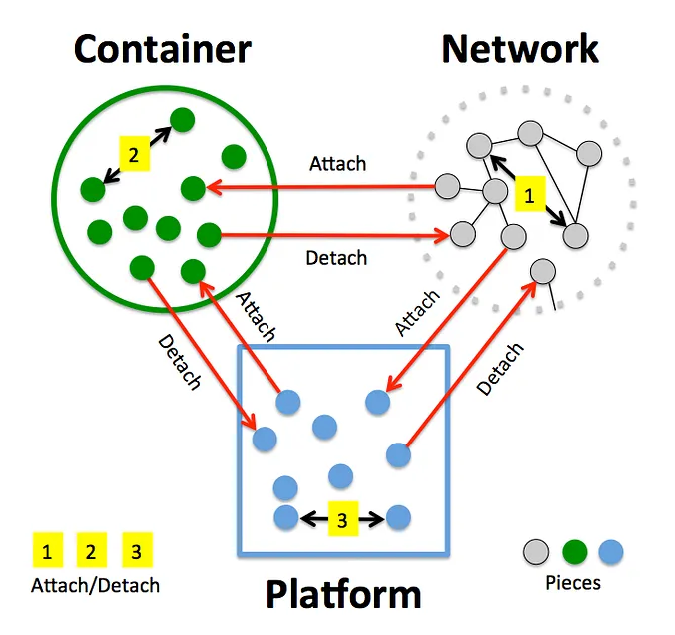
On August 23, 2023, I realized that I should use it as the knowledge model for curating the set of possible themes.
3. An Action
What did I do?
I made the diagram below.
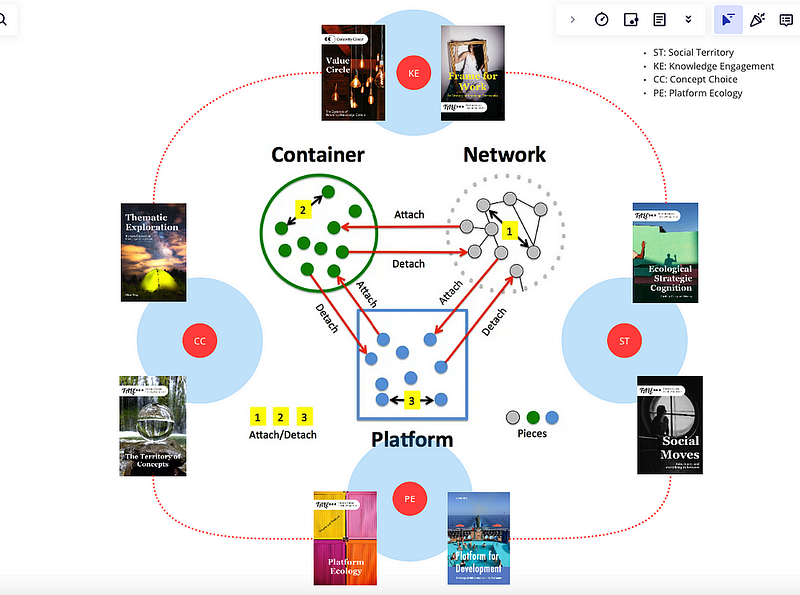
I used “the Network — Container — Platform Move” as the basic model to curate several themes together.
You can find more details in TALE: A new network of possible themes (August 24, 2023).
This diagram framed my strategic intents behind several knowledge projects from August 2023 to Dec 2023.
4. The Result
The moment led to several knowledge projects, articles, and books (drafts).
On Dec 7, 2023, I wrote a story about this journey with the diagram below.
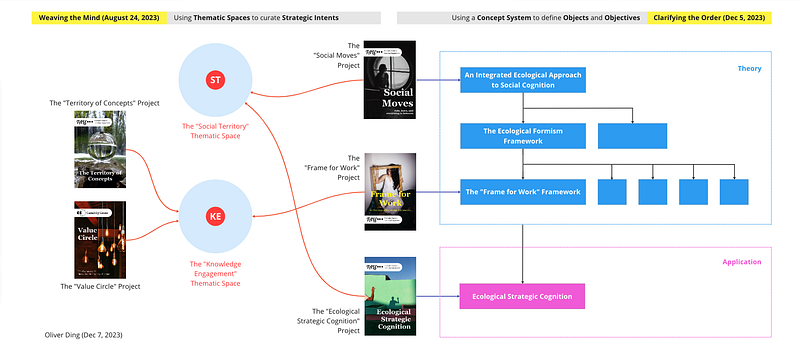
You can find more details in Social Moves: Weaving the Mind and Clarifying the Order.
6. The Motivation
The “Moment — Present — Future” Thematic Space is located in the “Motivation” Thematic Area.
In the above case, I realized that I didn’t often use “the Network — Container — Platform Move” Perspective. So, I decided to deliberately use it for future projects.
This Motivation led to an amazing outcome: the Evolving Concept System.
On Nov 4, 2023, I made the diagram below:
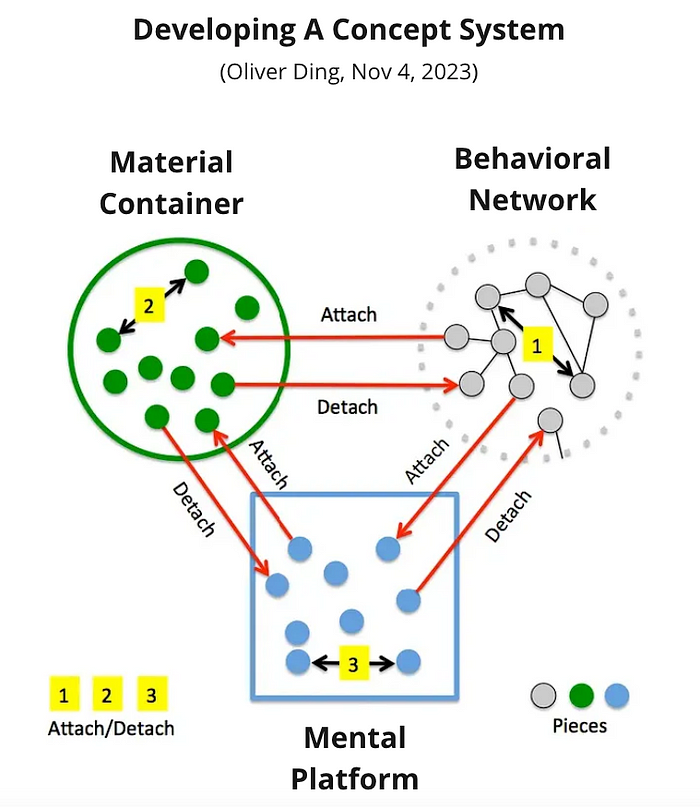
On Nov 25, 2023, I expanded the above diagram into a diagram network:
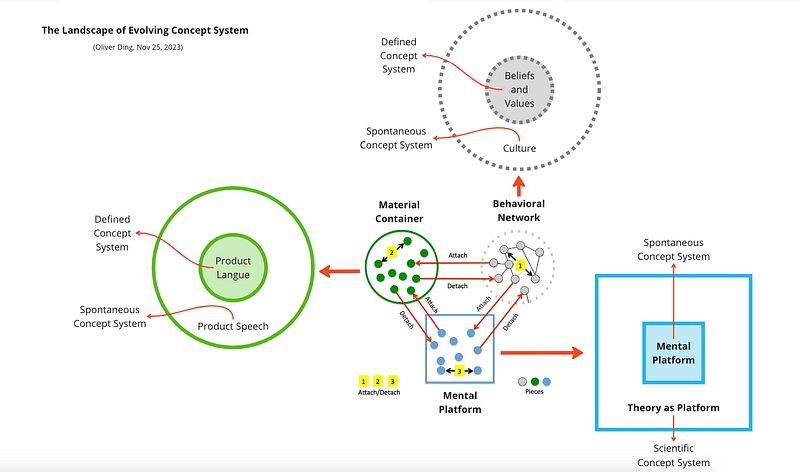
You can find more details in Mental Platform: The Evolving Concept System.
7. The Insight
What kind of insight can we learn from this case study?
It is about Managing the “Explore—Exploit” Balance.
At that moment, I realized that I didn’t work on the “Exploit” model of using “the Network — Container — Platform Move” Perspective enough.
Then, I made a strategic change.
I detached my mental focus from the the X-Y-Z Echo and attached it to “the Network — Container — Platform Move”.
Related Articles
- Situational Note-taking: The idea of “Meaning Matrix” — Oct 17, 2023
- Situational Note-taking: The Thematic Matrix Canvas and Meaning Discovery Canvas — Oct 25, 2023
- Situational Note-taking: The idea of “Thematic Matrix +” — Nov 19, 2023
- [Creative Diagramming] Graphic Space Affordances, Thematic Space, and Possible Paths — Oct 31, 2023


