
Frame Analysis in Context
An Example of Quasi-social Interaction and Ecological Interaction Analysis
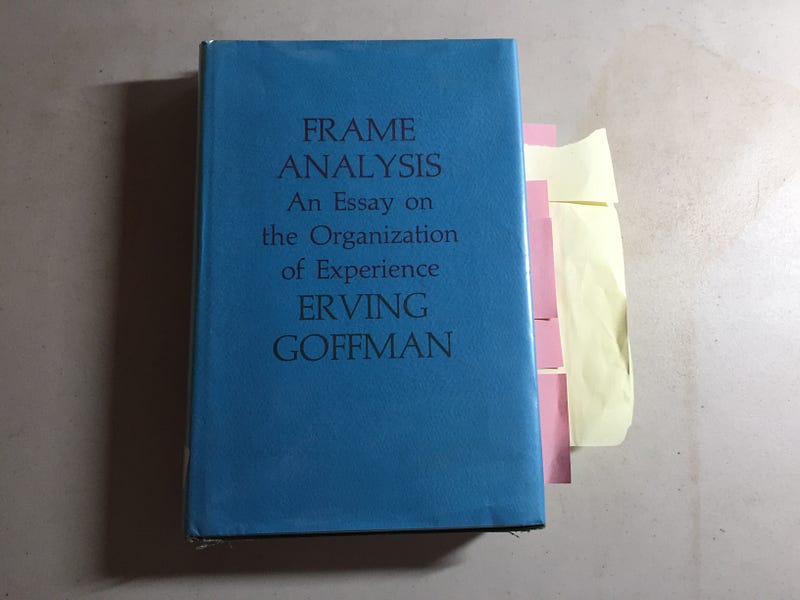
This is not a reading note, but a note on reading itself. Last week, I ordered Frame Analysis on Amazon and received it this Friday. The subtitle of the book is An Essay on the Organization of Experience. This article can be seen as a record of my experience of reading the book with additional reflection and discussion.
Part I: Record Part II: Reflection Part III: Discussion
The goal of the article is not to discuss the idea of “Frame Analysis,” but to record my reading experience of a book titled Frame Analysis. Thus, I will pay attention to the context of my reading experiences, such as related books and my reading chair.
Part I will use photos to record and present my reading activity within three days. Part II will present the Ecological Interaction Analysis framework and use it to reflect my reading experience. Part III will adopt the 3I model I developed for studying creative action for understanding a new idea Quasi-social Interaction I coined for discussing my reading case.
Part I: Record
Five years ago, one of my friends suggested that I follow a great mind and read an academic book on creativity every year. I adopted this great idea and changed my learning habits. Each year I select a great psychologist and pick an academic biography about the figure.
Early this year, I started reading about George Herbert Mead because I want to know more about sociology. Last week, I found Anders Persson’s Framing Social Interaction: Continuities and Cracks in Goffman’s Frame Analysis has an open access version and I downloaded it and started reading the book. After two hours, I ordered Frame Analysis on Amazon.
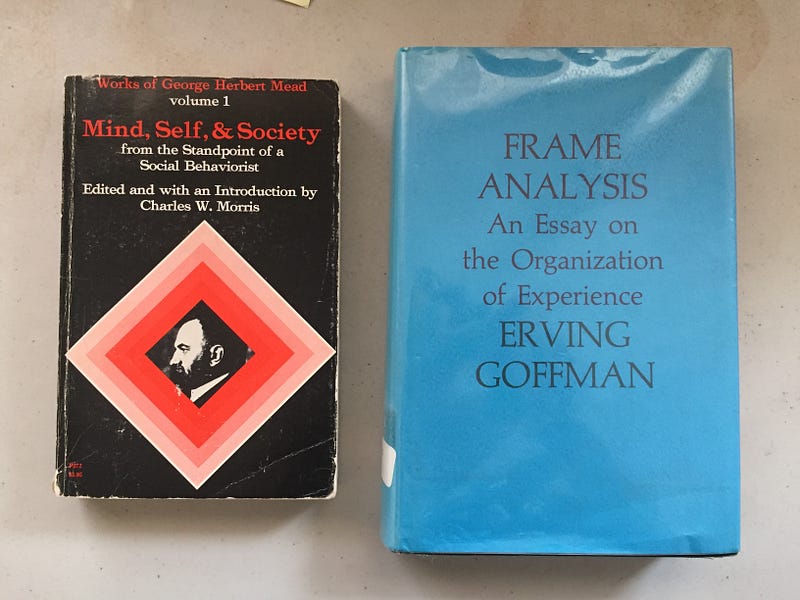
I received the book on Friday and read it immediately. This article records my reading experience within three days and six types of context.
Friday (July 10, 2020) Received the copy of Frame Analysis in the evening. Read it after dinner. Found William James and Alfred Schutz’s articles and took pictures.
Saturday (July 11, 2020) Read Frame Analysis in the morning. Reed Frame Analysis in the afternoon. …(afternoon: my wife made a cup of milky tea)… Read Framing Social Interaction on a Mac computer at night. Found more related books and took pictures.
Sunday (July 12, 2020) Read Frame Analysis in the morning. Took pictures of my reading space. Found a related book after lunch. Started writing this article in the afternoon. … (afternoon: making a pizza with kids)… Watched three related videos on YouTube at night.
Friday (July 10, 2020)
At around 6:00 p.m., I received Frame Analysis. It was published by Harvard University Press in 1974 with an ISBN number 0–674–31656–8 and Library of Congress catalog card number 74–4644. It is a hardcover book with 586 pages.
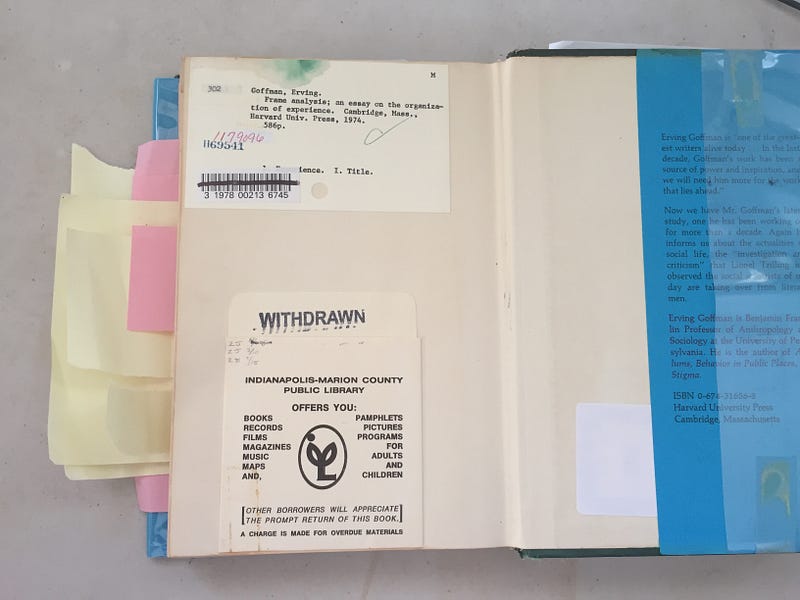
The copy of the book I received is a used book from Indianapolis-Marion County Public Library.
After dinner, I started reading the book. I have read some articles about Erving Goffman and Frame Analysis so I know he adopted the concept of Frame from Gregory Bateson. To my surprise, he mentioned William James and Alfred Schutz on p.2 and p.3.
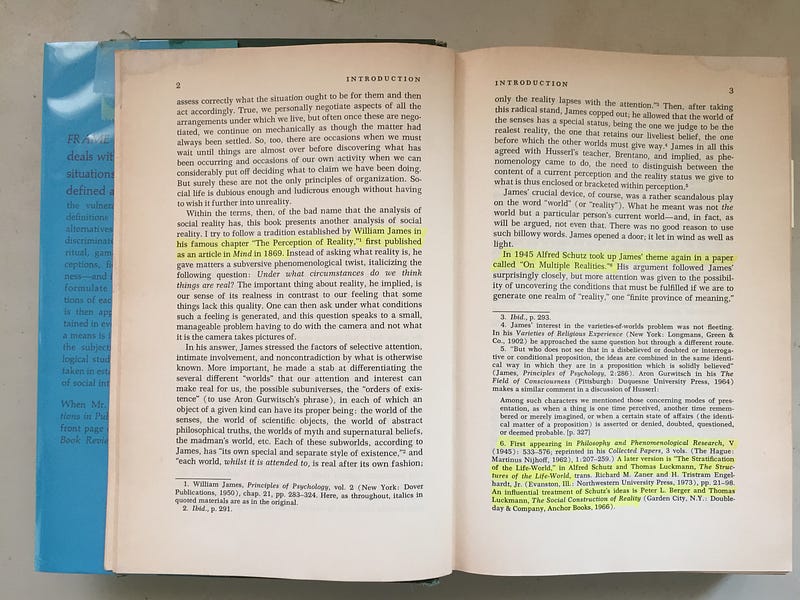
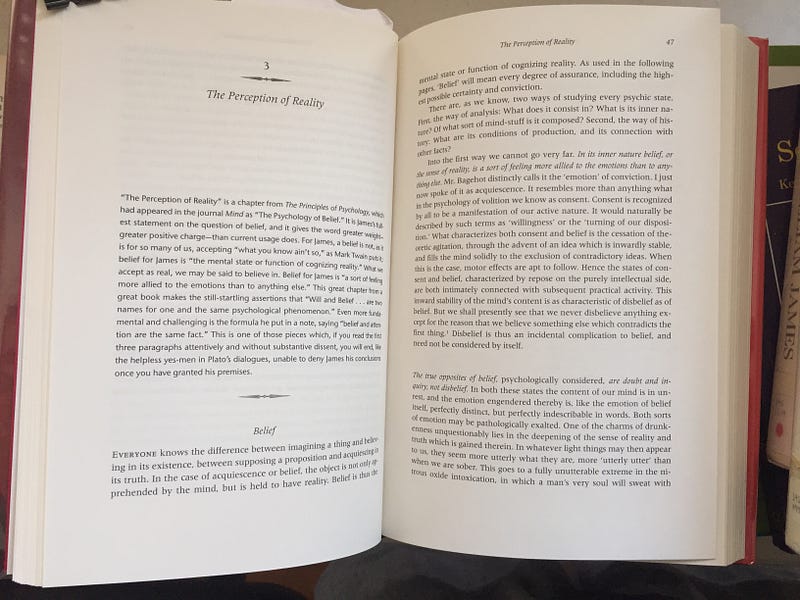
When I finished the first page and turned to p.2 and p.3, I found Goffman echoed William James and Alfred Schutz. He said, “I try to follow a tradition established by William James in his famous chapter ‘The Perception of Reality,’ first published as an article in Mind in 1869.” On p.3, he mentioned Schutz, “In 1945 Alfred Schutz took up James’ theme again in a paper called ‘On Multiple Realities.’ His argument followed James’ supringly closely…”.
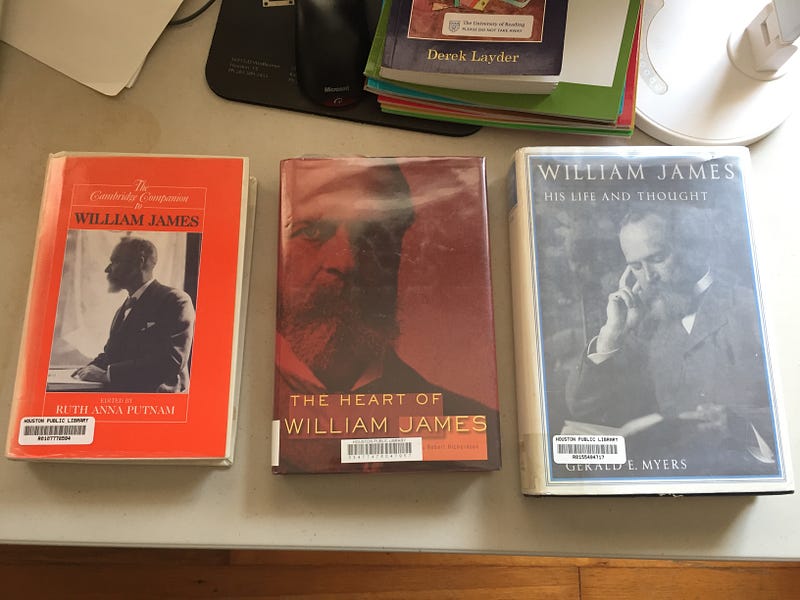
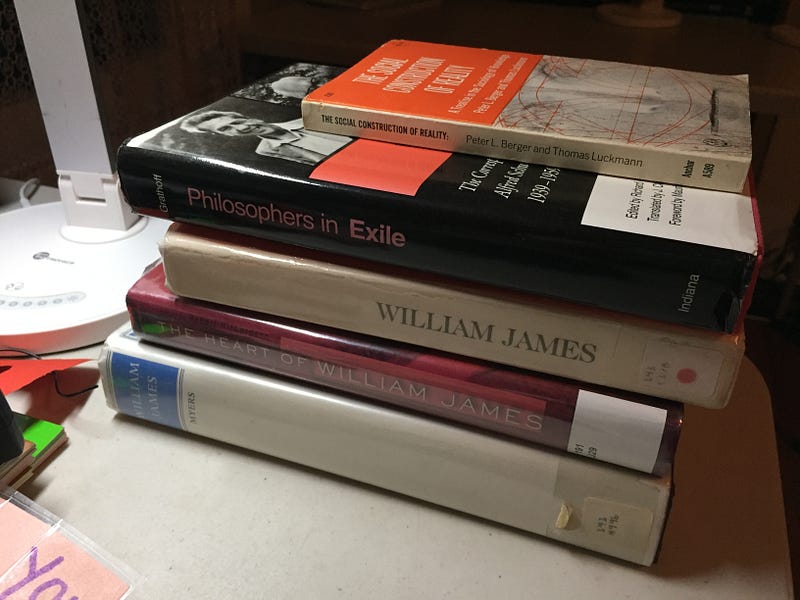
There are three books about William James at my home. I borrowed them from the Houston Public library three months ago.
I found the article Goffman mentioned at The Heart of William James.
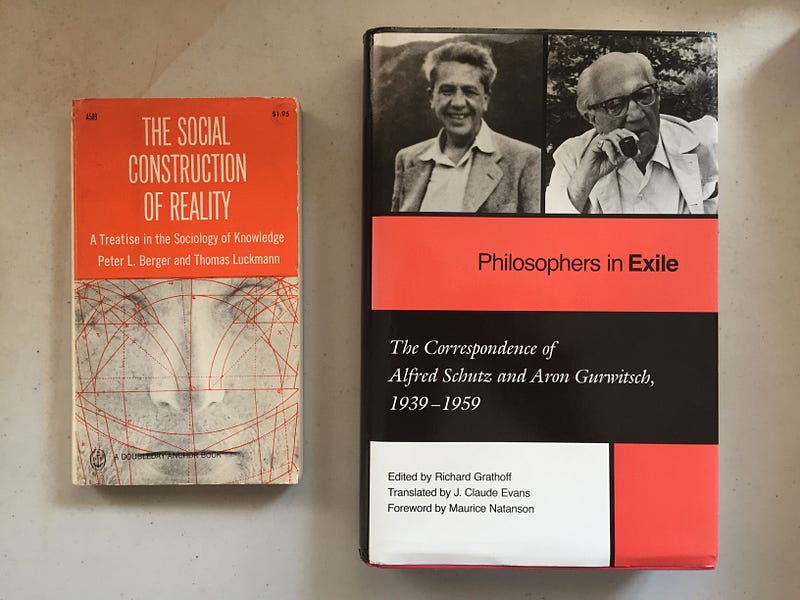
I found I only have two books about Alfred Schutz: The Social Construction of Reality and Philosophers in Exile.
In fact, I have a pdf version of The Phenomenology of the Social World.
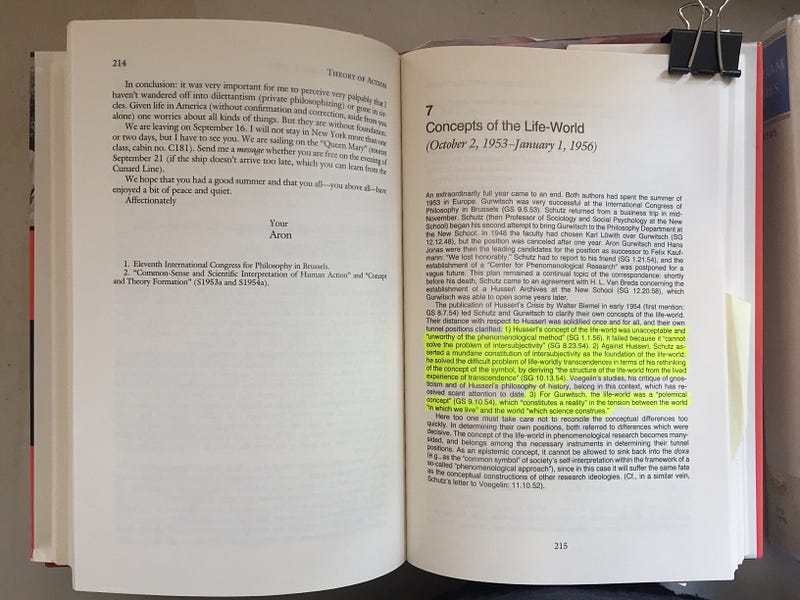
I bought Philosophers in Exile in 2017 and used it for a social media challenge called Books of Friendship for 30 Days.
I just ordered The Social Construction of Reality last week and received it on Monday (July 6, 2020). When I received the copy, I was shocked by my own thinking.
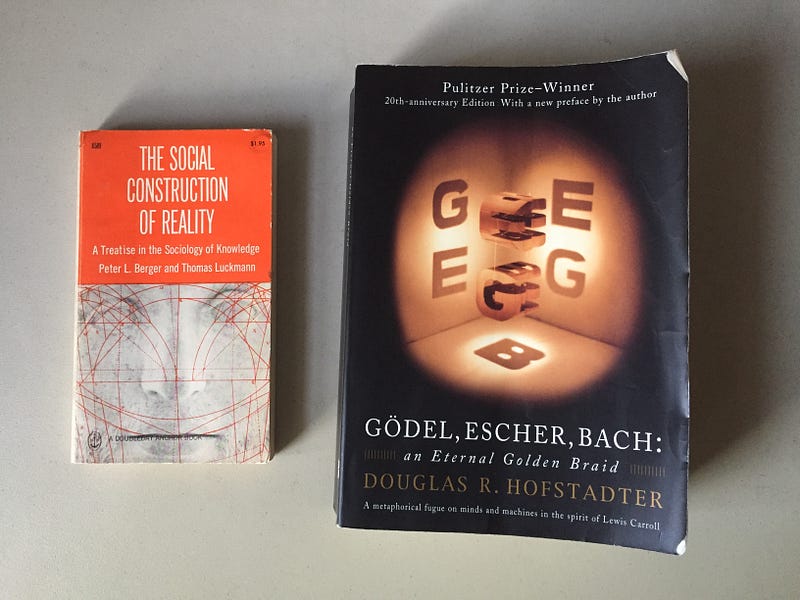
The Social Construction of Reality was written by Alfred Schutz’s students Peter L. Berger and Thomas Luckmann. This is a major work that made a significant contribution to social science. Thus, I thought it should be a “big” book.
In fact, it is so tiny! I was surprised that I combined abstract ideas such as “major impact” with concrete things such as a big and thick hardcover book.
Saturday (July 11, 2020)
On Saturday I read Frame Analysis almost the whole day: morning, afternoon, and night.

Books, a notebook, a pencil, and a highlighter pen, are artifacts for reading.

In the middle of the afternoon, my wife made a cup of milky tea for me.
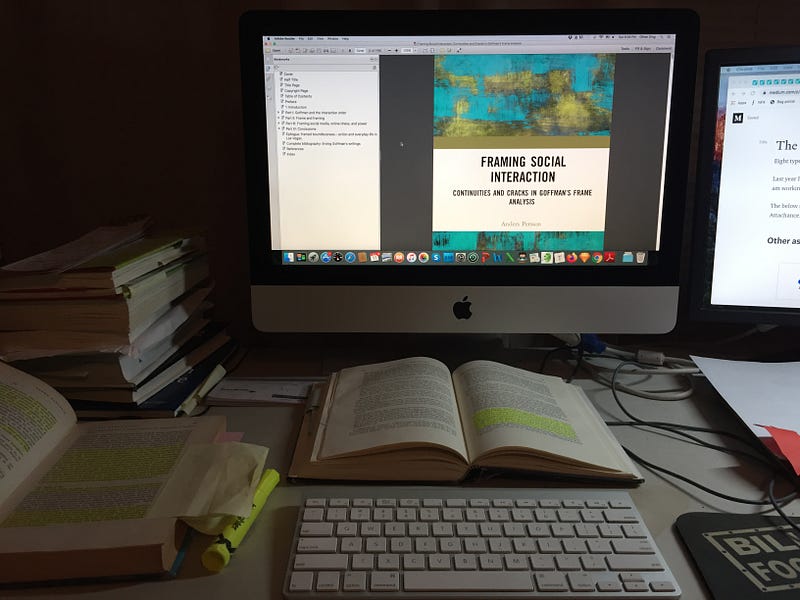
At night, I turned on the Mac and opened the pdf book Framing Social Interaction.
When I saw the cover of the book, I realized something special at the moment. I took a picture of my desk and Mac and captured the status of my reading experience.
This act led to more acts, I found more related books and took more pictures. I started recording the context of my reading experience.
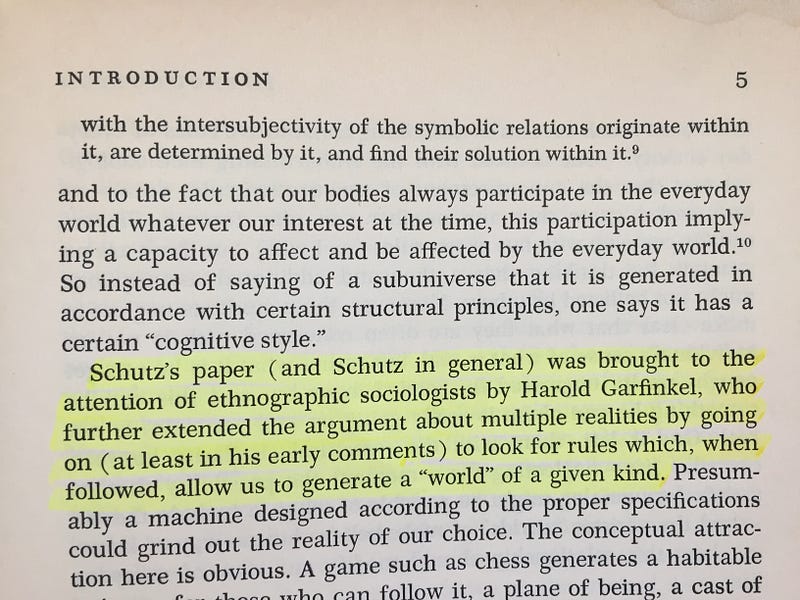
On p.5, Goffman mentioned Harold Garfinkel who established and developed ethnomethodology as a field of inquiry in sociology. I have a pdf version of his classic book Studies in Ethnomethodology. I also have a book titled Practice Theory, Work & Organization in which Davide Nicolini selected six theoretical approaches as major accounts of “Practice Theory.” Ethnomethodology is one of these approaches.
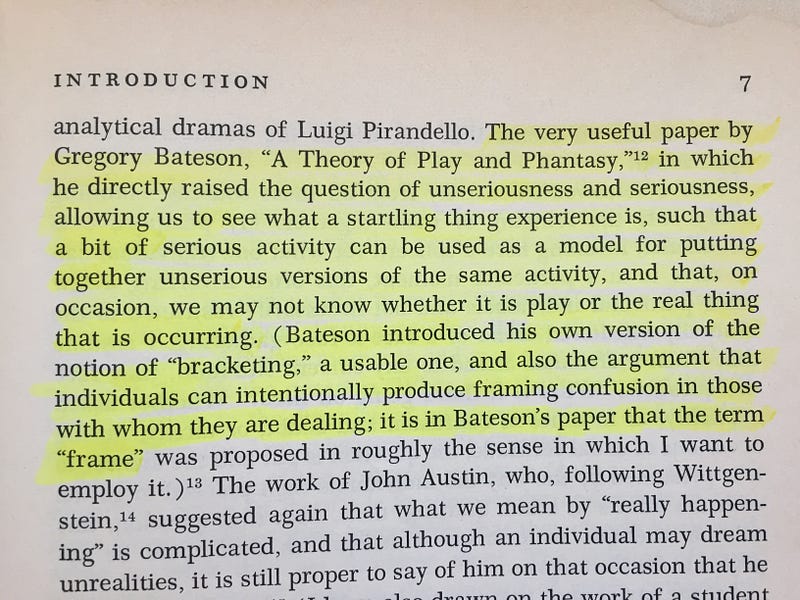
On p.7, Goffman introduced the original source of the concept of “Frame”: Gregory Bateson’s paper “A Theory of Play and Phantasy”.
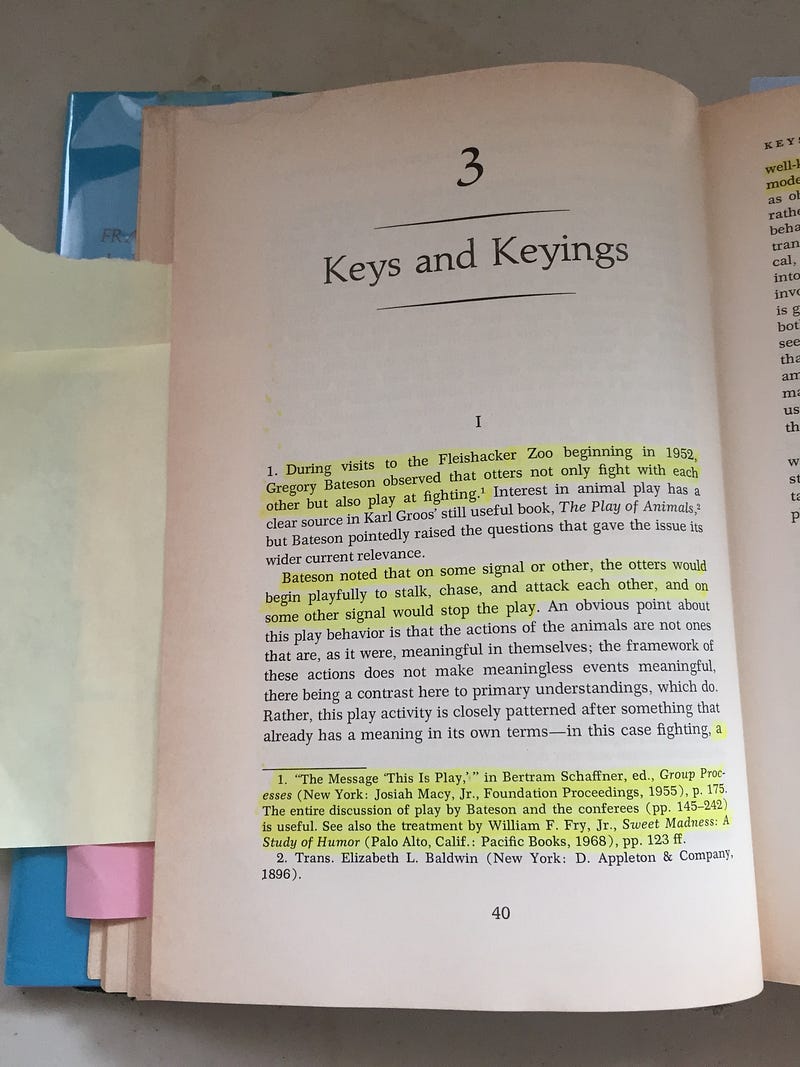
At the beginning of Chapter 3 Keys and Keyings, Goffman also mentioned Bateson’s idea “This is Play” again.
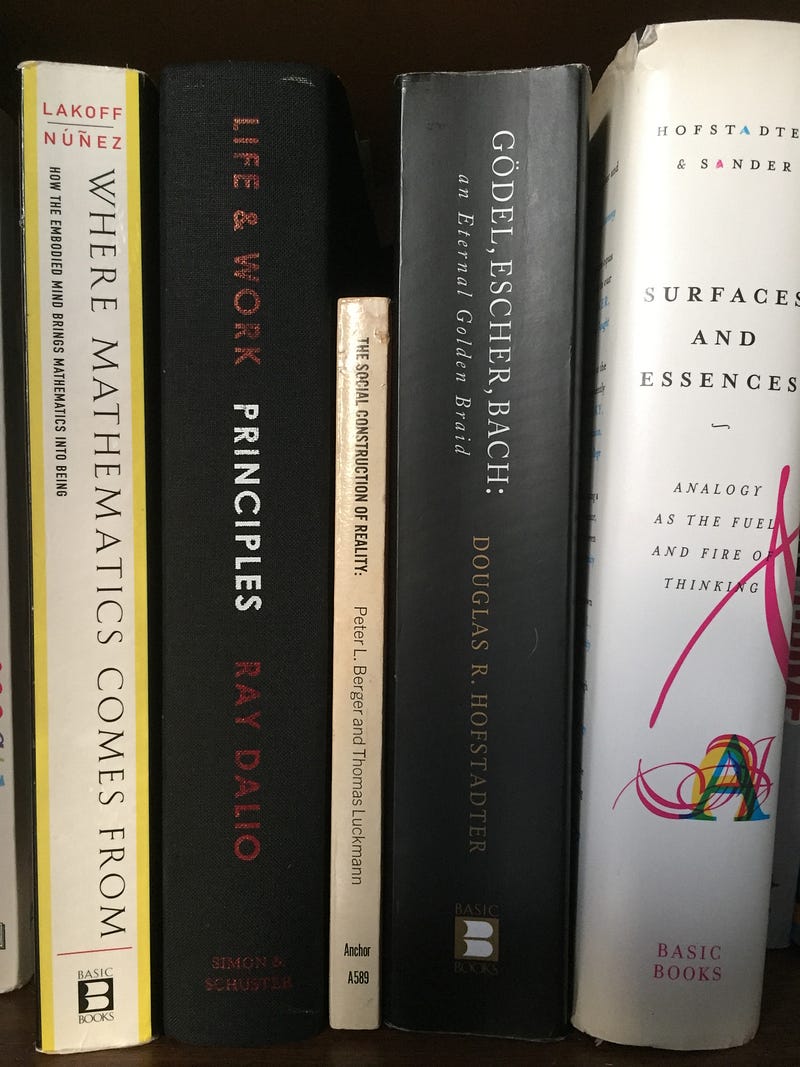
I have been a fan of Gregory Bateson for many years. I have read many articles about his ideas. It is easy to find the following three books about Bateson on my bookshelf.
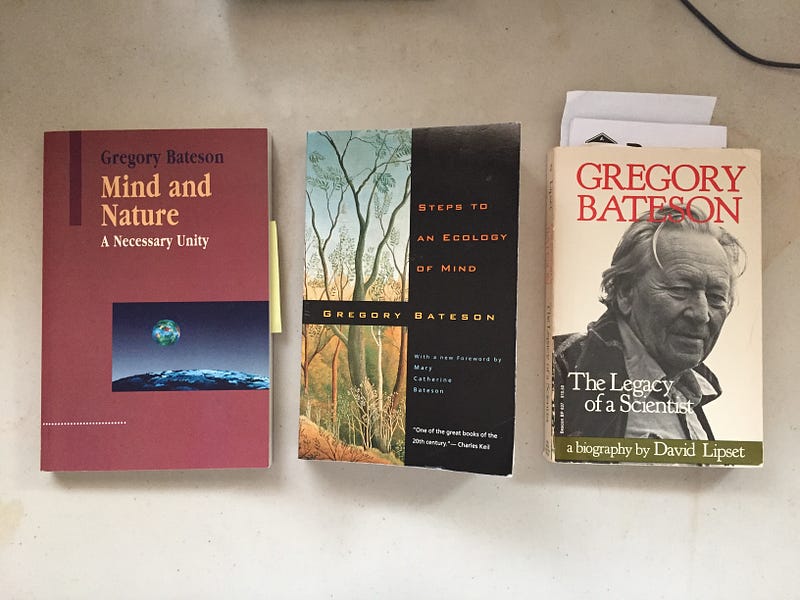
Steps to An Ecology of Mind collected essays Bateson wrote for different audiences and published in various settings. One of these essays is A Theory of Play and Fantasy in which we can find the original idea of “Frame”.
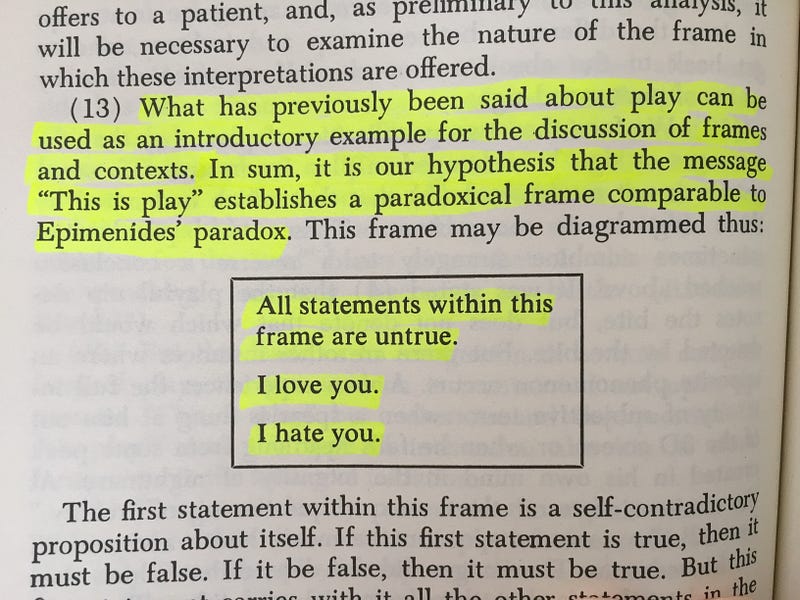
Bateson talked about two types of “Frame”, one is mathematical frames and the other is psychological frames. Bateson said, “But, while the analogy of the mathematical set is perhaps over abstract, the analogy of the picture frame is excessively concrete. The psychological concept which we are trying to define is neither physical nor logical. Rather, the actual physical frame is, we believe, added by human beings to physical pictures because these human beings operate more easily in a universe in which some of their psychological characteristics are externalized. It is these characteristics which we are trying to discuss, using the externalization as an illustrative device.”

Bateson used a simple analogy: a physical picture frame that contains the picture. The psychological frame is a set of messages of meaningful actions.
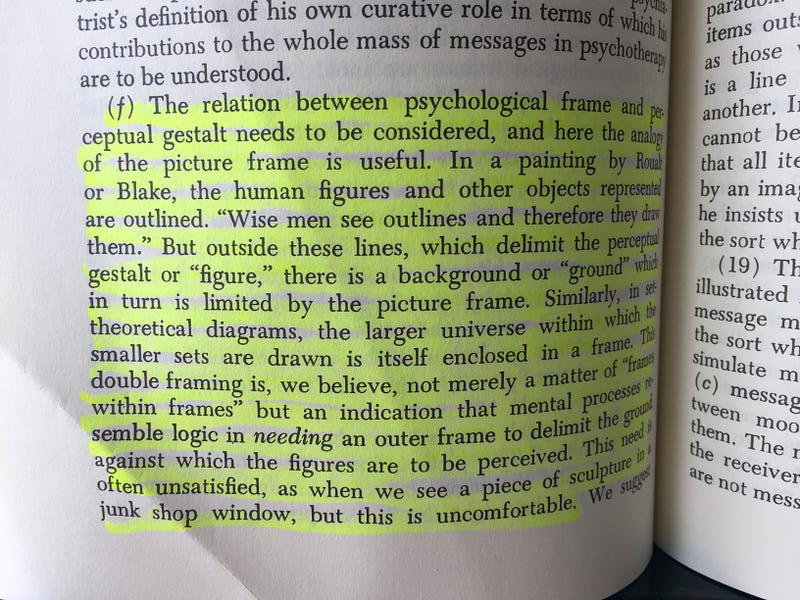
Bateson also mentioned “figure” and “ground” which are two core ideas of Gestalt psychology. For the frame, the picture is a figure and the frame is the ground.
In Mind and Nature, Bateson used the following diagram for analyzing the Iatmul culture. This diagram is a key to understanding Bateson’s “Ecology of Mind”.
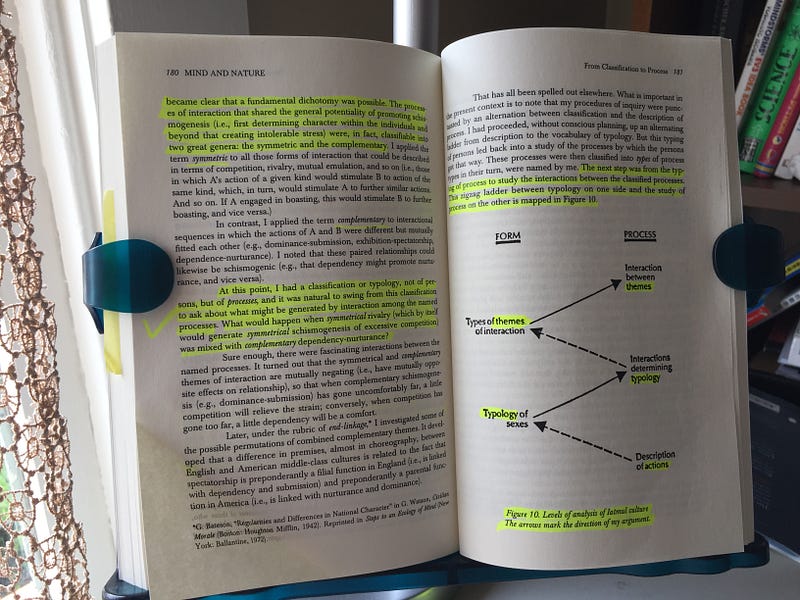
If we put Erving Goffman’s “Frame” back into the above diagram, we can say Goffman’s “Frame” is the “Form” and the human interaction is the “Process.” And the “Interaction Order” which Goffman talked about can be seen as “formal cause and ecological meaning” which are used by Harry Heft (2001) to review two approaches of ecological psychology: Gibson’s Affordance theory and Roger Barker’s Behavior Settings theory.
Heft said, “What then is the origin of these patterns or structure in perceptual experience? Instead of making the move that the Gestalt psychologists did and assume that this intrinsic structure arises out of dynamic brain processes, we can adopt James’s and Gibson’s positions that structure, and hence meaning, is intrinsic to the structure of the environment considered in a relation to a perceiver. Further, we can suppose, following Heider, that the structure of the environment features is preserved in the medium to be detected by a perceiver. If it is assumed that the potential meaning of environmental feature is carried in the intrinsic, structural relations in environmental information, and these relations are available in principle to any perceiver, then an account of detecting this environmental structure that uses formal cause as a conceptual vehicle may help to clarify how individuals perceive a common, meaningful environment.” (2001, p.286).
In a broad sense, we can see Goffman’s Frame as a special type of “the structure of the environment” at the level of social activities. Thus, Frame Analysis can be seen as a book of “ecological psychology”.
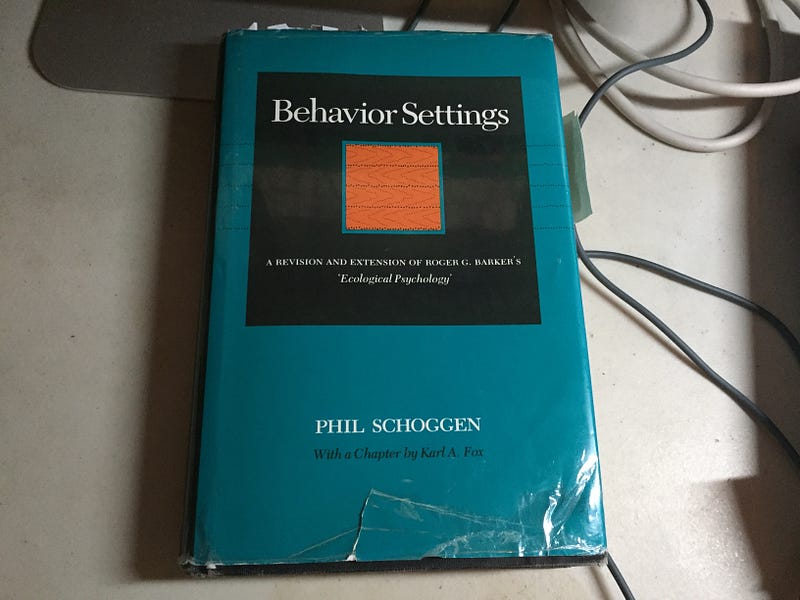
In 2017, I started learning Roger G. Barker’s Behavior Settings theory. In 1989, Phil Schoggen published a book titled Behavior Settings which is a revision and extension of Roger G. Barker’s classic Ecological Psychology: Concepts and Methods for Studying the Environment of Human Behavior (1968). Karl A. Fox wrote a chapter for Schoggen’s edition and mentioned Goffman’s Frame Analysis.
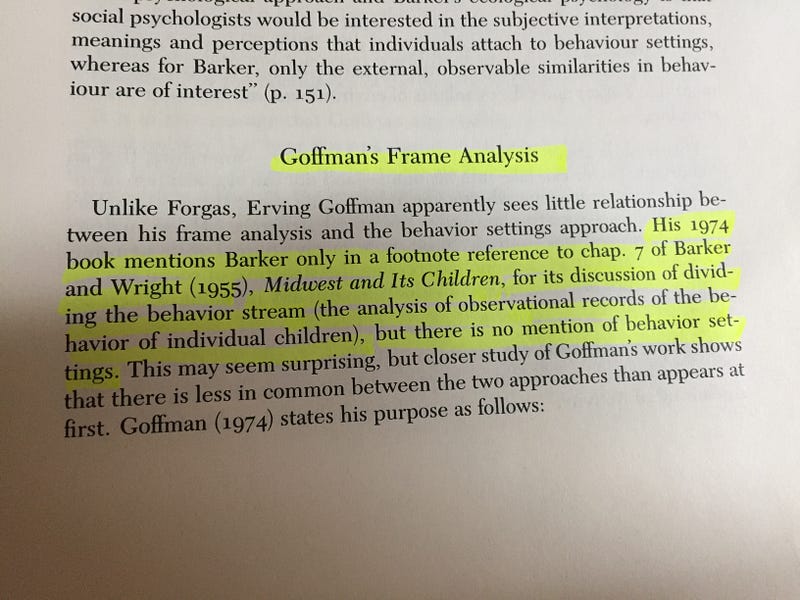
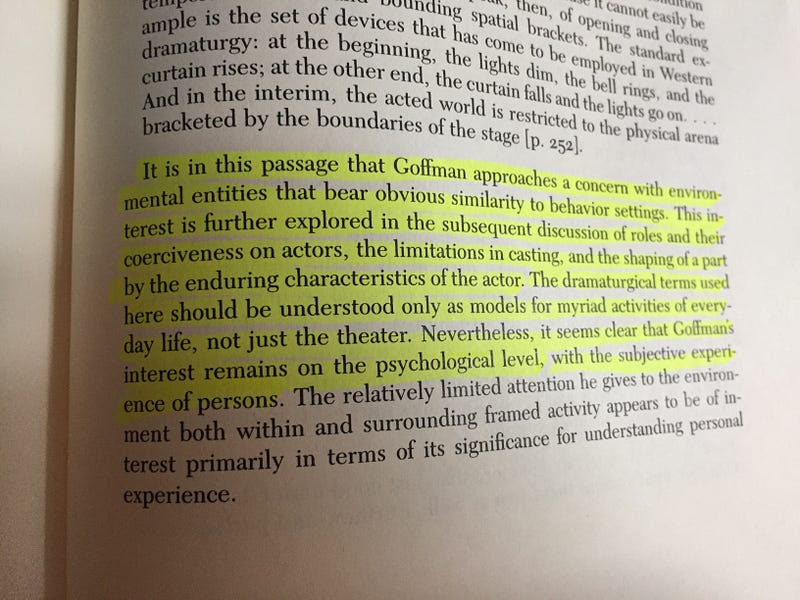
Fox pointed out, “It is in this passage that Goffman approaches a concern with environment mental entities that bear obvious similarity to behavior settings. This interest is further explored in the subsequent discussion of roles and their coerciveness on actors, the limitations in casting, and the shaping of a part by the enduring characteristics of the actor. The dramaturgical terms used here should be understood only as models for myriad activities of everyday life, not just the theater. Nevertheless, it seems clear that Goffman’s interest remains on the psychological level, with the subjective experience of persons. The relatively limited attention he gives to the environment both within and surrounding framed activity appears to be of interest primarily in terms of its significance for understanding personal experience.”
Heft argued that Gibson’s ecological psychology and Barker’s ecobehavioral science share a special type of causality, “Gibson and Barker are offering causal accounts of how structure can be conveyed between two entities. What is critical for understanding both positions is recognizing the kind of causal account they offer. It is not the kind of causal view reflected in much of 20th-century psychological theory, but it is a causal account with a well-established pedigree nonetheless. It is a view traceable to Aristotle’s metaphysics and psychology.” (p.274) The causality Heft highlighted is the formal cause.
Heft suggested, “The key to understanding environmental perception in the case of Gibson, or the effect of settings on the collective actions of its occupants in the case of Barker, is in seeing these problems as requiring an account of how structure is shared, and thus preserved across different entities. That is, in seeing these problems primarily in terms of formal cause.” (p.280). Heft also pointed out that the difference between Gibson’s theory and Barker’s theory is they refer to two different conceptual levels.
Following Heft’s suggestion, we can consider Goffman’s “Frame” as another approach to formal cause at the third conceptual level. Gibson’s affordance theory is about individuals while Barker’s Behavior Settings is about collective actions. The difference between Behavior Settings and Frame is the former focuses on behavior-milieu synomorphs while the latter doesn’t require a fixed physical place. We can see these three approaches as a serial:
Affordance — individual perception Behavior Settings — social action pattern plus physical place Frame — social action pattern
It was a wonderful day!
I realized I should buy more related books to build my personal mini-library in order to highlight books and find relevant books quickly. For some books I borrowed from the library, I can’t do such things. This concern points to the ownership of objects which is a social aspect and beyond the scope of Affordance theory. From the perspective of Affordance theory, every print book affords to highlight.
Sunday (July 12, 2020)
On the morning of Sunday, I kept reading Frame Analysis and related books such as Modern Social Theory and Twitter.
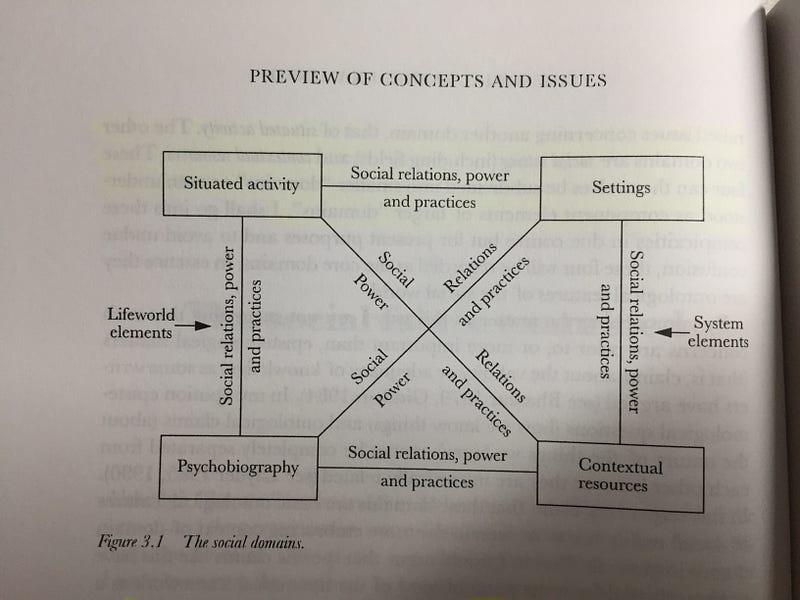
Derek Layder, the author of Modern Social Theory, reviewed modern social theories and developed his own account: social domains theory.
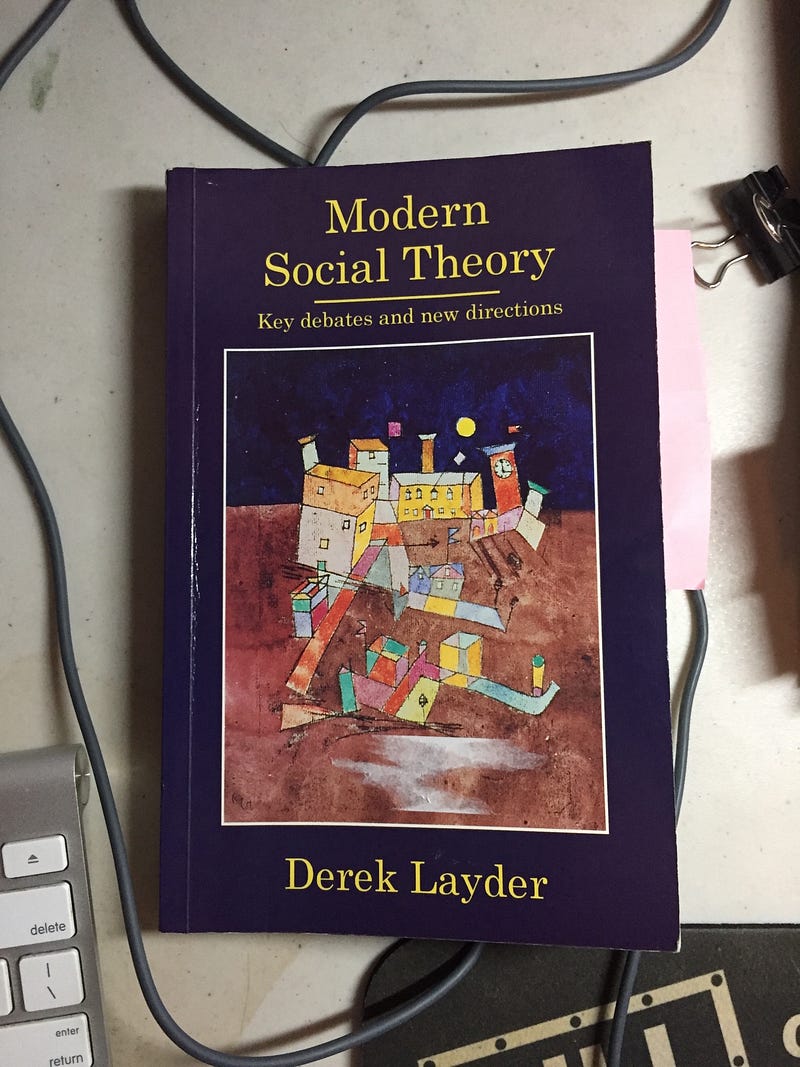
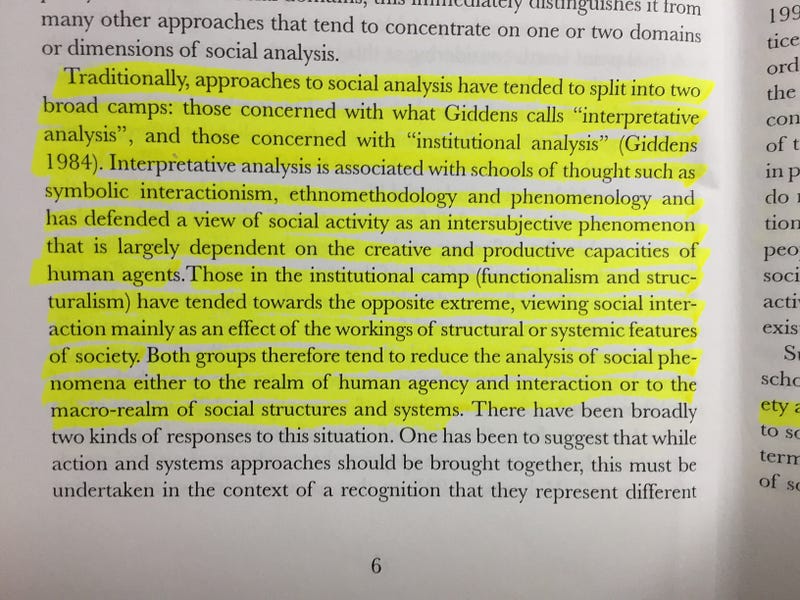
Layder said, “Traditionally, approaches to social analysis have tended to split into two broad camps: those concerned with what Giddens calls ‘interpretative analysis’, and those concerned with ‘institutional analysis’ (Giddens 1984)”.
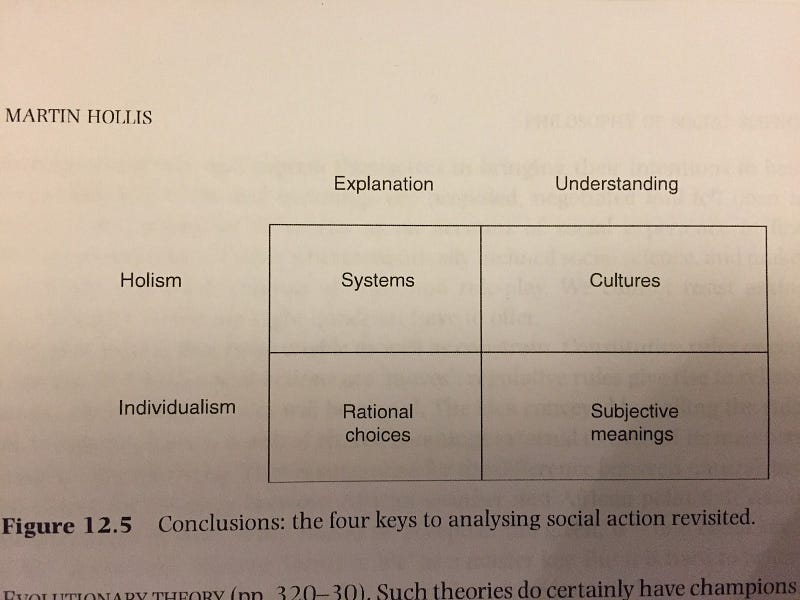
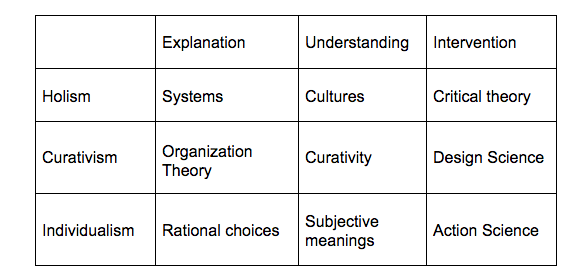
These two camps are really too broad. Last year I quoted the below 2x2 matrix from Martin Hollis’ article Philosophy of Social Science for my book Curativity.
Based on Martin Hollis’ typology, I expanded his matrix into the following nine-box matrix.
Layder categorized Goffman’s theory into the ‘institutional analysis’ camp and considered Goffman’s ideas as an important foundation for his own theory: social domains theory. He said, “The theory of social domains attempts a similar sort of marriage between action and systems (or ‘structural’) approaches to social analysis and thus it bears some close affinities with Habermas’s work. However, a significant point of difference is that domain theory borrows much more from the work of Erving Goffman.” (p.11)
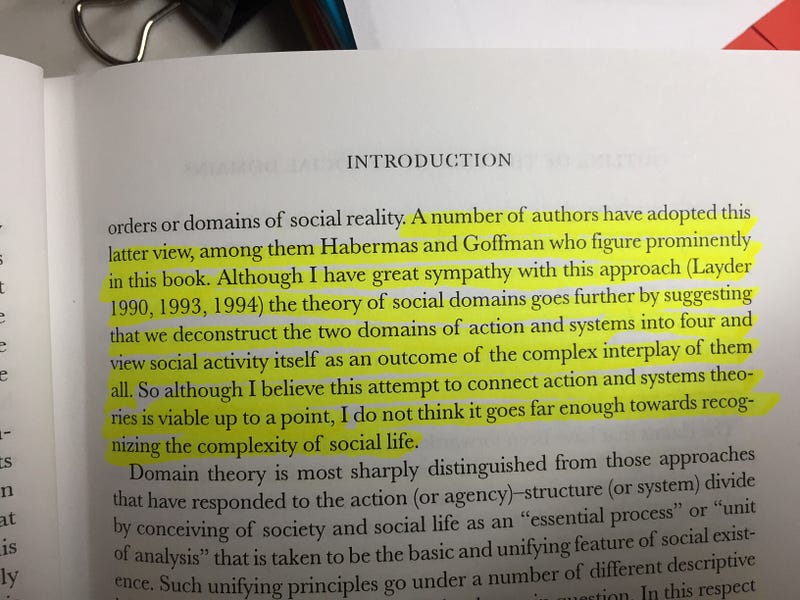
Usually, people consider Goffman as a member of interactionism, Layder believed this is a misunderstanding. He said, “…Goffman held a view of society in which the ‘interaction’ order and the ‘institutional’ orders are accorded equal importance … Goffman’s work must be viewed as an attempt to trace the ligatures that bind institutional constraints and resources with those that are specific to the interaction order itself, and in this regard, his work carries a direct link with that of Durkheim. However, whereas Durkheim was preoccupied with the realm of institutional constraint, Goffman concentrates on the dynamics of interpersonal encounters while locating them in a wider institutional context. This continuity with the dual preoccupations of social conditions that provide its environment — means that Goffman’s ideas occupy a central place in the theory of social domains. I build on some of Goffman’s formulations in order to develop a model of the relations between interpersonal encounters and the more encompassing settings and contexts in which they are played out.” (pp.11–12)
The diagram below shows Layder’s social domains theory. He suggested four principal social domains: Psychobiography (including self-identity), Situated activity, Social setting (including fields), and Contextual resources. We have to notice these four social domains are “principal” and they can be subdivided into smaller “domains” or even understood as component elements of larger “domains”.
After lunch, I found another book that is related to Goffman’s idea. It is a book about Twitter research. Last month I published an article about Twitterville and ordered Dhiraj Murthy’s book Twitter.
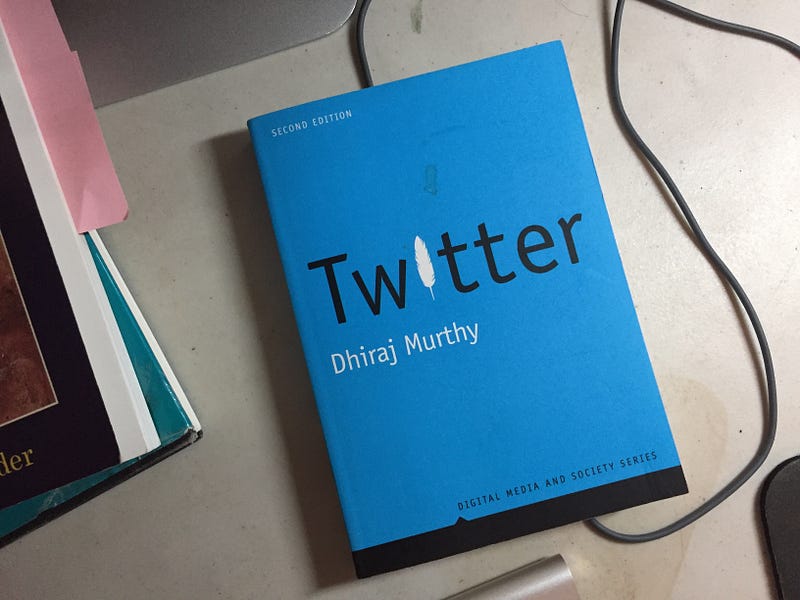
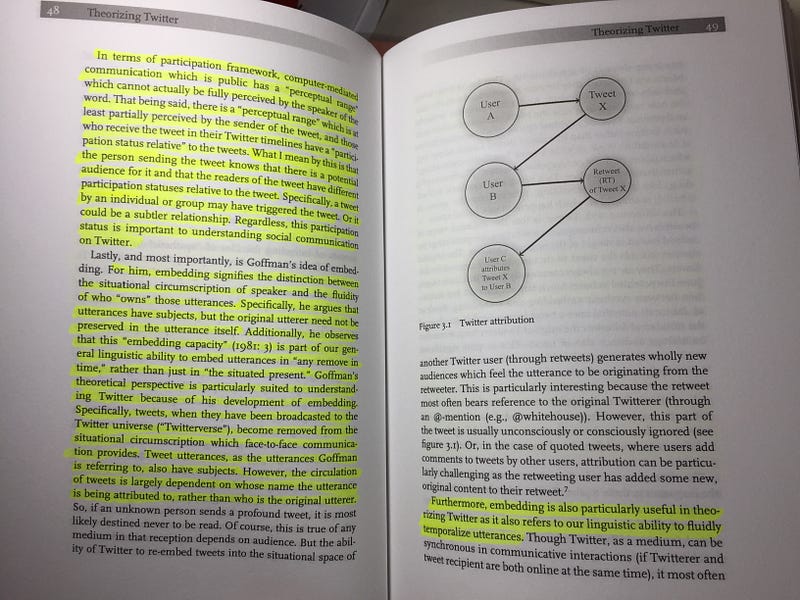
By adopting Goffman’s ideas, Murthy developed a theoretical framework for understanding Twitter.
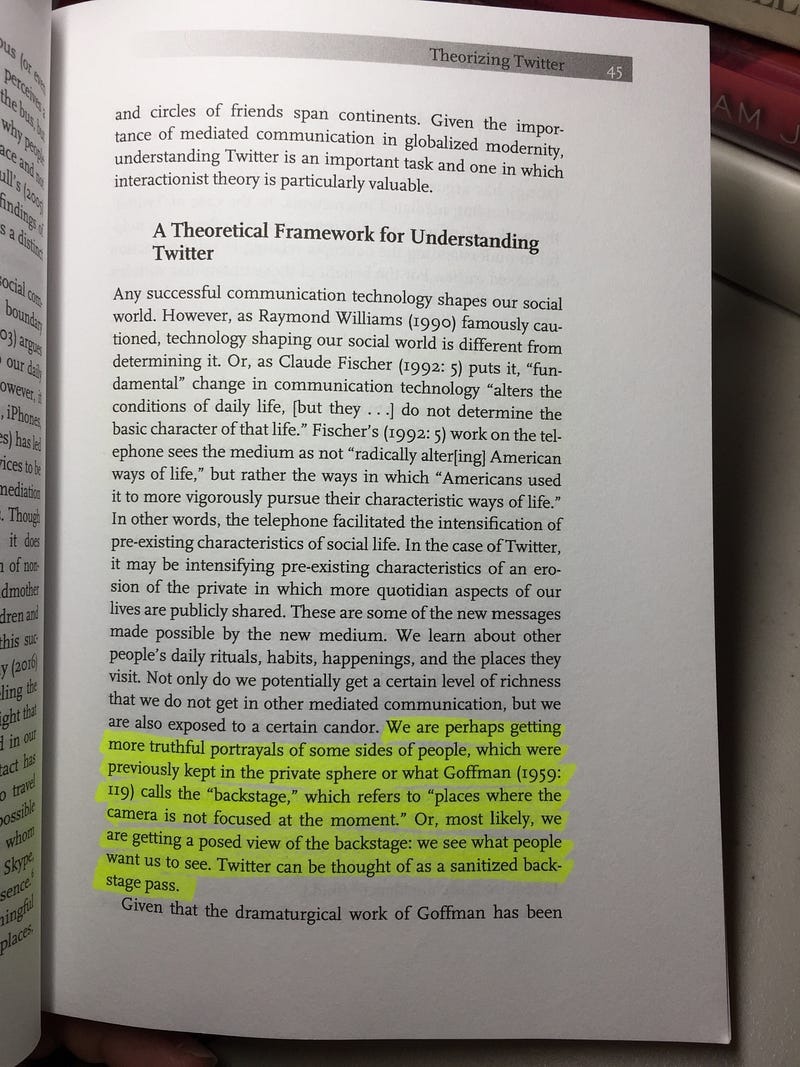
Though Goffman’s original ideas are about face-to-face talk, scholars have been expanding them to mediated communication. Murthy highlighted three ideas of Goffman’s theory of face-to-face dialogic interaction: “ritualization,” “participation framework,” and “embedding.”
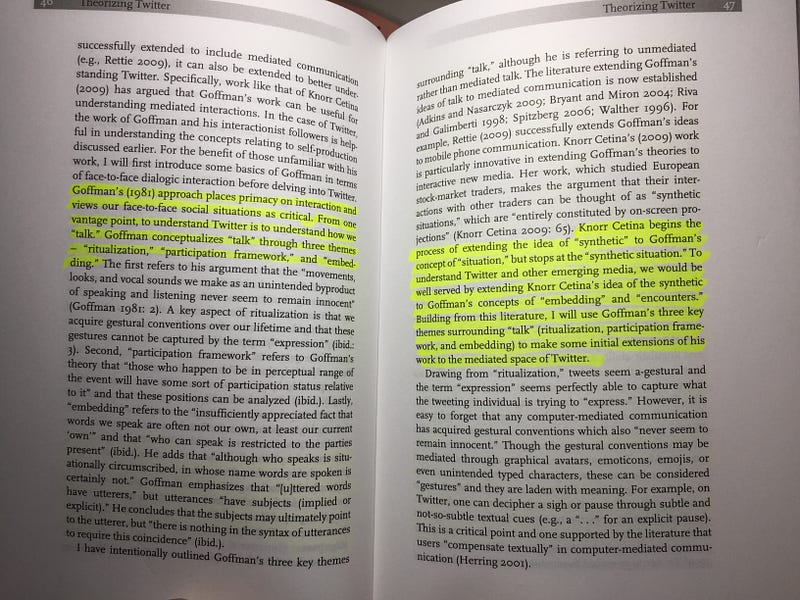
Ritualization is about gestural conventions which may be mediated through graphical avatars, emoticons, emojis, or even unintended typed characters. Participation framework means “those who happen to be in perceptual range of the event will have some sort of participation status relative to it”. Embedding refers to “…words we speak are often not our own…”
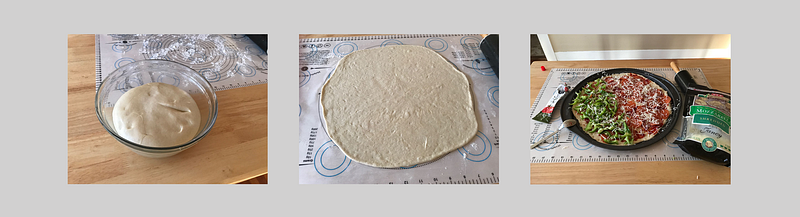
At 4:30, I stopped reading and worked with Kids. Together, we made a pizza by following a YouTube video.
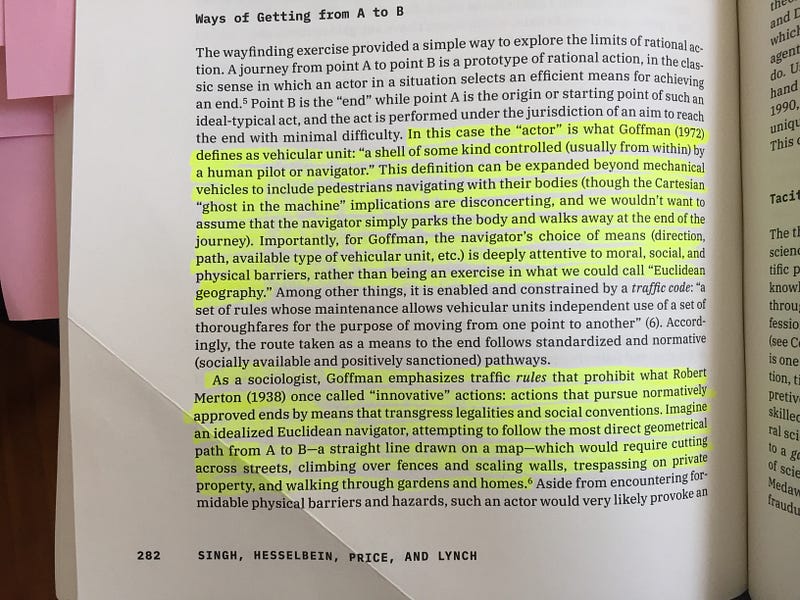
In the evening, I also found an STS paper mentioning Goffman’s “rules” and Robert Merton’s “innovative actions”.
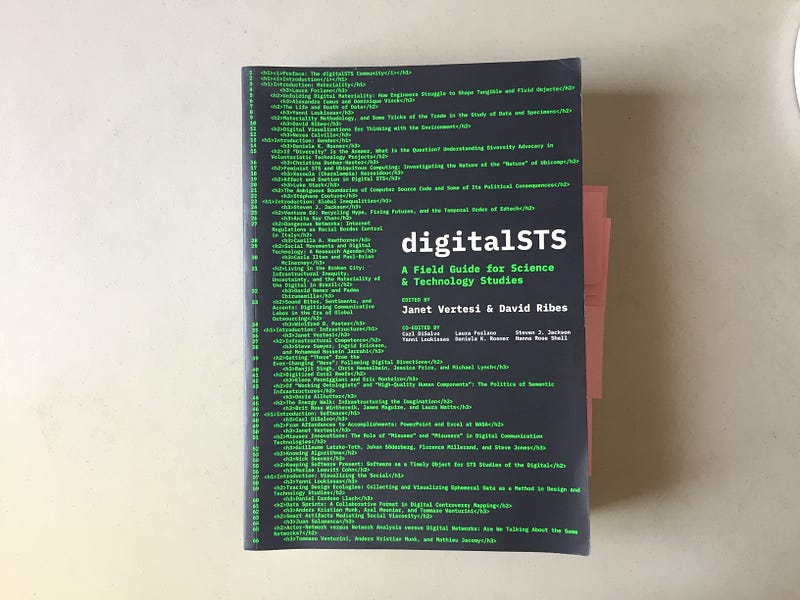
STS stands for Science & Technology Studies which is an academic community.
After dinner, I watched a video on YouTube. I searched “Erving Goffman Frame Analysis” on YouTube and chose the first one to watch.
I used a laptop to watch this video in my reading space.
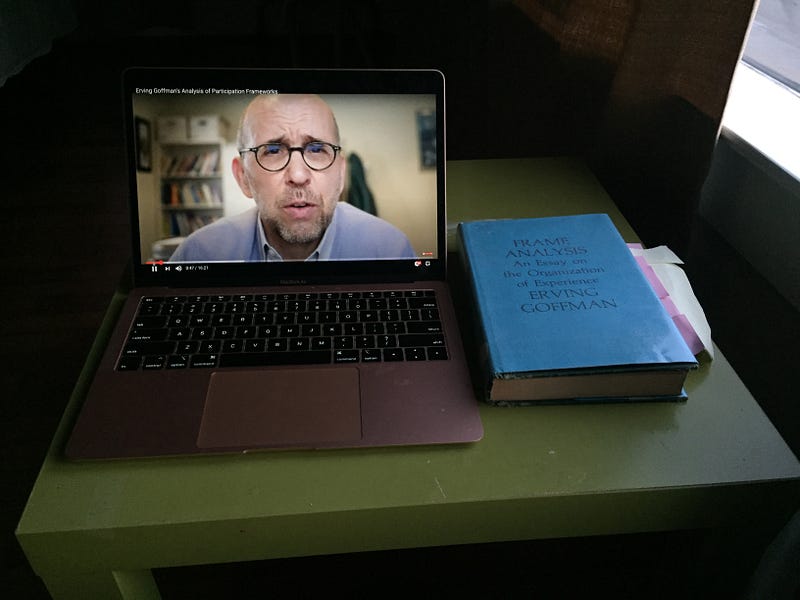
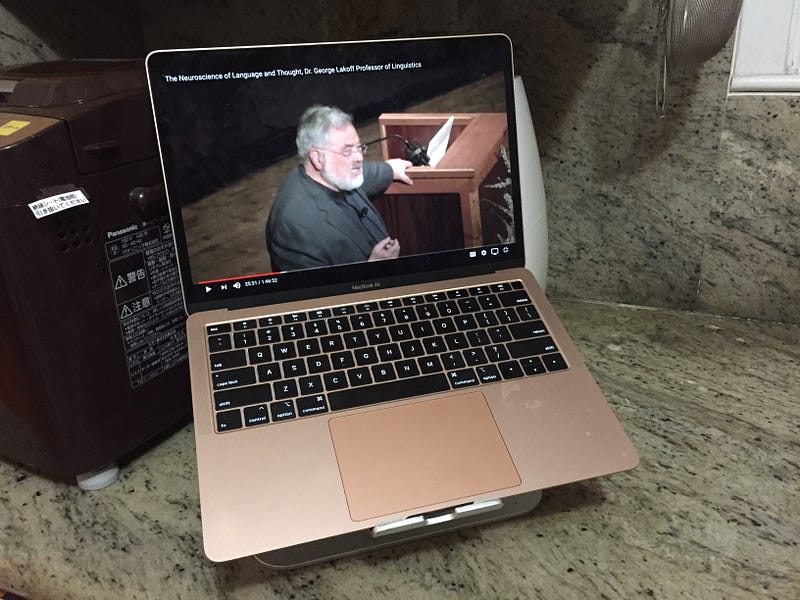
Then, I moved to the kitchen and watched two videos on YouTube while I was washing dishes.
George Lakoff gave a talk titled Frameworks, Empathy and Sustainability at the World-Changing Careers Conference in Vancouver in July 2009.
This one was given in 2011. Lakoff talked about the neuroscience of language and thought.
Lakoff mentioned Goffman’s “frame” several times and he believed frame, metaphor, and image schema are the foundation of human cognition in daily life.
What a wonderful weekend!
Startup Weekend used a 54-hour event format to build an innovative action learning experience. I may apply this 54-hour event format for knowledge sprint and open learning.
Part II: Reflection
Part I records my reading experience and describes related books and people. Part II will present an Ecological Interaction Analysis framework and use it to reflect my reading experience.
Inspired by the HERO U diagram, I made the following diagram to visualize six types of context: Physical, Digital, Personal, Social, Figure, and Idea. I name this process of diagramming for reflection as Ecological Interaction Analysis.
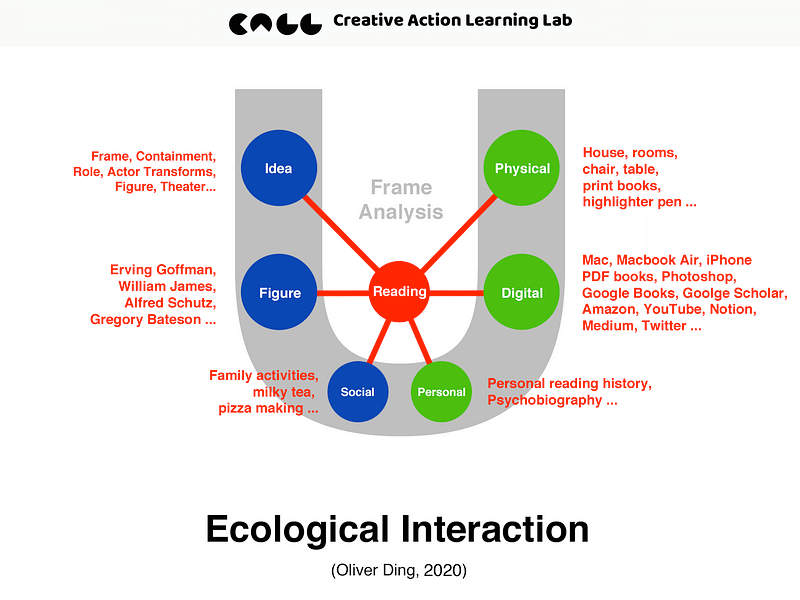
Physical Environment as Context
House, rooms, chair, table, print books, highlighter pen, etc, are the physical context of my reading.
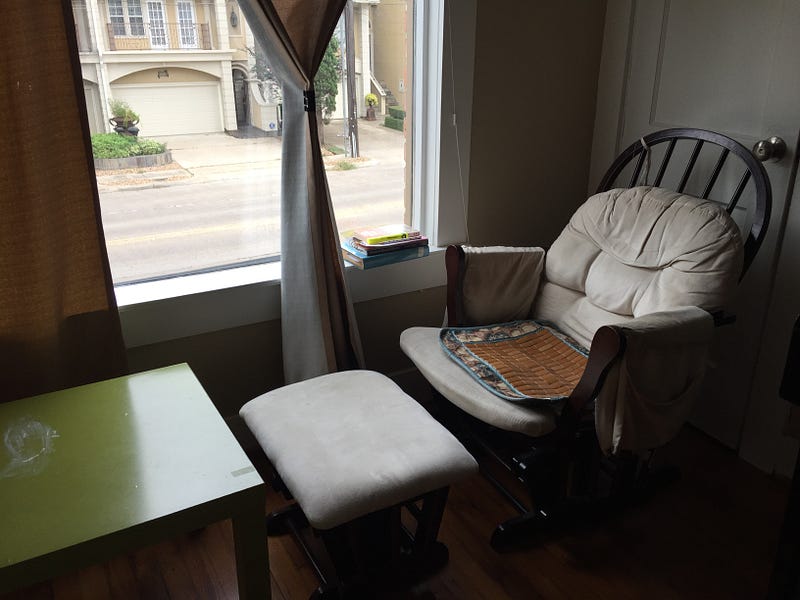
Let’s look at my reading space again.
For the physical environment (including physical objects), we can apply Gibson’s Affordance theory for discussing the “people-environment” relation. For example, this window is not a table, but it affords to lay books.
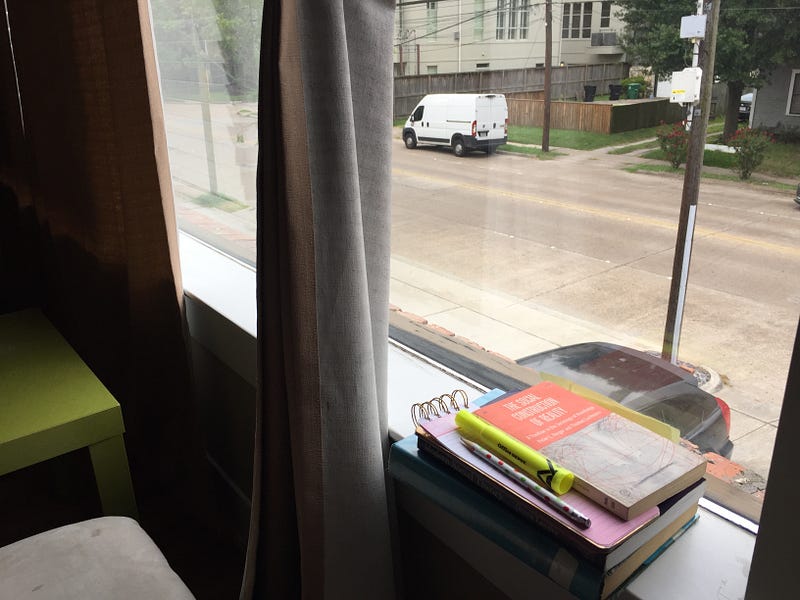
A great view!

Table and stool.

My body!
I consider the physical environment as the primary context for every kind of human activity. Though reading is considered a mental activity, I do believe the physical environment still is an important aspect.
Digital Ecology as Context
Some HCI (human-computer interaction) scholars defined “digital ecology” as “A closed set of digital and non-digital artifacts and a user acting as nodes of a network where its boundaries are specified by an activity and the structure and patterns of organization are either user and/or designer defined.” (Raptis et al. 2018).
They also recommended “personal ecology” as a level for studying digital ecologies, “According to Jung et al. each of the users we are designing for experience their own personal ecology comprised from all the digital artifacts they interact with. These artifacts might belong to them, to the company they work for, might be public, etc. Thus, we can characterize a personal ecology as a network where the nodes are comprised by all the digital artifacts a user may interact with, including the user himself.”
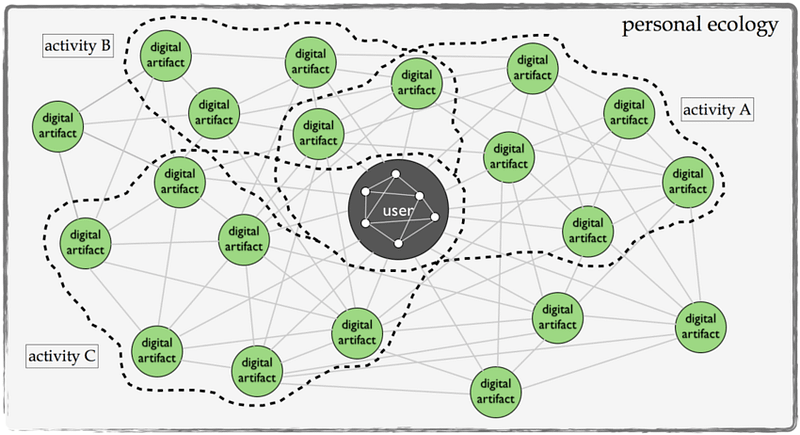
The above diagram clearly describes the personal digital ecology. It matches my reading case. I am the user, the Activity A is reading. For my reading case, I consider some digital objects I used for the reading activity as digital ecology for the context of reading.
I use Mac (desktop computer), and Macbook Air(laptop computer) for accessing PDF books and local software and cloud apps. I use my iPhone for taking pictures. I use Google Scholar for searching and finding papers and books. I use Google Books for preview reading. I use Amazon for previewing and buying books. I use YouTube for watching videos. I use Notion for writing notes and collecting ideas and references. I use Medium for writing articles and use Twitter to share my articles.
Since I have a print copy of Frame Analysis, I didn’t need to read it online. But I used Google Books to search “Figure” and got the following result.
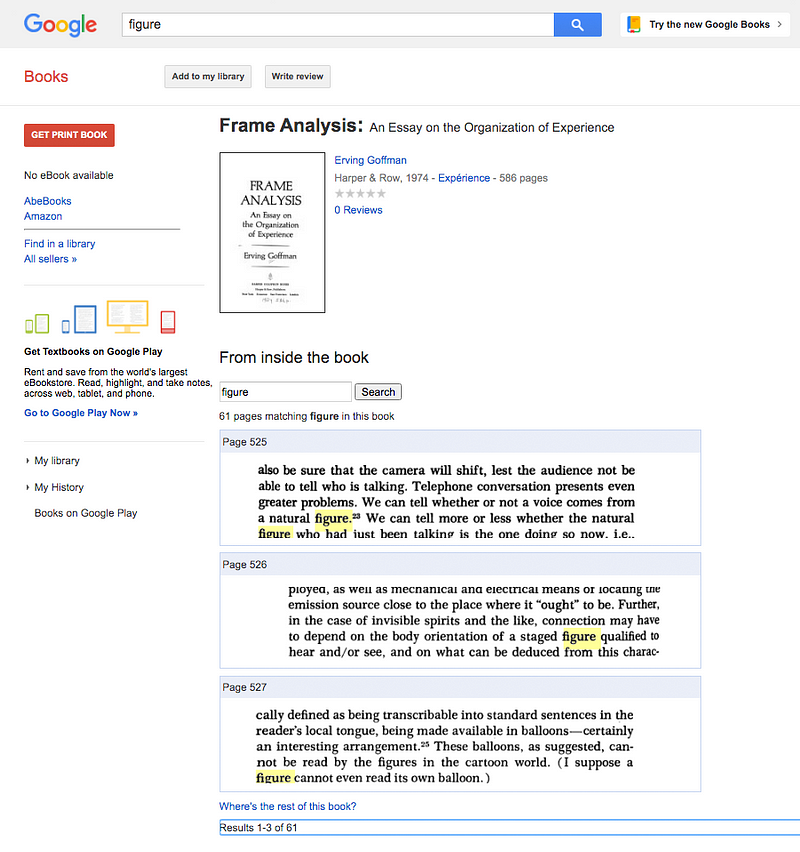
I remembered that Goffman developed a typology of figures in the book, but I couldn’t remember the page where he talked about it.
Personal Psychobiography as Context
Biography means an account of the series of events making up a person’s life. According to Derek Layder, “…the whole point behind the notion of psychobiography is that it maps the changing contours of self and behavior over time from the point of view of the intersection of psychological and sociological factors. Thus it stresses how the person is individuated within a social context.”(p.49)
By considering psychobiographies as a unit of analysis, sociologists can understand people as real in their unique individualities. Layder said, “Durkheim’s ideas suggest that modern societies provide the social conditions under which individuation flourishes. The notion of psychobiography complements this by adding a psychological dimension. It stresses that individuality is not only a matter of social pressure towards specialization and the expression of differences. It indicates that over their life-careers, individuals have quite different social experiences and are entangled in webs of social relationships that are unique both in terms of their quality and in terms of the personalities and behavioural patterns of those involved in them.”(p.50)
For my reading case, I considered three issues under the personal psychobiography dimension: my career, my personal reading history, and my social connections.
I have over twenty years of work experience which can be divided into three stages: the creative stage, strategic stage, and innovative stage. At the creative stage, I worked for the advertising and media industry as a creative copywriter and designer. At the strategic state, I worked for pre-IPO stage enterprises as a business strategist and fundraising consultant. At the innovative stage, I worked on making brand new digital tools and platforms as a researcher and designer.
Before 2014, I spent most of my spare time on digital nonprofit communities as a digital activist. From 2014 to 2015, I transformed my focus from nonprofit activities to theoretical learning. Since then, I have been spending most of my spare time on learning ecological psychology, creativity research, and other related subjects.
2014–2020: Ecological Psychology and Creativity Research 2014–2018: Action Science, Activity Theory and Cognitive Science 2018–2019: Practice Theory, HCI, Strategy and Work 2020: Social Theory, Social Media, Information Systems and Platform
The above list indicates that social theory is the newest focus of my learning activity. Why did I switch the focus from ecological psychology to social theory in 2019?
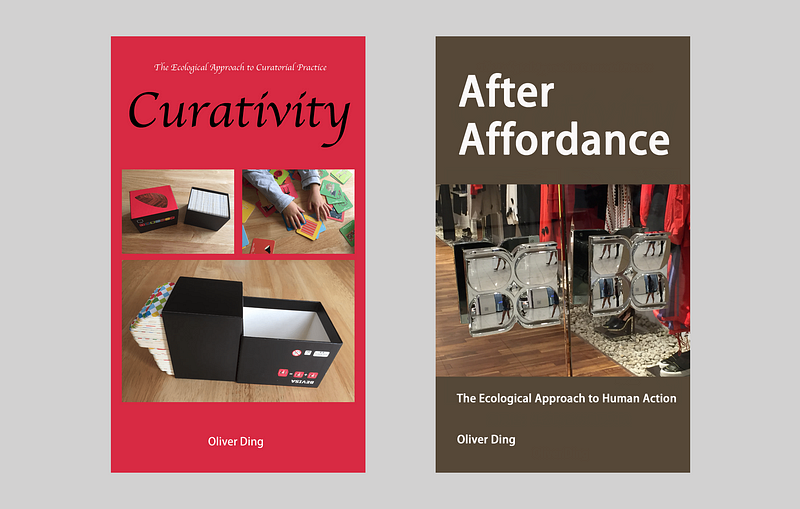
After learning ecological psychology for five years, I wrote a book titled Curativity from Sept 2018 to March 2019. During the process of writing, I developed a new theoretical approach called the Ecological Practice Approach which aims to build an Affordance-based theory of action and apply ideas of ecological psychology for analyzing various social practices.
After March 2019, I continuously worked on revising Curativity and developed the Ecological Practice Approach as a new project. Two months ago, I wrote another book titled After Affordance in which I proposed several new theoretical ideas for expanding ecological psychology to the modern digital environment.
Both two books were written in Chinese. Now I am working on applying core ideas from the Ecological Practice Approach to some practical domains such as Action-based Creativity, social platform design, and boundary innovation. I will directly write new thoughts and insights in English for English readers.
Why did I choose ecological psychology as the focus of my theoretical learning? The answer refers to my social connections.
Social Connections as Context
I have a friend who is an innovative psychologist and inventor. He is not a normal scholar because he developed several theories and used these as guides to invent several patented tools and methods, instead of writing papers. His inventions are powerful and attractive to many people. He is an expert on ecological psychology, personality psychology, and the psychology of innovation. He taught me affordance theory and ecological psychology from 2014 to 2016.
It is easy to learn the concept of affordance but hard to master the theory. From 2014 to 2016, I had a unique social environment for learning ecological psychology. My second son was born in 2013 and my first son was 3 years old at the time. During the past years, I had a wonderful opportunity to stay with my two sons in various settings such as daycare, playgrounds, museums, parks, birthday parties, etc. I reflected on my life experience from the perspective of ecological psychology and affordance theory.
Unfortunately, Gibson’s ecological psychology and affordance theory are only about visual perception. For example, I can’t highlight books I borrowed from the library because I don’t own these books. From the perspective of affordance theory, both books I borrowed and I bought afford the same paper-based affordance such as affording for highlighting. Affordance theory lacks ownership which is a social aspect of the environment and materials. For social-cultural level human activity, I need to find other theoretical approaches. Thus, I started reading books and papers about “Practice Theory” in 2019 and expanded my reading scope to the whole area of social theory in 2020.
For my reading case, my social connections are my friend and my family. My wife’s milky tea and our pizza-making activity are the social contexts for my reading during the weekend.
Figure Ecology as Context
I have mentioned several figures in Part I: Erving Goffman, William James, Alfred Schutz, Gregory Bateson, Harold Garfinkel, etc. While network researchers use “citation network” to describe a social network between academic papers, I’d like to use “Figure Ecology” to describe a social network between figures.
Many years ago, I noticed that Wikipedia displays “Influences” and “Influenced” at the sidebar box on academic figures’ pages. The idea of “Figure Ecology” considers these “past social networks” as a special type of context for present reading and learning activities.
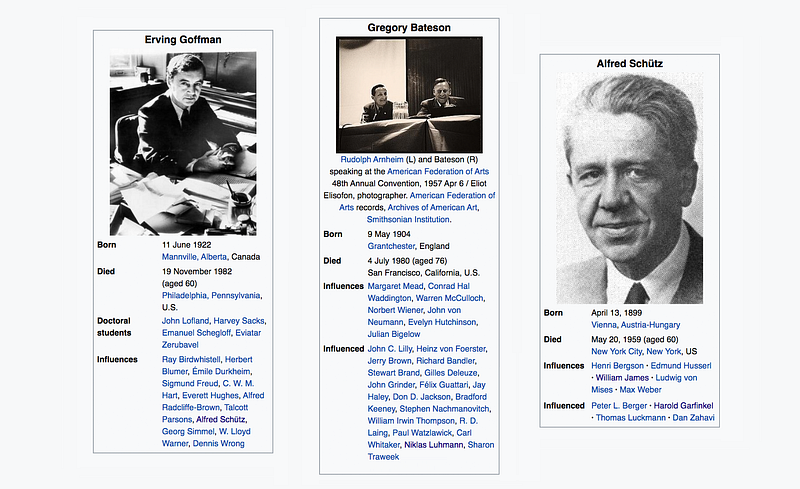
There is a popular learning activity called Living Wax Museum in elementary schools. Some teachers said, “living wax museum is a great way to tie together reading, writing, social studies and speaking and listening skills all in one fun project.” You can find some examples on YouTube (1, 2). In 2018, I was invited to join a living wax museum activity at my son’s classroom. My son and his classmates represented some historical figures and answered guests’ questions. The idea of “Figure Ecology” was inspired by the Living Wax Museum. As a special type of context for reading and learning, Figure Ecology is important for learning social science which requires respecting theoretical traditions.
In order to discuss the frame structure of talks, Goffman suggested there are five kinds of figures utilized in our culture:
- Natural figures: live, physical, flesh and blood bodies — animal or human — each with an ongoing personal identity.
- Staged figures: fictive or biographically derived characters on the legitimate stage, screen, radio, and cartoon page.
- Printed figures: figures in fiction and biography constructed out of words, not out of living performers or (as in cartoons) out of pictures.
- Cited figures: Natural figures have the capacity to tell of the doings — past, current, possible, or future — of other figures, including, necessarily, “themselves.”
- Mockeries and say-fors: an individual acts out — typically in a mannered voice — someone, not himself, someone who may or may not be present. He puts words and gestures in another’s mouth.
For my reading case, this typology is not very useful for discussing the “author-reader” relationship. It’s better to consider Goffman as a historical figure. But for other cases, this typology is great for discussing Figure Ecology.
Idea Ecology as Context
Idea Ecology refers to the network of ideas produced by figures. For my reading case, “Frame” is the core idea. Goffman’s other ideas and “Frame” form an Idea Ecology. We can also consider Goffman’s idea and other figures’ ideas as an Idea Ecology too. It depends on the goal of your analysis.
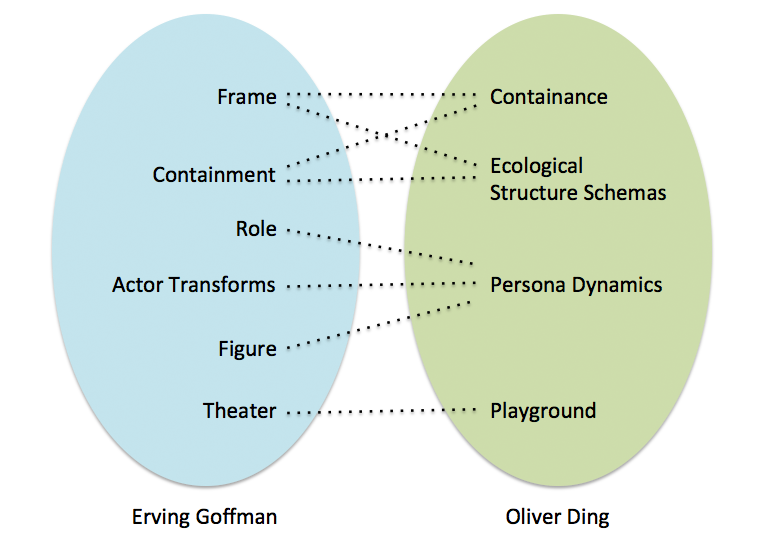
Instead of paying attention to the boundary of idea ecology, it is better to consider it as a context for your thinking. For my reading case, there are several ideas of Goffman that are relevant to my ideas, see the above diagram.
Part III: Discussion
I consider this reading case as an example of Ecological Interaction Analysis that focuses on environment and action.
The ecology view focuses on the “organism-environment” relationship. It suggests each and every living organism has its specific surrounding medium of environment called niche. An organism is also part of other organisms’ environment. Following this general view, I consider “ecological interaction” as “people interact with their surrounding context” and see “social interaction” as a subset of “ecological interaction” because we can say other people are social context.
Part II has described six kinds of context for this case:
Physical environment as context Digital ecology as context Personal psychobiography as context Social connections as context Figure ecology as context Idea ecology as context
An emergent issue is an interaction between people and their figure ecology. I consider this type of interaction as “Quasi-social Interaction” since historical figures are people too but they can’t respond to us.
The notion of Quasi-social Interaction bypasses the content and media approach for studying reading and raises a challenge for us:
What’s the mechanism of Quasi-social Interaction?
I want to use this challenge to test the 3I Model of Creative Actions. As the diagram below shows, the 3I model has three core entities which are idea, initiator, and initiatee. It also considers two types of events: act by the initiator and react by the initiatee. Finally, the model considers the platform as the context of entities and events.
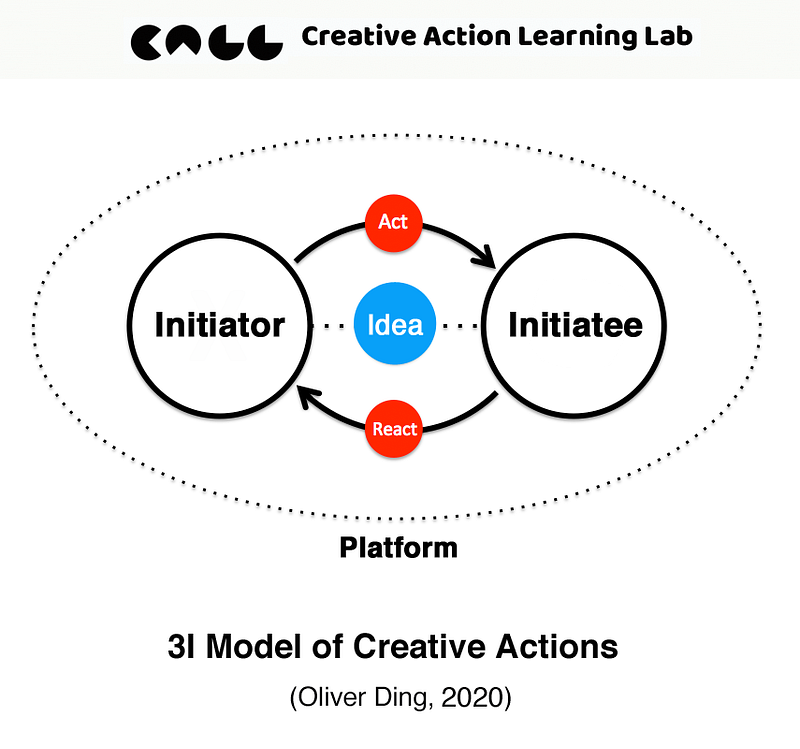
Originally, the 3I model was developed for the “Process as Product” approach for studying creativity. I use the term “Idea” to refer to the product aspect of creative actions and use the term “Act/React” to refer to the process aspect. This pair of concepts solve the problem of the disappearance of immediate experience. I further consider the “Idea” has three elements including name, form, and content.
Let’s consider Goffman’s creative wiring as a creative action, then we can apply the 3I model to my reading case.
Initiator
Erving Goffman
Initiatee
Oliver Ding
Act:
Erving Goffman wrote the sentence “I try to follow a tradition established by William James in his famous chapter ‘The Perception of Reality,’ first published as an article in Mind in 1869” in 1974.
React:
I found several books about William James at home and found the article and took pictures in 2020.
Idea:
William James on Reality.
Platform:
Harvard University Press can be seen as the platform for Erving Goffman’s creative writing for Frame Analysis.
Initiator refers to a person who initiates an act that makes “a grand opening” of a creative action. Initiatee refers to a person who responds to the initiator’s “call-to-action.” For my reading case, I consider Goffman as an unintended initiator who didn’t have a strong intention on what initiatees should do.
The “Act” is the original action and the “React” is the following actions. The 3I model doesn’t require Act and React should be real-time.
For intended action, the “Idea” has three elements including name, form, and content. For unintended action, these three elements are not required.
I also mentioned some “Ideas” may contain multiple layers and each layer is a creative space. This means we can also understand creative writing in multiple layers. The above example is writing a sentence which is a sub-creative action of writing a whole book.
Though the 3I model was developed for discussing non-content creative action, the above test tells us it can be used as a general model for interpreting creative content from the perspective of Action-based Creativity. I have pointed out that Action-based Creativity goes beyond creative actions because it also considers Action-based creative content.
Last month, I published an article titled #SocialPxD — ReEngagement with Twitterville. At that time, I also adopted a perspective of Action and used a similar diagram to describe the basic structure of Twitter. I said, “There are many ways to describe the structure of Twitter. For example, if you see Twitter as a ‘Media’ platform, you can adopt the model of communication: Sender — Message-Receiver. I see Twitter as a ‘Social’ platform and build a model of interaction: Act — Tweet — React.”
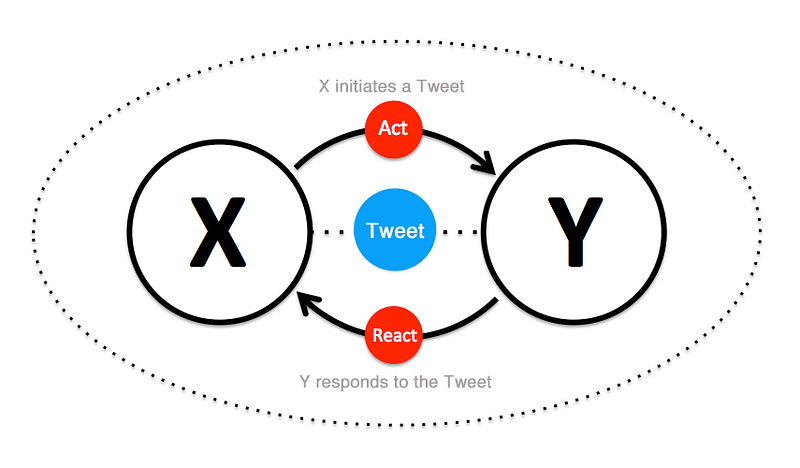
I also talked about the “Act” and “React” around a Tweet, “From the perspective of action, I don’t choose Tweet as the basic unit of Twitter, but the interaction based on Tweet as a basic unit of Twitter. User X initiates a tweet (Act), and User Y responds to the tweet User X initiated (React). User X and User Y connect to each other (Connect) through a tweet (Tweet).”
I didn’t go deep about the “React” part. Today I want to point out that the “React” part doesn’t only mean “reply, ” “retweet,” “retweet with comment” or other operations within the Twitter platform, but also any acts in context. For example, I recently replied to a tweet Jeremiah Owyang posted on April 26, 2020.
Tweet
In April, I found this tweet is a great example of unintended creation action, so I bookmarked it.
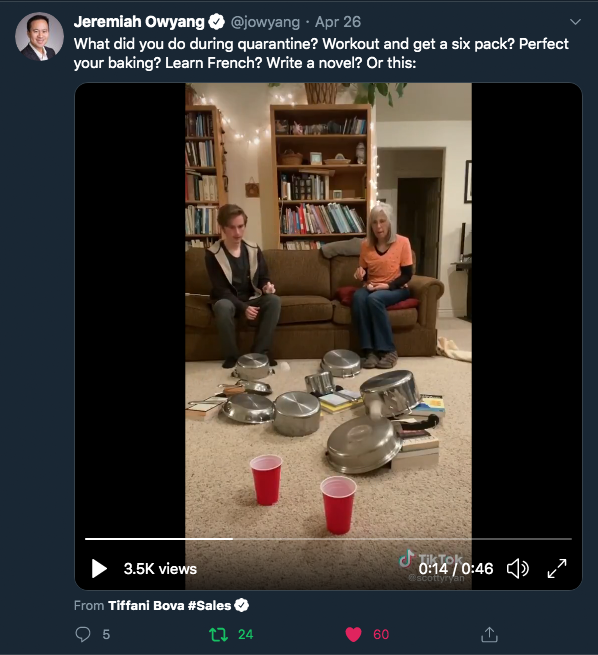
This month I wrote an article titled The NICE Way and Creative Actions and use the tweet as an example.
X: Act
Jeremiah Owyang posted the tweet on April 26, 2020.
Y: React
I bookmarked the tweet and used it as an example for an article about creative actions. After publishing the article, I replied to the tweet on July 9, 2020.
This example is what I said about “the interaction based on Tweets.” Now I want to point out the difference between my approach to study Twitter and Dhiraj Murthy’s theoretical framework for understanding Twitter I mentioned above.
- First, I focus on Twitterville which is an ecological environment based on the Twitter platform while Murthy focuses on Twitter.
- Second, I adopt an action-based approach while Murthy adopted Goffman’s ideas as a theoretical foundation.
- Third, I consider Twitter as a digital context of quasi-social interaction while Murthy considered Twitter as a communications medium.
Another interesting fact is that Twitter allows people to register user accounts for individuals, groups, organizations, and other entities such as pets. Obviously, we can’t claim every Twitter user account is a real live person. Anders Persson also developed a theoretical framework for studying social media in his book Framing Social Interaction: Continuities and Cracks in Goffman’s Frame Analysis, he used “Persona-to-Persona Interaction (p2p)” to describe communication behavior on social media. Persson defined “Persona” as a created or an assigned representation of an individual; e.g., a username, a chosen identity, a picture, etc.
What does “Social” mean when we call Twitter a Social Media Platform?
For contemporary theorists of social theory, HCI (human-computer interaction) and IS (information system), the meaning and definition of “Social” and “Human” is a critical challenge since the rise of AI and Robot technology. They have been debating on similar topics such as “agency” for many years. For example, Rose and Jones suggested a binary of human-machine agency (2005). HCI scholars Victor Kaptelinin and Bonnie Nardi also developed a typology of agents to describe different kinds of agency.
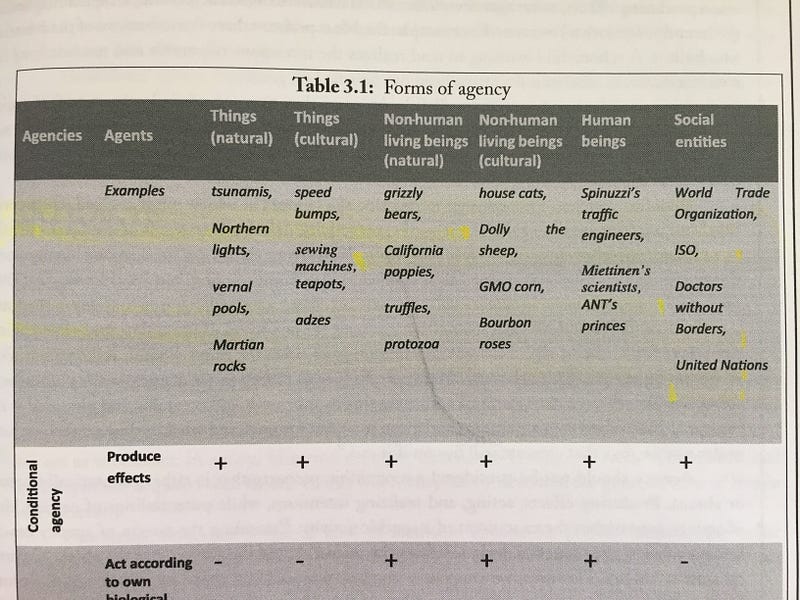
It seems Quasi-social Interaction is a trick for bypassing this complex philosophical debate. The above discussion has described two types of Quasi -Social Interaction:
Person-to-Figure (my reading case) Person-to-Persona (tweeting case)
At a higher level, Quasi-social Interaction is part of Ecological Interaction.
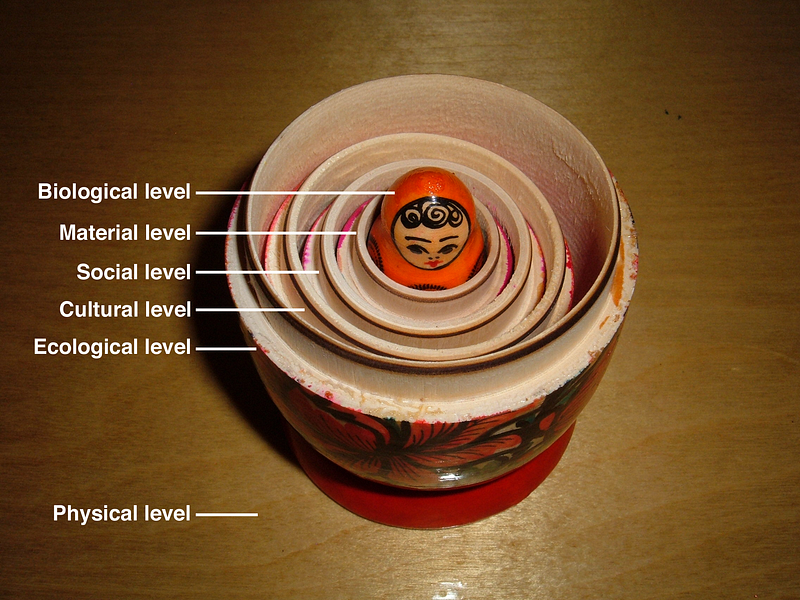
Finally, I found my Unit of Analysis is ecological level. Goffman’s Face-to-Face social interaction, Persson’s Persona-to-Persona social media interaction, my Person-to-Figure quasi-social interaction, and other various types of interaction can be contained in the ecological level.
The Ecological Interaction Analysis is an Action-based approach and it echos the Ecological Physics Method inspired by James J. Gibson’s ecological psychology.
Related Resources
This article was written on July 21, 2020. A by-product of the article is the Ecological Interaction Analysis method.
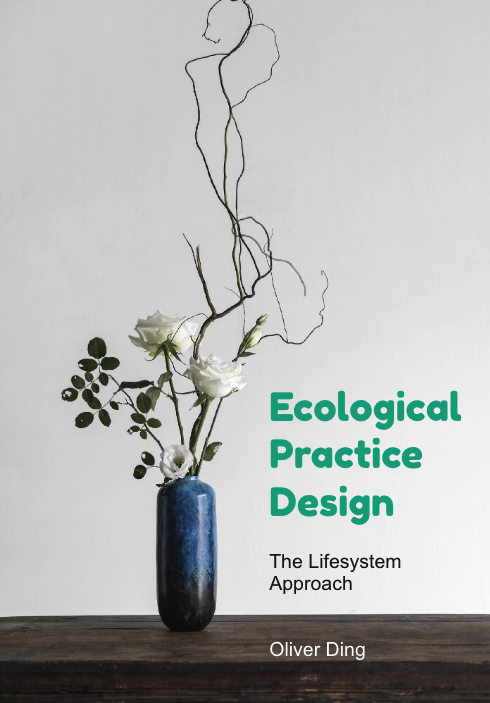
On May 17, 2022, I edited a Table of Contents for a possible book titled Ecological Practice Design: The Lifesystem Approach to Everyday Life Innovation.
Part 4 of the book introduces methods for conducting research projects with the Lifesystem framework and the Ecological Practice Approach. Readers can also use these methods for their informal study or life reflection.
This article is considered a chapter of Part 4 of Ecological Practice Design.
There are three methods behind the Ecological Practice Approach:
- Ecological Physics Method
- Ecological Interaction Analysis
- Creative Action Analysis
You can find more details from the following links:
- #SocialPxD — ReEngagement with Twitterville: An Introduction to Ecological Physics Method
- The Notion of Affordance Analysis
- Physical Space Affordances and Graphic Space Affordances
- Digital Space Affordances and the Opportunity of Objectification
- The Creative Action Analysis Method
I am also working on building a new website for the Platform Ecology project. You can save the following links:
- PlatformEcology.org
- Twitter: @PlatformEcology
- Linkedin: @PlatformEcology
You are most welcome to connect via the following social platforms:
Linkedin: https://www.linkedin.com/in/oliverding Twitter: https://twitter.com/oliverding Polywork: https://www.polywork.com/oliverding Boardle: https://www.boardle.io/users/oliver-ding


