
Curativity Theory: The Ecological Approach to General Curation Practice
In 2019, I had wonderful various epistemic activities. I wrote a book for my favorite topic Curation and developed a theory called Curativity Theory. I also created several frameworks for other topics.
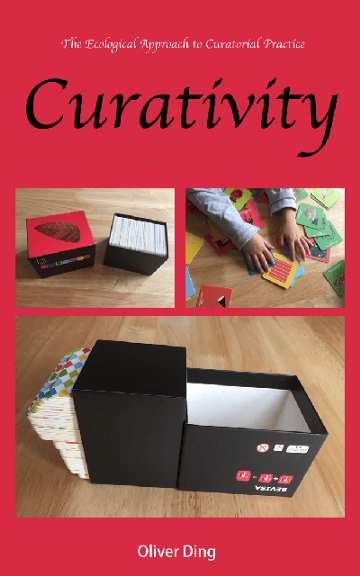
I have worked in the curation field for over ten years. I was the Chief Information Architect of BagTheWeb.com which was an early tool for content curation (We launched the site in 2010). This experience inspired me to make a long-term commitment to the Curation theme. After having 10 years of various curation-related practical work experience and theory learning, I coined a term called Curativity and developed Curativity Theory which became a book.
The core idea of Curativity Theory is very simple:
In order to effectively curate pieces into a meaningful whole, we need Container as part to contain pieces and shape them.
The theory built a brand new ontology called “Whole, Piece and Part” and adopted James Gibson’s “Affordance”, George Lakoff’s “Container” and Donald Schön’s “Reflection” as epistemological tools. To test the theory, I wrote several case studies and one of them is titled Knowledge Curation.
Part 1: Theoretical Background
1.1 Curativity: From Pieces to Whole
In philosophy and mathematical logic, researchers use “mereology” to describe the study of parts and the wholes they form. Though I am also talking about the relationship between the pieces and the whole, what I want to explore is not mereology. My objective is “curating pieces into a meaningful whole” which refers to action, experience, and value. In other words, I care about the practice and activity of curating, not the abstract thinking about parts and wholes.
Thus, I coined the new term Curativity to describe my objective. The diagram below shows the third element of Curativity: Container. The basic assumption behind the diagram and the new term is: “In order to effectively curate pieces into a meaningful whole, we need Container to contain pieces and shape them.”
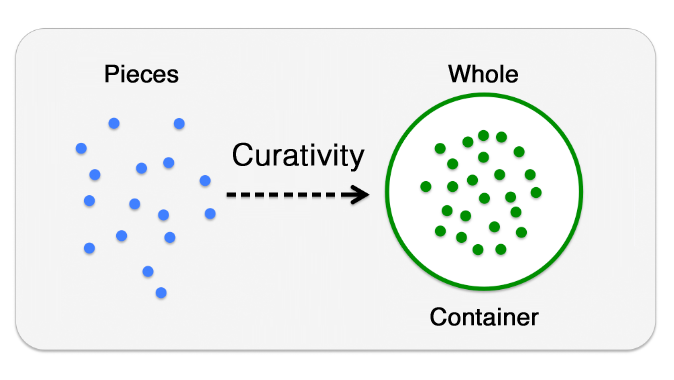
Pieces, Container, and Whole together form a triad which is the basic unit of analysis of Curativity theory. Also, this unit of analysis establishes a new theoretical category at the ontological level. The concept of Curativity indicates three statuses of things:
- Things-in-Pieces
- Things-in-Container
- Things-in-Whole
Curativity theory is all about understanding the structure and dynamics of these three statuses.
1.2 The Transactional Worldview
Curativity theory adopted the transactionalism worldview as the theoretical foundation.
In 1942, Stephen C. Pepper pointed out that there are four root metaphors of world views or conceptual systems: formism, mechanism, contextualism, and organicism in World Hypotheses: a study of evidence. In 1987, Altman and Rogoff reviewed the world views of psychologists and suggested a similar typology: trait, interactional, organismic, and transactionalism.
According to Harry Heft (2012), the foundations of various ecological approaches to psychology is the transactionalism, “Frameworks more sympathetic to ecological thinking had been simmering among psychology’s early writings, notably in William James’ radical empiricism and Kurt Lewin’s field theory, but became realized only in the 1960s through the works of James J. Gibson, Roger G. Barker, and others. These frameworks share many of the assumptions of the ecological sciences and, collectively, can be located within a transactional worldview.”
The major difference between the interactional worldview and the transactionalism worldview is their unit of analysis.
- Interactional worldview: The unit of analysis is the individual viewed as a bounded, independent entity, operating separately from the surrounding, while subject to influences from outside its boundaries.
- Transactionalism worldview: The unit of analysis is the person-environment dynamic system. The components of this system operate in a relational, interdependent manner, rather than as independent entities.
Curativity theory claimed the Pieces-Container-Whole triad as its unit of analysis. Without the Container, there are only Pieces. Without the Pieces, the Container doesn’t make sense. Without the Whole, the curating activity is not needed. Thus, these three components and three statuses are inseparate.
Part 2: Basic Concepts
2.1. Double Affordances
At the epistemological level, I adopted ecological psychologist James J. Gibson’s ecological approach as a tool for developing Curativity theory. One of the core ideas of Gibson’s approach is Affordances.
What’s Affordance? Let’s have a look at the original definition made by Gibson, “The affordances of the environment are what it offers the animal, what it provides or furnishes, either for good or ill. The verb to afford is found in the dictionary, but the noun affordance is not. I have made it up. I mean by it something that refers to both the environment and the animal in a way that no existing term does. It implies the complementarity of the animal and the environment.” (1979, p.119)
The affordance concept describes the possibilities for action that the environment including objects and other people offers for specified persons. The theory is complex, according to ecological psychologist Edward S. Reed (1996), there are two ways of using the concept of affordances: concrete analysis of affordance and abstract analysis of affordance. The former shows “how particular environment properties can promote a particular species’ habits of life (e.g., how this kind of terrain does or does not support human locomotion).” while the latter shows “these particular relationships between an organism and its habit are instances of ecological regularities or laws.”(p.40)
I adopted both two ways of affordance analysis for the Curativity theory. At the epistemological level, I used the abstract way. At the methodological level, I used the concept way. Curativity theory claims that double affordances are its starting point.
- Pieces: things-in-pieces afford putting into containers.
- Container: container affords containing things-in-pieces.
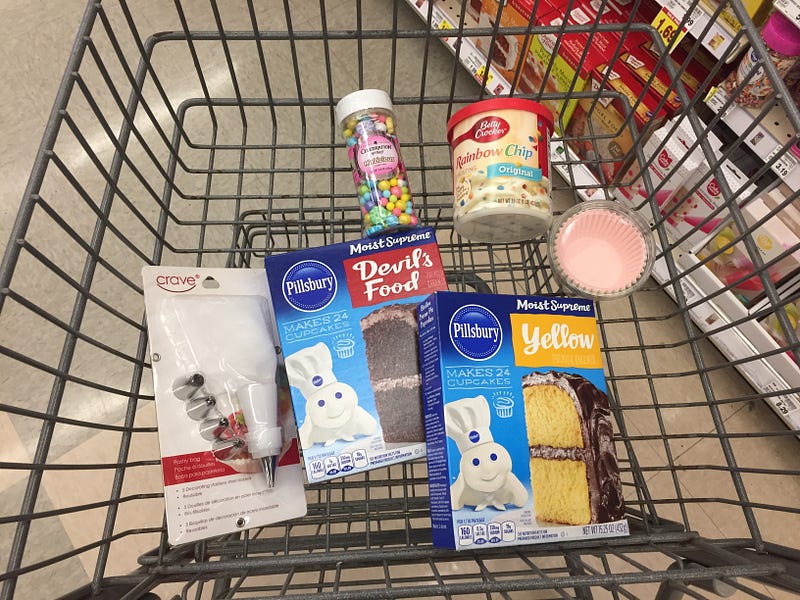
The about picture shows an example of double affordances. The shopping cart is a container, it affords containing various products which afford putting into a shopping cart.
2.2 Nested Containers
The concept of Container is inspired by George Lakoff and Mark Johnson’s conceptual metaphor Container and image schema Containment.
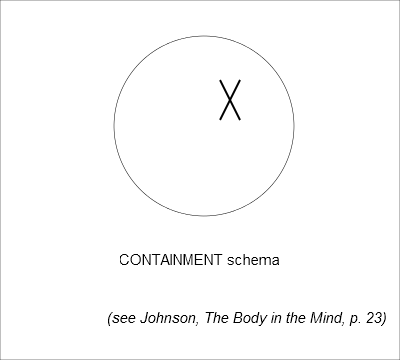
According to Mark Johnson (1987), “If we look for common structure in our many experiences of being in something, or for locating something within another thing, we find recurring organization of structures: the experiential basis for in-out orientation is that of spatial boundedness. The most experientially salient sense of boundedness seems to be that of three-dimensional containment (i.e., being limited or held within some three-dimensional enclosure, such as a womb, a crib, or a room).” He also pointed out there are at least five important entailments or consequences of these recurring experiential image-schematic structures for in-out orientation. (pp.21–22)
Why did I adopt the conceptual metaphor Container and image schema Containment since I already have the affordance of the container? Because Gibson’s affordance is only suitable for use in physical things. For abstract non-physical things, I can use conceptual metaphor Container and image schema Containment.
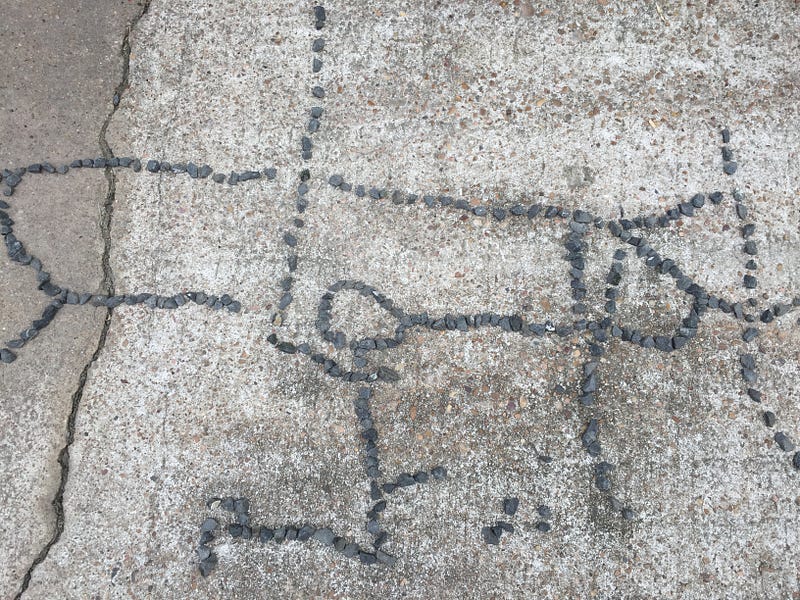
Moreover, physical containers and non-physical containers can work together in order to explain the complex curating activity. For example, the picture below shows a scene of playing. Two months ago, my two sons played a rock game outdoor. From the perspective of Curativity theory, there are three containers, 1) the land, 2) the rock-man picture, and 3) the game.
Another example is the picture below which shows two woodblocks. Here we see two containers, one is the desktop (physical container) and another is the word “AI”(linguistic container).

The concept of Nested Containers expands the scope of Curativity theory from the physical level to non-physical levels.
2.3 Double Selectivity
According to Harry Heft, the theoretical root of Gibson’s ecological psychology is William James’ Radical Empiricism. Inspired by Heft, I adopted the concept of Selectivity from Radical Empiricism.
Heft (2012) pointed out, “…in radical empiricism, knowing refers most fundamentally to a functional relation in experience between a knower and an object known. The defining characteristic of knowing is selectivity. Through knowing processes, structure is selected out of, or differentiated from, immediate experience. It is now time to consider the products of selective processes. To use James’s terminology, two products of the selectivity of knowing processes are percepts and concepts.”(p.37)
Curativity theory claimed that double selectivity is the foundation of curating.
- The Selectivity of Perceiving
- The Selectivity of Thinking
According to Heft, “Perceiving is an action that entails selection of a flow of immediate experience out of the potential ground that is pure experience. Thinking or conceiving entails, in turn, selecting and fixing particular parts of this perceptual flow. Through this process, concepts are carved out of immediate perceptual experience at a remove from action and are abstracted from it. Abstracting from the immediate flow of experience makes it possible for the knower to isolate, and then to classify or otherwise manipulate, these extracted ‘moments.’ This cognitive capability enlarges the knower’s epistemic potential in incalculable ways. ”(pp.39–40)
For Curativity theory, the orientation of selection is to turn pieces into a whole. It requires perceiving and thinking of something as a container for things-in-pieces.
2.4 Double Reflections
I also adopted Donald Schön’s “Reflection” for Curativity theory. Schön expanded John Dewey’s “Reflection” to double reflections:
- Reflecting-in-action
- Reflecting-in-practice
Schön refers reflecting-in-action to immediate situations while reflecting-in-practice means cross-situation level.
Curativity theory claimed that reflecting-in-curating can happen at both the action level and the practice level.

For example, saving is a typical curating activity. Reflecting-in-curating can happen in both the action level (putting one coin into the piggy bank) and the practice level (saving).
2.5 Affordances, Selectivity, and Reflectivity
The cover of Curativity shows a story of playing cards. This story is a great example of affordances, selectivity, and reflectivity. Two years ago, my son came to my office and I gave him IKEA Bevisa memory cards.
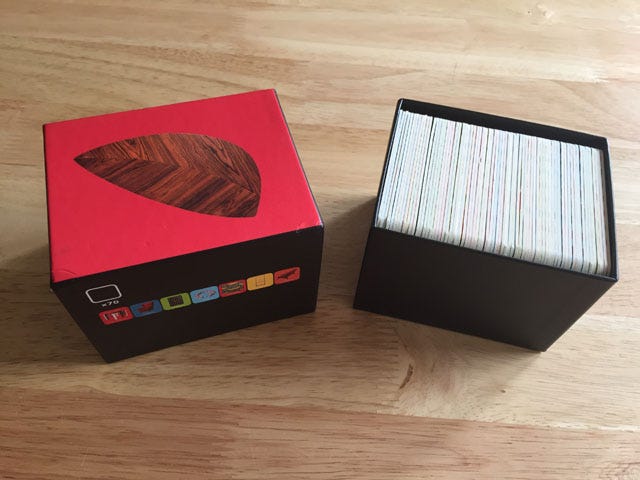
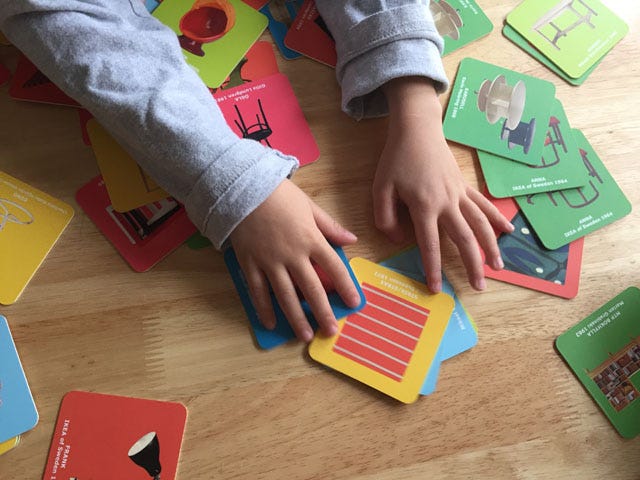
Usually, people play the memory card for training memory. You turn over any two cards. If the two cards match, then keep them. If they don’t match, turn them back over. If you can remember what was on each card and where it was, you can quickly match many cards and win the game. However, what my son played is not the normal way. He just randomly played these cards as “cards” instead of “memory cards” and turned them into a “truck”.

From the perspective of Curativity theory, this story shows three core concepts for understanding Curativity.
- Affordances: Affordance is potential and Action is real, thus, there is a transformation process between “affordance” and “action”, ecological psychologists call this process “actualization of affordances”. The side of these cards offers an affordance for shaping, my son actualized this affordance and surprised me. He didn’t know the term affordance but the theory exactly explained his behavior.
- Selectivity: Since the environment offers so many affordances, any person has to pick up one or some affordances from many affordances and actualize them in a particular situation. My son picked the affordance for shaping from the side of these cards. This is Selectivity of Perceiving. Affordances are about perceiving, not thinking.
- Reflectivity: When I saw the “truck” my son built, I realized this is a great case of Affordance theory and Curativity theory. Thus, I took pictures to record this case. At that moment, I did Reflecting-in-action on a particular situation. Later, I often did Reflecting-in-practice during the process of writing Curativity: The Ecological Approach to Curatorial Practice. I also used these pictures to design the cover for the book.
The “truck” is a new whole of these memory cards. This example also pointed out the relationship between Curativity and Creativity. For studying creative actions, we pay attention to what kind of affordances can lead to “Novelty” and “Surprise.” Some types of Whole are novel, other types of Whole are normal. Curativity theory covers both novel types of Whole and normal types of Whole.
The limitation of this example is it only talks about Selectivity of Perceiving. As I mentioned above, Curativity theory also considers Selectivity of Thinking which goes beyond the scope of Gibson’s ecological (perception) psychology. Gibson once mentioned, “Knowing is an extension of perceiving.” However, Gibson didn’t have enough time to develop a complete theory of “extension of perceiving.” Curativity theory aims to provide a brick for building the house of “extension of perceiving.” by incorporating William James’ Selectivity and Donald Schön’s Reflectivity.
2.6 Whole-in-Environment
Curativity theory claimed that there are many ways of perceiving and thinking of the Whole in the real world. For example, a typical normal routine practice can be a container for shaping a whole.
Two years ago, I went to Discount Tire to repair tires. I observed their routine work process and found there was a transparent plastic bag that contained my car key and the bill of my case (see the picture below).
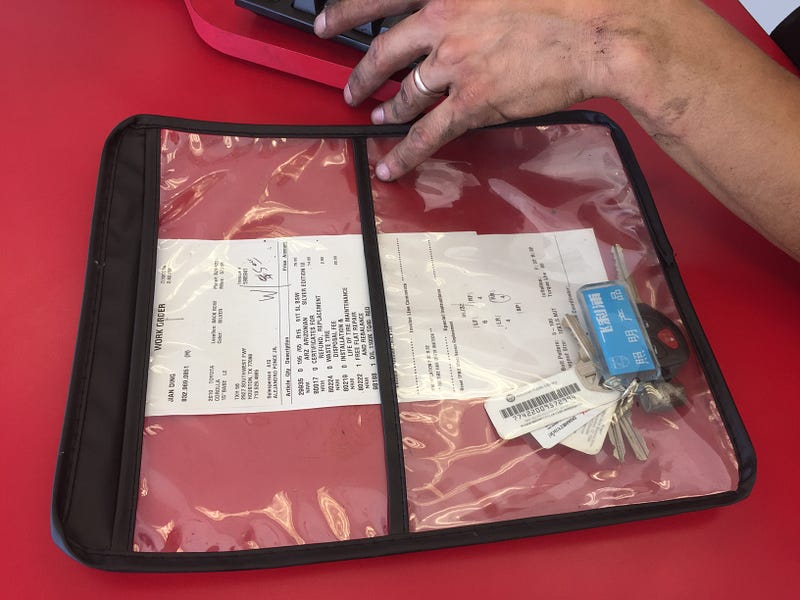
My car key and the bill of my case are two things-in-pieces. They connected together through a theme of practice: repairing tires. The company finds a simple way to make a container containing these two things-in-pieces as a whole for their workflow.
As a normal container, the transparent plastic bag doesn’t make these two things-in-pieces as a whole. In fact, the whole is defined by the routine practice of repairing tires. The bag-in-use provides a material function which turns the whole-in-mind into a whole-in-environment.
2.7 Attach and Detach
In order to understand the structure and dynamics of the Piece-to-Piece relationship and the Piece-to-Container relationship, I combined “Attach” and “Chance” together and coined a new term “Attachance” as a core concept of Curativity theory.
For Curativity theory, the concept of Attachance means two types of events. One is Piece-to-Container, another is Piece-to-Piece.

The term Attachance was inspired by Gibson’s writing about the relationship between people and environment, “When in use, a tool is a sort of extension of the hand, almost an attachment to it or a part of the user’s own body, and thus is no longer a part of the environment, graspable and portable, to be sure, but nevertheless external to the observer. This capacity to attach something to the body suggests that the boundary between the animal and the environment is not fixed at the surface of the skin but can shift. More generally it suggests that the absolute duality of “objective” and “subjective” is false. When we consider the affordances of things, we escape this philosophical dichotomy (p.35)”
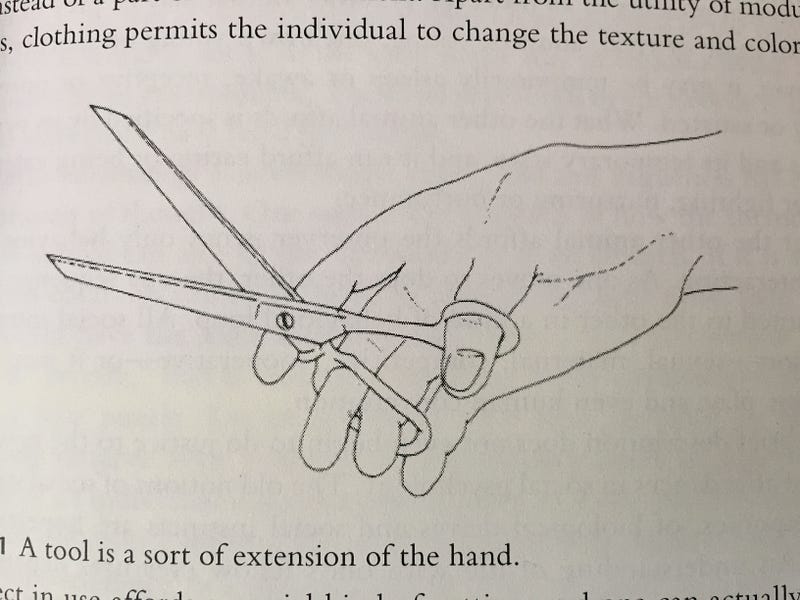
Gibson’s idea is not alone. The classic example of the blind man’s stick (Merleau-Ponty 1962; Polanyi 1962; Bateson 1973) described the same viewpoint. Gregory Bateson asked the below question in 1973: “Consider a blind man with a stick. Where does the blind man’s self begin? At the tip of the stick? At the handle of the stick? Or at some point halfway up the stick?” Merleau-Ponty, Bateson, Gibson, seeded a great tree about the human mind. Today we see their ideas are driving the emergent embodiment of cognitive science.
Gibson didn’t develop a theory about “attach” and “detach”. He used terms such as “attached object” and “detached object”. For Gibson, an attached object refers to a layout of surfaces less than completely surrounded by the medium, and a detached object refers to a layout of surfaces completely surrounded by the medium. This piece is complex because Gibson used his own term Medium, Substance, and Surfaces to described the meaningful environment.
Gibson focused on the human body and environment, he considered objects and tools as environments. His theory is body scale analysis. The Attachance concept I am working on goes beyond the body, I want to expand it to cover multi-level scales. In fact, this is the primary theme of my other book After Affordance: The Ecological Approach to Human Action.
2.8 Themes of Practice
The whole can be whole-in-mind, whole-in-environment, whole-in-artifacts, and whole-in-activities, Curativity theory developed a new concept called Themes of Practice to curate the diversity of the Whole.
Anthropologist Morris Opler (1945) developed theoretical “themes” for studying culture. Career counseling therapists and psychologists also developed a theoretical concept called “life theme.” If we put culture themes and life themes together, we see a “great debate” of social science: “individual — collective.”
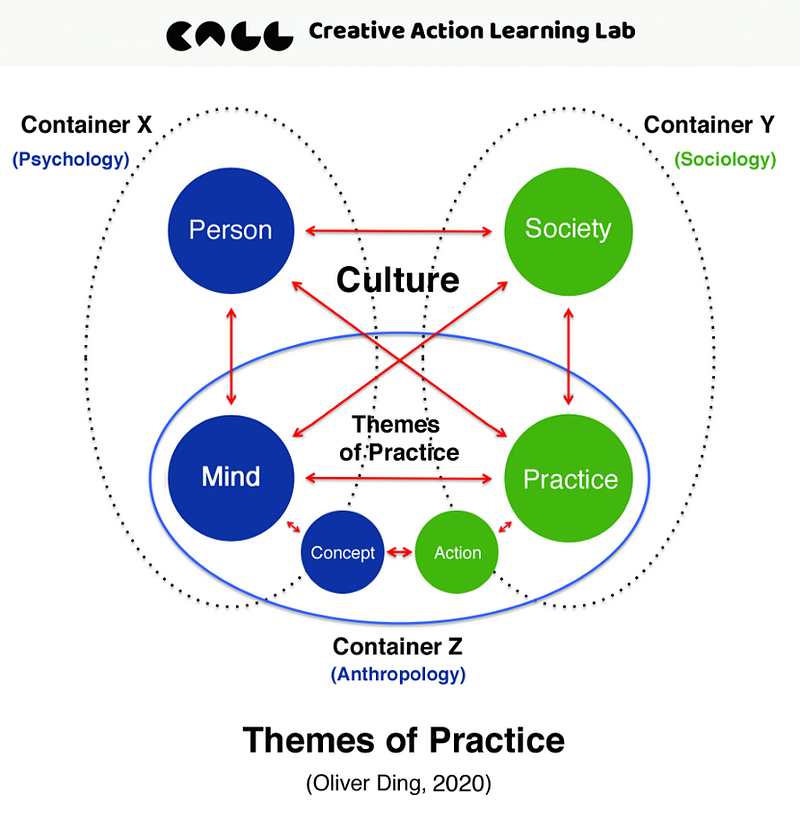
I consider the notion of Themes of Practice as a “process” type of concept, not a “substance” type of concept. Thus, it is not a new category of themes, but a transformational process between individual life themes and collective culture themes. It refers to both concept and action. It connects mind and practice. It indicates the transformation of both person and society.
2.9 Curativity, Self-reference, and Dialectical hierarchy
An interesting thing is one of the applications of Curativity theory is Knowledge Curation which can be used to guide the development of Curativity theory. Thus, it rough looks I make a theoretical self-reference.
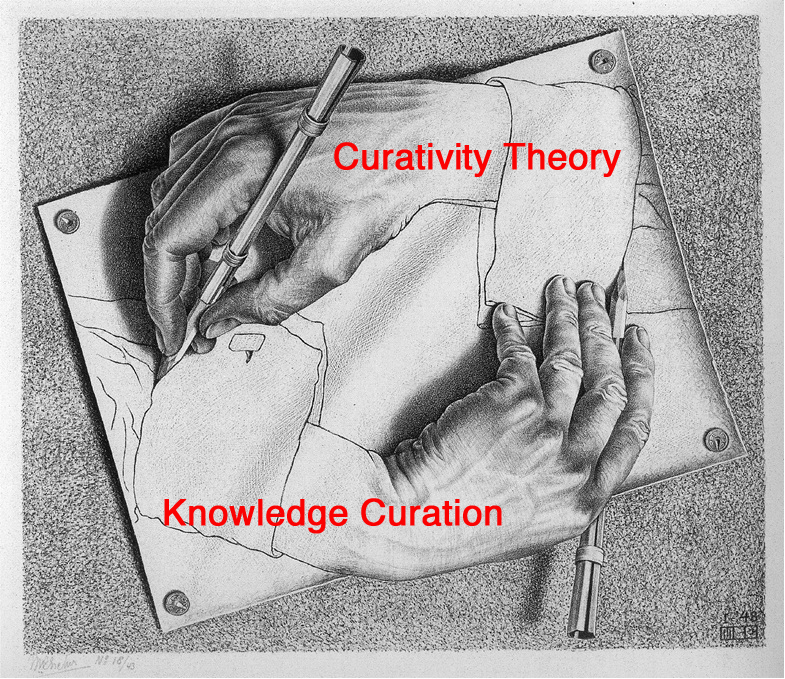
However, it depends on the boundary of self. From the perspective of Curativity theory, it is too naive to claim that the pieces and parts are determined by the whole. In fact, Curativity theory embraces the dialectical hierarchy of the pieces-whole relationship. For example, as an application of Curativity theory, Knowledge Curation is a piece while the whole is the Curativity theory. The outcome of Knowledge Curation can be returned to guide the development of Curativity theory.
Moreover, the dialectical hierarchy is one specific type of dialectical boundary of Container. Since this notion is not a part of George Lakoff and Mark Johnson’s conceptual metaphor Container and image schema Containment, I coined a new term Containance which refers to the dialectical boundary of Container and my other ideas about “Containee — Container” in general.
Part 3. General Curation Framework
Based on the basic model of Curativity, I developed a general curation framework in order to apply Curativity Theory for curation practice in the real lifeworld.
3.1 From Curatorial Practice to General Curation
Why do I use the term General Curation? Museum curators and Art curators tend to use Curatorial Practice to refer to their professional activities. I consider Curatorial Practice as a subcategory of General Curation. From the perspective of Curativity Theory, the following social practices are considered as part of the family of General Curation.
- Educational activities.
- Event organizing and curating.
- Web content curation.
- Knowledge Curation.
- Publishing and editing a catalog or a magazine.
- Toy Curation.
- Grocery shopping and other types of shopping.
- etc.
Thus, the General Curation is about social practices which require selecting, collecting, organizing, presenting, and reflecting. It goes beyond the scope of traditional professional Curatorial Practice.
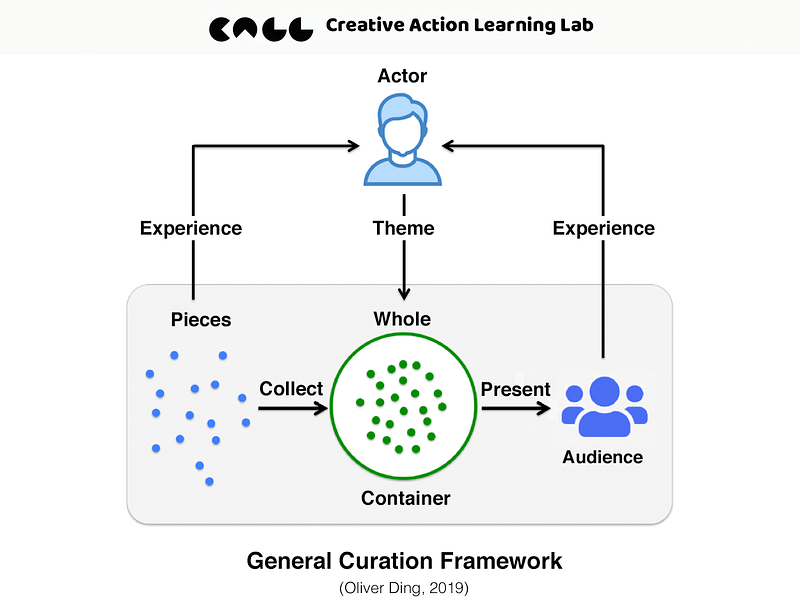
The above diagram highlights several pairs of concepts:
- Pieces v.s. Whole
- Whole v.s. Container
- Collect v.s. Present
- Actor v.s. Audience
- Experience v.s. Theme
As an application of Curativity Theory, the above General Curation Framework represents the structure and dynamics of general curation practice. The activity of general curation aims to collect pieces of things into a meaningful whole in order to present a theme to a group audience.
There are three immanent contradictions within the activity of curating: “pieces — whole”, “things — themes” and “curator — audience”. For the first dichotomy, I use the concept of “Container” to balance the pieces and whole. For the last dichotomy, I use the notion of “Everyone A Curator” to deconstruct the concept of “Curator” because I want to claim that the activity of curating is a general social practice.
The dichotomy of “things — themes” refers to two classical great debates of social science: “mind — matter” and “individual — collective.” After reviewing the concept of “theme” in various disciplines such as Cultural Anthropology, Counseling Psychology, Cognitive Psychology, and the Philosophy of Science, I developed a new concept “Themes of Practice” to propose a process view of “Theme.”
3.2 A Typology of Containers
The General Curation Framework identifies three types of containers:
- Physical Containers: Shipping containers, Bowls, Rooms, Places…
- Social Containers: Families, Communities, Schools, Groups, Events…
- Cognitive Containers: Frameworks, Concepts, Diagrams, Models, Theories…
In fact, we can consider them as three dimensions for understanding the concept of Container. For example, a book is both a physical container and a cognitive container.
3.3 Knowledge Curation
In 2020, I moved to the direction of Knowledge Curation which is my favorite topic.
How do I explore the direction of Knowledge Curation?
The first principle is making new cognitive containers such as diagrams, concepts, and frameworks. For example, I designed the HERO U Framework in June 2020 and applied it to guide the Activity U project in August 2020.
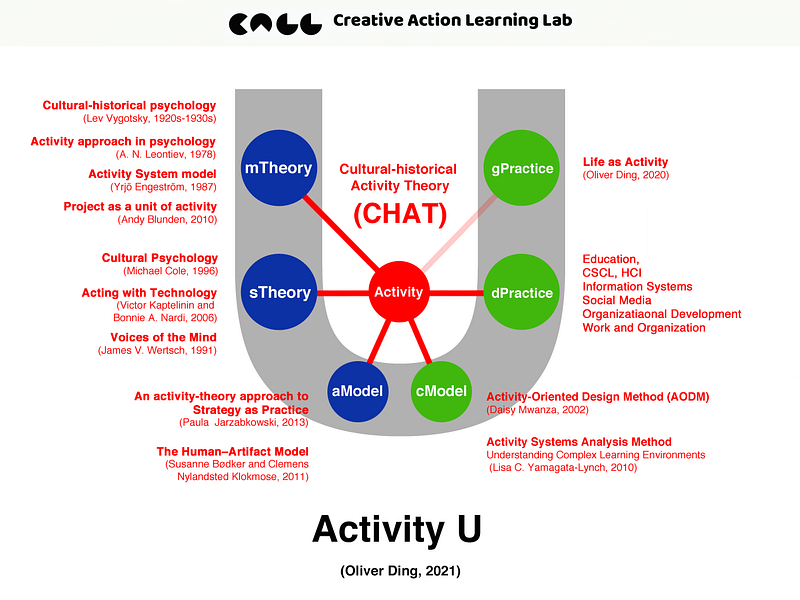
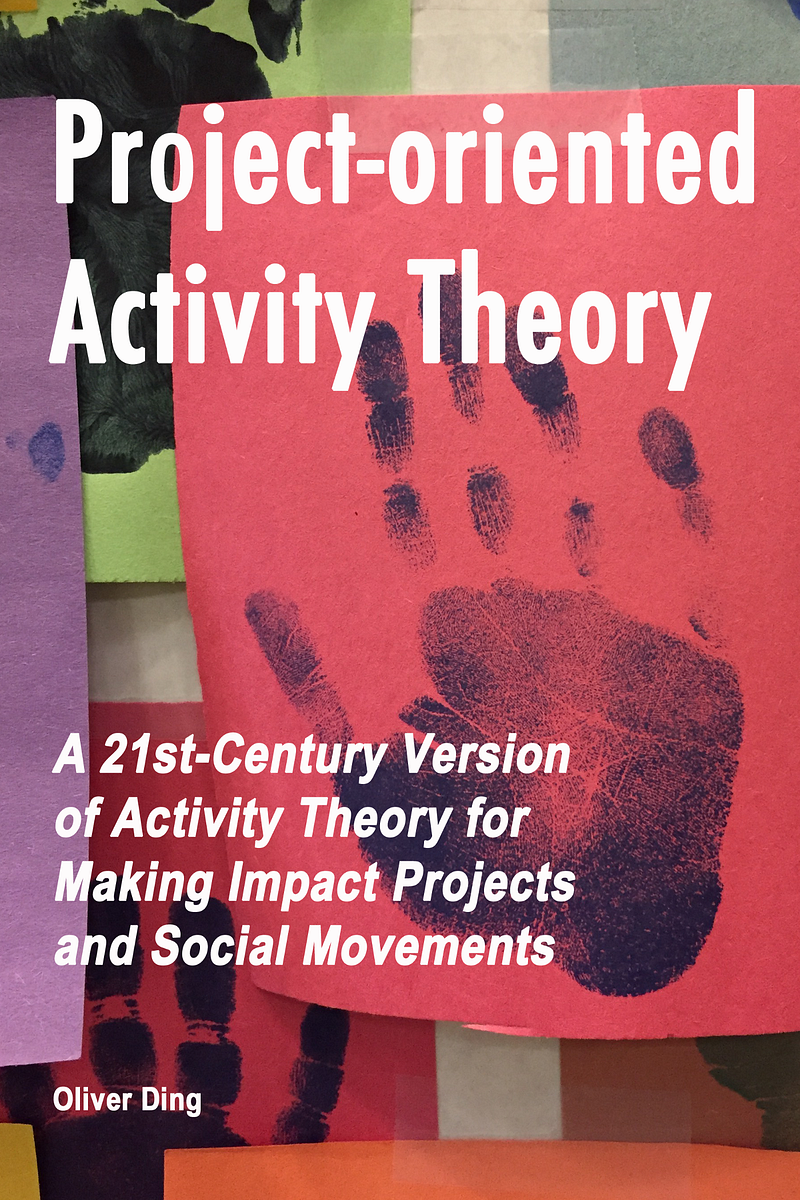
Since then, I have been using the HERO U framework to guide my knowledge curation projects. From August 2020 to March 2021, I wrote the following three books in English. This was an amazing experience!


Two months ago, I joined an online program and shared my reflection about the HERO U framework and the above works. Eventually, I wrote a new book called THE ECHO WAY in Chinese in April. It is a 312-page draft.
In fact, I started applying the HERO U framework’s diagram to platform innovation and personal innovation. On March 24, 2021, I published Platform Innovation as Concept-fit. On May 25, 2021, I published Personal Innovation as Career-fit. On June 4, I made a new diagram called Global-fit for Cross-Cultural Innovation and I had a wonderful conversation with a friend who is a founder of a cross-cultural innovative project.

I realized that it is time to use a new name for the HERO U framework and the new name should focus on boundary innovation. So far I think The ECHO Way is a good name.
The above picture is the book cover of THE ECHO WAY. The subtitle of THE ECHO WAY is Echozone and Boundary Knowledge Work. The book records my reflections on connecting Theory and Practice. Unfortunately, I wrote THE ECHO WAY in Chinese because I wanted to share ideas with my Chinese friends who are participants in the online program.
The WXMY diagram has three containers: Container X, Container Y, and Container Z. I used the term Echozone to name Container Z. Boundary Knowledge Work is a special type of boundary innovation. We can explore more boundary innovations such as Boundaryless Careers, Cross-cultural Innovation, Platform Innovation, etc.
3.4 Themes of Practice
The concept of Themes of Practice is a core concept of Curativity Theory. The purpose of the concept is to connect “life theme” and “culture theme”.
Anthropologist Morris Opler (1945) developed theoretical “themes” for studying culture. Career counseling therapists and psychologists also developed a theoretical concept called “life theme.” If we put culture themes and life themes together, we see a great debate of social science: “individual — collective”.
I consider Themes of Practice as a process type of concept, not a substance type of concept. Thus, it is not a new category of themes, but a transformational process between individual life themes and collective culture themes. It refers to both concept and action. It connects mind and practice. It indicates the transformation of both person and society.
In April 2021, I started learning Genre Theory. I designed a new diagram for Themes of Practice and shared it on Twitter for discussing Genre Theory. At that time, I didn’t realize that the new diagram offers me a concrete framework for analysis.
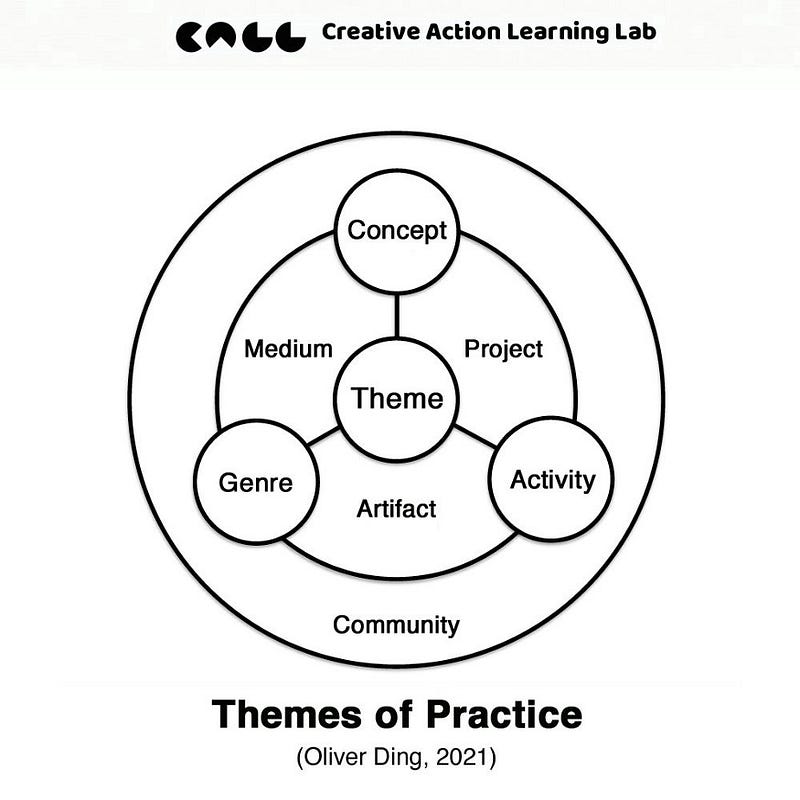
Two months ago, I started the Career Curation project. I applied the idea of Themes of Practice to generate a new concept: Career Themes. It means that I move from an abstract level to a concrete level. Thus, I realized I can use the new diagram for the career theme case study because it offers a structure for observing and evaluating the “Practice” part of “Themes of Practice”.
The recent works on Career Themes focus on the “Practice” part of “Themes of Practice.” This experience inspired me to review the historical development of the idea of “Themes of Practice”.
I collected all my writings about Themes of Practice in past years and edited a Table of Content for a possible book. To my surprise, I have written over 440 pages about the idea of “Themes of Practice”.

On June 28, 2021, I designed the above picture for a possible book and used “The Information Architecture of Social Life” as its subtitle. In fact, “The Information Architecture of Social Life” is the title of the first epilogue of Curativity.
You are most welcome to connect via the following social platforms:
Polywork: https://www.polywork.com/oliverding Twitter: https://twitter.com/oliverding Boardle: https://www.boardle.io/users/oliver-ding Linkedin: https://www.linkedin.com/in/oliverding
License
This work is licensed under the Creative Commons Attribution-NonCommercial-ShareAlike 4.0 International (CC BY-NC-SA 4.0) License. Please click on the link for details.


