
The 3I Model: Idea, Initiator and Initiatee
A framework for studying Action-based Creativity
This article is the Section 7 of The Nice Way and Creative Actions.
7. Idea, Initiator and Initiatee
As the diagram below shows, the 3I model has three core entities which are idea, initiator and initiatee. It also considers two types of events: act by initiator and react by initiatee. Finally, the model considers platform as the context of entities and events.
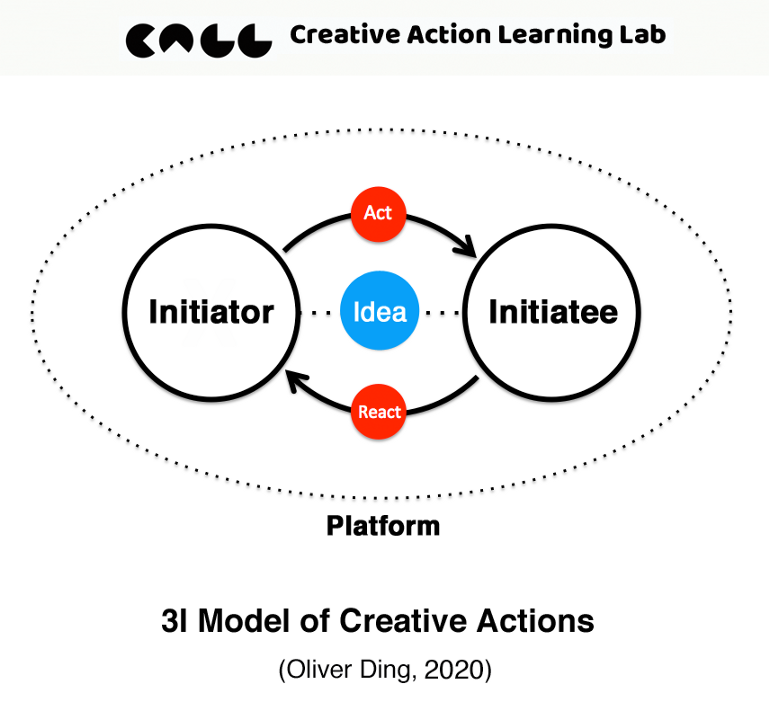
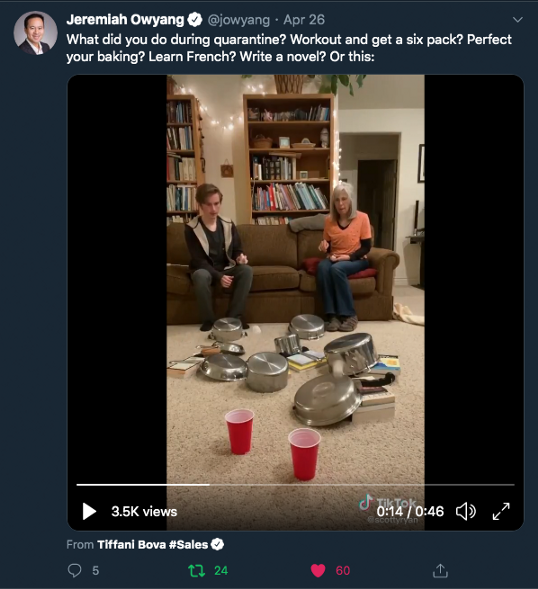
As the above discussion mentioned, acting refers to process and there is no product that remains after acting. In order to make the “Process as Product” approach possible, I use the term “Idea” to refer to the product aspect of creative actions and use the term “Act/React” to refer to the process aspect. This pair of concepts solve the problem of disappearing of immediate experience. I further consider the “Idea” has three elements including name, form and content. For example, the name of BED Talks is “BED Talks”, its form is “recording a short talk in bed”, and each BED talk has its own unique content. The name part is very important for communication and distribution. A name can generate a hashtag for people to follow on social media platforms, a name can help people mention a creative action in words, a name can be a keyword for searching and finding. Most intended creation actions have a short name and hashtag, sometimes unintended creation actions don’t have a name. The screenshot below shows an example of an unintended creation action.
The second pair of concepts are “Initiator” and “Initiatee”. Initiator refers to a person who initiates an act that makes “a grand opening” of a creative action. Initiatee refers to a person who responds to the initiator’s “call-to-action”. For most intended creation actions, it is easy to identify the Initiator and the Initiatee behind a creative action. However, it is not easy to do the same analysis on unintended cases. We leave this challenge for the next section.
The third pair of concepts are “Act” and “React”. It can apply to both Sawyer’s performance creativity and stay-at-home challenges. For performance, the “Act” is performing and the “React” is feedback from the audience. For stay-at-home challenges, the “Act” is the original action and the “React” is the following actions. For intended creation actions, the initiator might specify what initiatees should do while untended creation actions don’t have such strong intention.
The sociocultural approach to creativity research highlights the importance of context. Researchers have been studying various context of creativity such as classrooms, the local cultural traditions, the performance stages, etc. I suggest “platform” as a new type of context for studying creativity, especially creative actions.


