avatarJames Stanier

Free AI web copilot to create summaries, insights and extended knowledge, download it at here

6750

Abstract

sh.com?utm_source=medium&utm_medium=referral">Unsplash</a></figcaption></figure><p id="6fd3">Being a good manager is about walking the walk as well as talking the talk. The best way to demonstrate to your staff and your peers is to lead by example.</p><p id="dca6">Give talks, get involved in day-to-day discussions, and contribute technically if you have the time and inclination.</p><p id="b14a">Demonstrating the standards to which you want others to perform is the best way to create change — lead from the front. If you want your team to communicate better in person but you personally prefer to interact over email rather than face to face, then it’s unlikely that the situation is going to improve as quickly as you’d like.</p><p id="ad0a">You can also be a role model for your department by <a href="http://theengineeringmanager.com/growth/your-network-inside-the-business/">making connections outside of your typical influence sphere</a>. If you are in Engineering, for example, you may have regular check-ins with influential staff in other areas of the business, such as commercial. These connections can give vital feedback, help you discuss ideas and issues, and identify stakeholders for future projects.</p><p id="588b">Now, let's put the four keys together and look at a day in the life of a manager using them.</p><h1 id="8ed8">A Day Using the Four Keys</h1><figure id="e9a8"><img src="https://cdn-images-1.readmedium.com/v2/resize:fit:800/1*-6NvH1TMvqiQ4xZIdbumQQ.jpeg"><figcaption></figcaption></figure><p id="264a">Let’s have a look at a fairly typical day and see how we can categorize the interactions.</p><p id="67f7"><b>8:45</b>: You sit down and prioritize your to-do list. You read your emails and Slack messages. Here you are <i>information gathering</i>.</p><p id="5390"><b>9:00:</b> You answer email. You contribute to discussions, which is <i>nudging</i>. You decide to make an offer to a candidate you interviewed yesterday — <i>decision making</i>.</p><p id="3760"><b>9:10:</b> While in the kitchen making tea, you have a conversation with a colleague and learn what they’re working on —<i> information gathering</i>. You share how your own team tackled a similar technical issue with a degree of success. You suggest taking a similar approach —<i> nudging</i>.</p><p id="a459"><b>10:00:</b> You attend a meeting to review a number of CVs that have come in over the last few days. You choose which to invite to a first interview — <i>decision making</i>. You suggest to the CTO opening the position to more junior candidates now that the local universities are a few months away from graduation — <i>nudging</i>.</p><p id="cc06"><b>11:00:</b> You are in a 1 to 1 with a direct report. Lots of <i>nudging</i> but less <i>decision making — </i>ideally you want to steer them into making their own decisions. You learn a lot of things about work from the last week and how she overcame issues — <i>information gathering</i>. You offer options for tackling a problem — <i>nudging</i>.</p><p id="2725"><b>12:00:</b> Lunch. You gather some food rather than information at this point. However, you do have a conversation with a colleague while eating about his experiences using Jenkinsfiles (your team has moved across to using these recently). You suggest people to talk with — <i>nudging</i>.</p><p id="9551"><b>12:30:</b> You catch a colleague in the breakout area who shipped some new functionality last week. You tell her that she did a brilliant job and that customers are really appreciative. You speak up because you want your department to get better at delivering honest feedback — <i>being a role model</i>.</p><p id="168a"><b>13:00:</b> You answer emails and messages, which spans both <i>information gathering</i> and <i>nudging</i>. You have a decision to make about whether some work should be put into your team’s backlog or not. You decide that you need to talk more in person, so you set up a meeting for later.</p><p id="bdb0"><b>15:00:</b> You have the meeting about the work. Your product owner describes how the work can make your own product more compelling. You also know that you have the technical expertise to build it in such a way that other teams can use it too. You both decide to take the work on because contributing to other teams as well as your own is a good example to set — <i>being a role model</i>.</p><p id="f4d3"><b>16:30:</b> You spend the last hours of the workday in quiet, going through items on your to-do list. One of these items is preparing a technical talk on your latest project (<i>being a role mode</i>l). At the end of the day, you read your email (<i>information gathering</i>), review some pull requests (<i>decision making</i>), and take part in a discussion in the backend development channel about logging (<i>nudging</i>).</p><h1 id="2b93">In Summary</h1><p id="f332">When viewed through the lens of the four key managerial activities, you’ll see how even fairly mundane interactions transform into opportunities to exert your influence and improve your organization. Try it out. It’s fun!</p><p id="6de7">If you enjoyed this article, be sure to pick up James Stanier’s books from The Pragmatic Bookshelf:</p><div id="934d" class="link-block"> <a href="https://pragprog.com/titles/jsrw/effective-remote-work/"> <div> <div> <h2>Effective Remote Work</h2> <div><h3>The office isn’t as essential as it used to be. Flexible working hours and distributed teams are replacing decades of…</h3></div> <div><p>pragprog.com</p></div> </div> <div> <div style="background-image: url(https://miro.readmedium.com/v2/resize:fit:320/0*m38i6iMU1T4zFtDx)"></div> </div> </div> </a> </div><div id="46eb" class="link-block"> <a href="https://pragprog.com/titles/jsengman/become-an-effective-software-engineering-manager/"> <div> <div> <h2>Become an Effective Software Engineering Manager</h2> <div><h3>Software startups make global headlines every day. As technology companies succeed and grow, so do their engineering…</h3></div> <div><p>pragprog.com</p></div> </div> <div> <div style="background-image: url(https://miro.readmedium.com/v2/resize:fit:320/0*qQnBx5MokjxN6uvk)"></div> </div> </div> </a> </div><h1 id="2c5d">Further Reading</h1><p id="cf6f">Also by James Stanier:</p><div id="7eb5" class="link-block"> <a href="https://readmedium.com/the-spectrum-of-humanity-670b8f2b85dc"> <div> <div>

Options

            <h2>The Spectrum of Humanity</h2>
            <div><h3>Learn When to Break the Rules to Connect with People</h3></div>
            <div><p>medium.com</p></div>
          </div>
          <div>
            <div style="background-image: url(https://miro.readmedium.com/v2/resize:fit:320/0*naO7rX4RLMUUb5PS.png)"></div>
          </div>
        </div>
      </a>
    </div><div id="bb4e" class="link-block">
      <a href="https://readmedium.com/the-spectrum-of-permanence-a37208bc848e">
        <div>
          <div>
            <h2>The Spectrum of Permanence</h2>
            <div><h3>Create Useful, Tidy Artifacts for Your Colleagues and Future Self</h3></div>
            <div><p>medium.com</p></div>
          </div>
          <div>
            <div style="background-image: url(https://miro.readmedium.com/v2/resize:fit:320/1*kGWUrsRstQn2iWBdnSRO_A.jpeg)"></div>
          </div>
        </div>
      </a>
    </div><div id="8119" class="link-block">
      <a href="https://readmedium.com/the-spectrum-of-synchronousness-7f41d8687d1a">
        <div>
          <div>
            <h2>The Spectrum of Synchronousness</h2>
            <div><h3>How to Shift Communication for More Effective Remote Work</h3></div>
            <div><p>medium.com</p></div>
          </div>
          <div>
            <div style="background-image: url(https://miro.readmedium.com/v2/resize:fit:320/1*U5ZLMtDABfTu1swomAJm2A.png)"></div>
          </div>
        </div>
      </a>
    </div><div id="1f88" class="link-block">
      <a href="https://readmedium.com/managing-upwards-f3e710b5830b">
        <div>
          <div>
            <h2>Managing Upwards</h2>
            <div><h3>Upwards?</h3></div>
            <div><p>medium.com</p></div>
          </div>
          <div>
            <div style="background-image: url(https://miro.readmedium.com/v2/resize:fit:320/1*TpILWcakmqmLCMeWWmIj3A.jpeg)"></div>
          </div>
        </div>
      </a>
    </div><div id="aecc" class="link-block">
      <a href="https://readmedium.com/bringing-your-whole-self-to-work-4bf091340750">
        <div>
          <div>
            <h2>Bringing Your Whole Self to Work</h2>
            <div><h3>Wow, This Is So Much More Tiring than Programming…</h3></div>
            <div><p>medium.com</p></div>
          </div>
          <div>
            <div style="background-image: url(https://miro.readmedium.com/v2/resize:fit:320/0*WLYp2B6leG5y3oHC)"></div>
          </div>
        </div>
      </a>
    </div><div id="6c04" class="link-block">
      <a href="https://readmedium.com/performance-reviews-31026c423643">
        <div>
          <div>
            <h2>Performance Reviews</h2>
            <div><h3>It’s That Time of Year Again…</h3></div>
            <div><p>medium.com</p></div>
          </div>
          <div>
            <div style="background-image: url(https://miro.readmedium.com/v2/resize:fit:320/1*VHGMue5KQzy7shkcuV4Gzg.png)"></div>
          </div>
        </div>
      </a>
    </div><div id="a441" class="link-block">
      <a href="https://readmedium.com/giving-feedback-f94b8e75ea60">
        <div>
          <div>
            <h2>Giving Feedback</h2>
            <div><h3>Easy, Right?</h3></div>
            <div><p>medium.com</p></div>
          </div>
          <div>
            <div style="background-image: url(https://miro.readmedium.com/v2/resize:fit:320/1*sdRDAmeJu9o4BeC__NkIRQ.png)"></div>
          </div>
        </div>
      </a>
    </div><div id="a7a6" class="link-block">
      <a href="https://readmedium.com/conducting-1-to-1s-b25dc1f898e9">
        <div>
          <div>
            <h2>Conducting 1 to 1s</h2>
            <div><h3>Build Strong Relationships and Identify Future Superstars</h3></div>
            <div><p>medium.com</p></div>
          </div>
          <div>
            <div style="background-image: url(https://miro.readmedium.com/v2/resize:fit:320/0*M1KQVKO6Kkw-xyPC)"></div>
          </div>
        </div>
      </a>
    </div><div id="94c2" class="link-block">
      <a href="https://readmedium.com/doing-interviews-48a2bf55f930">
        <div>
          <div>
            <h2>Doing Interviews</h2>
            <div><h3>The Other Side of the Table</h3></div>
            <div><p>medium.com</p></div>
          </div>
          <div>
            <div style="background-image: url(https://miro.readmedium.com/v2/resize:fit:320/1*if1_F2OY2fgCLLsZznyNqw.png)"></div>
          </div>
        </div>
      </a>
    </div><div id="dc1d" class="link-block">
      <a href="https://readmedium.com/feeling-productive-23b2568996de">
        <div>
          <div>
            <h2>Feeling Productive</h2>
            <div><h3>Why Do I Feel Like I Get Nothing Done?</h3></div>
            <div><p>medium.com</p></div>
          </div>
          <div>
            <div style="background-image: url(https://miro.readmedium.com/v2/resize:fit:320/0*UfH-y1zRpo03kqeO)"></div>
          </div>
        </div>
      </a>
    </div><div id="ce1e" class="link-block">
      <a href="https://readmedium.com/attracting-people-to-work-for-you-7a1d33c39ced">
        <div>
          <div>
            <h2>Attracting People to Work For You</h2>
            <div><h3>It’s Not Just the Technology</h3></div>
            <div><p>medium.com</p></div>
          </div>
          <div>
            <div style="background-image: url(https://miro.readmedium.com/v2/resize:fit:320/0*GpiBeRGWcqrobBfT)"></div>
          </div>
        </div>
      </a>
    </div><p id="7730">Become An Effective Software Engineering Manager on Medium:</p><div id="dd09" class="link-block">
      <a href="https://readmedium.com/table-of-contents-e8bf453fe2b4">
        <div>
          <div>
            <h2>Become an Effective Software Engineering Manager</h2>
            <div><h3>Become an Effective Software Engineering Manager — by James Stanier (0 / 96)</h3></div>
            <div><p>medium.com</p></div>
          </div>
          <div>
            <div style="background-image: url(https://miro.readmedium.com/v2/resize:fit:320/1*sZWA2wjCR6nEwnOk6qSejg.jpeg)"></div>
          </div>
        </div>
      </a>
    </div></article></body>

Four Key Managerial Activities

How to Exert Influence to Improve Your Organization

📚 Connect with us. Want to hear what’s new at The Pragmatic Bookshelf? Sign up for our newsletter. You’ll be the first to know about author speaking engagements, books in beta, new books in print, and promo codes that give you discounts of up to 40 percent.

How should I best make use of my time?
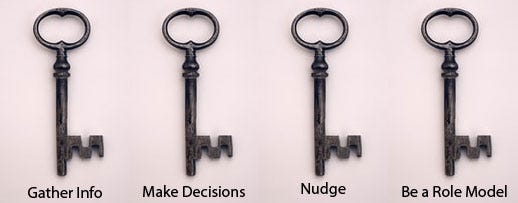
Photo by Everyday basics on Unsplash

In the previous post, we looked at techniques for keeping information under control. Certainly, for new managers, striving for structure is a positive place to start. However, once that structure is in place, what is the best way to create a positive outcome for the business?

In this post, we’ll focus on four categories first outlined in the quintessential book on management: High Output Management by Andy Grove. He uses the following categories to frame types of workplace interactions:

  • Information gathering
  • Decision making
  • Nudging
  • Being a role model

Let’s take a look at the role of information gathering to start.

Information Gathering

Photo by Markus Winkler on Unsplash

As you may have gathered (pun intended) from the previous articles, as a manager, the information base that you hold is critical. Document wherever possible: 1 to 1 notes, actions from meetings, a place to capture informal information, and so on. Your knowledge base is what you use to understand the many activities of the business and is fundamentally what you base your decisions on. Information gathering feeds this knowledge base.

You can gather information from many places other than formal interactions and meetings. For example, during a conversation at the coffee machine with your colleague, she mentions that her team is building a new API. You realize that the API could be incredibly helpful for your own team, so you note it down. Weeks later, your product owner notes that a particular feature from another product line would be perfect for your own. You already know that an API is available, so you make the connection between the teams.

Keep adding more information to your knowledge base. Always. Keep as little in your head as possible. Tools such as Google Drive and Evernote make documentation so much easier than it was ten years ago — and the tools are free. For me, the simple act of writing things down also commits them to my memory better than if I’d just made a mental note.

Next up is an activity that is central to management.

Decision Making

Photo by Vinicius "amnx" Amano on Unsplash

One of the more obvious answers to the question, “What does a manager do?” is “make decisions.”

You make decisions of all sizes. You could make a small decision to grant a holiday request or not during a busy period of work. You could make a large, capital-intensive decision about whether to migrate the entire infrastructure to the cloud or keep it in your own data center.

Always take decision making seriously. It is easy to forget that many people in the business do not have the power to make decisions, so you must always give them your full attention and take responsibility for all your decisions. Every decision is an inflection point: should we hire Bob or Susan? Should we split the team into two teams? Should we refuse to estimate the work required for a project when the proposal is unclear? Decisions such as these may seem small in the moment, but extrapolated over time and considering the cost of different outcomes, they are actually big decisions — treat them as such.

What if the decision is not yours to make? That’s where nudging comes in.

Nudging

Photo by Bradyn Trollip on Unsplash

The concept of nudging is influencing a decision by contributing your own viewpoint to the discussion.

For example, you may be involved in a discussion about whether to build or buy some particular software, and you make it clear how you feel about the situation. You are not the decision maker, but you can influence the decision.

Like decision making, nudging can occur for decisions of all sizes. You may put your viewpoint across about whether to book a meeting immediately or tomorrow, or equally state your case in a discussion as to whether to open an office locally or abroad.

Try to view your daily interactions through the lens of nudging, and you’ll soon see that there are ample opportunities to broaden your influence on the organization, thus increasing your output as a manager.

While nudging is a great way to exert influence, setting a good example is actually one of the most powerful ways to influence others.

Being a Role Model

Photo by Markus Spiske on Unsplash

Being a good manager is about walking the walk as well as talking the talk. The best way to demonstrate to your staff and your peers is to lead by example.

Give talks, get involved in day-to-day discussions, and contribute technically if you have the time and inclination.

Demonstrating the standards to which you want others to perform is the best way to create change — lead from the front. If you want your team to communicate better in person but you personally prefer to interact over email rather than face to face, then it’s unlikely that the situation is going to improve as quickly as you’d like.

You can also be a role model for your department by making connections outside of your typical influence sphere. If you are in Engineering, for example, you may have regular check-ins with influential staff in other areas of the business, such as commercial. These connections can give vital feedback, help you discuss ideas and issues, and identify stakeholders for future projects.

Now, let's put the four keys together and look at a day in the life of a manager using them.

A Day Using the Four Keys
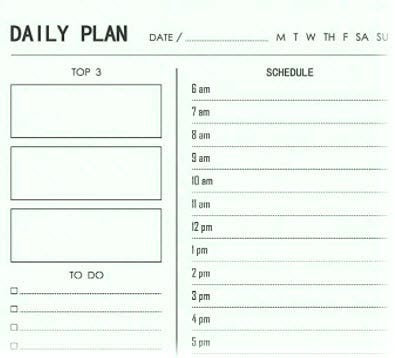
Let’s have a look at a fairly typical day and see how we can categorize the interactions.

8:45: You sit down and prioritize your to-do list. You read your emails and Slack messages. Here you are information gathering.

9:00: You answer email. You contribute to discussions, which is nudging. You decide to make an offer to a candidate you interviewed yesterday — decision making.

9:10: While in the kitchen making tea, you have a conversation with a colleague and learn what they’re working on — information gathering. You share how your own team tackled a similar technical issue with a degree of success. You suggest taking a similar approach — nudging.

10:00: You attend a meeting to review a number of CVs that have come in over the last few days. You choose which to invite to a first interview — decision making. You suggest to the CTO opening the position to more junior candidates now that the local universities are a few months away from graduation — nudging.

11:00: You are in a 1 to 1 with a direct report. Lots of nudging but less decision making — ideally you want to steer them into making their own decisions. You learn a lot of things about work from the last week and how she overcame issues — information gathering. You offer options for tackling a problem — nudging.

12:00: Lunch. You gather some food rather than information at this point. However, you do have a conversation with a colleague while eating about his experiences using Jenkinsfiles (your team has moved across to using these recently). You suggest people to talk with — nudging.

12:30: You catch a colleague in the breakout area who shipped some new functionality last week. You tell her that she did a brilliant job and that customers are really appreciative. You speak up because you want your department to get better at delivering honest feedback — being a role model.

13:00: You answer emails and messages, which spans both information gathering and nudging. You have a decision to make about whether some work should be put into your team’s backlog or not. You decide that you need to talk more in person, so you set up a meeting for later.

15:00: You have the meeting about the work. Your product owner describes how the work can make your own product more compelling. You also know that you have the technical expertise to build it in such a way that other teams can use it too. You both decide to take the work on because contributing to other teams as well as your own is a good example to set — being a role model.

16:30: You spend the last hours of the workday in quiet, going through items on your to-do list. One of these items is preparing a technical talk on your latest project (being a role model). At the end of the day, you read your email (information gathering), review some pull requests (decision making), and take part in a discussion in the backend development channel about logging (nudging).

In Summary

When viewed through the lens of the four key managerial activities, you’ll see how even fairly mundane interactions transform into opportunities to exert your influence and improve your organization. Try it out. It’s fun!

If you enjoyed this article, be sure to pick up James Stanier’s books from The Pragmatic Bookshelf:

Further Reading

Also by James Stanier:

Become An Effective Software Engineering Manager on Medium:

Jsrw
People
Management
Programming
Articles
Recommended from ReadMedium