Favourite Films From Every Year I’ve Been Alive: Part Two (1990–2005)
Part two of an agonisingly difficult selection.
Click here for Part One (1975–1989)
When Sir Paul Combs (Knight of the Dillon Empire) set forth a challenge to list one favourite film from each year that I’ve been alive, he knew perfectly well that whilst this would be a bit of fun for most, for me it would provoke anguish, hand-wringing, loss of sleep, sanity, and a deep sense that by choosing just one film per year, I was stabbing half a dozen others in the back. Nonetheless, I have attempted to answer this challenge. I shan’t reiterate all my selection criteria in detail here (please click the above link to part one for that) but here is a summary of the salient points.
One film per director, one film per series, in the interests of a more varied selection. For example, since I’ve already used up my Steven Spielberg slot, I can’t add Schinder’s List here, despite considering it the greatest film of the 1990s, and my personal favourite from the year in question.
What follows is not a summary of what I consider the greatest films from each year, nor even necessarily a list of my absolute favourites from each year, but every film selected is a favourite, one that I frequently revisit, and one that carries my highest recommendation.
With that preamble out of the way, on with the list.
Goodfellas (1990)
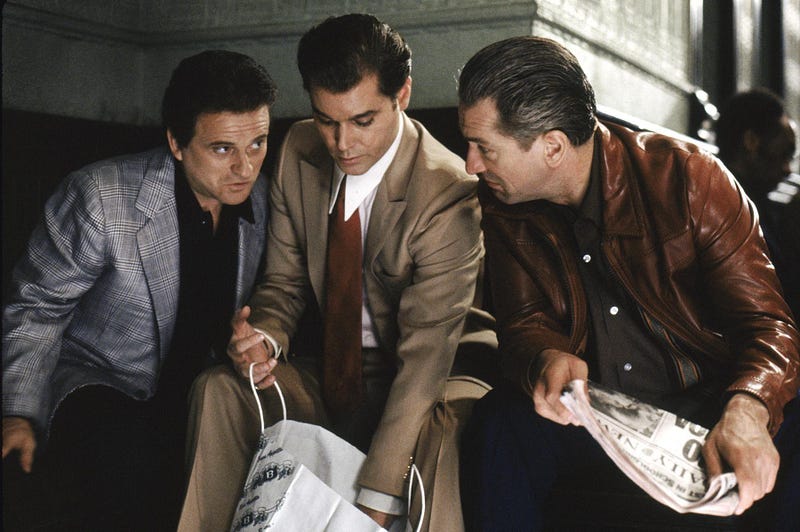
My favourite Martin Scorsese film just edges out Dances with Wolves, a film for which I have equal affection. At any rate, this gripping gangster classic (adapted from Wiseguy by Nicholas Pileggi) tells the true-ish story of Henry Hill (Ray Liotta), who as a teenager in Brooklyn was drawn into the gangster lifestyle of his Italian American neighbours. Featuring first-rate performances from Liotta, Robert De Niro, Joe Pesci, Lorraine Bracco, and Paul Sorvino, Goodfellas is an acting masterclass. But it’s also a directorial masterclass, with Scorsese at the peak of his powers. Each shot oozes authenticity, with everything from the editing (Thelma Schoonmaker) to the music choices and narration absolutely spot-on.
A very different beast to The Godfather, Goodfellas is more focused on the mafia rank and file. The seductive allure of organised crime is superbly showcased in Scorsese’s bravura direction, most notably in the extraordinary long take when Henry takes his new girlfriend Karen (Bracco) to the Copacabana nightclub, whizzing into a side entrance thus bypassing the queue, past doormen, through kitchens, out into the club, to a table right by the band, being schmoozed at every turn. Bewildered, Karen turns to Henry and asks what business he’s in. “Construction” is Henry’s deadpan response. On the other hand, in the latter movement of the film, Scorsese proves equally adept at depicting Hill’s Faustian decline, as his drug-fuelled paranoia escalates during a riveting sequence where he believes he’s being stalked by a helicopter. Riveting from start to finish.
Beauty and the Beast (1991)
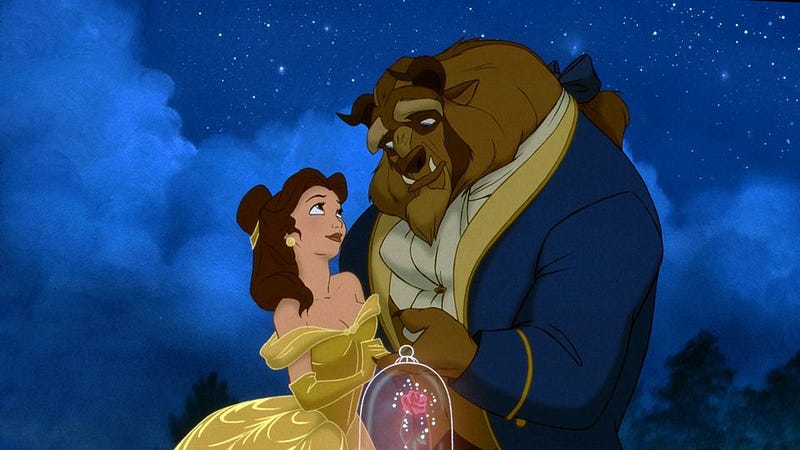
The Silence of the Lambs is the obvious choice, but for all its undoubted brilliance, as serial killer thrillers go, I prefer David Fincher’s Se7en (1995). What’s more, I’ve revisited Beauty and the Beast more than both, even if my favourite version is still Jean Cocteau’s moody monochrome masterpiece La Belle et la Bête (1946). The 1991 version represents the high point in the late 1980s/early 1990s renaissance of Disney animation that started with The Little Mermaid and ended with The Lion King. A Best Picture nomination followed, a rarity for an animated film.
Suffice to say, this version is stunningly animated under the oversight of directors Gary Trousdale and Kirk Wise. The songs and score, courtesy of Alan Menken, are marvellous, with toe-tapping tunes like Be Our Guest. My personal favourite, Gaston, showcases this boorish supporting character to hilarious effect. Yet the heart of the classic fairy tale remains. Yes, these days it’s a film that launched a thousand memes about Stockholm Syndrome, but Belle is a wonderful protagonist; a strong, intelligent, book-obsessed, deep thinker who refuses to settle for the aforementioned Gaston. Her companionship with the Beast and the subsequent love story is poignant and moving, aided and abetted by great vocal performances from the cast (including Paige O’Hara, Robby Benson, and Richard White). On a personal note, my affection for this film is also infused by happy memories of taking my much younger brothers to see it; one of their first cinema trips. They both loved it.
Unforgiven (1992)
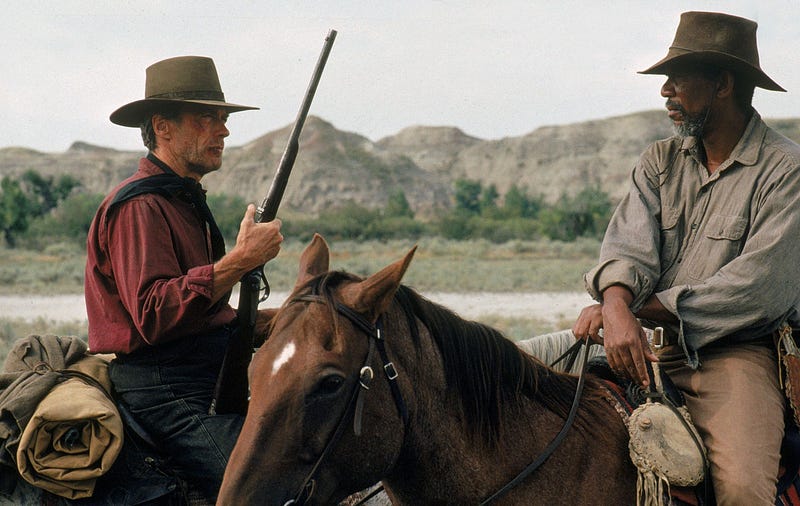
Possibly Clint Eastwood’s greatest film as an actor, and for my money his greatest film as director, this masterful revisionist western is a landmark in the genre. The plot concerns a violent gunslinger Will Munny (Eastwood) reformed by the love of a good woman. Her subsequent death has left him alone raising their two children on a struggling pig farm. When news of a prostitute’s violent mutilation at the hands of two cow hands reaches Munny, he considers whether he should pursue the bounty being offered by her fellow prostitutes for the death of the perpetrators.
At its most basic level, Unforgiven is an outstanding revenge western, but it is much, much more than that. For one thing, David Webb Peoples’s superb screenplay features an unswerving commitment to realism. Everything from the discomfort of sleeping on the trail to the appalling realities of what is involved in killing a man is depicted without a shred of glamour or false heroism. On a lighter note, western mythology in general, including the quick draw and other absurdities contained in penny dreadful novellas that inspired much of the genre in the first place, are deftly debunked. The outstanding supporting cast includes Morgan Freeman, Richard Harris, Jaimz Woolvett, and Gene Hackman. The latter won an Oscar, as did Eastwood for Best Film and Best Director. For once, the wins were fully deserved. Unforgiven is a masterpiece I return to time and time again.
The Remains of the Day (1993)
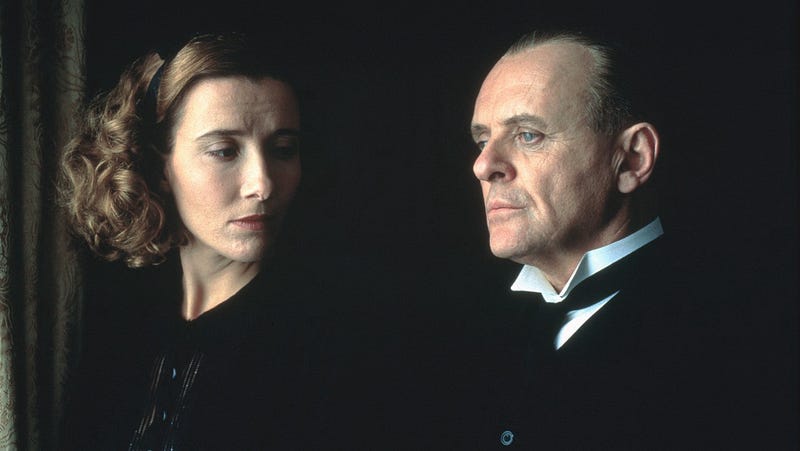
Almost thirty years on, I still cannot believe Anthony Hopkins failed to win an Oscar for what is, as far as I’m concerned, his finest performance. James Ivory’s adaptation of Kazuo Ishiguro’s Booker-prize winning novel also features a career-best turn for Emma Thompson, and she likewise ought to have won an Oscar. It remains one of the Academy’s great injustices, and I’m still going to be moaning about it thirty years from now.
Adjectives fail me when describing the understated, nuanced brilliance of Hopkins and Thompson, as butler Stevens and housekeeper Miss Kenton respectively, to Edward Fox’s Lord Darlington, circa England in the 1930s. Their relationship is initially one of mutual professional respect interspersed with amusing tetchiness on Miss Kenton’s part, as she challenges some of Stevens’s formal, absurdly repressed foibles. As the years pass, friendship blossoms and possibly love. Alas, Stevens will not permit the latter as he believes his first duty lies in loyalty to his master, a misguided Nazi sympathiser. This lovely, melancholy, subtly cautionary tale of wasted lives got under my skin from my very first cinema viewing and has lingered there ever since. Look out for Christopher Reeve and a pre-Four Weddings and a Funeral Hugh Grant in the supporting cast.
The Shawshank Redemption (1994)
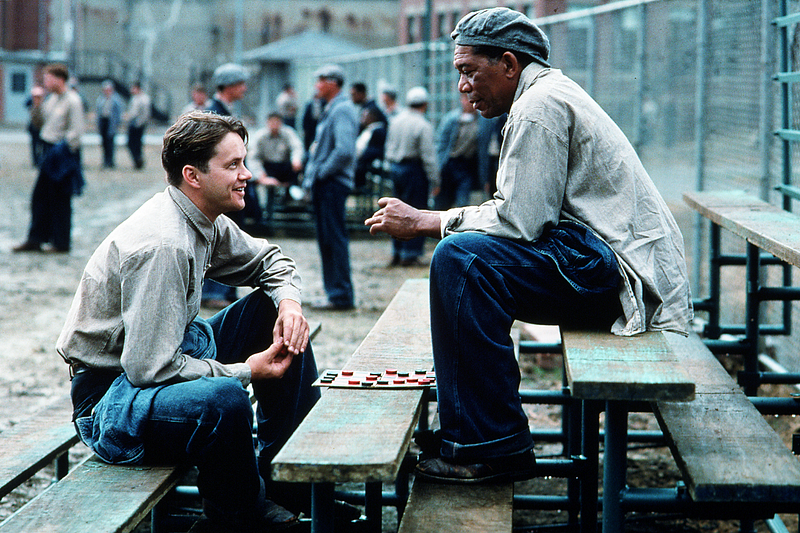
An extraordinary underdog of a film, given it initially flopped (despite good reviews) but subsequently gained a fervent following on VHS. It now regularly tops polls of the best films of the 1990s. I was one of the two people who actually saw it at the cinema during the original run (the other was my cousin Robert, who went with me). At any rate, Frank Darabont’s adaptation of Stephen King’s story of a man unjustly imprisoned is a remarkable piece of work, and features stand-out performances from Morgan Freeman and Tim Robbins.
I’m not sure I’d say it’s the best film of the 1990s (to my mind, that honour belongs to Schindler’s List, which, as I mentioned earlier, I couldn’t include having already allocated my Spielberg slot in the previous instalment). However, The Shawshank Redemption is a damn good film regardless. Despite the brutal miseries of prison life (including gang rape and crap food), it manages to be an uplifting story of friendship, topped by a terrific twist, and a strong central message of hope in the face of injustice: “Get busy living, or get busy dying.” Inspiring stuff.
The Usual Suspects (1995)
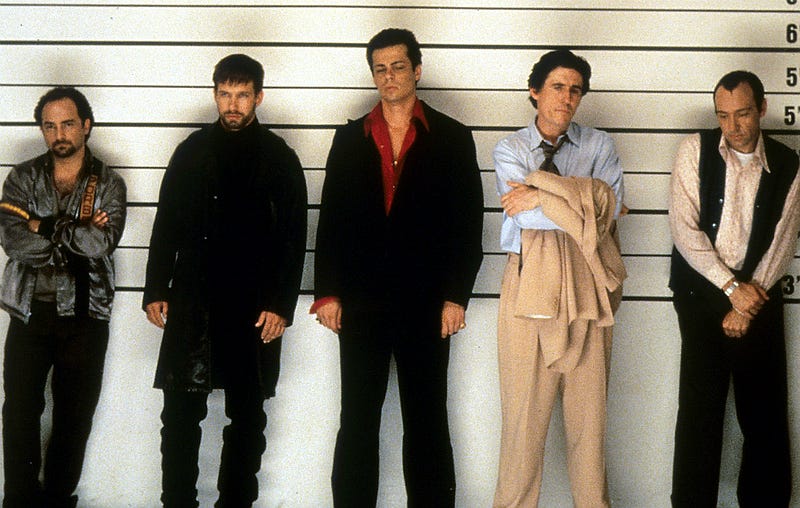
Another agonising choice, as I was torn between Babe and Se7en, but in the end, I couldn’t resist Bryan Singer’s riveting mystery thriller. Police discover several burnt corpses on a ship in what appears to be a drug deal gone wrong, but what really happened? The sole survivor is a cripple named Verbal Kint (Kevin Spacey). In flashback he tells police how his criminal gang, through a third party, came under the sway of mysterious shadowy mastermind Keyser Soze; a figure so feared he is akin to the Devil, though no one has ever seen him, and some are convinced he’s nothing more than a spooky myth.
Featuring a great cast (which also includes Gabriel Byrne, Pete Postlethwaite, Benecio Del Toro, Stephen Baldwin, Chazz Palminteri, and Kevin Pollak), a first-rate screenplay from Christopher McQuarrie, and one of the greatest twist endings of all time, this densely plotted, witty, gripping piece of work bears many repeat viewings. The first time I saw it, late one afternoon during the original run, I immediately queued up again for the evening screening. In fact, I might just give it another watch right now. And remember: “The greatest trick the Devil ever pulled is convincing the world he didn’t exist.”
The English Patient (1996)
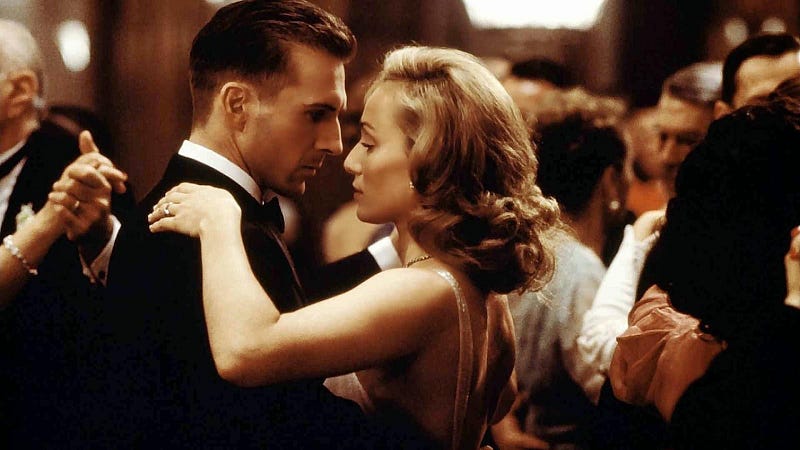
Romance is a dish I generally prefer served doomed, and Anthony Minghella’s masterpiece certainly delivers on that front. It isn’t a spoiler to say so, as we know this from the very start. After Ralph Fiennes’s eponymous “English Patient” (ironically named, as his character is a Hungarian suspected of spying for the Germans) is shot down in a biplane in the opening moments, he is subsequently looked after by Juliette Binoche’s nurse in a bombed Italian monastery, during the dying embers of World War II. In flashbacks, Fiennes’s tumultuous love affair with Kristen Scott Thomas is gradually revealed.
For lovers of big, romantic cinema, this is an absolute must. It has the feel of a latter-day David Lean epic, with rich desert vistas, a gorgeous music score by Gabriel Yared, and outstanding performances from the entire cast (which also includes Colin Firth, Willem Dafoe, and Naveen Andrews). There are a lot of calls on our sympathy, and the ending is almost unbearably sad (one visceral moment of anguish from Fiennes is like a dagger to the heart every time I watch), but I’m a masochistic sucker for this sort of thing. So, it seems, is the Academy, which awarded nine Oscars, including Best Picture and Best Director.
LA Confidential (1997)
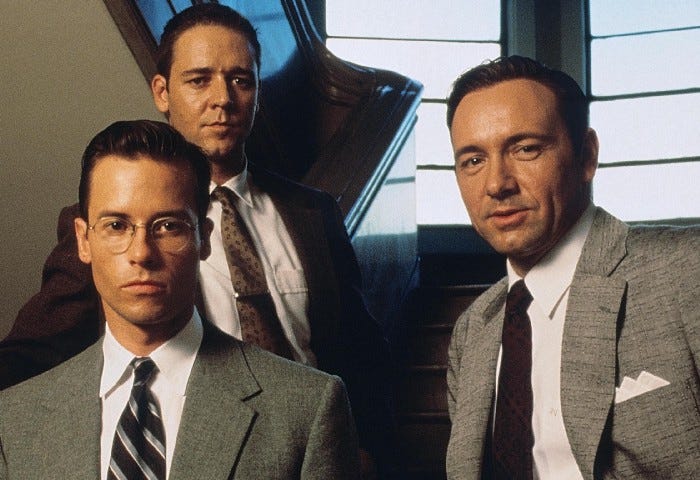
Three radically different police officers investigate a café shooting massacre in Curtis Hanson’s superb adaptation of James Ellroy’s 1950s set crime novel. The officers in question are the brutal Bud White (Russell Crowe), whose punishment of wife-beaters is informed by a tragic past, the ambitious Ed Exley (Guy Pierce), a brilliant but inexperienced detective with shrewd political instincts, and the cynical but resourceful Jack Vincennes (Kevin Spacey), who seems to prefer his role as technical advisor on TV cop shop Badge of Honour to actual police work. Together they are drawn into a dense quagmire of deceit involving blackmailers, pimps, pornographers, kidnappers, killers, and corruption among policemen and politicians.
The leads are first-rate. The supporting cast is equally good, and features the likes of Kim Basinger, James Cromwell, David Strathairn, and Danny DeVito. Although a narrative this dense could sprawl in the wrong hands, Hanson is in complete control, maintaining a vicelike grip throughout. Everything from the tense shootouts and interrogations to the shock reveal of the main villain lingers long in the memory. In short, LA Confidential is an outstanding thriller I revisit time and time again.
The Truman Show (1998)
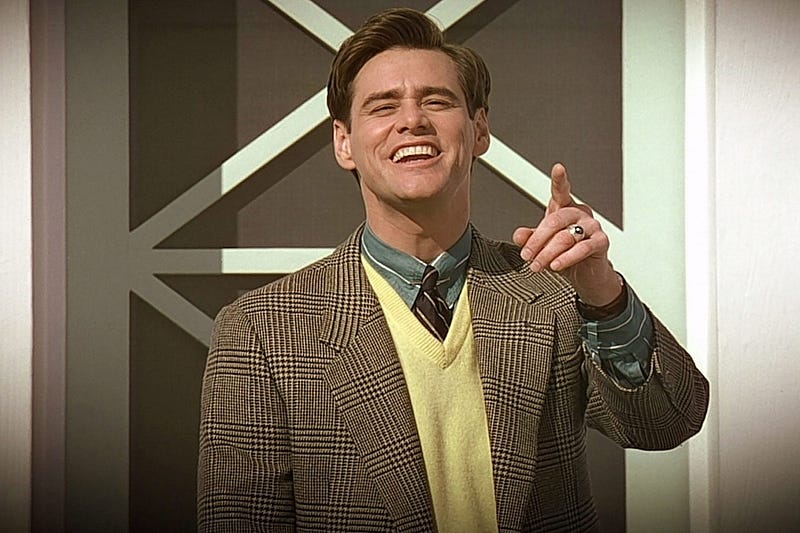
One often hears cynical remarks about how George Orwell’s novel Nineteen Eighty-Four was intended as a warning, not an instruction manual. I’d argue the same about Peter Weir’s The Truman Show, which anticipated reality television. Weir, a vastly underrated director, here works from a knockout screenplay by Andrew Niccol, coaxing a career-best performance from his lead Jim Carrey as the eponymous Truman (Weir has a track record of career-bests from his leads, including Harrison Ford in Witness and Robin Williams in Dead Poets Society).
Aside from being brilliant filmmaking and eerily prophetic, this gripping story of a man who doesn’t realise his life is the subject of a reality television programme (with everyone in on it except him) also has fascinating spiritual underpinnings. For instance, the programme’s creator, Christof (a superb Ed Harris), can be seen as a metaphor for God, whose creation wishes to escape his studio-bound Garden of Eden on the path to enlightenment. Or Christof can be seen as the Devil, attempting to prevent Truman from discovering the truth and thus saving his soul. Christof comments that if Truman really determined to discover the truth, nothing could stop him. As a Christian, these words have always resonated concerning my own journey to faith (and also when I’ve witnessed others undertake similar spiritual journeys). Regardless of such deep ponderings, The Truman Show is outstanding entertainment.
The Sixth Sense (1999)
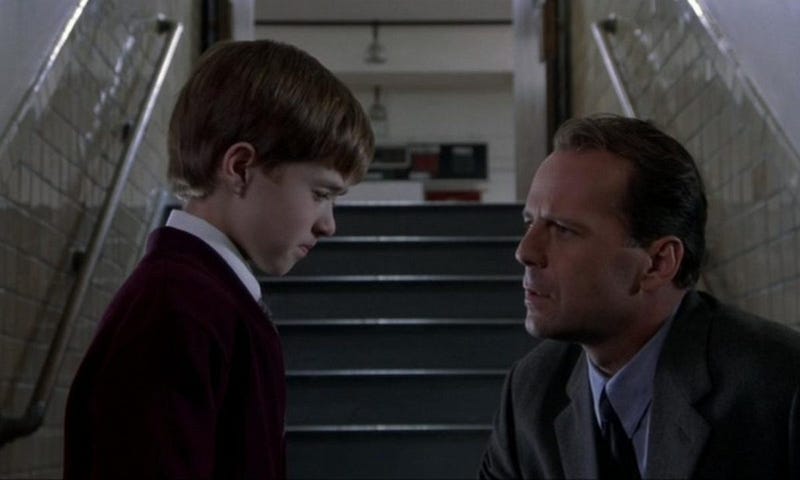
M Night Shyamalan’s first film is still his best. It features one of Bruce Willis’s finest performances, as Malcolm Crowe, a child psychologist whose patient Cole (Haley Joel Osment) has a frightening secret. Even all these years later, I’m reticent to reveal further plot details as this is a film best experienced without any foreknowledge, and I don’t want to spoil it for future generations. Suffice to say, when I first saw this in cinemas in 1999, I was absolutely blown away.
Shyamalan grips us, scares us, and ultimately deeply moves us with his stand-out screenplay and direction. The cast are all brilliant, including the often-overlooked Toni Colette, whose performance as Cole’s anguished mother is simply superb. Skirting around spoilers, one set piece involving Cole hiding in a bedroom tent is particularly bone-chilling. If you’ve not seen it, this film’s stunning twist ending is deeply embedded in popular culture osmosis, so I’d urge a watch before some inconsiderate nitwit with a meme ruins it for you.
O Brother, Where Art Thou? (2000)
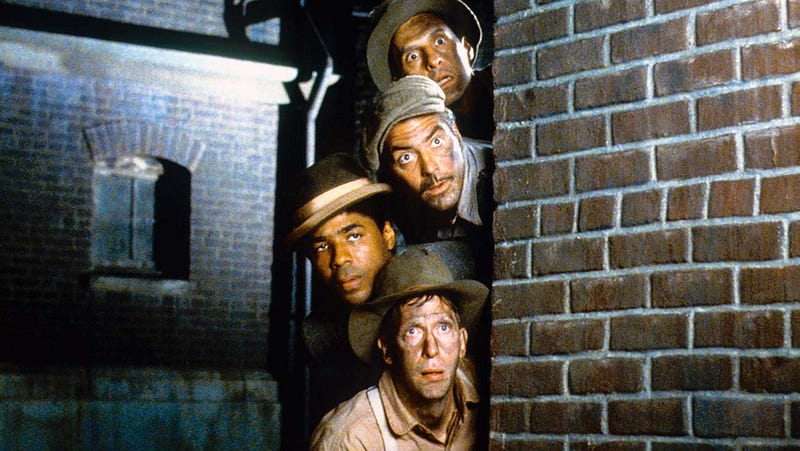
As a huge fan of the Coen Brothers, I spent considerable time deciding which of their films to include. In the end, I opted for this surreal sort-of musical comedy, a curious variation on The Odyssey. One of the Coens’ more accessible efforts, it features an amusingly self-deprecating George Clooney leading chain gang escapees across Mississippi, circa 1937. Amusing, often bizarre shenanigans ensue.
Clooney’s preening, preposterous character is hilarious. (“I’m a Dapper Dan man!”) He’s ably supported by Coens regular John Turturo, as well as Tim Blake Nelson, Chris Thomas King, John Goodman, and Holly Hunter. Roger Deakins’s cinematography (best appreciated on a cinema screen) shows off Deep South landscapes to achingly beautiful effect, and the musical numbers are also deftly deployed. Fun fact: The title is a reference to the serious, socially conscious film the director protagonist of Preston Sturges’s Sullivan’s Travels (1941) wishes to make, before a series of hard knocks show him that ordinary people in hard times just want to be entertained.
The Lord of the Rings: The Fellowship of the Ring (2001)
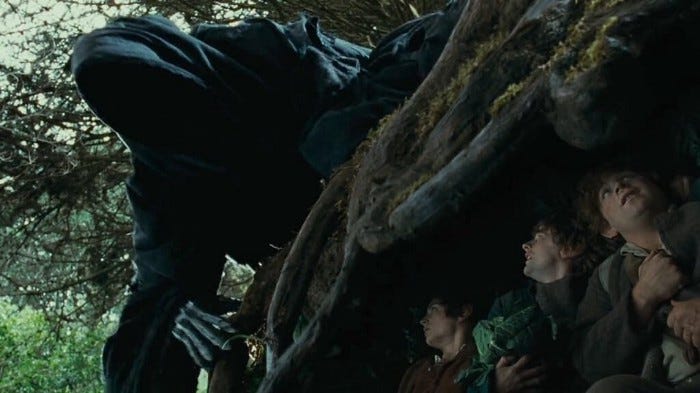
Trying to cram in everything I want to say about Peter Jackson’s magnificent adaptation of JRR Tolkien’s landmark fantasy novel into a couple of short paragraphs is impossible. Therefore, I’d urge you to read my full thoughts on The Lord of the Rings film trilogy here, suffice to say Jackson and his entire cast (Ian McKellen, Elijah Wood, Liv Tyler, Christopher Lee, Sean Astin, Viggo Mortensen, Cate Blanchett, Sean Bean, Hugo Weaving, and too many others to list) more than met my expectations. They did what I previously considered impossible and turned my favourite novel into groundbreaking cinema.
All three parts of the trilogy are brilliant, but I’m opting for this first instalment, due to the sheer jaw-dropping exhilaration experienced when I first laid eyes on the film. As the 35mm reels were projected in the cinema that evening, tears filled my eyes as I met with what felt like old friends in stunningly beautiful Middle-Earth landscapes. Every detail of the evil-ring-must-be-destroyed narrative proved as exciting on screen as it had been on the page. My wife was equally captivated, and we both have exceptionally happy memories of what became, for three glorious Christmases, the highlight of our cinematic year. As epic fantasy filmmaking, nothing has come close to topping it, and I suspect nothing ever will.
The Bourne Identity (2002)
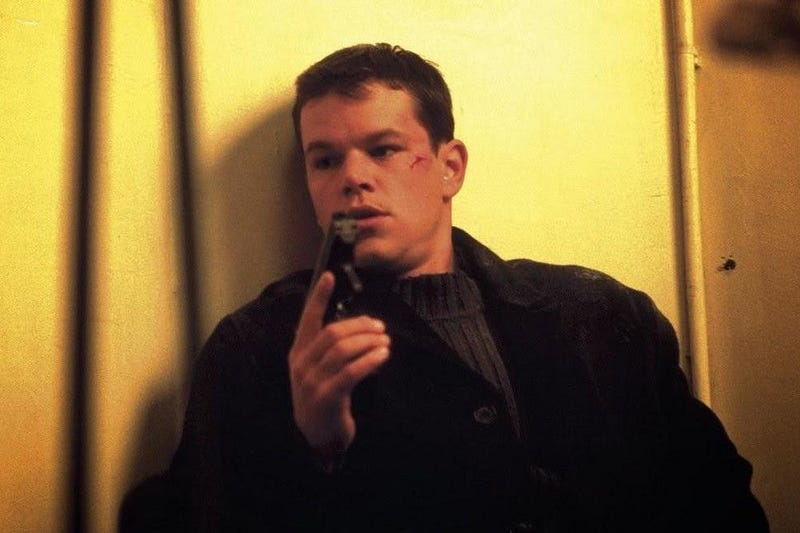
The same year James Bond plumbed new depths of ridiculousness in Die Another Day, this gripping gem, based on Robert Ludlum’s novel, tore up the spy thriller rulebook. Jason Bourne and TV series 24 had such an influence on the Bond franchise that it ultimately went back to grassroots with the excellent Casino Royale (2006). Looking back, it’s easy to see why this first Bourne film was so influential. The series had yet to acquire Paul Greengrass as director (this instalment is helmed by Doug Liman), so the camera is a little less shaky here, but everything else that made the series great is immediately apparent, from Matt Damon’s superb central performance as the eponymous amnesiac assassin, to the gritty use of real locations, and stand-out action sequences.
The latter includes a thrilling car chase through Paris (which I recently included on a list of favourite cinematic vehicular pursuits) and some stand-out fights. But my favourite scene involves the unexpected outcome of a moment when Bourne is attacked by fellow assassin “The Professor” (Clive Owen). A fine supporting cast also includes Brian Cox, Franka Potente, Julia Stiles, and Chris Cooper. Edge-of-the-seat from start to finish, this was followed by two equally brilliant sequels, though after that the quality started to dip in subsequent instalments.
Oldboy (2003)
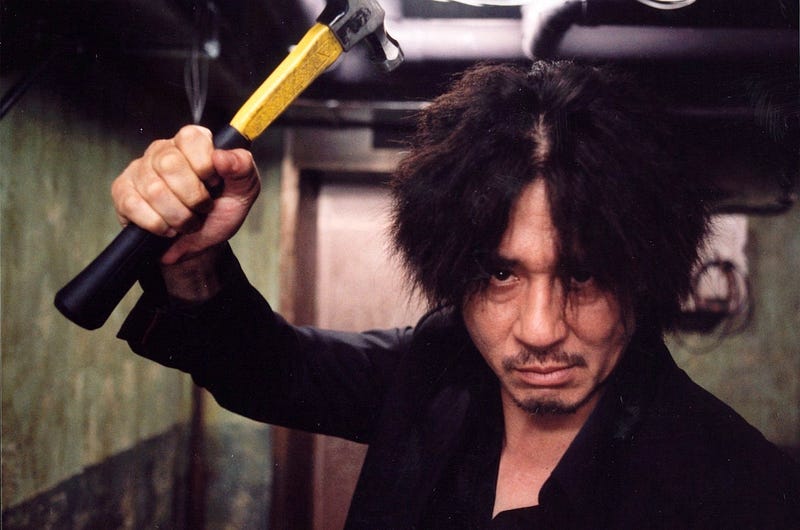
Park Chan-Wook’s violent revenge melodrama certainly isn’t for the faint of heart, but it is an audacious, astonishing piece of cinema. A loose adaptation of a Manga comic, the plot is a tangled web of mystery concerning Oh Dae-su (Choi Min-sik), who is kidnapped and placed in a cell resembling a hotel room. He doesn’t know who has captured him, or why. When drugged and released fifteen years later, Dae-su seeks to get to the bottom of his captivity and take revenge, only to fall in love with young sushi chef, Mi-do (Kang Hye-jung). Shocking twists and turns ensue.
This remarkable film is another where spoilers should be avoided at all costs. The narrative alone is absorbing, but the action scenes — in particular, an astoundingly choreographed single-shot fight — are a phenomenal bonus. Performances are excellent and the direction is top-notch. All that said, I should warn it is also bloody, brutal, controversial, and goes to places some audiences might not be comfortable. Personally, I found it invigorating and brilliant.
The Incredibles (2004)
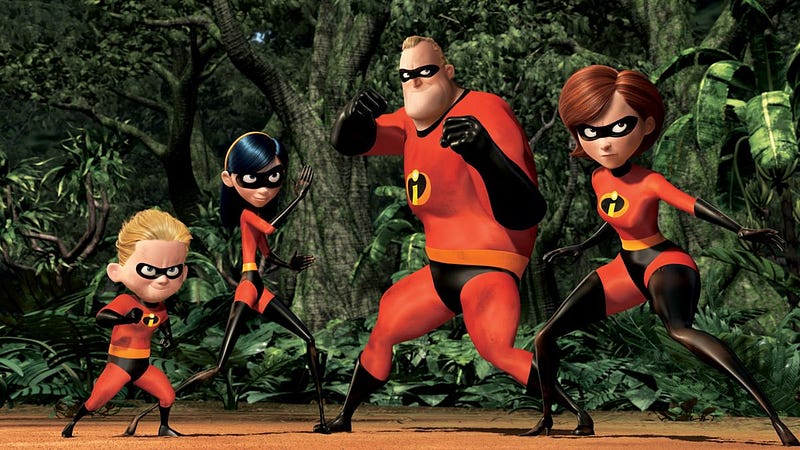
Brad Bird’s fabulous animated adventure is both sublime send-up and first-rate superhero story in its own right. Featuring must-see-on-the-big-screen action sequences, and excellent vocal performances (from the likes of Holly Hunter, Craig T Nelson, Sarah Vowell, Spencer Fox, Jason Lee, and Bird himself as hilarious superhero costume designer Edna Mode), it’s an exceptionally high watermark for Pixar. Then again, my real love for The Incredibles stems from the frustrations experienced by Mr Incredible in the first act, as he grinds away at a soul-destroying insurance job, trying to keep his superpowers a secret following the superhero relocation programme (a consequence of superheroes getting constantly sued).
Anger at his petty corporate boss, cynicism about society’s celebration of mediocrity, and sadness at his glory days seemingly being behind him hit plenty of Mr Incredible’s middle-aged raw nerves. The film’s issue with everybody’s-special, participation trophy culture is cunningly explored via the antagonist’s ultimate plans. (“When everyone’s special, no one will be.”) Syndrome is one of Pixar’s finest villains; a well-motivated character who clearly missed his calling to be a Q-type character, given his genius with gadgets. Instead, he wants to play superhero, but is too clumsy to pull it off, not to mention too megalomaniacal after years of festering bitterness at Mr Incredible’s refusal to make him a sidekick. All in all, The Incredibles is a clever, funny, satisfying film that, apart from anything else, demonstrates the absurdity of capes on superheroes.
Wallace & Gromit: The Curse of the Were-Rabbit (2005)
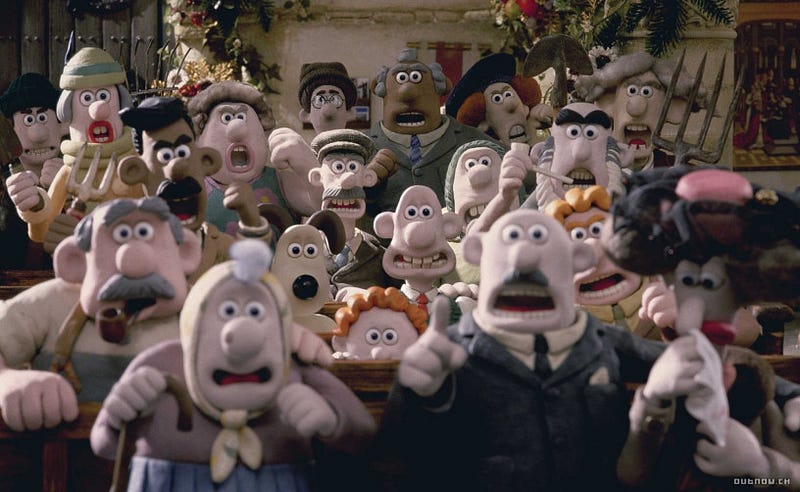
In The Curse of the Were-Rabbit, Nick Park’s beloved Wallace and Gromit get their own feature; a splendid parody of Hammer horror films and An American Werewolf in London, with a through-the-roof gag rate and spectacularly silly action set pieces. The farcical narrative involves the cheese-and-crackers obsessed inventor and his exceptionally clever dog starting a humane pest control business. Their methods include rabbit brainwashing, which, for lunatic reasons too convoluted to detail, results in a monstrous leporine threat to the village’s giant vegetable competition.
Peter Sallis provides excellent Wallace vocals as usual. The supporting cast includes Helena Bonham-Carter as Lady Campanula Tottington, and Ralph Fiennes as Lord Victor Quartermaine. Both are amusing upper-class caricatures; the former an aristocratic spinster who makes hilarious double-entendres to Wallace concerning his interest in her “produce”, and the latter a thorough cad and bounder with designs on Lady Tottington and a loathing for Wallace and Gromit. Park and co-writer/director Steve Box oversee the stop-motion animation to brilliant effect. As with all Park’s best work, this is a fingerprints-on-the-plasticine labour of love, and a masterpiece of English eccentricity.
That wraps up part two. Click here for Part Three (2006–2021).
One more point: Do check out parts two, three, and four of Sir Paul’s selection here, here, and here, respectively, and also Eric Pierce’s parts two and three here and here (Eric shares responsibility for urging my participation in this prompt, for which, like Paul, he will one day have to answer to God).
Author’s note: I hope you enjoyed this article. For more about me and my writing on Medium, please click here. For information on my writing outside Medium, please click here. For a list of my published novels and other works, please click here.