
The 1990s Produced Some Timeless Film Classics
My favorite films from every year I’ve been alive (1990–2000)
It’s really hard for me to wrap my head around the fact that the 90s were 30 years ago, and probably a not insignificant number of you reading this were born around that time. On one hand, I’ve done a ton of living since then: graduated college, got married, had kids, bought a house, yada, yada, yada. On the other hand, I don’t feel all that different from the teenager I was back then.
As I worked on this story, I reconsidered my criteria: what defines a favorite? A critical gem I enjoy? A film I would stop on while channel-surfing and remain rooted in place to finish? One I put on in search of the kind of comfort that only the familiar can grant? Is it one I’ve seen a ridiculous number of times? Do I physically own it?
It’s all of these, really. Also, as you can undoubtedly tell, I am probably overthinking this.
Here’s part one, in case you missed it: Were the 1980s the Greatest Decade for Movies?1990: Goodfellas
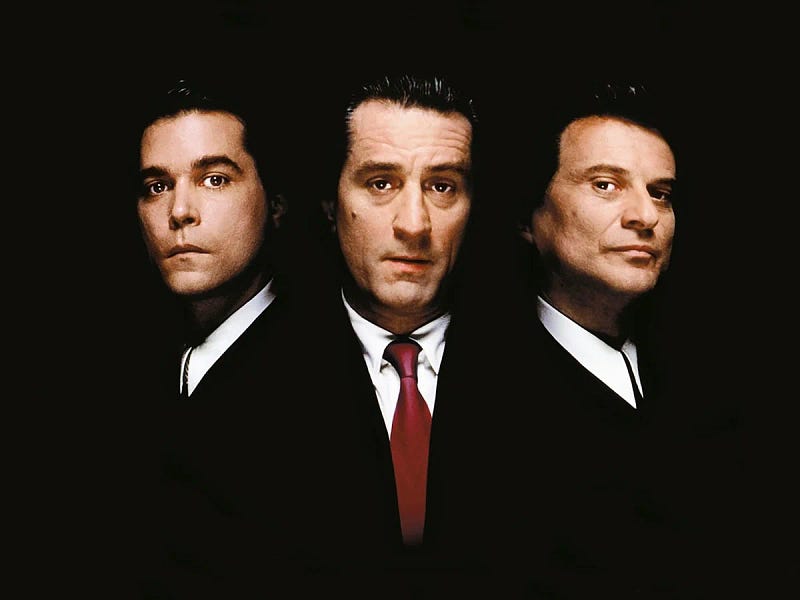
With apologies to Paul Combs, I consider Goodfellas the greatest mafia film ever made, a position the great Roger Ebert also held.
No finer film has ever been made about organized crime — not even “The Godfather,” although the two works are not really comparable. ~ Roger Ebert
I don’t typically feel the need to bring receipts to justify my position regarding my favorite films, but in this case, knowing Paul will be one of the first readers, well, a little extra ammunition felt warranted.
As for the film: the fictionalized account of real events is powerful and poignant, and we come to grudgingly admire these people even as they do the most heinous things. All of that changes in the aftermath of the Lufthansa heist. Memorably set to the melancholic second half of Layla, the true price of this life, glamorized as it has been in the film’s first half, is laid bare as the montage plays. That we don’t see the murders but only the bodies discarded like trash somehow makes it all the worse.
1991: Terminator 2: Judgement Day
1991 was a good year for films. The Silence of the Lambs, Boyz in the Hood, and Point Break are all favorites; while the latter isn’t in the same weight class as the other two, Point Break is the more easily rewatchable and also is the only one with a coked-out-of-his-mind Gary Busey.
But T2 just hits at another level. If you were a teenager in the 90s, you may have obsessively rewatched the incredible Guns N’ Roses music video for ‘You Could Be Mine’. Released at the height of the band’s popularity, the video features a prolonged cameo by Arnold Schwarzenegger — Hollywood’s biggest name at the time — intercut with scenes from the unreleased film and sensuous shots of Axl Rose gyrating in tight biker shorts that highlighted his junk. Fortunately, the song kicks ass and pairs wonderfully with the onscreen mayhem, so Axl’s monty can be tolerated.
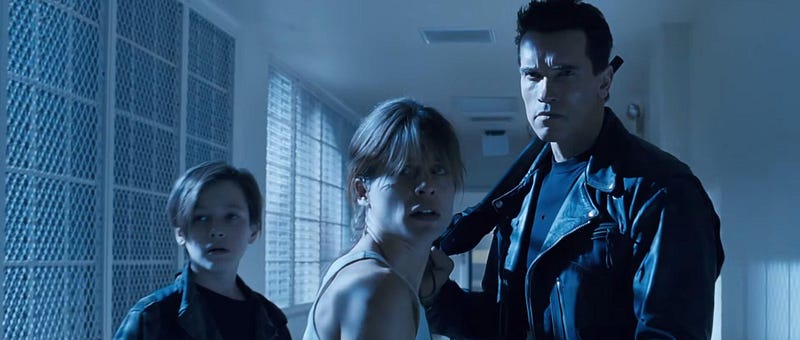
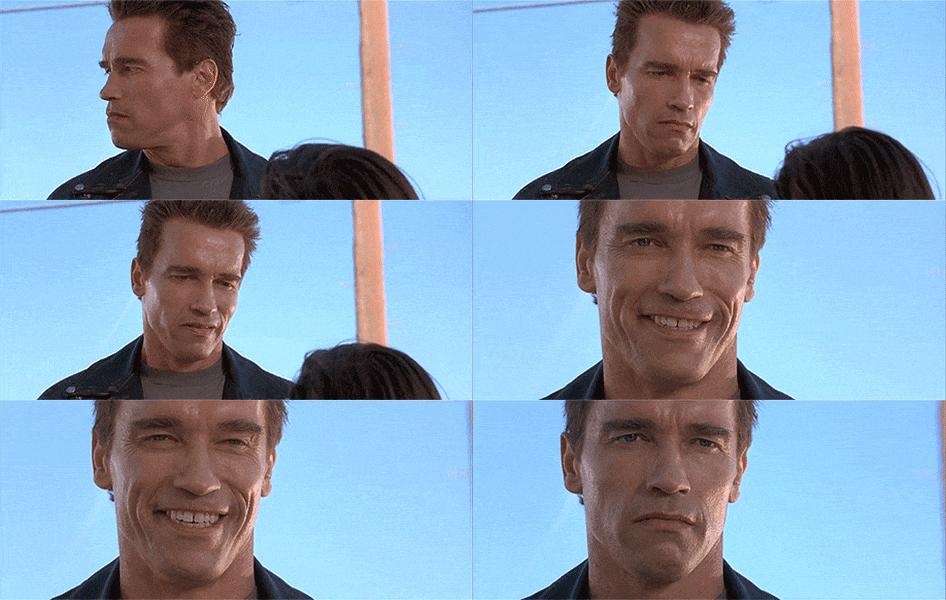
As for the film: I vastly prefer T2 over the original. The action scenes don’t hold up quite as well today, but they were mind-blowing for the time. Linda Hamilton truly comes into her own as ass-kicking, morally-compromised Sarah Connor. Edward Furlong was a thing for a minute, thanks entirely to his role as John Connor. But it was Arnold reprising his role as the Terminator, this time as a reprogrammed force for good, that truly stole the show. The burgeoning father-son dynamic between John and the Terminator is surprisingly endearing, and Arnold does a wonderful job of playing a robot with just a hint of humanity. And you’ve probably quoted the film recently, inadvertently or not.
1992: Unforgiven
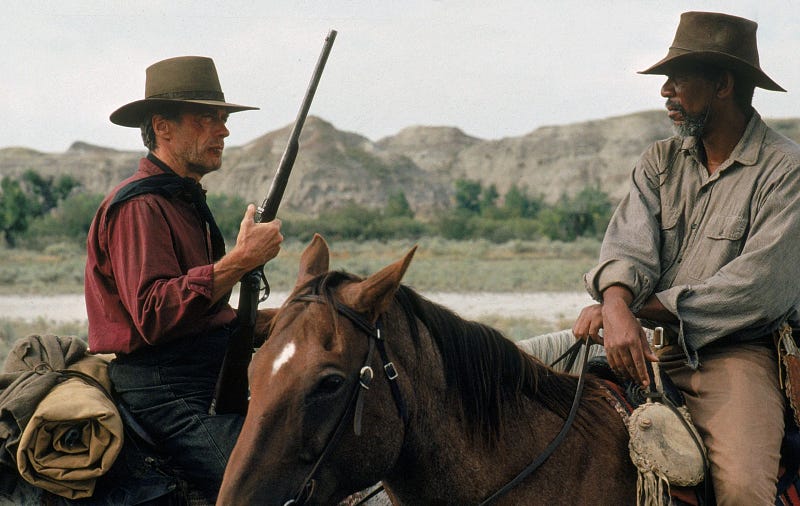
Unforgiven is something of an anti-Western, in that it evaluates and deconstructs the mythos of the American West, much of which Eastwood had a direct hand in creating. Violence, in particular, is not glorified here; gut-shot men do not die quietly or easily in Unforgiven. And as we ride with Eastwood’s William Munny, we are forced to accept that he was a killer, a hard case, an infamously bad man. That he rides now to right a wrong doesn’t condone his past or even make him a good man. Violence takes a toll, one that can never be repaid.
1993: Tombstone
And now, for something completely different.
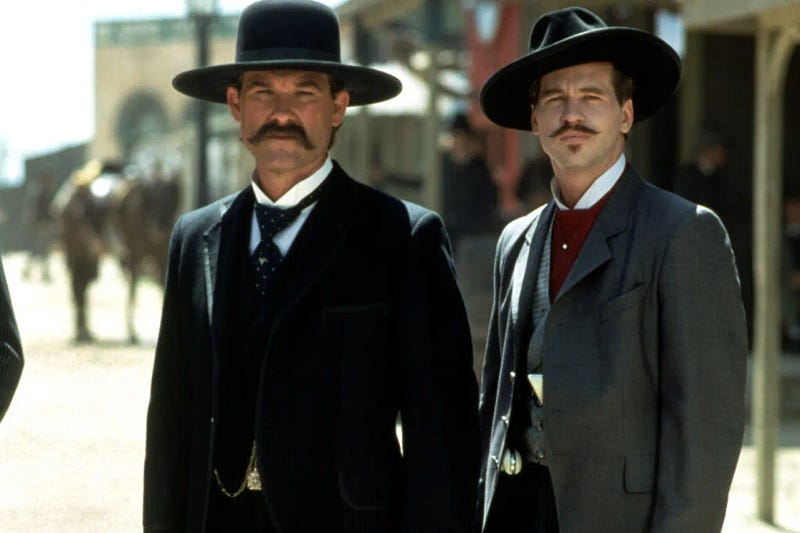
Where Unforgiven makes the viewer sit with violence and truly consider its costs, Tombstone gleefully kicks the door down and comes in shooting. And damn if it isn’t a good time. Tombstone’s cast is one of the finest a Western has ever seen: Kurt Russell, Val Kilmer, Sam Elliot, Bill Paxton, Thomas Haden Church, Powers Boothe, Billy Bob Thornton, Michael Rooker, Michael Biehn… they even knocked the dust off of Charlton Heston and put him ahorse.
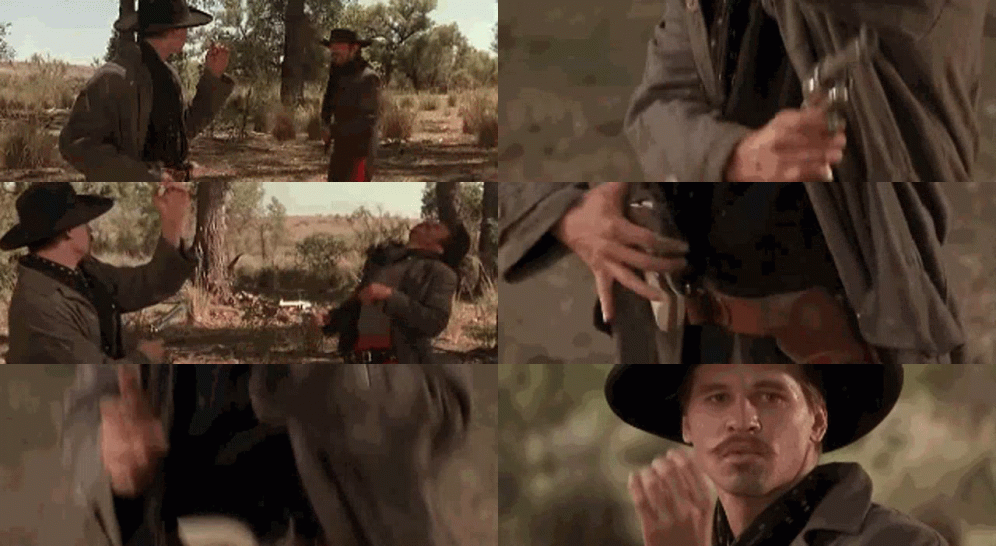
But it is Kilmer’s scene-stealing Doc Holliday that makes this one of my favorite films. He’s a modern-day swashbuckler, a poet and gambler, a no-good drunkard who drinks in part because he is slowly dying and can’t do a thing about it.
Oh, and he’s also pretty good with a gun.
All that said, 1993 was a really hard year to pick, as it also saw the release of Groundhog Day and I love that film to bits.
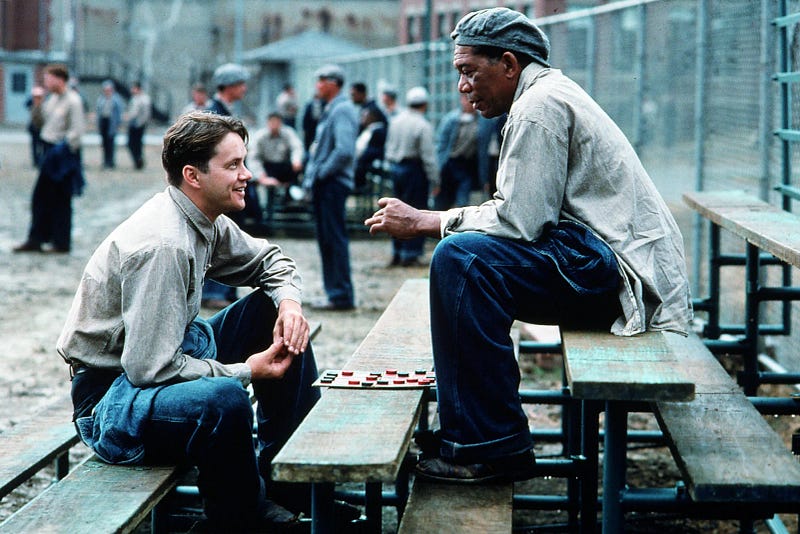
1994: The Shawshank Redemption
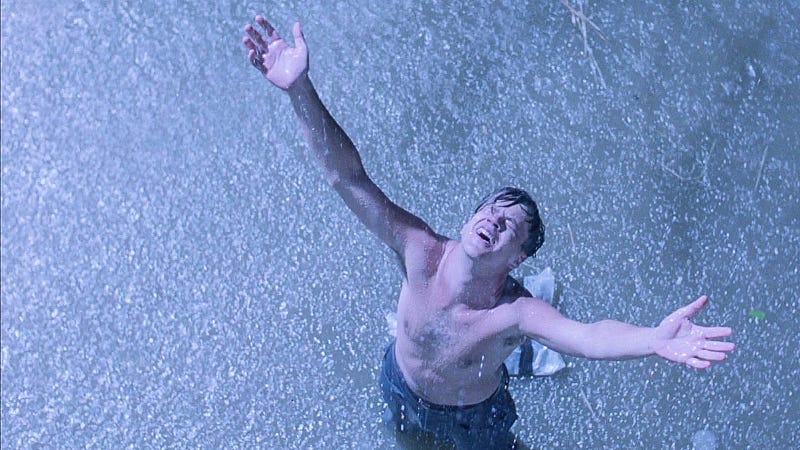
I’ve quickly discovered that in doing these lists, the selections tend to fall in one of two camps: hmm, these are all great movies, how do I decide; or, I already know what film I am going to pick and I don’t care what else released that year. The Shawshank Redemption was the latter kind.
Like many people, I only discovered The Shawshank Redemption years after it had been released. I stumbled across it on TNT or TBS while flipping channels and paused out of idle curiosity — is that Nuke LaLoosh? — and quickly became riveted. I subsequently drove to the video store to rent the DVD. After that first real viewing, I sat back and seriously pondered if Shawshank was the greatest movie I’d ever seen.
I love movies, but I admittedly have not seen nearly as many as the illustrious Simon Dillon. So my endorsement of The Shawshank Redemption as the greatest film — e.g. my personal all-time favorite — means a heck of a lot less than if he made such a proclamation. However, I am also saying it is better than Star Wars, which, if you know me, is not nothing.
Here’s how good Shawshank is: in considering how best to discuss the film, I’ve found that words fail me. It’s not that I don’t have any words — that’d make for a poor sort of writer — only that I can’t find the right ones to express precisely why I love it so, and the ones I’ve dredged up seem painfully inadequate. That feels like a cop-out, so here goes: The Shawshank Redemption is dark and funny and sad, but ultimately up-lifting. It reaffirms what it means to be human and the importance of hanging onto our humanity even in the darkest of places.
How’s that?
Or, conversely: it’s better than Star Wars.
1995: Heat
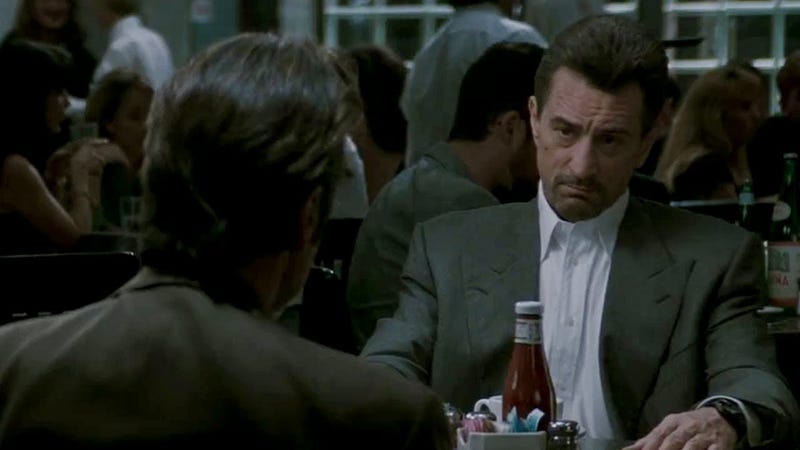
According to my copy, Heat has a 170-minute runtime. Nearly 3 hours. It feels like half that, which is remarkable considering all the time in the script set aside for character moments, including romantic interludes for both lead characters.
But the film’s best relationship is the one between Al Pacino’s wily Police Lieutenant Vincent Hanna and Robert De Niro’s professional criminal Neil McCauley. Heat was the first time the two esteemed actors shared the screen, and it was worth the wait. The diner scene alone is worth the price of admission.
1996: The Rock
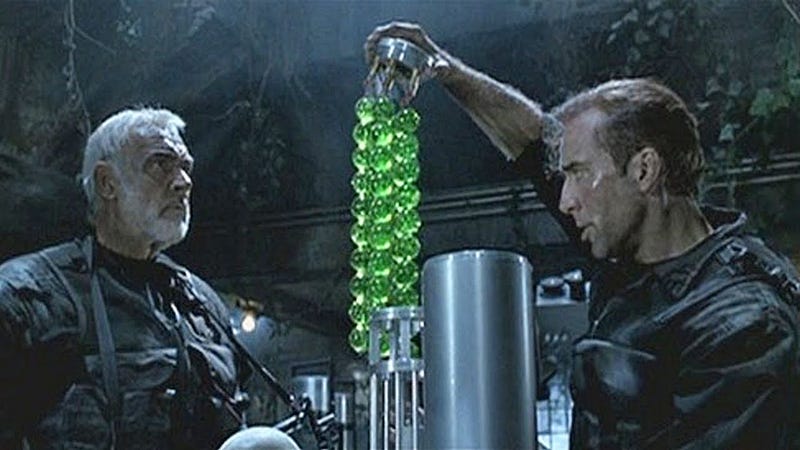
It’s become rather fashionable to crap on Michael Bay. And for good reason — most of his recent efforts suck. But it wasn’t always that way. The first two Bad Boys films were great, Armageddon was entertaining nonsense, and I have a fondness for the first Transformers film. But The Rock remains his finest work.
The story of domestic terrorists seizing Alcatraz and threatening the country with chemical weapons probably seemed outlandish in 1996 — I don’t remember, as I was largely distracted by girls at the time — but it feels eminently feasible in our present hellscape. Fortunately, the story rises above any doubts of plausibility, aided in large part by a great cast. Sean Connery in particular is an absolute delight in one of his final roles, though Ed Harris’ duplicitous General is also of note, in large part because his motives are commendable if horribly misguided. Nicolas Cage is also there, doing Nicolas Cage things.
The Rock is a thrilling adventure picture that makes the most of Bay’s talents. You probably are long due for a rewatch. I certainly am.
1997: Air Force One
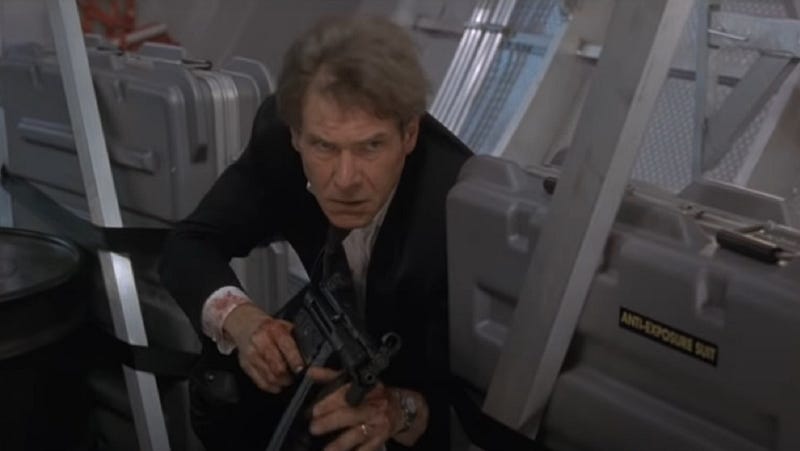
I know.
I had Boogie Nights penciled in here for quite a while, but I kept putting off writing the little supporting blurb. And for good reason — I knew I was being dishonest with myself.
On one hand, Boogie Nights is a far superior film to Air Force One. It is a piece of art, a one-of-a-kind film; Air Force One is mostly a by-the-books adventure yarn. That said, I’ve only seen Boogie Nights two or three times. It is a heavy film. Some movies are simply too real, and thus, are harder to watch.
On the other hand, Air Force One stars Harrison Ford, my childhood hero, a bit wrinkly and stooped but still believable enough as an action hero. He plays the President of the United States, a no-nonsense politician, the type of guy you’d actually want to have a beer with, which is probably the most far-fetched part of the plot. We’ve seen terrorists highjack planes before — Executive Decision and Passenger 57 both did it better, honestly — but neither had Ford, who just wants these terrorists to get off his plane.
If you are still annoyed by this selection, perhaps this will console you: at least I didn’t pick Face/Off.
1998: Saving Private Ryan
I will now ask you to forget everything I just said.
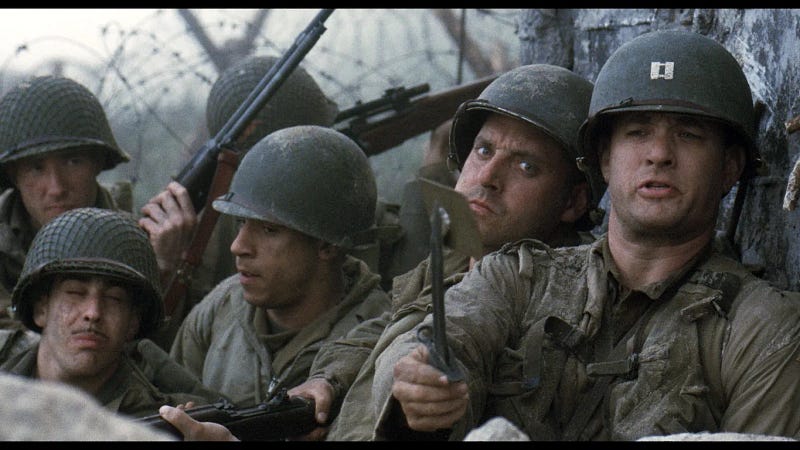
Saving Private Ryan is not an easy film to watch. It is visceral and upsetting. Many WWII veterans who saw the film experienced PTSD. War is horrible and hopefully this film is the closest I will every come to it.
That said, it remains my favorite film from 1998. Even though it is hard to watch. Even though the scene where Private Mellish is slowly stabbed is burned into my memory. Even so, this is my pick. It is a spectacle in every sense of the word, and a deeply moving tribute to the Greatest Generation, most of whom are now gone.
I briefly toyed with putting Rush Hour or The Big Lewbowski here, simply because they are much more fun movies. But as I alluded to at the beginning, my definition of ‘favorite film’ is a sliding scale, not an exact meaurement. I know it when I see it.
1999: The Matrix
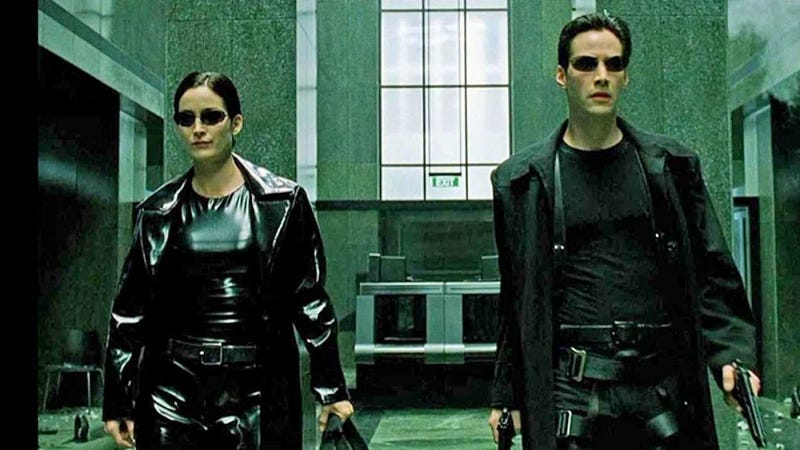
That's right, I didn’t pick Star Wars: The Phantom Menace. Surprised? I certainly hope not!
(This reminds of the teaser trailer for Austin Powers: The Spy Who Shagged Me, which released a few months before The Phantom Menace.)
The Matrix was a fresh take on the chosen one trope that also looked stylish as hell. Forget about the confusing and ultimately crappy sequels — The Matrix actually works better as a standalone story anyway. The marketing for the film hinged around the question that Neo himself asks Morpheus: what is the Matrix? Remarkably, the trailers never gave it away, and I remained unspoiled when I finally saw it on video months later; it was a simpler time.
What is the Matrix? Simply one of the greatest science fiction films ever made.
2000: Gladiator
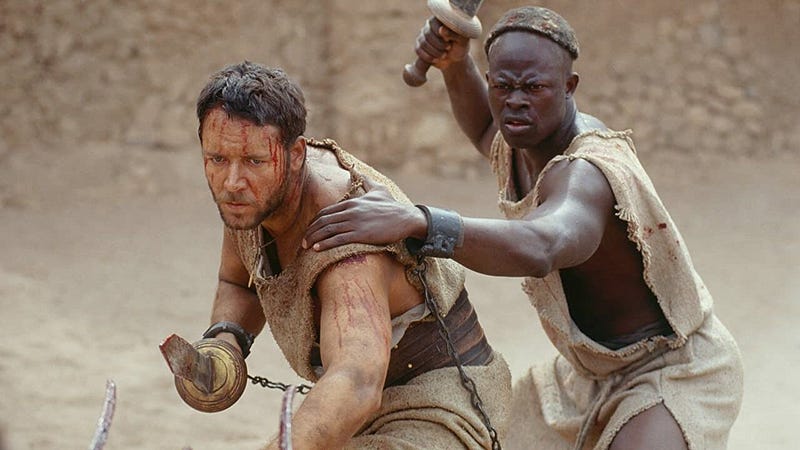
The blood-soaked story of the general who became a slave, the slave who became a gladiator, the gladiator who defied an emperor. Maximus Decimus Meridius, played with quiet ferocity by Russell Crowe, is a man of character; it is his determination to stick to his principles that ultimately sets him on the path toward revenge. Gladiator was awarded best picture by the Academy and Crowe took best actor, which just goes to show that sometimes they actually get it right.
Oh, and the fight scenes are glorious.
This seems like a good opportunity to plug one of the coolest things I’ve ever seen on YouTube, a fan-made video that sets scenes from Gladiator to Metallica’s ‘Hero of the Day’. Trust me when I say it works really well. Goosebumps.
Other films I seriously considered along the way and didn't mention above:
Dances With Wolves, The Last of the Mohicans, Jurassic Park, Fight Club, The Fugitive, Forrest Gump, Hoop Dreams, Independence Day, Jerry Maguire, Clueless, Braveheart, Toy Story, The Mask of Zorro, Enemy of the State, Austin Powers, The Iron Giant, The Sixth Sense, Galaxy Quest
Come back next week for the third installment, covering 2001–2011.
Eric writes about pop culture. Not a Medium member? Join today to access Fanfare’s entire story catalog, plus every other story hosted on Medium.


