The Godfather: 50 Years On
Francis Ford Coppola’s masterpiece, the greatest gangster film ever made, gets a half-century birthday cinema rerelease.
Warning: Contains spoilers
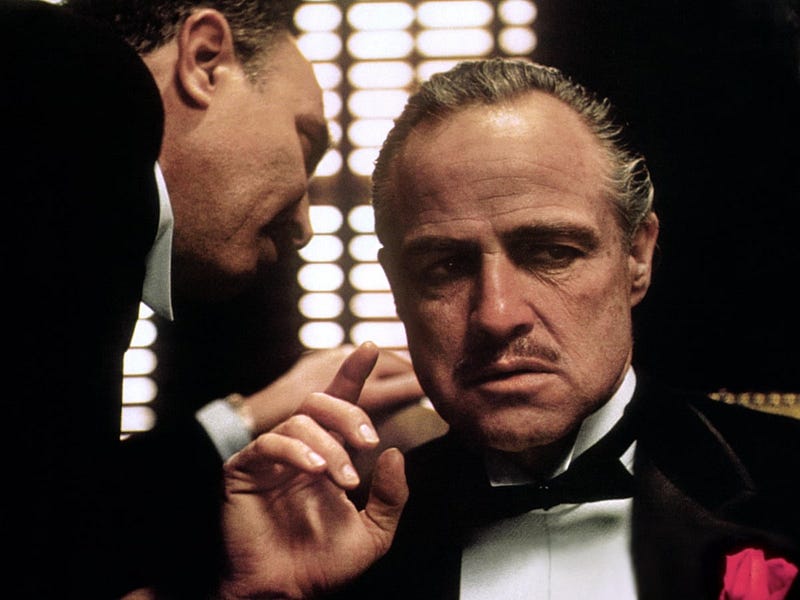
Quite simply, The Godfather is the greatest gangster film ever made. Yes, there are other greats in the genre, but nothing quite as influential, groundbreaking, and beloved, having well and truly stood the test of time. One can quibble that The Godfather Part II is even better, but Part II is less a gangster film and more a study of power and corruption, so I’m standing by my claim.
A landmark of the second Golden Age of Hollywood, Francis Ford Coppola’s masterpiece was made at a time of unprecedented filmmaking freedom. It emerged from that fertile creative period between the dying gasps of the censorial Hays Code and Star Wars, which, for better and worse, would go on to define the new era of blockbuster obsession which exists to this day. However, The Godfather remains a singular passion project; a labour of love for Coppola, adapting Mario Puzo’s bestselling novel.
Coppola was the ideal choice to direct, being Italian American and having an in-depth understanding of the culture. Every detail, from the mannerisms, euphemisms, and rituals of mob culture, to the recipes and wines, were meticulously researched. I’d also argue The Godfather is one of the ultimate examples of a film that is better than the book. Mario Puzo’s novel has many prurient elements that Coppola correctly minimised for the screen, without compromising the brutality of the subject matter. The result? Lurid pulp elevated into art.
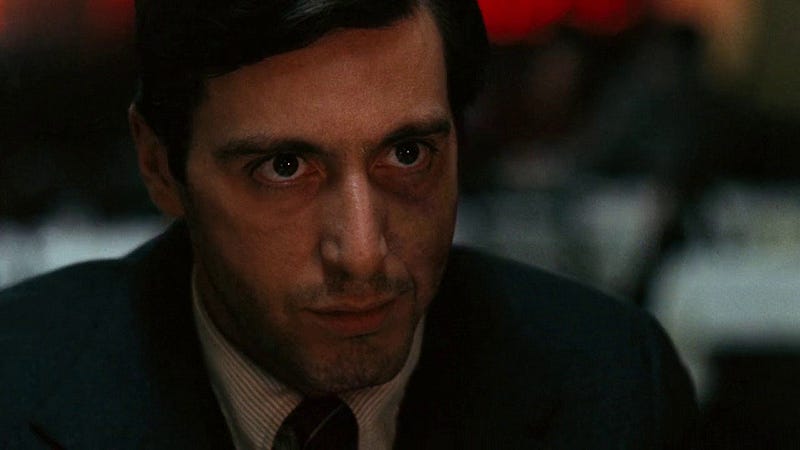
The film is immaculately cast with names including James Caan, John Cazale, Robert Duvall, Talia Shire, Gianni Russo, Diane Keaton, Sterling Hayden, Al Pacino, and of course, Marlon Brando, in one of his most famous roles. Brando won an Oscar, though if I’m honest, I’d have given the award to Al Pacino. He has never been more electrifying than in the role of Michael Corleone, one of four children born to New York mob boss Don Vito Corleone (Brando). The Godfather is really his story; a tragedy of Shakespearean proportions, about a war hero who initially wants nothing to do with his father’s criminal empire, but winds up being drawn into it, becoming even more ruthless than his father.
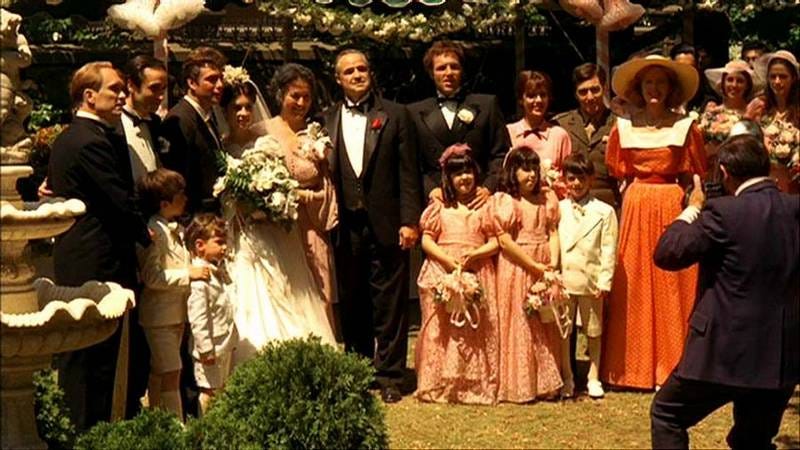
Set shortly after World War II, the film opens with a colourful, joyful, vivid twenty-five-minute wedding reception set piece. It’s long, but unlike The Deer Hunter’s wedding — which proved so lengthy one critic quipped he felt embarrassed he didn’t bring a present — not too long. The Don’s daughter Connie (Talia Shire) is to be married to Carlo (Gianni Russo); an outsider not involved in the family business, but with ambitions to do so. Over the course of this wedding, in which celebrations are interspersed with criminal business, we are introduced to all the key characters. These include highly sexed, short-fuse elder son Sonny (James Caan), cool-headed lawyer and consigliere, adopted son Tom Hagen (Robert Duvall), Michael’s weakling elder brother Fredo (John Cazale), as well as several other supporting players, including Michael’s girlfriend Kay Adams (Diane Keaton), whom Michael regales with tales of his father’s ruthlessness.
Michael: My father made him an offer he couldn’t refuse.
Kay: What was that?
Michael: Luca Brasi held a gun to his head, and my father assured him that either his brains or his signature would be on the contract.
(Kay is incredulous.)
Michael: That’s a true story. That’s my family Kay, that’s not me.
When Connie rushes through the wedding guests to greet Sinatra-esque popular singer Johnny Fontaine (Al Martino), Coppola’s camera follows Connie’s head bobbing up and down like a puppet. With the string-pulling metaphor evident throughout, this is a telling image. I’ve been told I’m reading too much into it, but Coppola is an exceptionally clever filmmaker, and I think the subtle evocation is deliberate. At any rate, Fontaine goes to see the Don, complaining that his career is finished if he doesn’t get a role in a war movie soon to be filmed at the behest of Hollywood studio mogul Jack Woltz (John Marley). Hagen is duly dispatched to give Woltz another offer-he-can’t-refuse, culminating in the memorably shocking scene involving a decapitated horse’s head in a bed.
Here The Godfather is at its most fascinating, since the Fontaine/Woltz segment is supposedly based on a real-life incident with Frank Sinatra, and how he got his career-boosting role in From Here to Eternity. But all this is a preamble to the main narrative, as Vito Corleone’s refusal to get involved with the drug trade triggers an all-out gang war. Here, after the attempted assassination of Vito, Michael is drawn into matters, ultimately gunning down a corrupt New York police captain, and being forced into hiding in Sicily.
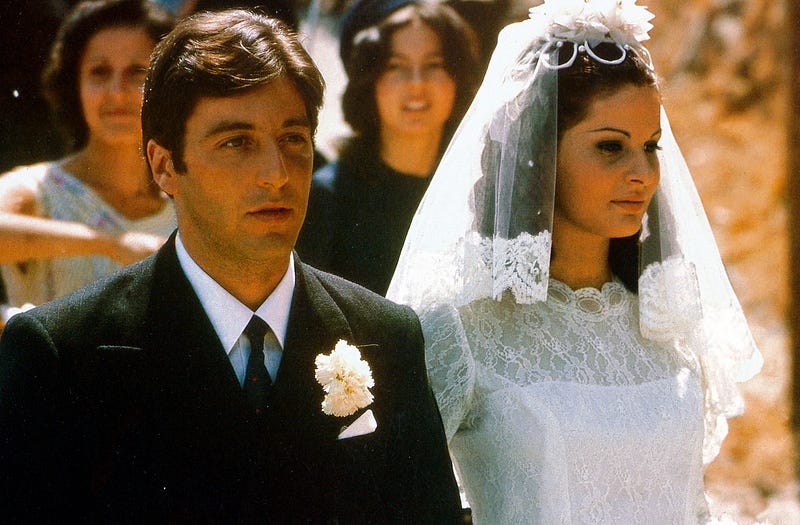
In the US, long but compelling scenes of family drama and conflict erupt into shocking explosions of bloody violence. In Sicily, Michael meets, courts, and marries local beauty Apollonia (Simonetta Steffanelli), only for her to be slain by a car bomb intended for him. As these scenes play out, we find ourselves sympathising with the Corleone family, rooting for them to wipe out their enemies. All of which is rather disturbing. Yes, the Corleones aren’t exactly the good guys, but we admire their loyalty and sense of family. In relative terms, they are honourable compared with their backstabbing, treacherous, ruthless rivals.
Except Michael becomes every bit as ruthless. Once Vito finally shuffles off this mortal coil, Michael arranges the assassination of all his enemies, including the heads of the other New York mob families, traitors within his own ranks, rival businessmen standing in his way (such as Las Vegas casino entrepreneur Moe Greene, played by Alex Rocco), and even his own brother-in-law. This Michael does whilst standing godfather to Connie’s son, during a church baptism, which ironically intercuts with the killings. Michael renounces Satan in church, whilst murder after murder takes place on his orders.
All things considered, Michael’s rise to power is bone-chilling. Whether lying to his wife about the death of Carlo, or chastising Fredo for taking sides with someone against the family — a warning that prophetically foreshadows events in Part II — Michael’s character arc is the moral thread running through the film, reminding viewers at regular intervals what this family is capable of. Despite this, some claim the film glamorises the Corleones a bit too much, though I’d argue Part II is a corrective to that criticism.
Such quibbles aside, even umpteen viewings later, The Godfather is a stone-cold masterpiece of cinema, especially when viewed via the immersion of the big screen (something I can now finally tick off the cinematic bucket list). From the famous opening monologue (“I believe in America. America has made my fortune…”), to the final shot of the door closing on Kay as respects are paid to the new Don, it remains a riveting examination of the dark side of the American Dream, featuring a raft of outstanding performances and sublime direction from Coppola. Gordon Willis’s beautiful cinematography and Nina Rota’s evocative score provide the icing on a delicious cinematic cake.
However, my final word of praise for the film goes to often unsung producer Robert Evans. For all his genius, Coppola struggled in the edit to get his film into shape. When he turned in a two-hour cut, Evans took the picture out of Coppola’s hands, and had it recrafted into the version we know and love today, running two hours fifty-five minutes. Far from butchering Coppola’s masterpiece for commercial gain, Evans preserved a work of art. He also did the same with the second Godfather film, and as such deserves considerable credit.
Author’s note: I hope you enjoyed this article. For more about me and my writing on Medium, please click here. For information on my writing outside Medium, please click here. For a list of my published novels and other works, please click here.