My Cinematic Bucket List
Ten films I really want to see on the big screen.
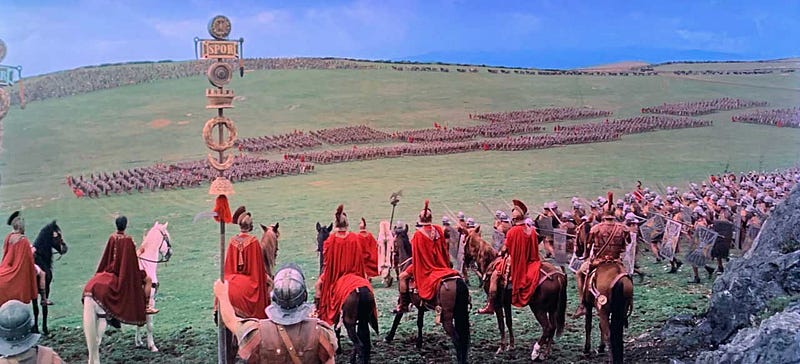
Every film buff has a cinematic bucket list. They long to see those all-time favourites at least once on a big screen. In some cases, they might have missed the original release, but more often than not, they simply weren’t alive when the films in question came out.
In my case, I’ve been particularly fortunate. I’ve managed to see almost all my favourite films — either on first runs or during re-releases — at one point or another at the cinema. Everything from Gone with the Wind to Casablanca, Les Diaboliques, North by Northwest, The Great Escape, A Matter of Life and Death, The Lavender Hill Mob, The Innocents, Some Like it Hot, Singin’ in the Rain, La Regle Du Jeu, The Wild Bunch, Lawrence of Arabia, West Side Story, La Strada, 2001: A Space Odyssey, The Exorcist, Apocalypse Now, Close Encounters of the Third Kind, Snow White and the Seven Dwarfs, Die Hard, Alien, Blade Runner, The Iron Giant, the original Star Wars trilogy, The Lord of the Rings trilogy… Name a classic film and I’ve probably seen it on the big screen.
As regular readers of mine will know, I am an old-school, hardcore, big-screen-is-best, dyed in the wool cineaste. I believe watching a film on DVD, Blu Ray, or (if you really must) streaming, is akin to looking at holiday snaps and lovingly recalling the experience of being in a place where you had a wonderful experience. All right that’s a little extreme, but you get my general point. Big screen is best. In some cases, I’ve only seen the holiday snaps and not visited the holiday destination, so to speak.
Therefore, here are ten films I’ve seen on television, but wish to see in the cinema, listed in no particular order of cinematic urgency.
Spartacus (1960)
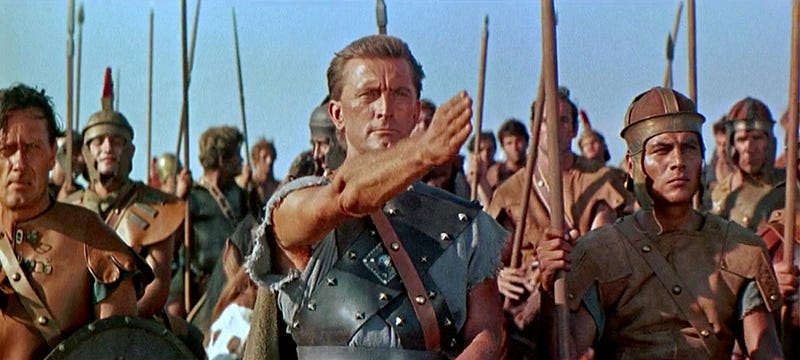
Despite a high-profile reissue in the early 1990s, I’ve not yet managed to catch my all-time favourite sword and sandals pic in the cinema. Stanley Kubrick’s only film as director-for-hire features a suitably heroic Kirk Douglas as the eponymous rebel slave, taking on the might of Rome. The wonderful Jean Simmons provides the love interest, supporting characters Charles Laughton and Peter Ustinov provide the witty asides, Laurence Olivier provides the villainy, and Tony Curtis provides the male bonding.
Speaking of Curtis, if you’ll forgive me for pandering to gender stereotypes, Spartacus is oft-cited as a film at which it is socially acceptable for grown men to cry — not just for the iconic “I’m Spartacus” moment, but for the intensely moving “I won’t let them crucify you!” scene where Curtis and Douglas are forced to fight to the death, determined to kill the other because they want to spare them the agony of crucifixion. There’s definitely something in my eye. There is in the finale too, and the emotion is enhanced by a great Alex North score. Why do I desperately want to see this in the cinema? Mainly for the battle scene where Roman legions advance like ants, in an incredible series of wide shots.
Black Narcissus (1947)
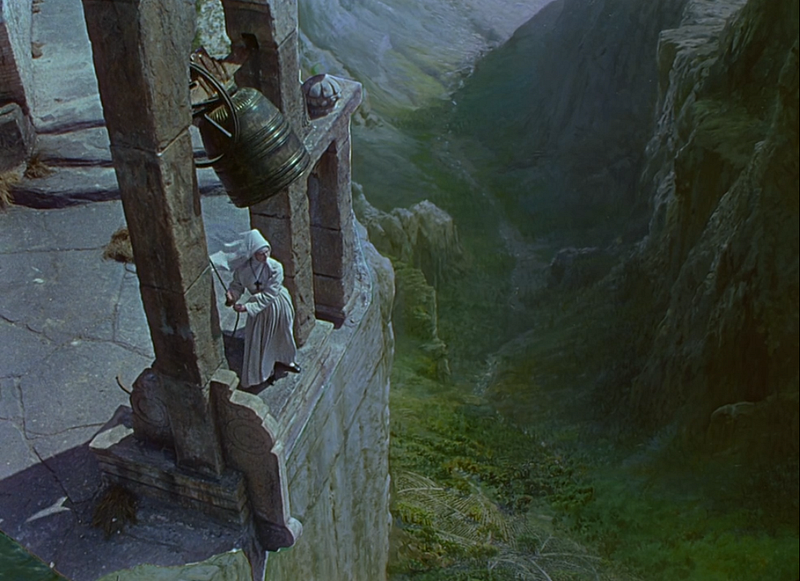
I’ve always wanted to see my favourite Powell/Pressburger film in the cinema, but so far, it has eluded me. This tale of sexually repressed nuns going mad in the Himalayas is so vivid, so atmospheric, so erotically charged, and (in the final ten minutes) so utterly terrifying — as scary as anything in The Exorcist, despite the U certificate — that seeing it on a big screen has always been one of my great ambitions.
In one superb scene, Deborah Kerr faces down Kathleen Byron, who has degenerated into lustful madness over David Farrar. Kerr wears her nun’s outfit and takes out her Bible. Byron, in her red dress, takes out lipstick and applies it. Both Bible and lipstick are weapons in a silent, psychological duel. The scene oozes with religious fervour, sexual tension, and dread. Indeed, the entire film is like a dream, a heightened state of consciousness, or an out-of-body experience. The magical realist atmosphere is vividly captured via Jack Cardiff’s stunning cinematography, which incredibly is all achieved in studio. It looks like they went to the Himalayas, but there is no location photography at all. A remarkable achievement.
Thunderball (1965)/You Only Live Twice (1967)/On Her Majesty’s Secret Service (1969)
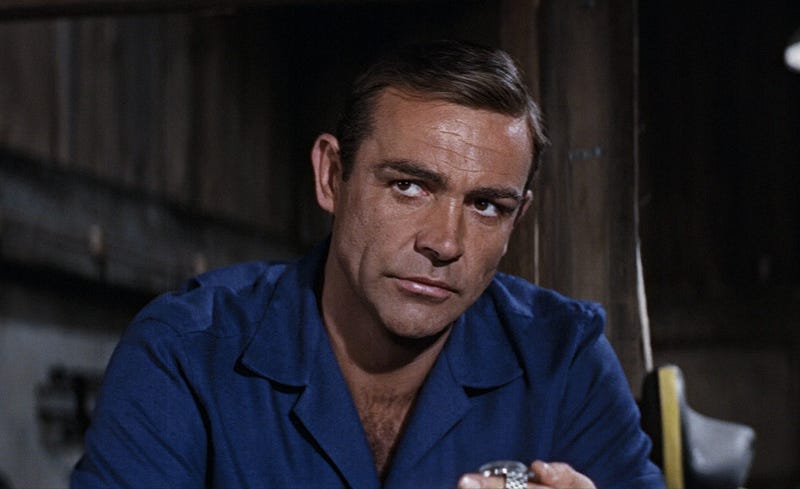
Picking three Bond films is a cheat, but these had significantly bigger budgets than their predecessors, were the first to be shot in scope (ie the 2:39:1 aspect ratio, instead of 1:85:1), and I can’t choose between them, as all three look fabulous. I grew up in the latter-day Roger Moore era, so never saw any Sean Connery Bond films on the big screen. I want to remedy this as a matter of urgency.
Thunderball is the one where SPECTRE half-inches nuclear weapons and holds the world to ransom. It has a big underwater battle near the end that I bet looks great in the cinema. You Only Live Twice I daresay looks even better, especially in the scene where the ninjas infiltrate SPECTRE’s volcano hideout— the best baddies base ever, courtesy of legendary production designer Ken Adams. Then there are those thrilling ski chases and the avalanche sequence in On Her Majesty’s Secret Service which I’m sure are a treat on the big screen (despite featuring George Lazenby rather than Connery as Bond).
Napoleon (1927)
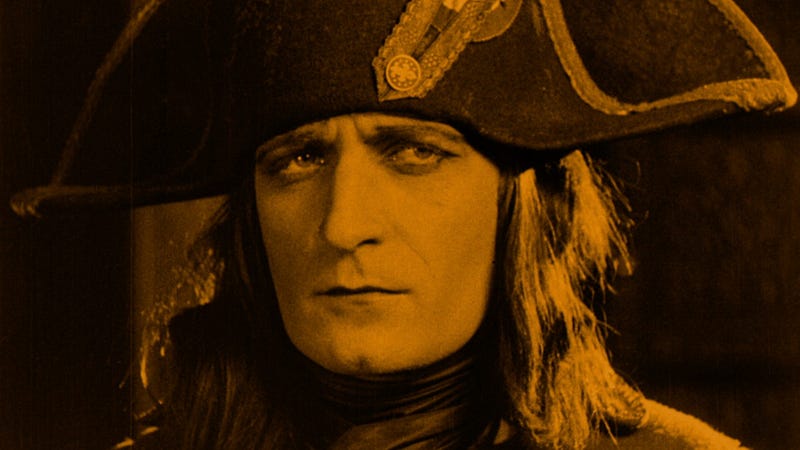
Of the many versions and cuts of Abel Gance’s epic, silent classic Napoleon, I recommend tracking down the version recently restored by film historian Kevin Brownlow, which runs for a whopping 330 minutes. Yet even this version is still missing footage, and the search for lost scenes continues. That said, what remains is astonishing (even if you’ll need to take annual leave to see it). Gance’s lavish film is an exhilarating cinema experience, and one I really want to see at the cinema.
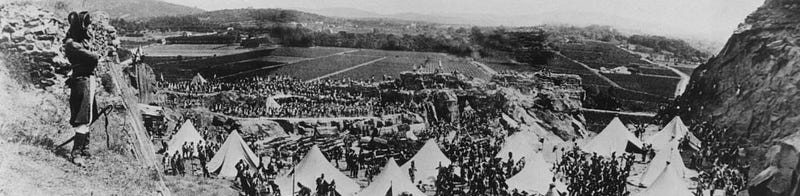
Alas, screenings are rare because they require very specific preparation for the legendary “triptych” finale; a simultaneous projection of three images alongside one another forming an exceptionally wide horizontal frame in an unparalleled 4:00:1 aspect ratio. Watching this extraordinary, groundbreaking sequence on television simply doesn’t cut the mustard. At least once in my life, I’d like to see this singular work of art properly.
The Bridge on the River Kwai (1957)
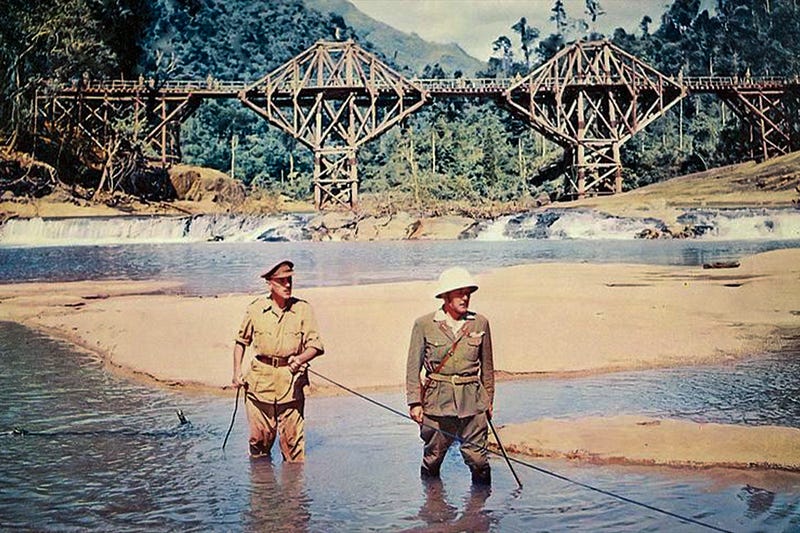
I’ve seen most of my favourite David Lean films at the cinema, including Great Expectations, Lawrence of Arabia, and Doctor Zhivago. One favourite I’ve yet to see on a big screen is The Bridge on the River Kwai, which some consider his greatest work. I’m not sure it is (I’d argue the case for Lawrence), but this is certainly a worthy contender.
I will concede that it features Alec Guinness’s greatest performance. As the British officer proving a point of honour by building a key strategic railway bridge along the Burma Railway during World War II, thus unwittingly assisting the Japanese, he is quite remarkable. Rarely has the psychological madness of war been so thrillingly rendered on celluloid. As for the reason I want to see it in the cinema, the nail-biting finale alone cries out for big-screen treatment.
Intermission: A related mini-rant
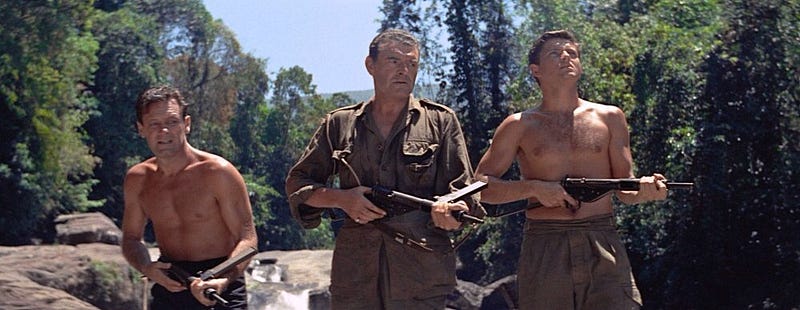
Back in the bad old days, missing a film in the cinema (or having the temerity to be born years after it was released) meant you couldn’t see it in the correct aspect ratio. Panned and scanned, low-resolution VHS copies were the order of the day, or else panned and scanned TV broadcasts. However, in the late 1980s, BBC2 decided to run a very rare late-night screening of The Bridge on the River Kwai in widescreen. As a 14-year-old budding cineaste, I was beyond thrilled. I duly set our newly purchased VHS recorder, eager to see this magnificent film in its proper 2:35:1 aspect ratio.
Unfortunately, when I checked the tape the following day, the bloody live golf on beforehand had overrun. The BBC, as was their irritating habit in those days, decided the sports audience was more important than the film audience and extended the coverage. Thus my video recording missed the last hour of the film.
To say I was enraged doesn’t cover it. A multitude of swear words and curses issued from my mouth, as I pounded the floor in a kind of Charlton-Heston-in-the-final-scene-of-Planet of the Apes sort of way. I have always detested golf with a burning passion, and concur with Mark Twain’s assessment of it as “a good walk ruined”. The best thing I can say about this idiotic game is that it features in an entertaining scene in Goldfinger. Beyond that, I view it as the elitist, pseudo-masonic pastime of Trump, hedge fund managers, condescending CEOs, rich idiots, and similar scum of the earth.
Yes, yes, all right #notallgolfers if you must. And yes, years later, once widescreen became the default format, I picked up a lovely DVD copy in the correct aspect ratio, but dammit that’s beside the point. I’m still bitter about what happened. It still hurts. To summarise: I loathe golf, everything it represents, everything associated with it, and I suspect seeing The Bridge on the River Kwai at the cinema is the only thing that will bring inner healing of this deeply traumatic incident.
The Godfather (1972)
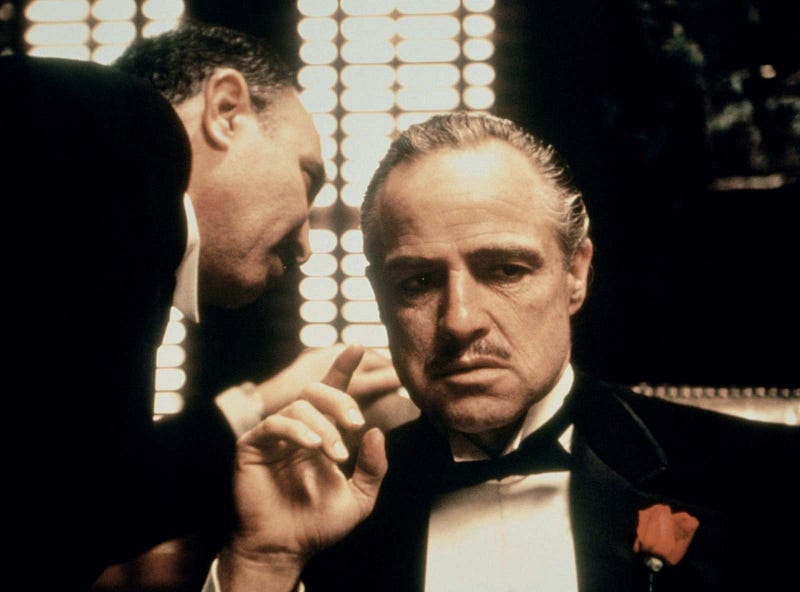
I have no proper excuse for this one, as I’ve missed at least two re-releases in the last twenty or so years. In my defence, one of those was during a period of relative financial embarrassment, which meant I had money for a ticket to either The Godfather or The Godfather Part II. I opted for Part II (which looks phenomenal on a big screen, by the way), so alas, The Godfather went unseen. It was on again a few years back, but for some reason, I just didn’t get there.
So yes, with a certain amount of shame, the greatest gangster film ever made is on my cinematic bucket list. Why? Because Francis Ford Coppola’s direction, Gordon Willis’s cinematography, Nina Rota’s music, and the electrifying cast — including Marlon Brando, James Caan, Robert Duvall, and a career-best Al Pacino (well, career-best except for Part II, where he’s even better) — are all best experienced in the immersive atmosphere of a cinema auditorium, I have no doubt.
Butch Cassidy and the Sundance Kid (1969)
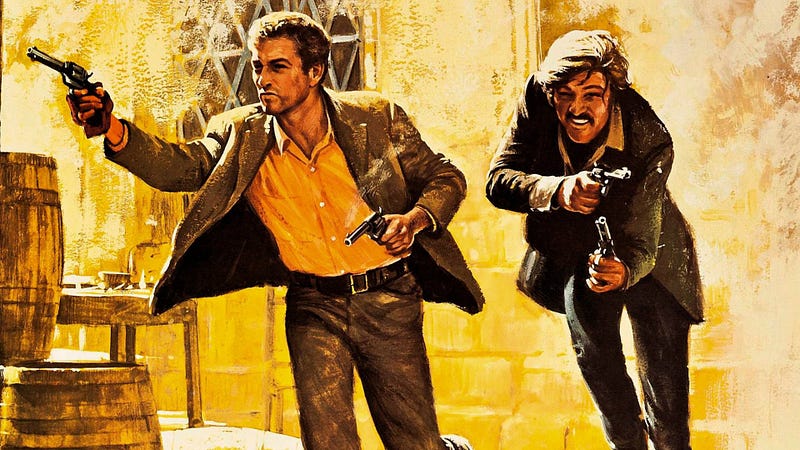
This is another film I’m embarrassed to say I’ve not seen in the cinema, as I missed a perfectly good rerelease relatively recently, for the idiotic reason that I was out of the country on a work trip. I seriously question my priorities on such occasions, and yes, you may well feel it warrants revoking my cineaste card. I offer no excuse, and promise to do better in future.
At any rate, this best-ever buddy movie western, featuring superb performances Paul Newman and Robert Redford, is one I’ve always wanted to see on the big screen. Partly for the landscapes, partly for the sepia segments, but mostly for the classic Bolivian siege finale and that iconic freeze-frame finish. Director George Roy Hill would later reunite his stars for The Sting, which incidentally is another classic film I’ve not seen on the big screen.
Seven Samurai (1954)
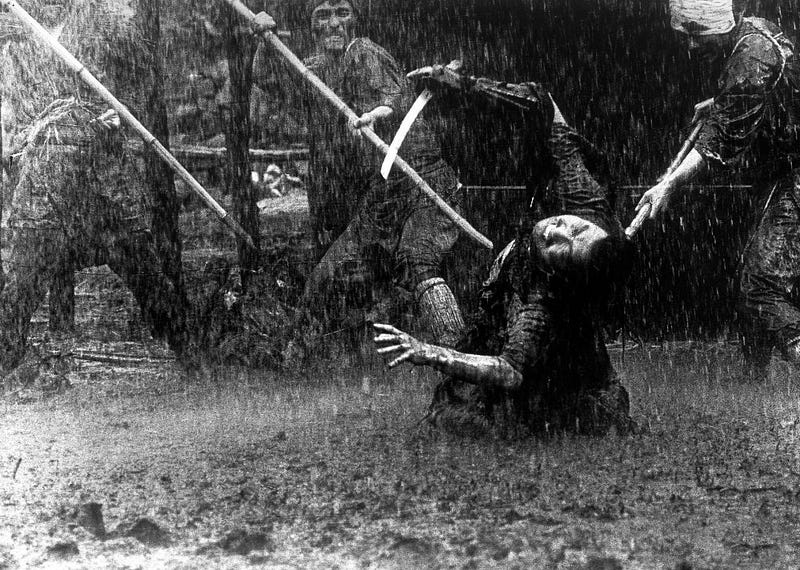
Legendary Japanese director Akira Kurosawa’s films always look splendid on the big screen (Ran, in particular, is astonishing). However, my favourite Kurosawa film, Seven Samurai, I’ve never managed to see at the cinema. Frankly, for someone as obsessed with film as I am, that’s another serious black mark against my cinematic credentials.
Seven Samurai concerns desperate farmers persecuted by bandits, who hire seven ronin (masterless samurai) to help protect their village and crops. This hugely engaging drama has been endlessly imitated, referenced, and remade (most famously as The Magnificent Seven) but for me, this film stands alone. I particularly like the legendary Toshiro Mifune’s performance, as the man who lies about being a samurai, but ultimately proves heroic and honourable. As for why it’s a must on the big screen, the battle sequence at the end — and particularly the duel in the rain and mud — I can imagine looks phenomenal supersized.
The Apartment (1960)
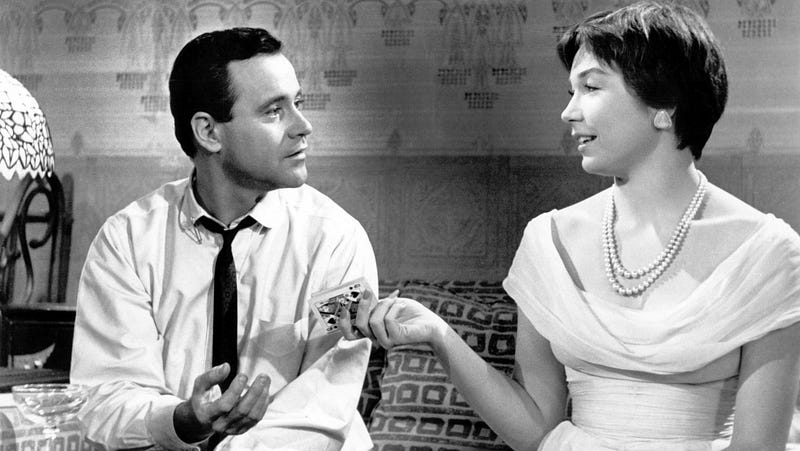
Again, I’ve seen several of my favourite Billy Wilder films at the cinema, including Some Like It Hot and Double Indemnity, but I’ve not managed to catch this romantic comedy-drama gem in all its big-screen glory. Featuring sizzling chemistry between Jack Lemmon and Shirley MacLaine, and adulterous abuse of power from their boss Fred MacMurray, the film is a bittersweet comedy of errors. It concerns Lemmon’s amiable sucker, an insurance salesman who lends his apartment to bosses so they can have affairs and he can climb the greasy pole.
Unfortunately, after falling for elevator girl MacLaine, Lemmon discovers she’s having an affair with MacMurray, who in standard adultery operating procedure tells her he’s going to leave his wife, but procrastinates indefinitely, leaving Lemmon to nurse her broken heart following a suicide attempt. Lemmon hushes things up, for the sake of protecting his boss, and in return for his string-pulling. But how long before his love for MacLaine becomes more powerful than his career ambitions?
Wilder’s take on workplace sexual politics was radical in its day, though now my reason for wanting to see this classic in the cinema is principally Joseph LaShelle’s stunning cinematography. For instance, the shot of Lemmon at his desk among a seemingly unending open plan office is a stark image of being an unseen cog in a vast, uncaring machine. I know it will all look much better on a big screen.
Once Upon a Time in the West (1968)
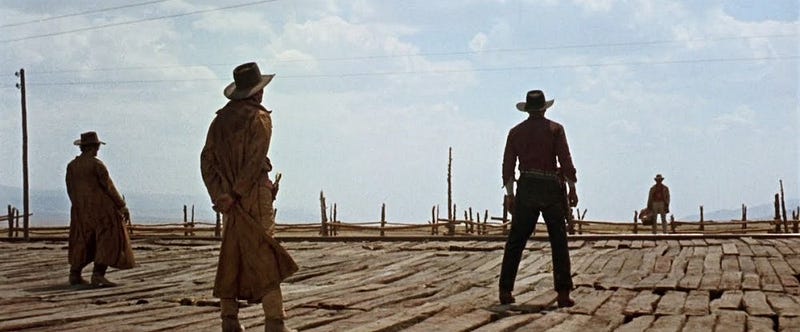
Sergio Leone’s epic, operatic western has been a favourite of mine for decades, but it is obvious many of its astonishing scenes really need a big screen. From the tense opening credits, where a gunslinger traps a fly in the barrel of his gun, to that incredible crane shot over the station, as Claudia Cardinale arrives on the train, this film is screaming out to be seen at the cinema. But don’t take my word for it. Watch the latter iconic sequence for yourself, set to Ennio Morricone’s achingly beautiful music, and imagine it far, far bigger.
Of all the films on this list that I want to see on a big screen, this one is top of the pile for me. Once Upon a Time in the West is a masterpiece, featuring stunning performances from Cardinale, and a supporting cast that includes Charles Bronson, Jason Robards, and Henry Fonda in a rare villainous role. An absolutely gorgeous piece of work; elegiac, melancholy, and moving.
So that’s my cinematic bucket list. What’s on yours? Let me know in the comments. Alternatively, feel free to gloat if you’ve managed to catch one of my listed titles on the big screen.
Author’s note: I hope you enjoyed this article. For more about me and my writing, please click here.


