Ten Films There Ought to Be a Law Against Watching on Television
I shudder to think of anyone discovering these for the first time on the small screen.
I am a cinema fundamentalist. Cinema is the true faith. Television is the antichrist. When the VHS revolution came about, I was having none of this “I’ll wait till it comes out on video” piffle. Watch a low-res, pan and scan, mono version on a 4:3 television instead? Nope.
In a similar way, today I utterly reject all this newfangled streaming nonsense. Yes, films can now be seen in their correct aspect ratio in a better resolution, and yes, you can add big TV screens, surround sound gimmicks, and the like (which do not replicate the cinema experience, contrary to what some claim), but films should be seen first at the cinema. Not on television, and definitely not on computers, tablets, iPads, and God forbid phones. That is a hill I will die on.
With that ranting preamble out of the way, here are ten films (in no particular order of merit) that really are far better viewed on a big screen. I’d even argue there ought to be a law against watching them on television. Or, as a concession to such hyperbole, that you really ought to see first in the cinema. Later to be rediscovered on DVD or Blu-Ray perhaps (I still disapprove of streaming; a rant for another day), but that initial viewing really does require the magic of the silver screen.
One further point of order: I’ve decided to omit Christopher Nolan’s work, as well as The Lord of the Rings (2001–3) and the original Star Wars trilogy (1977–83), as they are such obvious choices, and make for a very predictable list.
North by Northwest (1959)
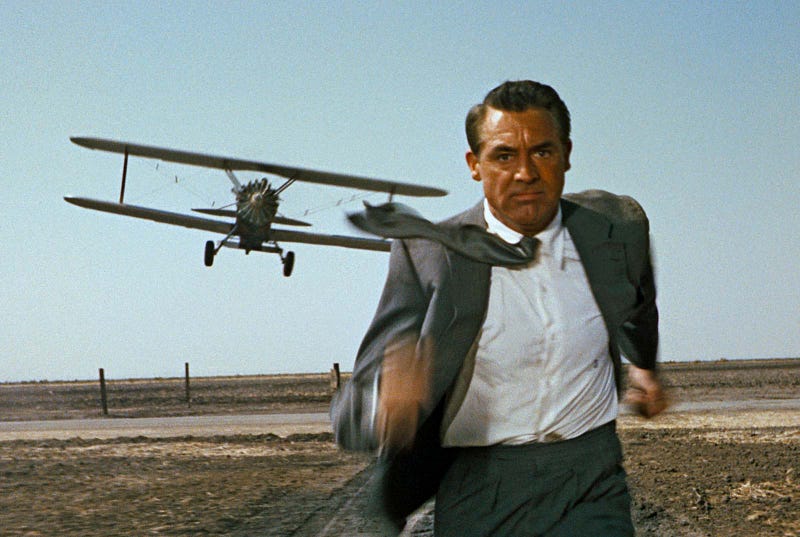
My first experience of Hitchcock; my father showed it to me at the tender age of nine. During the legendary crop-duster attack on Cary Grant, he went on at great length about how television had squashed and diminished the scene. I didn’t pay much attention, as I was completely gripped. On subsequent occasions when I watched this with him, my father would reiterate his complaint, and I would silently roll my eyes.
Some years later, I finally caught a cinema re-release. The moment the film dissolves from the railway station to the high shot of the bus arriving in the vast open fields, I finally understood why my father felt so frustrated about television’s inadequate exhibition of this truly extraordinary sequence. North by Northwest remains one of Hitchcock’s very best, but that crop-duster scene has to be seen in the cinema to be properly experienced.
The Searchers (1956)
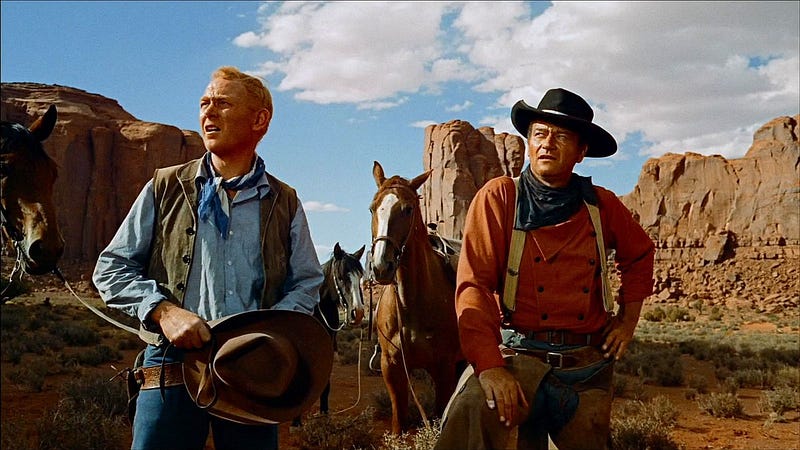
The final shot may be one of the most iconic in cinema history, but the whole of John Ford’s greatest film is a must on a big screen. Ford shot many westerns in his beloved monument valley, but the place never looked as menacing and unsettling as it did in The Searchers. In addition, the sense of danger to the homesteaders, the isolation, and loneliness — not to mention sheer pathological racist oppressiveness of John Wayne’s character — loses much intensity on television.
Indeed, Wayne, in his greatest performance, almost seems part of the bleak landscape itself, forever cursed to wander in the winds like the Native American whose eyes he shot out; an idea underscored by the final shot. There are more epic westerns I considered for this list — Once Upon a Time in the West (1968) being the closest second choice — but the atmosphere of The Searchers narrowly edged it out.
Lawrence of Arabia (1962)
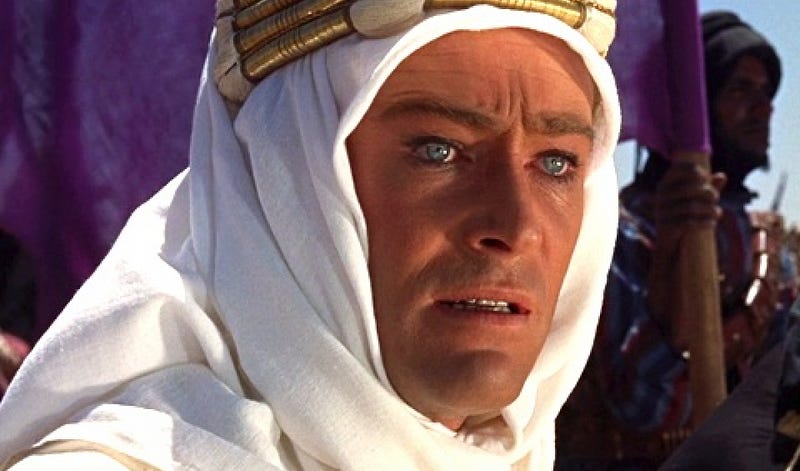
David Lean once said he disliked realism for the sake of realism, and that films ought to feel like dreams. Despite the historic subject matter, Lawrence of Arabia certainly feels like a dream; a dream that that contains an extra-dimensional cinematic aspect that cannot be articulated, merely experienced. The desert vistas absolutely cry out for a huge screen, ideally in its original 70mm format. I shudder to think of anyone discovering this masterpiece for the first time on an iPad.
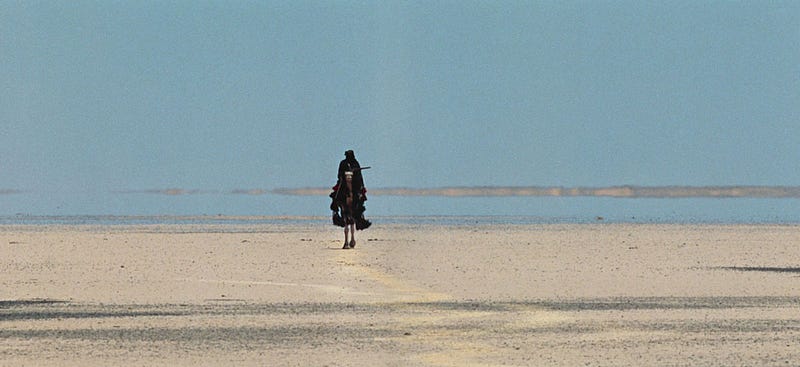
Yet for all its scale, Lawrence of Arabia also feels surprisingly intimate. Peter O’Toole’s enigmatic central performance and Robert Bolt’s spare screenplay contribute greatly to that effect, though Lean’s epic vision ensures we’re never more than a few minutes away from another jaw-dropping, huge scale image. In arguably the film’s most famous moment, Omar Shariff rides endlessly, grippingly across the desert heat haze towards the camera. As cinema entrances go, this one absolutely and emphatically cannot be appreciated on television.
2001: A Space Odyssey (1968)
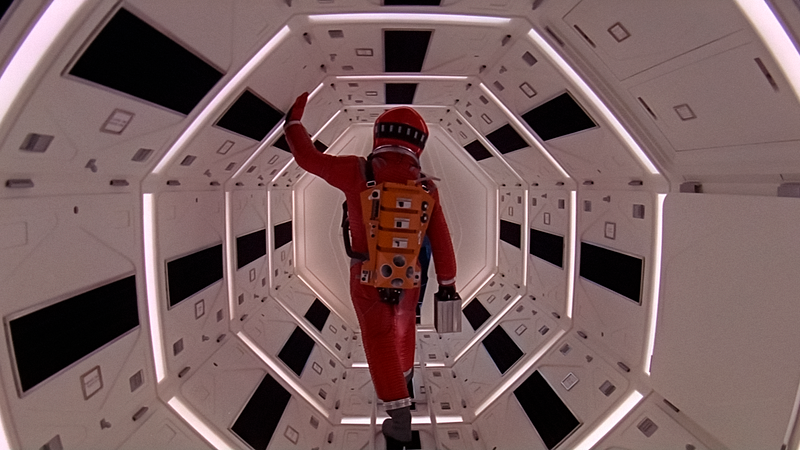
The greatest science fiction film ever made, or a load of glacially paced, boring old cobblers? Some take the latter view, and I feel sorry for them. Nonetheless, I will make one concession to their argument: Those who claim the apes at the dawn of time opening, and the psychedelic final act drag on way too long are correct — but only when watching the film on television. At the cinema, Stanley Kubrick’s masterpiece doesn’t feel a second too long. The eye travels across the widescreen frame, scrutinising the extraordinary imagery with a wonder that has seldom, if ever, been matched.
A genuinely singular cinematic experience, 2001: A Space Odyssey remains as enigmatic, mysterious, and fascinating as it did in 1968. Even if you hate it, it is impossible to deny this film is anything but a landmark of cinema, and it absolutely must be seen on the big screen.
Manhattan (1979)
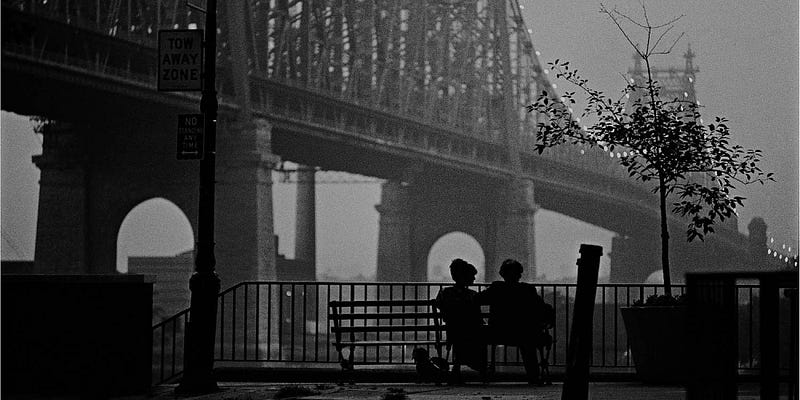
I wanted an example of scope black and white for this list and considered The Innocents (1961) and Roma (2018) as possible choices, but in the end, Woody Allen’s atmospheric, Gershwin scored romantic comedy-drama pipped them to the post. The film is a visual marvel, with cinematographer Gordon Willis’s widescreen depictions of monochrome New York staggeringly beautiful. Manhattan is an unforgettable must at the cinema, particularly for the opening montage, and remains one of my absolute favourites from Allen’s back catalogue.
Apocalypse Now (1979)
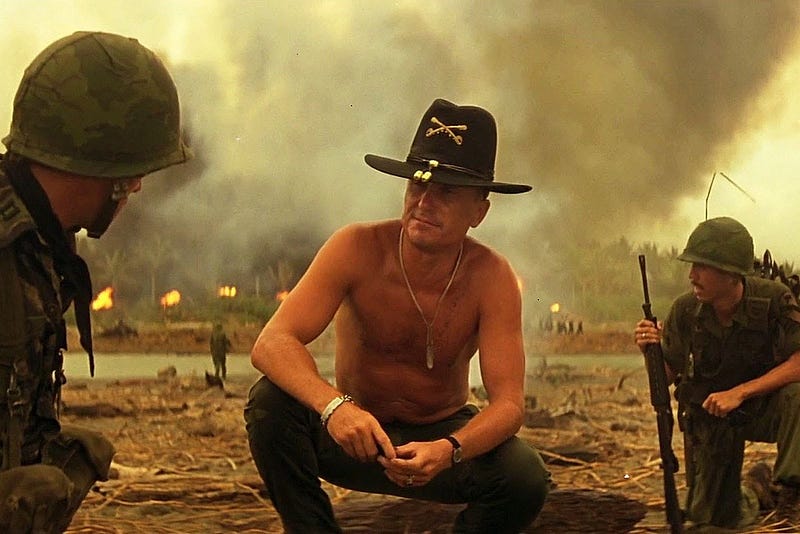
How Academy voters decided Kramer vs Kramer (1979) was a better choice for Best Picture over Apocalypse Now is something I will never understand. As Blackadder once said to Baldrick: “You are either lying, blind, or mad”. At any rate, Francis Ford Coppola’s astonishing film — which he famously said wasn’t “about Vietnam, it is Vietnam” — has an epic scale that simply doesn’t translate to television.
Whether it’s the helicopter attack on the village, scored to Wagner’s Ride of the Valkyries, or the dark, intimate confrontations between Martin Sheen and Marlon Brando (“You have a right to kill me… but you have no right to judge me”), Apocalypse Now could be considered a barrage of sprawling, overblown, pretentious self-indulgence, but because it’s imagery, scale, and sheer power are this overwhelming, the film overrides any such concerns. On a cinema screen, Apocalypse Now really does feel like a genuine, transcendent insight into the evil in the heart of mankind.
Close Encounters of the Third Kind (1977)
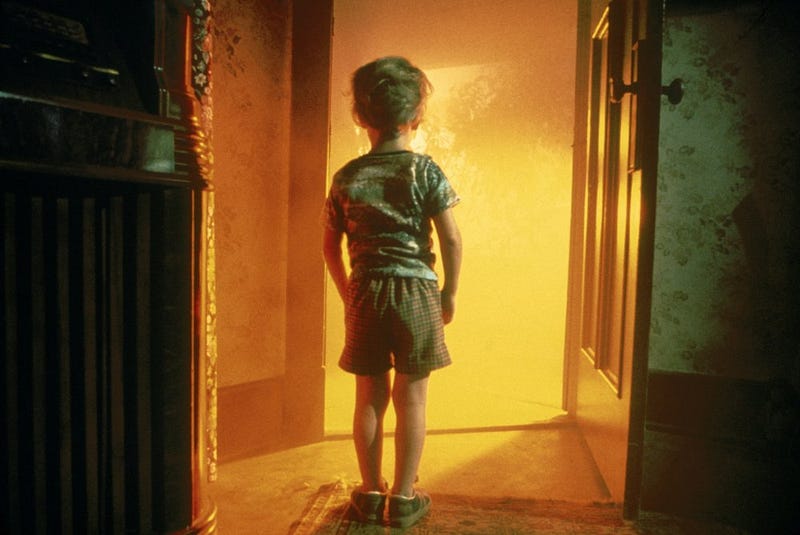
I considered several Spielberg films for this list, including Jurassic Park (1993) and Saving Private Ryan (1998). However, of the many great choices in his back catalogue, none require the big screen as much as this UFO masterpiece. From the very start, Close Encounters announces itself as pure cinema, as the eerie hum of John Williams’s score gradually fills the auditorium over simple white on black opening credits, culminating in a crescendo that explodes with light, using a tremendous cut to the opening scene in the desert.
This masterful opening cannot be properly appreciated on television. Nor can Vilmos Zsigmond’s cinematography, or the visual effects (particularly those beautiful, ink-black skies). Most emphatically, the gasp-inducing appearance of the mothership in the finale isn’t one-twentieth as powerful on the small screen.
Titanic (1997)
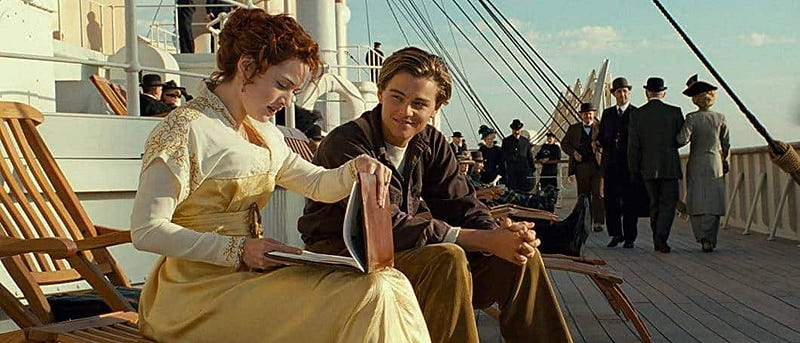
It is fashionable to sneer at Titanic, and to a degree, I understand criticism of dubious history, one-dimensional characters, and the other assorted clichés on display. However, simple characters and clichés can conjure satisfying, broad brushstroke emotions, especially in an epic romantic disaster film of this scale. James Cameron’s sheer ambition cannot be denied, and whilst Titanic is something of a blunt instrument, it is a hugely effective one, especially on a big screen.
The first half of the film has a few moments that lose all sense of scale on television — the shot of the eponymous vessel passing the pilot boat, for instance — but really it is the second half where the expansive cinematic canvas is most crushed by the small screen. The gradual sinking and rising hysteria are all the more immersive when bigger and louder, with creaking bulkheads, collapsing funnels, torrents of water blowing apart doors, and the famous hull split adding up to a hugely effective depiction of the sheer terror involved in the notorious disaster. A Night to Remember (1958) is still the better Titanic film, but Titanic is the more spectacular one to see at the cinema.
The Exorcist (1973)
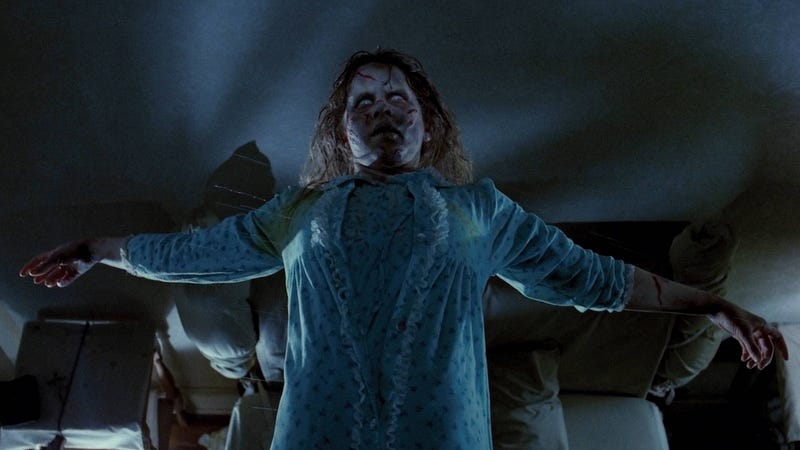
William Friedkin and William Peter Blatty’s horror masterpiece has to be seen in cinemas — not just for reasons of scale, immersion, innovative sound design, and so on, but because it is simply too alarming to watch on television. No, really. Going to the cinema to watch it is one thing. I can summon the nerve, collectively take a deep breath with the safety of an audience, and enjoy the terrifying catharsis of the greatest horror film of all time (an argument with which I will brook no argument). And yet, I can’t bring myself to watch it at home. I get about ten minutes in and have to switch it off. Horror films always feel scarier in such intimate settings, and with The Exorcist, the film is just too frightening to be allowed in my house.
The Iron Giant (1999)
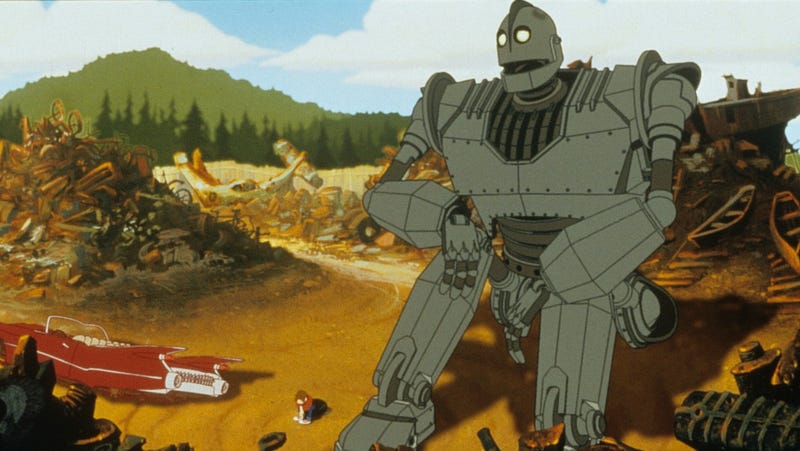
Animation plays far better on a big screen, and there are many examples from cinema history I could have chosen to illustrate this point. Part of me wanted to opt for early Disney — perhaps Snow White and the Seven Dwarfs (1937), the first film I ever saw on the big screen. Part of me wanted an anime — Akira (1988) for instance, which blew me away to the point that I couldn’t walk in a straight line as I left the cinema. Another part of me wanted to pick a Pixar classic like — maybe Wall-E (2008), their most visually staggering film.
However, in the end, I’ve selected something hugely personal to me: Brad Bird’s criminally underrated, old-school, hand-drawn gem The Iron Giant. Bird and his animators make superb use of widescreen space, such as the giant’s menacing first appearance behind Hogarth in the top right-hand corner of the frame, or the wide-angle of the giant stomping away from the town, having been warned that people aren’t ready to see him. These shots simply do not have the same impact on television. In addition, the film as a whole, with its courageously pacifist message, is so much more powerful on a big screen.
There are many other films worth mentioning, but these ten represent a compelling argument supporting my evangelistic zeal for cinemas as the primary place for film viewing. In closing, I will add one final plea: If you have somehow not seen any of the above, are on a long-haul flight, and find they are available as part of the in-flight entertainment, please, please, please do not watch them. I get all hot and cold at the thought of someone experiencing Lawrence of Arabia for the first time on a minuscule low-res screen on the back of a seat in economy/cattle class, enduring constant interminable interruptions from cabin crew and so forth. Instead, look inside your heart, listen to your conscience, and ask yourself: What would Simon Dillon do? Read a book instead, and wait for a cinema re-release. Don’t lose your Lawrence of Arabia virginity on a plane. True love waits.
Author’s note: I hope you enjoyed this article. For more about me and my writing, please click here.


