Why Are Horror Films Scarier at Home?
The masochistic pleasure of movie terrors in your personal living space.
Seeing a horror film at the cinema involves a deliberate decision to leave your home, summon your nerve, and collectively brace yourself with other audience members, to embrace the macabre thrills on show. But at present, during lockdown, cinemas are closed. That means when watching horror, there is no more safety in numbers. No more nervous laughter from the audience. The catharsis of a well-deployed jump scare proves less effective when you daren’t turn up the surround sound too high, for fear of upsetting the neighbours. Whilst you may have been scared by that hand from the grave at the end of Carrie, something was reassuring about the fact that everyone else in the cinema had also experienced a severe fright.
At home, there is no such reassurance. You feel as though you have directly summoned the very evil at the heart of the film. Whatever serial killers, ghosts, demons, monsters, vampires, or other nightmares feature, they are now in your sitting room. For example, The Blair Witch Project didn’t trouble me on a big screen, but all that hysteria in your face, in the intimacy of your own living space, all alone, late at night, proved undeniably unsettling.
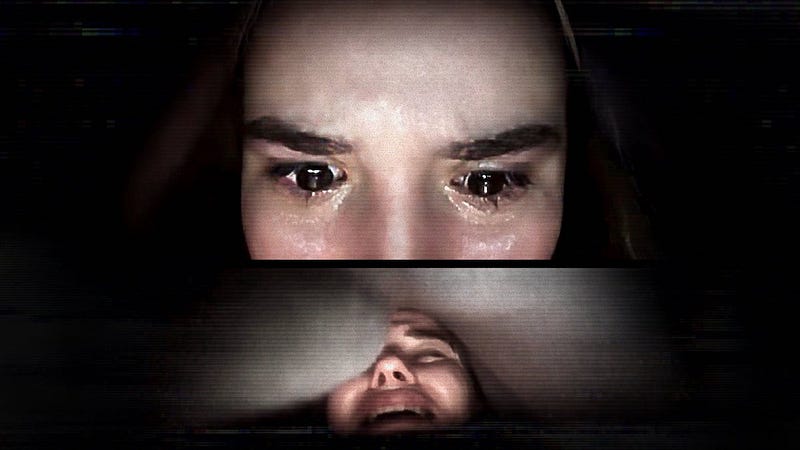
My interest in the fascinating psychological contrast between horror in the cinema and horror at home was recently renewed, following a viewing of the innovative Host. Seeing this film alone, on a laptop, late at night, was surely the most frightening way to watch it, given that the entire film is a Zoom call, fabricated in the prankish tradition of Orson Welles’s notorious 1938 War of the Worlds radio broadcast. Could it have worked more effectively on a big screen? I doubt it. When viewing Unfriended at the cinema a few years earlier, I kept thinking I’d probably be more scared watching it on a computer.
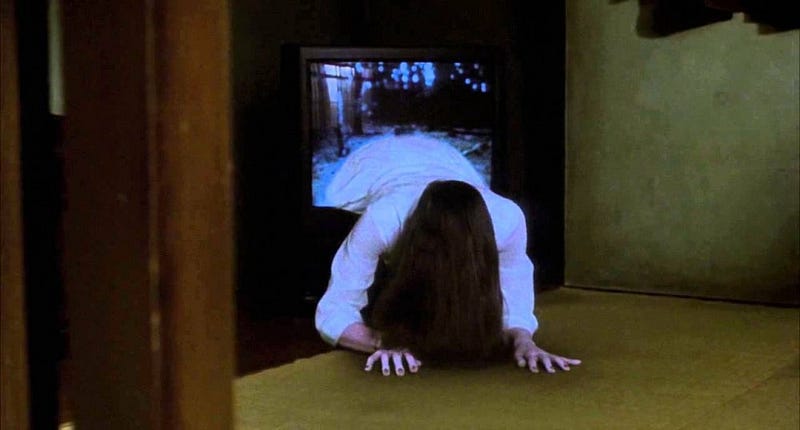
Host wasn’t the first time I’d noted increased scariness when watching horror at home. Twenty years ago, I’d somehow managed to miss Ringu at the cinema. Having heard anecdotes of bowel-loosening scariness, I doubted viewing the film on a sunny summer afternoon on VHS would prove anything like as alarming. I was wrong. Watching a film about a cursed VHS tape on VHS just added to the experience. The sunniness outside did nothing to dispel the terror, and after that notorious scene featuring a well, a television, and a long-haired girl, I was properly rattled. I resolved not to have such a flippant attitude towards scariness warnings in the future.
Getting my fingers burned in such a manner didn’t prevent me glibly catching up with The Changeling in my sitting room, alone, and late at night. Peter Medak’s superb ghost story was so utterly bone-chilling, I couldn’t go to bed afterward. I had to stay up for another hour, watching episodes of Fawlty Towers, to dispel the irrational but unsettling notion that screening the film had opened a portal to let something malevolent into my house. Of course, the next day I felt utterly foolish, but it’s harder to shake off such feelings when you think you see things moving in the shadows of the curtains, out of the corner of your eye.
During my teenage years, two home viewings stand out as formative horror experiences. The first involved Alan Parker’s ludicrously overheated but hugely effective, visually stunning masterpiece Angel Heart. Featuring Mickey Rourke’s finest performance, this 1950s set Faustian tale of a private detective trying to track down a missing crooner opens much like hard-boiled noir. I was lulled into a false sense of security by initial genre expectations, and the visceral, horrific descent that followed shook me to my core. My shocked teenage eyeballs were assailed by a bloody, sweaty haze of sex, violence, and occult terrors, culminating in an unforgettably bleak finale. The fact that I saw this late at night at a friend’s house, and then had to walk home through dark alleyways at around 2am, simply added to the exhilaratingly frightening experience.
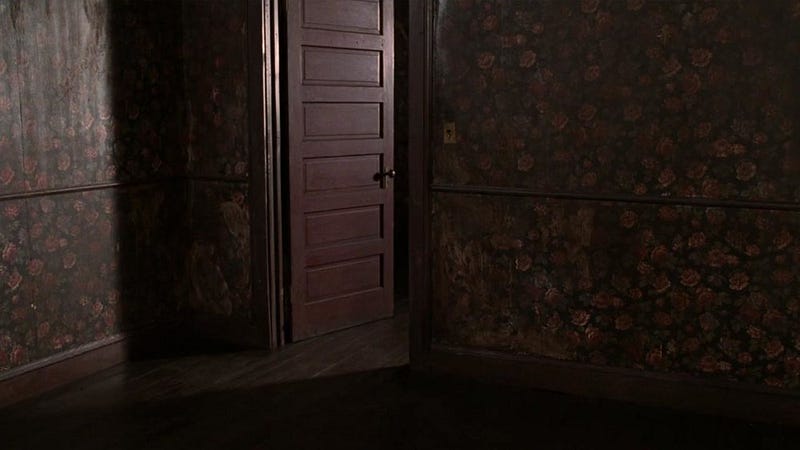
On another occasion, around the same time, I first watched another criminally underrated gem: David Lynch’s Twin Peaks: Fire Walk With Me. With memories of the TV series fresh in my mind, I was a little more prepared this time. But not prepared enough. Lynch has an uncanny habit of startling the viewer with unsettling and surreal imagery at the best of times, but here he outdid himself. One image lodged in my mind, like a half-remembered nightmare; the picture of the empty room with the open doorway, beyond which you can somehow sense something truly horrific lurks. When the film finally takes you through that door, watching it at home, I felt as though the demon Bob was about to invade my house. For some days afterward, I couldn’t sleep, because I kept imagining him standing at the foot of my bed.
More recently, Babak Anvari’s brilliant debut Under the Shadow proved a particularly fascinating case in point. I had seen the film at the cinema and found it very scary indeed. I picked up a DVD and watched it a second time, this time alone, late at night, at home. At first, I was confused. Why had I found this so alarming? The film opens in an almost documentary style, taking time to establish the characters. The gradual shift to more genre-appropriate directorial tactics is effective and unsettling, but despite some good jumps, the film still didn’t raise my pulse rate to any significant degree. However, with the shocks of the final act, all that changed. Scare upon scare had me cowering in my armchair, and I realised that, rather disconcertingly, I couldn’t recall any of the specifics, despite having only seen it at the cinema about a year previously. I had blacked them out of my memory. Now they returned with a vengeance, and at home, they were scarier than ever.
Moving away from cinema for a moment, it’s worth mentioning the BBC’s notorious Halloween 1992 Ghostwatch broadcast. A prank in the Orson Welles tradition, the programme was presented as a real-life live investigation into an allegedly haunted house. It cut between “live” footage of the residents, who interacted with a studio hosted by celebrities, including Michael Parkinson and Sarah Greene. What made Ghostwatch so effective is the way it began in a convincingly dull manner. The various presenters play pranks on one another, lulling viewers into a false sense of security, as though nothing is going to happen. Equally sceptical studio guests and “experts” add to this false sense of security, before weird and inexplicable developments gradually unfold. Events build to a terrifying and unsettling finale.
I saw Ghostwatch with a couple of friends, who were terrified out of their minds, convinced the “live” broadcast was real. I had my doubts towards the end of the programme, but during the earlier stretches, I bought the deception. The BBC was inundated with calls and complaints, and there was considerable controversy. Some even attributed the suicide of a mentally ill teenager to the programme, and the BBC has never repeated it. All of which underscores my point about horror often proving more effective on television.
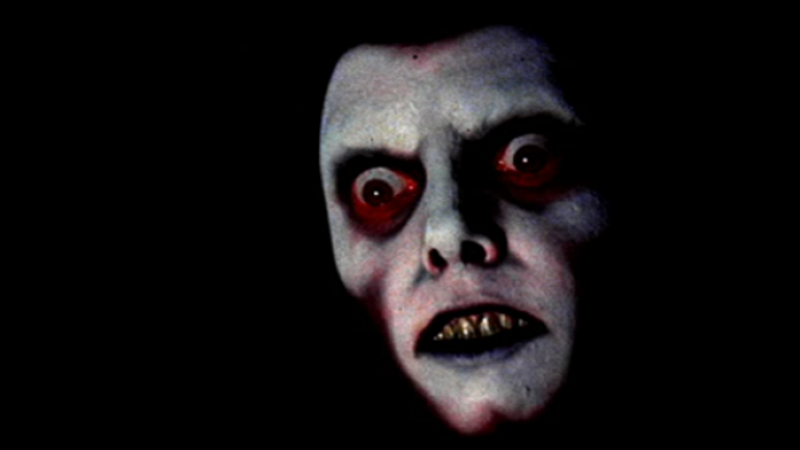
Some films I find so thrillingly frightening that I refuse to watch them at home. The Exorcist is one example. I’ve seen the film a number of times at the cinema, but if I try and watch it at home, my stomach begins to twist, and I end up turning it off after about ten minutes.
Kill List is another example of a film I can’t bring myself to watch at home. I had to drive for about half an hour to see it, as it wasn’t on at any of my local cinemas. I’d heard it was scary, and when the lights dimmed, I sensed the collective intake of breath from other audience members. Safety in numbers. It was only a film. We’d make it through the film alive, surely?
Needless to say, Kill List proved a hugely oppressive, massively unsettling experience that provided the out-of-body terror so beloved by those like myself, who are inclined towards the masochistic catharsis of the horror genre. After the film, I had to drive home in pitch darkness, with the images of that terrifying final act still rattling around in my skull. Road work meant I was diverted onto increasingly narrow and obscure country lanes. My imagination went into overdrive, and I expected the vehicle to be surrounded by torch-wielding masked death cult members, who would escort me to my grisly demise. This both added to the experience and added to my resolve not to enhance the film’s terror by watching it on television.
To conclude, in the interests of balance, here’s a film I considered terrifying upon initial cinema viewing but found more moving than frightening at home: The Babadook. Jennifer Kent’s masterful debut is a film I greatly cherish, and it is gradually growing in stature to become one of my all-time favourites. That initial experience on the big screen provided the aforementioned rare and wonderful feeling, that the film might prove too scary even for me to sit through. However, at home, I was moved to tears by the compassionate, deeply humane undertones. Themes of guilt and grief are beautifully woven into the story, and the narrative arc is empowering to those who have experienced the traumatic loss of loved ones. At least, it was to me.
That film at least was scarier in the cinema. But it proved the exception rather than the norm. My rule of thumb remains: Horror films are scarier at home. As a hardcore film evangelist preaching the superiority of the cinema experience, even I must concede this point.
Author’s note: I hope you enjoyed this article. For more about me and my writing, please click here.