
Breaking Down Ageism and Age Denial, One Old Lady at a Time
My premature interest in aging was once questioned, criticized, even scorned. Now my peers are finally getting the message.
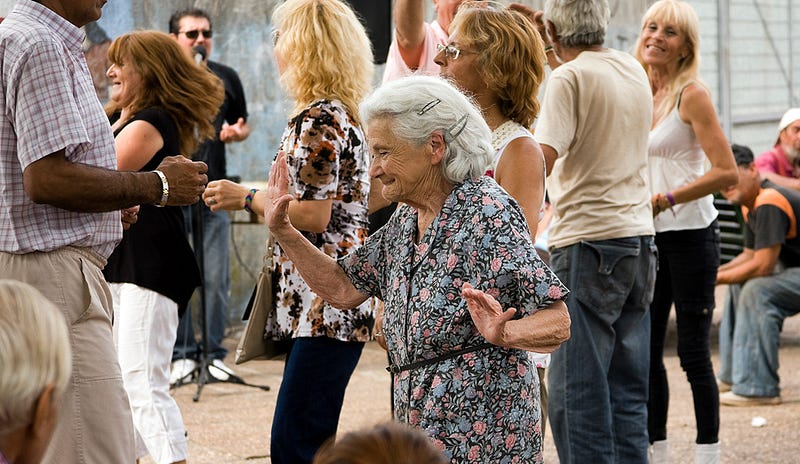
I started cultivating relationships with “good” old ladies when I was only 46. My first old lady, Henrietta, was 75.
I didn’t call her my old lady. I didn’t realize I would go on to amass a group of them. Nor did I truly understand how important my old ladies were to me until…I started becoming one.
Thinking of myself as an old lady was sobering and scary. No joke. What was in store for me?
I knew that I couldn’t stop aging —except by dying. A few close friends already had. No dying for me if I can help it. I still have energy, ideas, and more surprises ahead of me.
I can’t control the march of time but I can take care of myself: eat right, exercise, socialize. I can stay curious about and engaged in the events swirling around me and pay attention to what is going on inside me.
Once a day, I catch a glimpse of my wise inner old lady in the mirror: “You damned well better embrace aging,” she says, “because it is happening — with or without your approval!”
I can’t — and don’t want to — stop time. But I can look to my old ladies for information and inspiration.
My peers didn’t want to hear it at first…
“Why are you always talking about getting old?” challenged one of my sorority sisters nearly ten years ago. A group of us “Iotas” — coeds at Syracuse University in the mid-60s — are still in touch, tracking each others’ stories.
“In no universe is 70 young!” I tried to explain. “Being old doesn’t mean, I that I’m out to pasture. Yes, 70 is different, but it’s not necessarily bad.”
She wasn’t the only one. When I first began calling them “my old ladies,” many of the Iotas said the same thing:
“You can’t call them old ladies. No one wants to read about old ladies. Call them something different.
…but my old ladies weren’t offended!
That is, except Joan Kron. She agreed with my sorority sisters. “You can’t call them that.”
I didn’t expect this from Joan who was 90 when we reconnected. She was my editor at New York, a top journalist, best-selling author and at 88 wrote and produced her first film — an artfully woven documentary about comedians and cosmetic surgery.
A few years later, at 92, in an interview about her next documentary, Joan made a comment that helped explain her reaction to the word old:
“I’m a bit of an ageist because I don’t like to be with old people. Most of them. Because I don’t want them to act old. If they act old, I don’t want to be with them. [Acting old] is talking a lot about what hurts you. There are a lot of pains and aches, a lot of things to complain about, but I try not to focus on them. I don’t even read about them some times. I don’t want to know.”
Wondering whether her attitude changed, I emailed Joan before publishing this piece. “I can’t control what you call me,” she wrote. “I would prefer to be called an ‘old broad.’”
Although my other old ladies agree with her that it’s best not to complain and to focus on what you can do, Joan is the outlier. Marge, in her early 100s when I asked if she objected to being called an old lady, laughed at the question.
“I’m not insulted. I am an old lady.”
When I logged in enough hours with my old ladies and our conversations started to feel like book, I finally pitched the idea to an agent. I stuck with the original title.
These women are in their 90s and 100s — undeniably old. They are ladies. And they are my friends. My old ladies.
To my relief, the agent understood. I want to normalize the word old and show the wonderful, creative, and courageous ways my old ladies inhabit their lives and inspire me to belly up to mine.
(I would later write the proposal and come up with a much better title for the actual book, but kept “my old ladies” in the subtitle!)
My “sistahs” are seeing it for themselves
The Iotas of Syracuse hear my stories differently these days. Their vantage point has changed. Pushing 80 will do it!
“Since we’re all close to being ‘old ladies,’ it was good to be inspired,” one comments after she tunes in to the Crow’s feet podcast in which writer Warren Turner and I talk about my much-older friends and how I’ve collected them over the years. We hear some of their actual voices.
“It’s a wonderful reminder as to where we all are at this stage of our lives,” says another.
They’re not quite calling themselves “old ladies,” but they know they’re approaching the territory.
The reaction that thrills me most is Maureen’s (posted with her permission).
Your dedication to the topic of aged ladies is starting to hit home with me, although you know I put up a good fight every step of the way. But there is no denying that Joan Rivers was correct when she said, “Old age is not for sissies.”
Despite her own internalized ageism — everyone in a youth-oriented culture has it to some degree — Maureen not only admits and celebrates her age, she makes 80 look good.
Sometimes I feel like the new Sylvia. Most of my friends here this winter are 15–20 + years younger than me and are constantly saying that I am their role model at 80 years old! I keep telling them that the journey from 60 to 80 is a very very fast one — so brace yourself.
The “old Sylvia” is my friend Daryl’s mother, who, thanks to Maureen’s introduction, became one of my old ladies a few years ago. Delightfully engaging, interested in everything, a social butterfly who split time between Manhattan and Miami, Sylvia dished and discoed with the best of them. She died planning her own 98th birthday party.
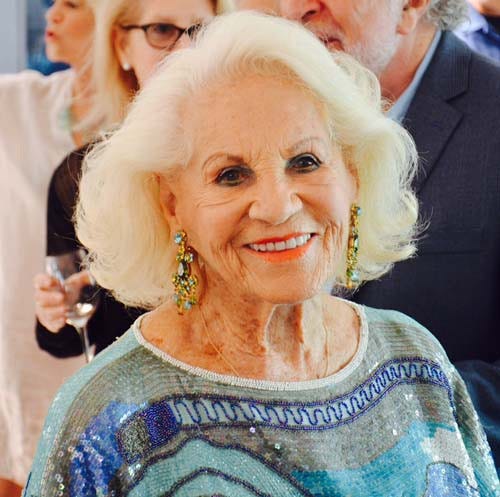
One could do a lot worse than be “the New Sylvia.”
Maureen describes My Old Ladies (the project) as “women aging gracefully with love and laughter.”
I couldn’t have said it better myself! We’ve all come a long way.
Melinda Blau is an award-winning journalist, currently working on her 16th book about the power and promise of relationships with much older women. Find her on social media via LinkTree.


