
When Are You Old Enough to Understand Ageism?
The last allowable prejudice just might be the most intractable. How ironic that it’s also the one that ultimately affects everyone!
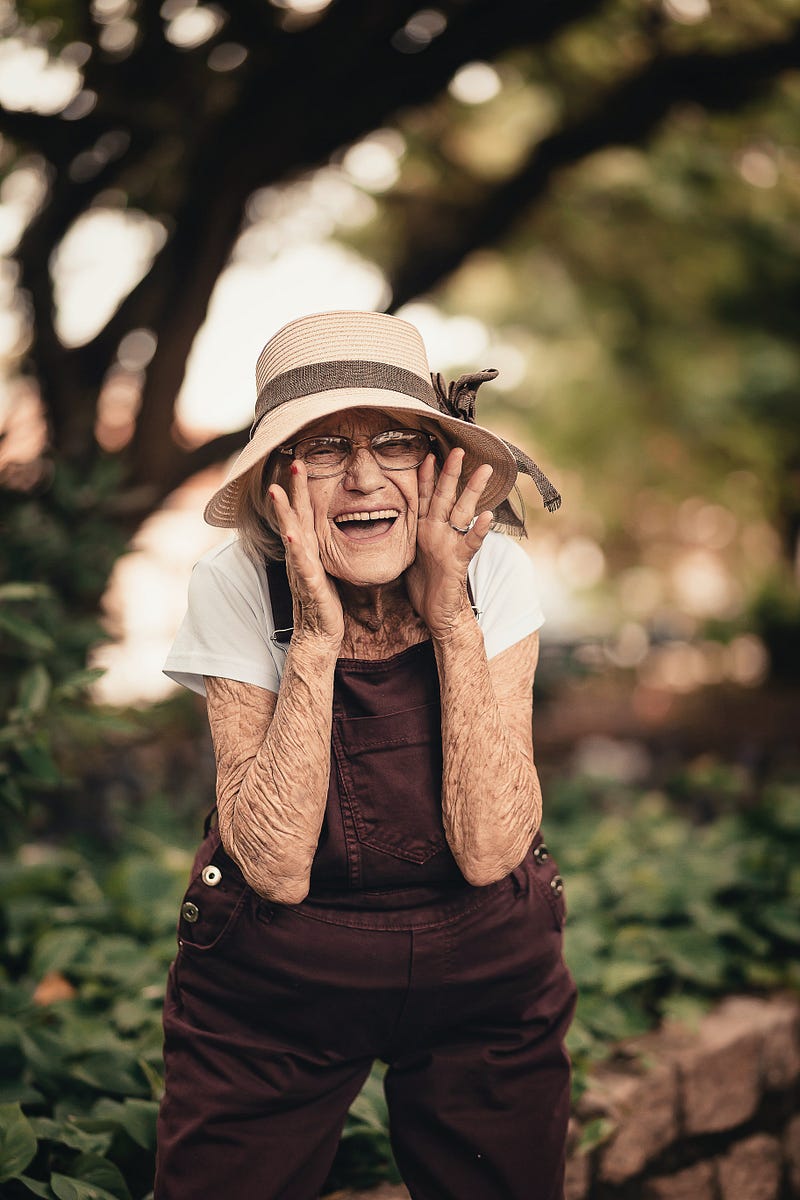
I’m writing a book now about “my old ladies” — women in their 90s and beyond who have, by their good example, made my own later years happier and more hopeful.
I started this quest in 1986, accidentally and in spite of my own unconscious ageist stereotypes. I was 43. A successful journalist by then and curious about other forms of writing, I enrolled in a fiction class at the New School.
Because I was a freelancer who could schedule her own time, I signed up for the afternoon section.
Oh, no! A roomful of old people, I thought to myself as I entered the classroom a few weeks later.
I’m not proud of that moment. I was a product of that time — a Baby Boomer wannabee (born 3 years too early but there in spirit nonetheless). We were the young whippersnappers who changed the culture and vowed never to trust anyone over 30.
Eventually, ageism begins to hit home.
Again, not proud, but… I didn’t see age as a barrier, nor did I see discrimination based on age, until my mid-6o’s when I first felt what Landon Jones once described as “the breath of old age” on my neck.
In 2005, I am 62. I submit a first draft of “The Third Homes Comes Within Reach” to the Home section of The New York Times. My editor, a woman I’ve never worked with, tells me it’s great except the interviewees are “geriatric.” I explain the obvious: People who own multiple homes are either very rich and childless or over sixty.
The editor, no spring chicken herself, urges me to keep looking anyway. “The Times is trying to appeal to younger readers.”
Eventually, I find a gay couple, guys in their forties, who “shuttle between their high-rise apartment in the Riverdale section of the Bronx, their painstakingly restored Victorian in Park Slope, Brooklyn, and, in the summer, their house in the Fire Island Pines.” Naturally, they have no kids.
That same year, I do a ten-minute television spot for the Hallmark Channel on disappointment. After the shoot, the producer calls me aside to tell me the spot was “great” and that she’d love me to come back to hold forth on another topic.
Then she adds, “But next time, use some neck cream or wear a turtleneck.”
When I hit my seventies, my awareness deepens. All around me contemporaries are moaning. Denying. Having procedures. Vowing never to get into a bathing suit.
I am a proactive person. I probably should thank my mother for that. Her response, whenever I complained about something being difficult, was, “there’s no such thing as can’t.”
I don’t want to dread aging. It means I’m still alive. Besides, it will keep happening without my permission — no matter how I feel about it.
As ageism rears its ugly head in my own life, I start paying attention to what I learned from some of the much-older women I’d already begun to sweep into my social sphere:
Ruth, who often reminded me, “It’s not what happens to you in life that matters; it’s how you deal with it.” Aging happens to all of us…if we’re lucky.
Henrietta, one of my classmates at the New School, who was legally blind and disabled but continued to bop around the City to take classes. Neither age nor disability stopped her.
Zelda, who was still playing tennis at 99 and kept meeting new people because everyone else was dying off. She lived to almost 105.
Sylvia, whose social calendar was crammed until the day died. There wasn’t a new restaurant she didn’t want to try, an opening she didn’t want to attend.
Marge, who is still sharing stock tips at 104.
In a conversation about these much-older female friends, an acquaintance asks, “Isn’t it boring to hang out with old ladies?”
She reflexively assumes that my old ladies are repetitive or achingly self-involved — or worst, they can’t hear, talk too loud, and are “out of it.” Granted, some older people are afflicted with physical, mental, and/or emotional problems. But so are some younger ones.
Many of my contemporaries warn me when they hear I’m writing about them: “Don’t call them old ladies. No one wants to read that book?”
Why not? Shame on us, especially those who see ourselves as “liberal.” We unquestioningly support women, people of color, and other minorities. We allow for alternate sexualities and non-binary gender. But we don’t give the same respect and freedom to old people.
We somehow overlook the one group we’ll all eventually be part of… if we’re lucky.
It’s time we —gave “old” a new image.
You don’t believe me? Ask Ashton Applewhite
She’s one of the most vocal and engaging of the anti-ageism activists. Her 2017 TED talk should be required viewing for all ages.
Even if you think you’re already aware of ageist slurs and myths, give yourself 11 minutes and 28 seconds to be sure. And then share this talk with everyone you know.
Ageism — the “othering” of old people — affects all of us. As Applewhite stresses:
The strange thing about ageism: that other is us. Ageism feeds on denial — our reluctance to acknowledge that we are going to become that older person. It’s denial when we try to pass for younger or when we believe in anti-aging products, or when we feel like our bodies are betraying us, simply because they are changing. Why on earth do we stop celebrating the ability to adapt and grow as we move through life? Why should aging well mean struggling to look and move like younger versions of ourselves? It’s embarrassing to be called out as older until we quit being embarrassed about it, and it’s not healthy to go through life dreading our futures. The sooner we get off this hamster wheel of age denial, the better off we are.
Protecting the Next Generation
In June of 2021, my youngest grandson and I leave the football field where his older brother’s high school graduation was held. Hugs, pictures, smiles. We’ve had it.
Now, we — a 77-year-old and a 12-year-old — are waiting in the car for the rest of the family to say their goodbyes. I’m in the driver’s seat, Charlie directly behind me. It’s extremely hot, so we leave both doors open.
A guy approaches the car next to us and says to his wife — in a voice loud enough for everyone in the parking lot to hear:
“We can get out of here as soon as that old bag closes her door!”
My first reaction is to channel Robert DeNiro in Taxi Driver, “You talking to me?
But my wise inner old lady says, Shut up — he could have a gun.
I’d like to say to that yahoo, Watch it, buddy. Someday some asshole will tell you, “Move it, you old geezer!”
I don’t. Instead, I talk to myself. What kind of role model do you want to be, Minna?
It is important to point out that “Minna,” is my chosen grandmother name. Still unconsciously ageist at 59, I decided on it when my daughter was pregnant with her first. Like many of my ever-youthful peers, being called “Grandma” didn’t sit right.
I shoot a dirty look in the yahoo’s direction and use my energies instead to discuss ageism with Charlie. Hopefully, when he’s in his forties and meets a much-older person, his reaction will be to connect, not criticize or condemn.
But we all have a lot of work to do between now and then.


