
The Joy of Friends Who Go Way Back
3 keys to reaping the surprising and special rewards of relationships that illuminate your past.

Nine years ago, when my old friend Sylvia Mackey heard that I was throwing myself a birthday soirée in Paris, she promised to be there. I don’t turn 70 every day and Sylvia knows I throw a good party. Also, she’s been a flight attendant since 2001 and flies for free.
Her entrance that evening was pure Sylvia. Translation: spectacular from the ground up. Thigh-high stiletto boots barely disappearing under a leather mini-skirt and a chic black top, punctuated by a plunging neckline and gold hoops dangling next to her long, graceful neck.
Oh, Sylvia, I thought, you’re still turning heads. I was proud to be her friend.(The only snapshot of that moment is in my mind, but the photo above captures Sylvia’s “spectacularity.”)
That was almost ten years ago. Sylvia is now pushing 82. She’s still flying, still wearing stilettos, still gracefully gorgeous. And we’re still friends.
Sylvia and I recently recorded a podcast for Crow’s Feet, in which I interview her about her marriage to the legendary NFL great John Mackey and how their life changed when he was diagnosed with temporal frontal lobe dementia. Sylvia rose to the challenge in creative and courageous ways.
But the purpose of this piece is not merely to promote the podcast. It is to highlight the unique benefits of friendships that span several decades.
Sylvia and I, for example…
We met at Syracuse University in 1961. That September, I was a freshman and she a junior transfer student. We pledged the same sorority — a group that Sylvia still refers to as “sharp.”
The “houses“ then were either Jewish or Christian, none of color. Sylvia was the first Black coed accepted by a sorority.
Sylvia was humble, kind, and friendly toward everyone. We all knew she was special — and not because of her skin color. She was smart and beautiful, knew how to put herself together, and it didn’t hurt that she was John Mackey’s girlfriend. He was already football royalty.
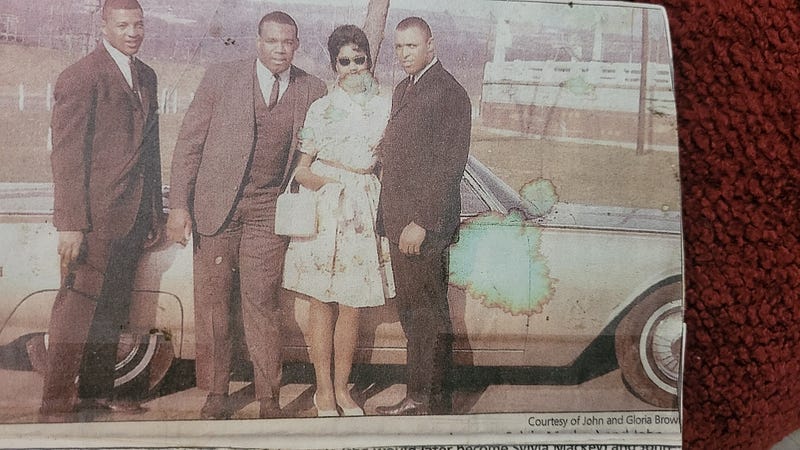
After graduation, John morphed into an NFL legend, and Sylvia quietly succeeded at every role she took on: football wife, linguist, mother, and fashion model.
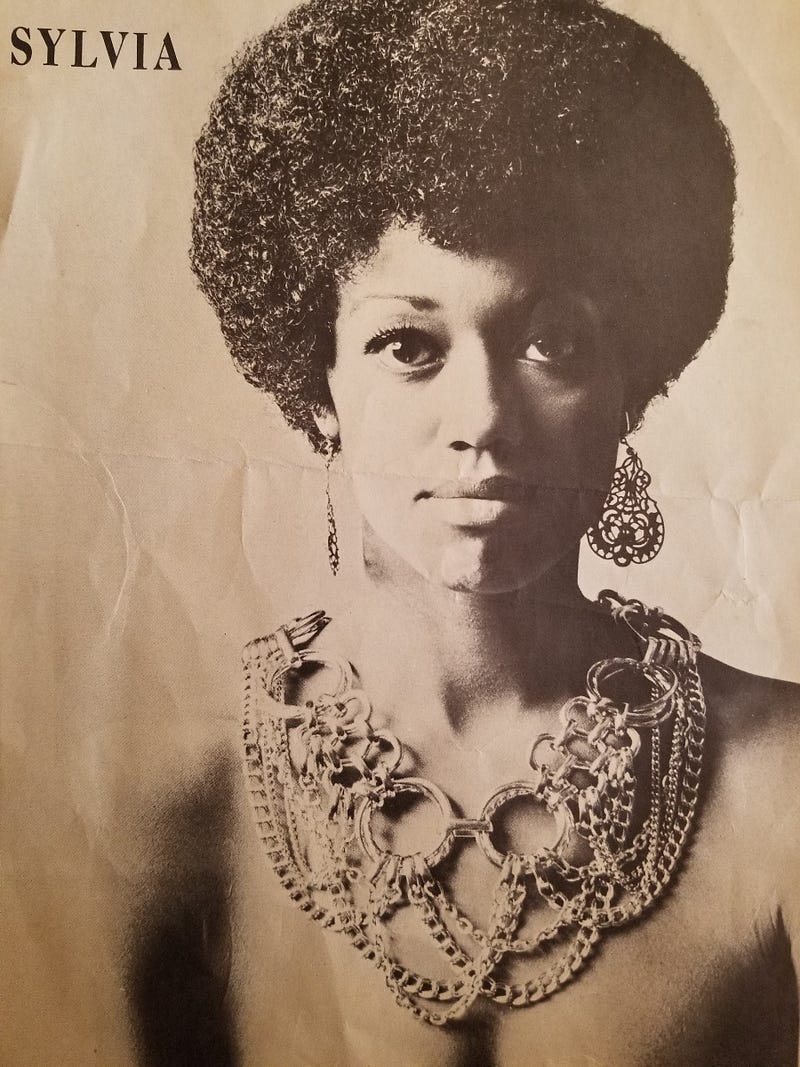
After 10 seasons on the field, John retired, and the Mackeys moved to the West Coast. He became a successful sports agent and an advocate for the players, and Sylvia continued to turn heads.
Except for the occasional sorority reunion, we rarely saw each other in person. In 1999, when a book project brought me out to Los Angeles, we met for dinner. Another time, the three of us had lunch in Miami. John’s disease had progressed by then. Otherwise, the years slipped by. Life got in the way.
And yet, we somehow have been in each other’s lives for sixty years. Yes, it has been sporadic, but one of us always remembers the other and makes that hi-how-are-you call. This alone puts our relationship into a special category.
Friends Who Go Way Back
Friends who go way back don’t have to be front and center in your life all the time or even most of the time. But they are an important part of what psychologist Toni Antonucci calls your “social convoy” — a cavalcade of the relationships you collect over your lifetime.
Just as a toddler feels safe and is willing to venture across the room if Mom or another trusted caretaker is nearby, adults get that kind of support and reassurance from their social convoys.
Social convoys keep moving. Some members travel with you for almost the entire journey. Others ride along for a while and then take an off-ramp. Still others disappear into the rearview mirror and might later reappear.
As we age, our social convoys become increasingly vital. The road changes; the scenery shifts, seasons come and go, unexpected storms threaten the horizon. You end up in new and unfamiliar territory. Fortunately, at least some of your social convoy is there with you.
If you’re lucky, your convoy include relationships that span several decades — perhaps going as far back as grade school or college. These are the people who have traveled through multiple chapters of your life. They represent the past and are in a class by themselves.
I credit this insight to another sorority sister, Gail, who was also my roommate for three years. In 2006, I was telling her about the book I’d just started researching, which was meant to shed light on the importance of “consequential strangers” — relations outside our more intimate social circles of family and close friends.
I listed several examples — neighbors, coworkers, gym buddies and fellow churchgoers — and then, because we have college in common, I added, “Most of the people we knew at Syracuse are consequential strangers,”
Gail interrupted, clearly insulted. “I can never be your consequential stranger. I knew your parents!”
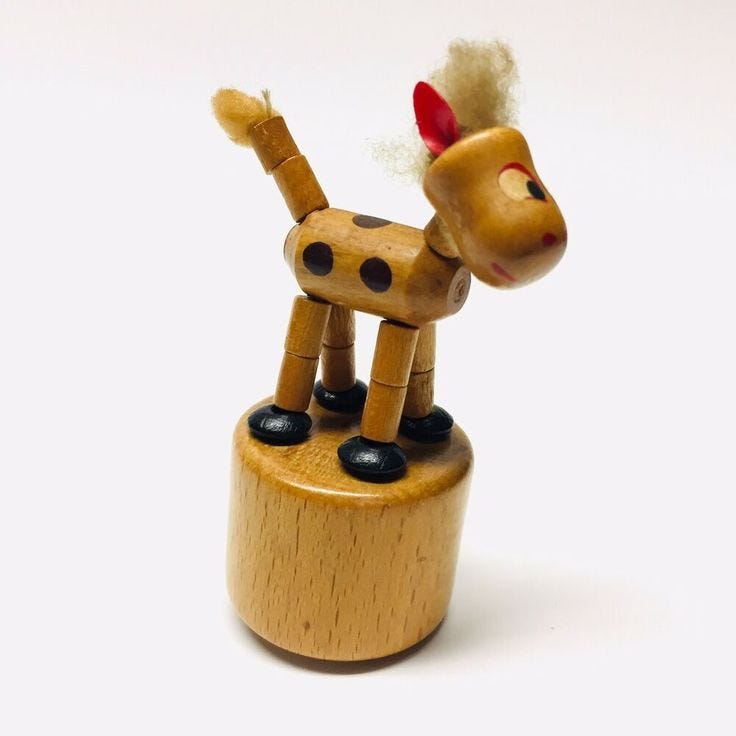
She was right. Gail knew the younger me — and vice-versa. The summer after our sophomore year, she had open heart surgery, and every day I brought a different collapsible wooden push animal to her hospital room to cheer her up. She still has them. Even though our paths diverged after college, she will always be a friend.
(I ultimately defined consequential strangers in the book using Supreme Court Justice Clarkson Potter’s yardstick for pornography: “I know it when I see it!”)
The truth is, what you call a relationship or how you categorize it is beside the point. Especially with a friend who goes way back, even if you rarely think about them and only reconnect every now and then, they will always be part of a long-ago time and place that played a key role in shaping both of you.
3 Keys to Nurturing Ties from the Past
The bottom line: It’s a good idea to have at least a few people in your life In who go way back. They knew you when. But it doesn’t just happen.
Sometimes, old friends die — nothing we can do about the fickle finger of fate. And sometimes, time-worn relationships peter out for any number of reasons. You might live too far away. You might be less interested now in what that person offers. You might feel like you’re the only one giving or keeping up the relationship. You might not like the person’s politics or how she talks to waiters. Or you might have an irreparable rift.
Some of those scenarios are unavoidable; all are regrettable. I have a handful of old relations I no longer want to see, colleagues who let me down or simply stopped calling. Failed relationships bring me no pleasure. In contrast, the long-term bonds I’ve managed to nurture over time bring me great joy.
Doesn’t it make sense to try?
1. Make the time.
We’re all soooooo busy. But it only takes minutes to meaningfully reconnect — eight minutes, according to a New York Times article which quotes Harvard Medical School professor of psychiatry, Dr. Bob Waldinger:
“[We] tend to think that in some unspecified future, we’ll have a ‘time surplus,’ where we’ll be able to connect with old friends.”
It ain’t gonna happen! The advice: pick up the phone now. Catch up, ask questions, share your news. Relationships are fueled by caring and conversation. Moments together matter and add up, whenever and however they occur.
2. Remember what’s so precious about those who go way back.
Recalling the past feels good and is good for you. Reminiscence happens only in relationships that have a history. When I speak to Sylvia or Gail or any of my sorority sisters, we share memories and joke about common experiences. It thickens our connection — and, best of all, we laugh. Vot could be bad?
Who but my sorority sisters would appreciate stories about Aunt Edna, our plump and proper Southern housemother who warned us to “close our legs” and “act like ladies”? I doubt if anyone left on earth still talks about “Dredna,” as we called her behind her back. She was openly racist (probably antisimetic, too, but Jews paid her salary). The year Sylvia got in, Aunt Edna let us know that she would not wash Sylvia’s sheets.
There’s nothing like the glue of shared past experience. It’s why veterans come alive with their war buddies. Arguably, we all do battle in our daily lives and have moments of uncertainty and fear throughout life. When a former classmate remembers the day you cried because your parents split up or the time Mrs. Grundy mocked you in gym class, it is reassuring to know that another human being was there.
3. Allow for change.
As much as it warms us to look back, remember to also look forward with old friends. Give them a chance to grow. We all possess multiple selves, forged in the various roles we assume.
While interviewing 81-year-old Sylvia, I could still see the young coed who loved to laugh and dance, but other more recent identities came through as well: activist, mental health advocate, widow going on without the love of her life. I’m happy for the richer, broader woman Sylvia has become. I love that she isn’t “ready” to retire and that she’s still looking forward to new adventures. It gives me hope. If she can grow and change and rise to meet life’s challenges head-on, I can, too!
Hear Sylvia in her own words on the Crow’s Feet podcast
If you like reading me…
Subscribe to my Medium articles — you’ll get an email when I publish. If you’re not already a member, join Medium with my referral link. (Full disclosure: I earn a whopping $2.36 (or so) monthly if you do!)
Follow me on social media via LinkTree