
SUSTAINABLE FUTURE
A Wild Idea: Stop Cleaning Up
We can leave the packaging at the store and have a much bigger impact
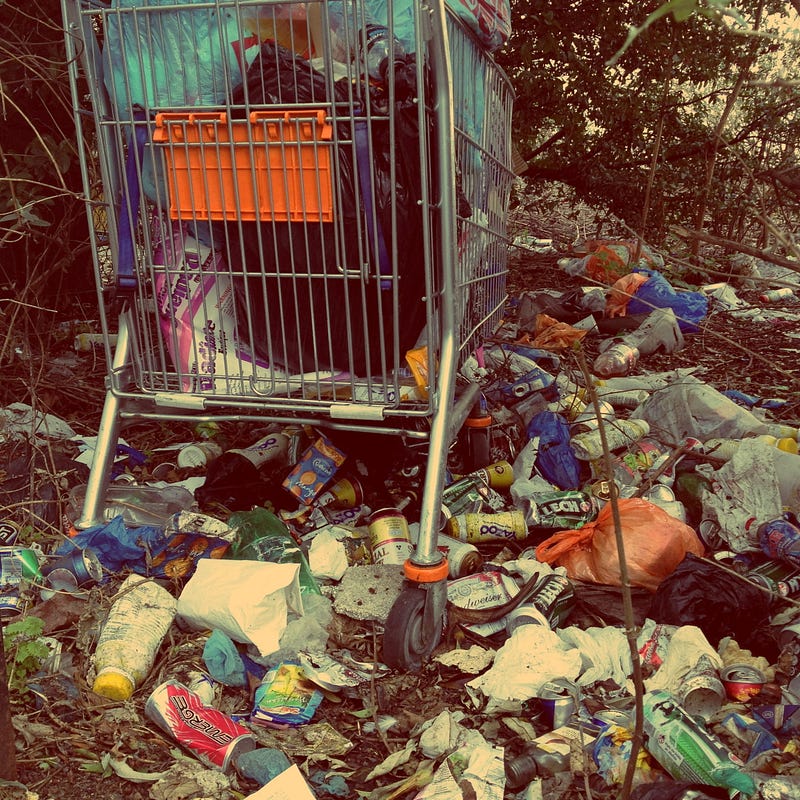
Hey girls and guys, a wild idea came into my head and I would like some opinions. I’ve been writing about upstream solutions for a while now. And I notice that companies and governments are more and more blaming us for the mess. Climate change, the waste in our rivers, etc.
You and I are not trying hard enough, they say.
Well, if I know my readers in Climate Conscious well enough, we are trying all the time. We are getting ill just feeling the great mess. We are trying to convince others to care too.
But how can we make enough difference?
And then this wild idea to leave the packaging at the store popped into my brain. Thanks, Gaia, for showing me the way… Tell me what you think about this idea in the comments.
Personal Responsibility
First a few words on personal responsibility. As we all know, changing our broken world can only happen when many people in our society care about the mess and take responsibility to solve it. We as co-creators, governments, and companies should all apply care and responsibility to our actions.
So, caring for your own environment is as important as my wild idea. If we don’t care about the sh*tty plastics in our own river next door, who will?
A few years ago, I lived anti-squatting in a deserted holiday village. There were around 100 holiday-houses in many hectares of forest. And we were 10 people living in 8 houses on the premises.
There was beautiful birdsong to be heard and I walked around quite a lot. Connecting to the trees and trying to lighten a bit of the sadness around. It was a beautiful place, in a way, but I could feel how it had been neglected.
There were immense amounts of trash lying around.
Once a week, I took my gloves and a trash bag and cleaned up. It was a Sisyphus job. There was so much of it! It was horrible! And I always returned to my little corner immensely sad when I had done it. But there was a feeling of accomplishment as well. I noticed that the trees felt a little lighter and the soil a little less sad.
For me, it was important to do it just once a week.
The rest of the week, I walked with a spring in my step. Ignoring the trash. Singing with the birds. And smelling the great smells of the forest after a cleansing downpour of rain.
There’s a time for everything. Joy and sadness. And this is how I personally managed it.
The other anti-squatters often told me I was mad. Why clean up? We were going to be here temporarily anyway. The heaps of trash were too big. And I always told them: “I live here now. And now is all that counts. If I don’t care, who will?”
Corporate Responsibility
But of course, we cannot keep cleaning up forever. Something has to change in the system. We cannot spend so much of our valuable time cleaning up the mess. People like you and I need this time to just feel joy in connecting to nature.
Well, the world is changing, although it goes mostly unnoticed in the regular media. They don’t observe closely enough. They see just the old ways and shout how it’s wrong and how we should fix it.
Hmm…
What if fixing it isn’t the way to go? What if cleaning up and telling people to recycle only cause more problems?
National Geographic reports that a whopping 91% of plastics are not being recycled and much of it is becoming trash and litter.
And if we keep cleaning up, the corporates don’t feel the responsibility to innovate on their packaging and their products’ lifecycles. They just shout harder: clean it up, clean it up!
The heaps of trash get bigger and bigger. And our souls get sadder and sadder.
I told you there’s hope. Wise hope. Our group of international people who are understanding the problems and solutions deeply and acting upon the great transition, is growing fast now. They are people in business, governments, and science. And we are finding the solutions to align the economy, ecology, and the human spirit.
We need to put our energy most of all into building the new world. Exploring the new business models that take responsibility for all that a company creates. Waste and pollution included. Designing the new materials that will feed the soil and the oceans and give back to nature.
We have to stop fixing the broken record. See the connections between all the different aspects of the mess we’re in. And think and do differently for a radical future. We need to look upstream and tackle the problems where they started in the first place.
Companies and governments are made by people too. We can change. They can change. We know about the why, so now we have to learn about how and what and inspire people to start doing it.
An Act of Disobedience
Okay, so what is the wild idea?
We have to show the companies and governments that we are sick and tired of cleaning up the packaging that’s lying around everywhere. And we need to tell them that it’s their responsibility to give us less packaging. To redesign. To innovate. To change their business models.
What if we collectively unpack all of the goods that we buy in the store and leave the packaging there?
Leave it where it belongs. In the supply chain. And if they don’t like it, tell them they should go to their supplier to ask for less and different packaging. Go upstream in the supply chain to make the change.
Let their suppliers design the solution. Let the producers and distributors of products take responsibility for all things they create with their products.
We can give this collective unpacking its well-deserved attention by giving it a cool name and #hashtag. Adopting the methods of guerilla marketing and humor. Loads of humor. And teach about a regenerative future at the same time.
Invitation for Comments
Well, what do you think? Are you up for it?
Of course, we’re not all made for activism. Some people like to make changes and not attract too much attention to themselves. I know that there are many young activists out there. But there are other ways as well.
I hope we see now that just recycling is not good enough. So we can buy locally at the market or directly from regenerative farmers without packaging. Buy in a packaging-free local shop. Bring our own packaging. Buy less. Period. Make our lives simple with less stuff.
It’s up to you to choose the upstream solutions that work for you.
If you want to connect, you can find me in our food forest or via LinkedIn, Facebook, Twitter, Instagram, and my website.
© Désirée Driesenaar


