
Abundant Future
Growing High-Quality Food for a Future without Hunger
Food is the bridge between natural systems and human systems. Regenerative farming and healthy, living soil will provide abundance.
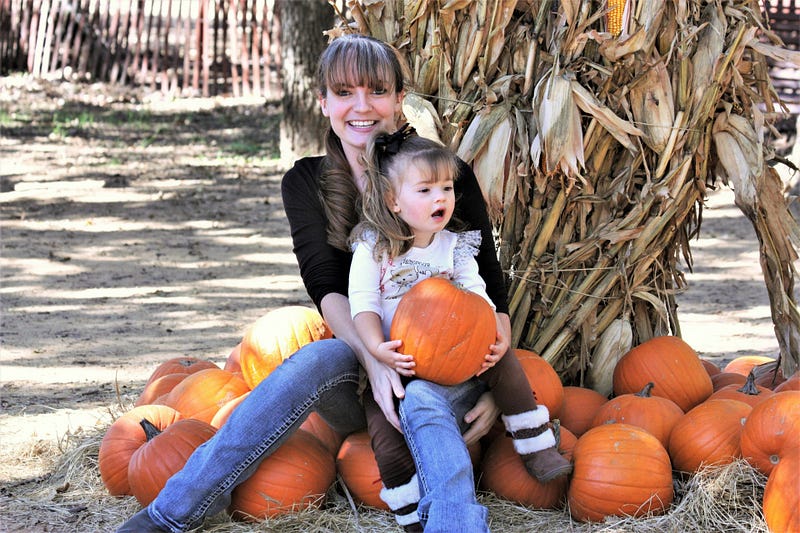
Food will be at the heart of the transition towards a regenerative future. It’s the field where natural systems literally meet human systems.
Food is the bridge.
It is also the field where nature’s abundance can be introduced most logically and can be understood best by all of us.
So let’s embrace our healthy food. Let’s embrace our regenerative farmers. Let’s connect to them by buying local, seasonal goodies for our bodies to thrive on and enjoy.
Regenerative farming is in the list of professions I wrote about. In this story, it occupied #2 but its rightful place might be #1, now that I think about it again…
But what is regenerative farming? Do you need a university degree for it? Are there any successful business models? And can any farmer transition to a healthy, living soil?
Those are the questions I will answer here. And, as always, feel free to comment and discuss.
Let me start by repeating my motto for my new readers in the publication Activate the Future.
Let’s restore ecosystems and learn as humans to live within the boundaries of our planet
Not so easy but doable when we unleash the abundance of nature, embrace systemic solutions, use ecological intensification in our business models, and transition to an aware society in which all species are important.
Healthy, living soil is a systemic solution to many world problems. Sequestering carbon in the soil, restoring water cycles, cooling the climate with forests. Regenerative farming can be a big part of the solution.
What is regenerative farming?
In the unleashing of nature’s abundance, regenerative agriculture will play a huge role. What is it? There are many methods, but they all have one thing in common: they put healthy, living soil first.
Here you can find a short insight into different styles of regenerative agriculture. Agroecology, agroforestry, silvopasture, just to name a few.
One that is not in this list and definitely interesting to know about is the long practice of biodynamic farming. There are already lots of best practices around in many different countries.
And of course, there’s permaculture. This short interview with Bill Mollison and David Holmgren nails it for me.
“A sustainable system is any system, that in its lifetime, can produce more energy than it takes to establish and maintain it” — Bill Mollison
Bill Mollison makes many more interesting remarks in this video:
- “Pollution is a product of work”
- “Work is a result of not supplying every component of your system with its needs”
- “Pollution is an unused resource”
- “When you design well, nature takes hold of what you’ve done and does it better”
Permaculture is often just seen as hip and natural gardening. But it is more, much more! It is ‘systemic design’ applied to food and human living conditions. Here, the understanding of natural systems can start for all of us.
Do you need a university degree for it?
When I shared the story about professions in the LinkedIn group ‘Sustainable Foods Network’, Rich Bradbury, ranch owner focused on grass-fed and regenerative ranchlands, gave a valuable comment.
He said:
“Funny thing I have noticed about regenerative food jobs. They never go to people in agriculture. They usually only go to people that graduate from top tier universities.”
He urged me to add some practical knowledge to regenerative agriculture. His comment triggered me. Thanks, Rich!
I’ve included some practical knowledge in this story.
The farmers who nail it, have two important virtues that help them: common sense and curiosity. They experiment, they observe the outcomes, they learn and do it better next time.
I’m convinced that any farmer can make the shift. They understand the land, they are connected to their animals and plants in an intrinsic way. As soon as they embrace the thought that they want to do things differently, the first step is taken. The ball will start rolling, in my experience.
However, let’s not forget that they are stuck in a system that doesn’t support them at all. I’ve seen the transition of a big scale regular farmer to become a biodiverse vegetable grower from up close. That was, and still is, a tough job! And I applaud it big time!!!
So, I also want to urge governments to support the farmers with transition money and I want to urge consumers to spend their money where their hearts are. We need to shorten the chains, make sure more money goes to the farmers instead of to all the intermediates…
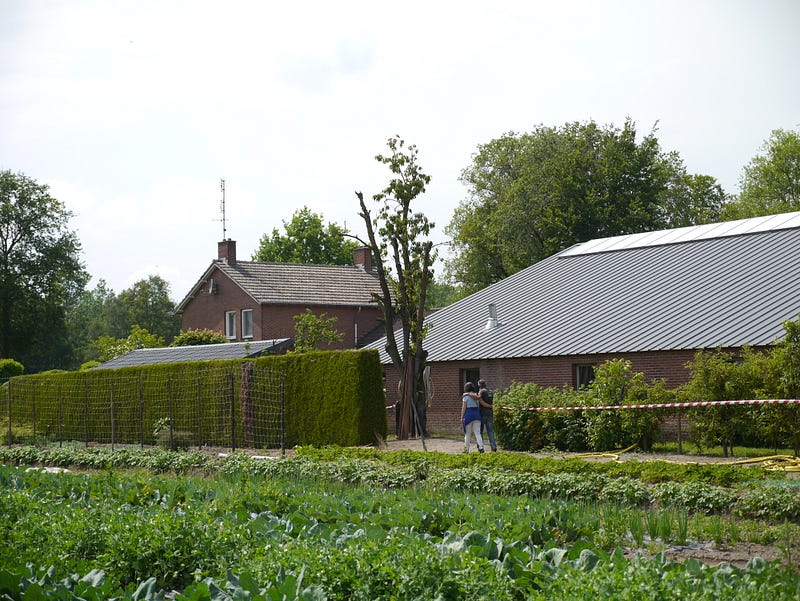
How to transition to regenerative farming
Of course, a little theory can help a lot. I don’t think you have to go to university though. Regenerative farming is using the laws of nature skillfully. And farmers have a natural instinct for that.
To any farmer who wants to transition, I want to say: use your intuitive connection to your land, combined with your observation skills to make progress.
One step at a time. One part of your land at a time.
Many people think above-the-ground-biodiversity is key. It is. But it’s not the first step to consider. Biodiversity needs healthy, living soil to stay alive.
So working on the soil always comes first.
Here are some of the steps that are being used in The Netherlands to help regular farmers transition to nature inclusive farming.
- Solve the compaction of your soil. And prevent it from compacting again. The main cause here is heavy tractors. Solutions can vary from making clear paths and staying off the cropland, to manual harvest (e.g. by customers in Community Supported Agriculture), to robots and drones
- Solve your water issues, restore the water cycles. The solutions here are very dependent on the local situation: groundwater level, rain, erosion, the gradient of the land, etc.
- Work on a healthy pH and chemical balance of your soil. The right pH balance is good for soil life and absorption of nutrients
- Balanced fertilizer application. Use it where it’s needed on the basis of your plants’ needs. Instead of just applying what’s prescribed and maximum allowed
- Adding lots of organic matter. We want to enhance the biodiversity in the soil (micro-organisms, fungi, worms, and other creepy crawlies), so we have to feed soil life with organic matter. Practical ways of doing this are spreading compost, mulching, planting in-between-crops, such as nitrogen-fixers
- Reduced tillage. There are lots of micro-organisms in the soil that you don’t want to expose to air. And you also don’t want to break the fungi-mycelium-threads in the soil. Go as much as possible towards shallow plowing or no plowing
- Look broader than just your own plot of land. Include what might be beneficial in your environment in your system
- Use natural enemies for pest control. Plant diverse flowers, herbs, hedges around your fields. Make a food forest edge with multiple layers. Use bird nest boxes, beehives, and other shelters for restoring balance
- Enhance above-the-soil-biodiversity. Diversify your crops by planting in strips. Choose crops that go well together, and add to your business model with their time of growth or rest materials. Look for solutions in the larger environment.
The thing with biodiversity is, you have to maintain it. You can stimulate micro-organisms, fungi, and creepy crawlies in the soil but they will be killed in no time if you don’t do something with the earlier steps.
They will be crushed. Smothered by big, plowing tractors…
Not One Road to Success
What I really like about our times, is that I see more and more people realizing that there’s not just one way to transition our world. We need variety. We need a (bio)diversity of solutions.
In the Netherlands, where I live, regenerative farmers from different schools of thought have joined forces in Caring Farmers. Their common goal is nature-inclusive, circular farming in 2030. They admit they don’t know how to get there (yet). But since the start in 2019, they are well underway.
The founders have different approaches:
- Annette Rande, Keizersrande: biodynamic farming combined with river restoration
- Ruud Zanders, Kipster: large scale egg production with a heart for the chicken. Combined with animal feed made from local rest streams, and solar energy
- Geert van der Veer, Herenboeren: a Community Supported Agriculture (CSA) model in which customers are owners and employ a professional farmer to produce their meat and veg in a biodiverse system
I applaud the diversity here. These are people with a heart for people, nature, animals, and food. They have different approaches to synergy and scale. But they use their professionalism to make their own model work.
Towards government and consumers, they join forces. They shorten supply chains. Finding ways how to ethically transition our whole food supply system…
Business tips for regenerative farmers
Learning from nature will help with creating regenerative business models as well. The key is to use the synergy of your products in your business model and make sure all of your waste is used to create value. Not just money, per se. Clean air, clean water, and healthy soil are just as valuable.
Some ideas for the transition toward an agroecological business:
- Transition just parts of your land first
- Use ecological intensification to create more income streams. The organic waste from your crops can be used for producing an intermediate product, such as mushrooms or insects. I wrote this story about it:
- After you have produced e.g. mushrooms, you can use the substrate again to feed the soil. So instead of using the organic matter immediately on the land, you can create some income stream with it first before you make compost
- If you want to stick to one product, you can collaborate with other entrepreneurs to create other synergy products and share the profits fairly
- Collaboration can really bring you far. Choose your partners wisely though. Make diverse groups with lots of different expertise fields and make sure your values in life match
- Cross-selling to your customers becomes easier this way. And you can help each other with branding as well. Make sure your customers recognize the separate companies in your group and are attracted to them for different products
Examples of synergy-based farming businesses
I’m so happy to see that many farmers are on the path of regenerative business models, making a living this way. Diversifying, experimenting, and making it happen.
It’s not an easy journey. Especially not in the old, reductionist, economic system. But the farmers I talk to, find it a very rewarding journey.
It has become a way of life.
1. Synergy of Farm, Beer Brewery and Bakery
In this story, I elaborate on the business model of the Montana Beer Brewery. It’s a great model in which the farmers, the beer brewery, and the bakery work together to create a multiplier effect in the business model.
In the Netherlands, this model is adopted by the independent beer brewer Gulpener, collaborating with farmers and the bakery De Bisschopsmolen in Maastricht.
2. Synergy of Tea, Peppers, and a Game Reserve in India
In the Blue Economy network, there are many examples of clusters innovating their business models with synergy. One very interesting one is Assam in India.
The tea plantation is located at the edge of Kaziranga, a reserved forest and World Heritage Site. In order to be a bridge between the natural world and the human world, Hathikuli Organics has transformed the tea plantation in 2007.
They have gone organic and diversified their business model in the process. They now combine organic tea with pepper vines, add water ponds, and fish farming in the equation and create many jobs this way.
And whoever has a job, will not go poaching. Win-win-win…
5. Synergy of Avocado, Guacamole and Baking Bread
Synergy business models always look at what’s available and use it all as resources for the next value creation.

In South Africa, avocado farmers and guacamole makers have joined forces with bakeries. The waste stream of pits is transformed into healthy flour and bread. Children in the slums have breakfasts again because of it.
Conclusion
Well, now we know how food can be the very necessary bridge between natural systems and human systems. A few steps are key:
- We need healthy, living soil as a basis for all human systems
- We need enthusiastic farmers who observe, learn and transition
- We need business models based on synergy and organic rest streams
- We need to shorten supply chains to make sure the money goes to the farmers instead of the intermediates such as food auctions, supermarkets, and transport companies
- As governments, we need to rethink our economic systems
- As consumers, we need to spend our money where our hearts are
Happy transitioning!
If you want to connect, you can find me on LinkedIn. Or in our food forest, experimenting, observing, and learning from nature…
Thank you, Mike, for adding your wise energy to my words on regenerative farming and food.
Further reading
About ecosystem restoration and unleashing the abundance of nature
About the ReGeneration


