
A Small Molecule for a Healthy Old Brain
By counteracting cellular stress in the brain, the small molecule ISRIB prevents cognitive decline in mice.

Brain says no
For most of us, the winter of old age is a period of unwanted changes. While the extent of those changes is different for each of us — due to, among others, genetics, metabolism, lifestyle, and environment — there are general trends.
Our immune function declines, the risk for cancer increases, muscle disappears or becomes harder to maintain, joints lose flexibility and integrity, memory is spottier than we remember it to be (I think). Even our microbiome, our skin, and body shape change.
But perhaps the scariest changes occur in our brains.
Dementia is a catch-all term that encompasses several conditions correlated with increasing age. These conditions are characterized by a progressive deterioration of cognitive capacities, such as memory and speech. Alzheimer’s disease is the most common cause of dementia, accounting for over half of all cases.
There is no cure. Around fifty million people are affected across the globe, a number that is projected to triple over the coming decades as the demographic group of the elderly is growing quickly.
Those gloomy numbers also imply a massive healthcare cost, not to mention the personal cost for the families of those affected. And while there are genetic risk factors, as well as lifestyle changes that can reduce your risk, the cognitive decline associated with aging (here again, there are individual differences) remains a challenge.
Maybe, though, great help comes in a small package.
Small molecule rescues mice brains
As we age, the integrated stress response is activated in our brains. This response can be triggered by the accumulation of misfolded proteins. Guess what old age can do? Jup, hiccups in protein production and folding.
Once activated, this integrated stress response negatively affects a start signal for DNA translation, meaning less useful proteins are produced. At the same time (nothing is simple in biology), the AFT4 gene is expressed. This gene activates other stress-response genes. The upshot of all this is that the integrated stress response sets into motion processes that, among others, influence brain and immune cells in a way that is correlated with memory and learning difficulties.
A stress response has its uses when it is brief. Prolonged stress, as we all know, is never a good idea. The problem in aging brains is that the integrated stress response remains switched on.
But what if we can make our own off switch?
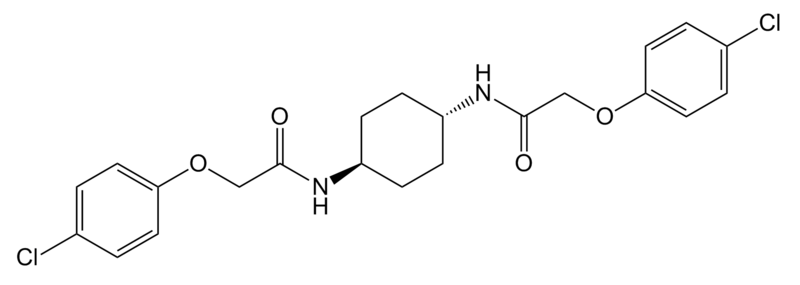
A new study investigates the potential of a small molecule known as ISRIB — integrated stress response inhibitor. As the name suggests, this molecule prevents the on switch from being flipped.
When administered to old mice, ISRIB:
…reverses spatial memory deficits and ameliorates working memory in old mice. At the cellular level in the hippocampus, ISR inhibition i) rescues intrinsic neuronal electrophysiological properties, ii) restores spine density and iii) reduces immune profiles, specifically interferon and T cell-mediated responses.
In contrast with many other studies, the scientists included both male and female mice in their cognitive assessments (but not in identifying the changes in brain and immune cell, that was done only in male mice). Overall the cognitive effects were the same in both female and male mice. Effects which, by the way, lasted at least for three weeks after treatment.
However… Mice brains are not human brains!
To the best of my knowledge, ISRIB is a relatively recent discovery, and it has not yet been tested in humans (although there is definitely interest from pharmaceutical companies). So far, no serious side effects have been observed in mice.
Please don’t go out and buy ISRIB. Right now, there are still too many unknowns with regards to its activity in the human brain. From a recent review by the discoverer of the molecule:
…important to assess whether activation of the different kinases leads to the same translational reprogramming…
…little is known about the nature of the specific proteins whose synthesis is controlled by the ISR during long-term memory formation.
… to develop new and more specific molecules that tune the activity of the ISR up or down and to address diseases for which such drug-like molecules may open therapeutic windows for ISR manipulation in the clinic.
Translation: ISRIB could do different things in different cells, and short-term IRS has its uses.
The research paper concludes:
Aging is an inevitable process for all living creatures, improving our understanding of cellular and molecular processes associated with healthy aging can allow for intervention strategies to modulate cognitive decline. Here we demonstrate that pharmacological attenuation of the ISR can alleviate age-related neuronal and immune changes potentially resetting age-induced cognitive decline.
Potential? Certainly. ISRIB works relatively ‘downstream’ of a pathway that appears to lead to various biochemical manifestations of age in the brain.
Application in humans? To be determined.
In the meantime, take care of your brain.


