
A New Earth Consciousness (NEC) Spiritual Explainer
A Practical Guide to Karma & Awakening to a Better Life
[Updated June 26, 2022] Karma is our conditioned response to the world; Synchronicity is how we master our Karma to live an awakened life.

Non-Medium subscribers can access this full article here.
CONTENTS
[1] Definitions of ‘Karma’ — [1.1] In Sanskrit, Karma means… — [1.2] The 3 Levels of Karma [2] Samskaras (Conditioned Responses) Create Karma — [2.1] Good & Bad Karma [3] ‘Kriya’ is the Opposite of Karma —[3.1] Kriya Releases of Karma — (1) Sleep; (2) Destressing [4] 2 Types of Karma Yoga — [4.1] Doing Karma Yoga — [4.2] Being Karma Yoga [5] The Game of Life — [5.1] Karmic Nudges to Stay on Course — [5.2] Synchronicity as Karma & Kriya [6] Related Resources
As our ego-self, we are forever trying to find a meaning for our existence. If we identify in the least bit as spiritual, then karma is likely one way that we give meaning to events that arise in our lives.
Recently, within 2 days, I came across 3 discussions on karma (see section [6] below). There are no coincidences in a universe where everything connects to everything else. So that must mean it is time to write about karma. 😁
[1] Definitions of ‘Karma’
The most popular definition of karma is “fate or destiny resulting from one’s previous actions” (source).
So it is something we experience because of something we did.
Thus, another very common definition of karma is the universal law of cause-and-effect. That “law” is in many religious and spiritual traditions, as well as in our secular legal systems. It is fundamental to our moral and ethical understanding. “We reap what we sow”.
On a more practical level, karma is described as the consequences of our actions. But we know that life is not always practical. Some consequences are obviously the result of something we did. Others are totally unexpected and seem unrelated to anything we can remember doing. The unexpected ones suggest something more is taking place.
Like most spiritual topics, people debate the importance of karma and how it works endlessly. Whether karma exists as part of reincarnation is an especially controversial topic (see Wikipedia, for example). In addition, there are also many adjectival karmas, including karmic cycles, karmic debts, instant karma, karmic soulmates, family karma, and karmic wounds. Karmic relationships are a huge topic with many articles and opinions found online.
I do not cover most of those topics in this article (which is already long as it is).
I have also heard some spiritual teachers say the “karma is speeding up” at the present stage of human evolution. They say we played the karmic consequences of our actions over many lifetimes in the past. But now, karmic consequences are instantaneous (instant karma) or manifested within a single lifetime. (Those explanations, of course, require a belief in time as something real, which I do not believe.)
[1.1] In Sanskrit, Karma means…
Kr = Action or activity (Sanskrit) Ma = to negate or bind (Sanskrit) Karma = Actions that Bind or Restrict Us
Karma is the binding or limiting effect caused by certain activities and actions that restrict our spiritual evolution and ascension, or otherwise limit our life options and free will.
A karmic act (cause) puts into action a process that returns as a karma experience (effect). It is important to keep in mind that karma includes both a cause (an action) and an effect (a resulting experience).
From a spiritual perspective, there is only the absolute oneness of Source. In nonduality oneness, there is no cause and effect because there is no “time” as we know it. Cause and effect are inseparable, happening at the same time at the same now moment point. (See my article on Radical Nonduality for more on that perspective, which underlies much of Eastern religious philosophy.)
But in our 3rd Dimension experience, we (our ego-self) have the experience of separation. Time is spread out and “we are Source/God/The Absolute having the experience of being a separate individual”.
Karma is how Source creates the sense of separation and individuality from oneness. It does that by binding up or restricting a part of itself so that part cannot see beyond its boundary.
This suggests that the action, the binding, and the subsequent experience are one event, which is true from a nonduality oneness perspective. But we string those 3 steps out on a timeline from our 3rd Dimension (3D) ego-self perspective, which is what most of this article covers.
[1.1.1] Our Individual Karma
At our individual level, we may recognize the binding knots of karma as the stresses, tensions, and traumas we have accumulated in our physical body and nervous system. We accumulated these from a lifetime of using our bodies to interact with the world.
Physical stress, mistreatment, and trauma (as well as occasional care) have shaped the boundaries of what we can and cannot do physically. They have determined much of our physical body’s destiny. (Genetics also play a karmic role, as discussed below.)
We see similar patterns in our mental reality. Over the years, we have adopted beliefs that define our personality and what we can and cannot do psychologically and socially. Some of those might have been conscious adoptions at one time, but eventually, they all become hidden and inaccessible in the deeper layers of our subconscious.
We can also think of those mental karmas as the stories that we have created about who we are, what we can and cannot do, and the limitations and possibilities of our world and reality. Those are all direct reflections of beliefs we have adopted.
The way stresses and beliefs work to shape our present experience and future destiny is through “conditioned responses”, which are how we habitually respond to the world. Also called “memory-based conditioning” and “conditioned beliefs”, we have been forming conditioned responses since our birth into this incarnation, and probably even earlier than that.
And each of us has a complex and unique set of conditioned responses. We hold some in our physical bodies and others are in our conscious and subconscious minds. Together, they make us a distinct personality different from every other personality on our planet.
Our memory-based conditioned responses and beliefs are our karmic knots.

[1.1.2] The Spiritualist’s Dilemma
Our karma enables and sustains our sense of being separate and individual. We are distinct from everyone and everything else, and because of the boundaries that our knots (or conditioned responses) create, we are separate from the oneness of Source/God.
Those knots are part of the fabric of universal spiritual energy that is the basis for all manifest reality. Everything in the universe is a manifestation of spiritual energy.
At one end, the energy is woven and bound into karmic knots that make up our separate and individual ego-self in a physical world. All manifest forms are created that way. At the other end, the energy is the completely open and unconditionally accepting oneness of creation in universal consciousness.
Our actions create the specific make-up of our karmic knots that are reflected in our unique fate and destiny. That is the cause-and-effect way that karma works.
Almost everything we do in our waking physical reality is a karmic action, creating karmic knots, and strengthening our individual identity. Karmic bindings are necessary for us to exist as unique individuals.
The major downside to karmic bindings is they hide our True Self, which is the oneness of Source. But if we had absolutely no karmic knots, we would not exist as an individual entity (or being) on Earth or in any other dimension of reality.
The path of spirituality is to resolve this dilemma — to be both the diversity and the oneness, both the duality and the non-duality. That is what I address in the rest of this article from the perspective of karma and karma yoga.
Note: From a Radical Nonduality (Neo-Advaita) perspective, karma is just a made-up story and we never “do” anything. There is no “doer” that is separate from oneness.
Actions and experiences arise as energy forms (stories) from the universal field of cosmic energy. Karma is one of those energy forms (stories). Our ego-self (which is another energy form that thinks it is separate) attaches certain actions/experiences to itself to create its story and strengthen its sense of separation. Attachments to experiences in that way are karmic actions.
More traditional (not radical) Nonduality (Advaita Vedanta in Hinduism) is the foundation for much of the karma that I discuss in this article (as seen in the 3 videos linked below). Neo-Advaita is a “radical” variation of traditional nonduality. For more, see:
[1.2] The 3 Levels of Karma
The definition above points to 3 generalized levels of karma creation and experiencing:
- Physical Karma — The obvious outer physical reality causes and effects of our actions. — This includes immediate and extended physical, emotional, and spoken responses to our actions from ourselves, other people, and physical objects. When we connect an event, action, or response directly to a specific action, then it is Physical Karma.
- Mental Karma — The less visible mental causes and effects of our thoughts, intentions, attitudes, and how we interpret and judge our actions and their results. — This is how we create subconscious conditioned responses and beliefs (see samskaras below) from our actions. We hold them in our memory and subsequently experience them as karmic responses. When we attribute an event, action, or response to a conscious or subconscious belief we hold, then it is Mental Karma.
- Cosmic Karma — The spiritual intention and energy behind our actions and experiences where the cause is unknown, and we call the experience “fate” or “destiny”. — This is when things happen to us that are meaningful, but inexplicable. We cannot see the cause-and-effect because it comes from the oneness, nonduality, and universal energy of Source/God that is beyond the duality of time and space that we exist in. When we cannot attribute an event to anything we physically or mentally know, then it is Cosmic Karma.
One problem is we use the word “karma” to mean all these without thinking about the distinctions.
Physical Karma connections often are easy to detect, such as when you break a law and you are punished for it. But probably more often they are difficult to detect because the effect is far removed from the cause. Most of our food choices, for example, increase global warming and biodiversity loss.
The sciences (physical and social) can expand our ability to understand the extended affects of our actions. The knowledge they uncover can deepen our awareness of the causes and effects of our actions. But they have their limits as well, due mostly to Mental Karma.
Mental Karma impedes pure science. Because of the limitations of the human mind, the sciences must deal with imperfect data and flawed theories and methods, as well as social and political biases. Those karmic knots are the reason scientific research so often results in contradictory results and findings that are proven false or unreplicable.
The Mental Karma that pervades the so-called “objective sciences” comes from deep within our individual and collective subconscious. It is a major reason so many people distrust science. Why those karmic limitations exist is a mystery of Cosmic Karma.
Cosmic Karma is the most mysterious because it does not fit well into the stories that many people hold of reality and their lives. Cosmic Karma is beyond our human perceptions and scientific understanding and logic. Many attribute it to “God’s will”, their “Soul’s intentions”.
It is also the karma that we attribute to our behavior in other lifetimes or dimensions of reality. Our stories, for example, may include carrying karma over from other lifetimes, which is an attempt to apply logic to our Cosmic Karma.
Some believe the genetic code we are born with is how we carry over the karma of our ancestors. That could be a form of Physical Karma because we can trace the cause to our parents. But our parents do not intentionally select our genetic make-up, they are just a vehicle for its delivery. Its true origin is Cosmic.
As noted in section [1.1] above, from a Radical Nonduality perspective, the oneness operating at the Cosmic Karma level is beyond space and time. In that oneness, everything exists and is happening simultaneously in the same place and time (or moment point). So everything affects everything else simultaneously and instantaneously. Yesterday and tomorrow are now. Every place on Earth and the universe is here. Everything is one thing (form) and no thing (formless), simultaneously.
In that way, past karmas affect present and future experiences. And future karmas equally affect past and present experiences. That is because past, present, and future are one experience happening now.
“Now karma does not operate in terms of cause and effect though it seems to you that it must. Instead, you see, all your acts now affect all of your other reincarnational selves both, in your terms, past and present.” — Seth/Jane Roberts, “The Early Class Sessions, Book 3”, ESP Class Session, May 4, 1971
But of course, no space and no time are hard to grasp from a 3rd Dimension (physical reality) ego-self perspective. So most people instead look to traditional Nondualism (Advaita Vedanta) and Dualism (belief in a god or gods) for spiritual explanations of reality. (See video [6.1] for an example of Advaita Vedanta teachings.)
All 3 levels of karma have a powerful impact on our understanding of the causes and effects of our actions and subsequent experiences.
As mentioned above, in this 3D Earth we incarnated on, we are having a separate experience as an individual. But we are also an aspect of the one universal energy of the universe, which is our True Self.
We are like a single wave that is also inseparable from the ocean, which is the source of all waves. And every action we take ripples out into the ocean/universe of existence.
Our actions ripple Physically/environmentally in the 3rd Dimension, Mentally/emotionally in the 4th Dimension, and Cosmically/spiritually in higher dimensions. Those ripples reach and affect other forms and entities that send ripples back to us at all 3 karmic levels. That is how the cause-and-effect of karma works.
And karma is more than just us humans. Everything in manifest existence is created through a similar binding process. It is how Source contracts universal energy to create manifest reality.
For more on the spiritual dimensions of reality, see:
[2] Samskaras (Conditioned Responses) Create Karma
From the above description, karma may appear bad because it creates a bounded and restricted version of our True Self. But without karma, we (our ego-self) would not exist in any way as an individual entity and experience. So karma is good in that sense.
We (our ego-self) come into our 3D incarnation with a completely open mind that has no restrictions. But the environment we come into immediately imposes restrictions, boundaries, and bindings on us. Limitations come from our physical bodies and our mental capabilities, our parenting experiences, and the society we grow up in.
Many say our subconscious minds remember every experience we have had. These are recorded as samskaras, which are the conditioned patterns of thinking and behaviors we adopt in response to our 3D physical environment. Samskaras are the basis of karma.
“…every karma (action, intent) leaves a samskara (impression, impact, imprint) in the deeper structure of the human mind. — Ian Whicher, cited in Wikipedia
The “you” that is a separate individual is the total of all the environmental experiences you have had since your arrival on our 3D Earth. Examples of the environments you have acted in include your physical body, your mother’s womb, your childhood home, your schools, and beyond.
Each of those contained a set of experiences that are recorded as samskaras in our physical/mental memory. Some, of course, have stronger and deeper karmic effects than others.
This model explains how we form samskaras from our environment in 6 steps:
1. Environment > 2. Emotions & Feelings > 3. Actions & Behaviors > 4. Judgments & Attitudes > 5. Subconscious Beliefs > 6. Samskaras/Conditioned Responses
(1) Our Environment is given by Source/The Universe/The Absolute. It is our Cosmic Karma. There are two ways we can understand that. I put these under Radical Nonduality and The Law of Attraction, but other terms could be used to generalize them.
- Radical Nonduality (aka Neo-Advaita) says our environment and what happens in our environment are just what appears to arise in our experience. Why it arises and where it comes from is beyond our human capacity to know. It is probably just random permutations of universal energy, which we call Source/God/The Absolute, though it is unknowable. — We can, however, create stories about what arises. We select certain aspects and ignore others to create a seemingly logical story that supports our separate and individual ego-self. That ego is an illusion because it is temporary. Our True Self is the infinite and eternal oneness of Source/universal energy. — (This Nonduality description applies to the other 5 steps in the same way. They are all stories created by a temporary ego-self to justify its existence as an apparently separate thing. It is kind of real, but only temporarily.)
- The Law of Attraction says we (as our True Self) create our reality in its entirety — from the smallest rock to the largest planet. So our environment and what happens in it is a mirror of what we want to create at a mostly subconscious level (also called the Law of Mirroring). So we (our deeper soul-self) create our environment and experiences, which our outer ego-self to responds to (judges), creating conditioned memory responses (samskaras) that then become part of our subconscious mind. — It is still a mystery why our deeper soul-self creates the specific environments our outer ego-self experience. But we can create a lot of stories about that.
> (2) Our Emotions & Feelings arise in our ego-self in response to our environment. We based them on the samskaras (or conditioned responses and beliefs) we had previously adopted in similar environments. We mostly hold these in our mind without expressing them outwardly.
- This is the primary level that the Law of Attraction works at to change our environment and experiences. We attempt to change our emotions and deeper mind to change our outer environment.
> (3) Our Actions & Behaviors are also based on the samskaras (conditioned responses) we have adopted. They are a higher energy expression than Emotions & Feelings. Some say because we outwardly express them, Actions & Behaviors can create stronger new samskaras (conditioned behaviors) than those we keep only inside our mind.
- This is the level that traditional Karma Yoga (the path of action) and Bhakti Yoga (the path of devotion) focus on. They emphasize behaviors, such as serving others and worshiping in temples as paths to enlightenment and oneness. Those practices, of course, also have emotional aspects to them. Hatha Yoga (physical exercises) emphasizes action, as well.
> (4) Our Judgments & Attitudes are how we view (judge) the results of our Actions & Behaviors, which then become our beliefs (attitudes). This is where new samskaras (conditioned responses and beliefs) take shape.
- This is the level of Jnana Yoga (the path of the intellect & learning). We learn from spiritual writings and teachings. The goal is to expand our knowledge to change our Judgments & Attitudes (beliefs) to be more life-supporting.
> (5) Our Subconscious Beliefs are the result of our Judgments & Attitudes. It is how our mind attaches to certain samskaras (conditioned responses) and refuses to let them go. We have many beliefs that conflict with one another. But our subconscious beliefs are the core beliefs we hold about who we are as separate and individual ego-personalities.
- All spiritual paths have a concern for managing subconscious beliefs. The practices mentioned above are examples. Western psychoanalysis and neurosciences also focus on this area to improve the human condition.
> (6) Our Samskaras/Conditioned Responses are the final product that gets locked into our energy system as a karma. Some call these Mental Programs. They include memories and beliefs embedded in our physical, mental, emotional, or spiritual/psychic body. They vary in intensity and impact on our life experiences. And they differ in how stuck they are in our ego-self system. Some seem to arise repeatedly, no matter how much we try to stop them.
- Like karma, samskaras may often appear to be a bad thing, but they can be beneficial or completely neutral. Many spiritual practices seek to create positive conditioned responses in our subconscious minds. That does not guarantee awakening or enlightenment, but it puts us in an excellent position to receive them when the time is right.
Our “autopilot monkey mind” is an example of Mental Karma samskara experiences. Samskaras (conditioned responses) cause the constant flow of thoughts that many people experience during their waking hours. In some people, those uncontrollable thoughts can be the source of serious depression and mental illness. For others, they are less severe, but still an annoyance.
Life is about learning to manage our samskaras (conditioned responses) in whatever ways are available to us. They are all recorded in an Akashic Record-like fashion. You express them as your personality. And you experience them as your karma.
For more on the differences between The Law of Attraction and Radical Nonduality, see:
[2.1] Good & Bad Karma
Throughout our lives, we are constantly working with karma. We created new karma as new conditioned responses, which form samskara knots (or memories) in our physical body and mind. (We might also hold them in our cosmic self, though that is difficult to know for sure.)
We also maintain our karma when we express our samskaras (conditioned responses) and when we identify with those expressions. For example, anger, fear, and depression are often uncontrollable samskaras (conditioned responses) that many people say they do not want.
But some people have made those emotions core aspects of their identity. They attach to them and are unwilling to let them go, even if opportunities arise to do so.
Most of our samskaras are more benign than anger, fear, and depression. And many are even beneficial. But the more we attach them to our identity, the more we maintain them in our psyche.
We also believe that some of our karma is good and most of it is bad. Good and bad karmic actions created good and bad samskaras (conditioned responses and beliefs), which result in good and bad karma experienced at some later point in our life. Karma and samskaras also vary in intensity, and they can be neutral — neither good nor bad.
But good and bad are a matter of perspective. What one person considers good, another might consider bad. From the perspective of the oneness of Source, there is no good or bad. There is only energy contracting and expanding through different frequencies, amplitudes, and wavelengths.
Our 3rd Dimensional reality is one of the most separate and dualistic dimensions or planes of existence. We (our ego-selves) make strong judgments about pretty much everything and everyone here on Earth.
But samskaras (conditioned responses) created through personal judgments are almost entirely forms of bad or negative karma. They are judgments made by the seemingly separate individual’s ego-self that is seeking to justify and maintain its separation. They are the story created by the 3rd Dimension.
Judgments say more about the person judging than they say about the person or thing being judged. To truly know and understand the other requires a suspension of judgments. That is how we interact with the world without creating new karma or circulating our old karma (conditioned responses).
Acting without judgment and without accumulating new karma brings our actions closer to recognizing the underlying eternal oneness of everything. We already are that oneness. It is just that our ego-self judgments get in the way of our realizing that.
Because our eternal oneness is always present, we can never really do anything wrong. No matter how hard we try, our True Self will eventually return us to the unity of Source/The Absolute.
To speed up that process, though, many look for ways to rid themselves of what they consider bad karma. Karmic cleansing is a big topic in spiritual circles nowadays. (A simple search on that term will give you many results.)
I am not going into those New Age approaches. But I am going to introduce the concepts of kriya and karma yoga, which are ways of understanding and balancing karma in our life experience and using it for spiritual ascension.
For more on the underlying energy of all creation, see:
[3] ‘Kriya’ is the Opposite of Karma
In Sanskrit, Kriya means…
Kr = Action or activity (Sanskrit) Ya = to manage or administer (Sanskrit) Kriya = Actions that are Managed by The Absolute -or- Actions Supported by Nature
A Kriya is an action or event that is aligned with universal intent, frictionless flow, creative intelligence, and our True Self. When all our actions are in kriya, we are living a life in alignment with the universe (or nature, or God/Source, or our Soul). — (This translation of Kriya comes from Thom Knoles, on YouTube.)
Another definition translates Kriya as:
Kr = Action or karma Ya = the Soul Kriya = Actions that unite us with our Soul
A Kriya is an action or event that unbinds a karmic knot (samskara) in our mind/body system. That action allows for spiritual evolution and ascension toward living is closer alignment with the universe (or nature, or God/Source, or our Soul).
A kriya act or experience is the opposite of a karma act or experience because it specifically releases karmic knots (samskaras) instead of creating or maintaining them.
Kriya Yoga teachings seem to emphasize this second definition. They trace their lineage to Patanjali, an ancient Indian sage whose life story is unknown. Patanjali’s writings propose Kriya Yoga practices to cleanse our body of karma using breathwork (pranayama), study, and devotion to God.
Kundalini Yoga, as taught in the west, is another example of the second definition of kriya. It emphasizes cleansing and enlivening our chakras and the kundalini energy at the base of our spine. Kundalini practitioners use the word kriya in 2 ways:
- A kriya is one or a set of kundalini hatha yoga or pranayama (breathing) exercises. I have heard kundalini yoga teachers define kriya in this context as a “complete action” and a “meditation”. — This would be an Intentional Kriya.
- A kriya is a body spasm or other physical movement that occurs spontaneously in some people when they meditate or are about to fall asleep. — This would be an Unintentional Kriya.
So we can understand kriya from two related perspectives:
- Living in Kriya = living in alignment with the universe
- Experiencing a Kriya = a release of karma to puts us greater alignment with the universe
Both these can occur spontaneously (unintentionally), or they can be goals that we seek through spiritual or physical practices (intentionally).
While both Kriya Yoga and Kundalini Yoga emphasize specific techniques to bring about kriya releases of karmic knots, their goal is to live a life in kriya. It is the first definition, above. Living a life in kriya is also the goal of Karma Yoga, which is covered in section [4] below.
But first, a little more on kriya releases of karmic knots.
[3.1] Kriya Releases of Karma
Freeing our bound karmic energy through intentional or unintentional kriyas seems to be something many people want to do. It is the focus of many spiritual practices, besides Kundalini Yoga and Kriya Yoga. But indeed, all forms of spiritual practice intend to open us up in this way.
Spiritual practices mostly turn us inward — into our bodies and our minds. They turn us away from the outside physical reality that is the source of most of our karmic samskaras and conditioned responses.
[3.1.1] Sleep
Sleep is another inward turn that we all experience every night, even if many of us do not remember our dreams. Dreams are a kriya release of Mental Karma. Deep sleep (no dreams) enables kriya releases of Physical Karma and possibly even Cosmic Karma.
We created karmic samskaras in our body-mind-ego systems through our waking interactions with physical reality. We do not create them when we are asleep or in deep meditation.
Maharishi Mahesh Yogi emphasized the relaxation and stress-releasing benefits of his Transcendental Meditation technique. He encouraged studies of TM that found body and mind states deeper than those of deep sleep. He suggested we release physical and mental stresses at that deep level of relaxation. I always saw stress as another word for karma, even though he never said that. (See a description of my TM practice here.)
Seth/Jane Roberts also pointed to the importance of dreaming to balance our psyche. He/she puts it in very different terminology, however. But the effect is the same in the end:
“You are all portions of your own higher identity, your own multidimensional selves. Now, these selves know how to heal. And, in the dream state they will indeed do so if you allow them to. You carry many of your misconceptions into certain areas of your dream reality and even there you close many doors. Each of you automatically heal yourselves day by day, as you know. Cells die and are born. You renew your bodies every seven years, all without your conscious knowledge. You use the energy of the universe to heal yourselves constantly.” — Seth/Jane Roberts, The Early Class Session, Book 2, ESP class on November 10, 1970
When Seth (and others) talk about our multidimensional selves, that is an alternative way of framing our memory-based conditioned responses. So he is suggesting that our karmic knots know how to heal (or untie) themselves. And they do so to a degree when we sleep.
Our karma/conditioned responses do not entirely unknot, release, or heal themselves in our sleep, because that would put us out of balance with our waking state of consciousness.
[3.1.2] Destressing
Kriya releases are always good. They may feel like a Dark Night of the Soul if a large amount of “destressing” (as TM teachers call it) arises. But even then, we have an innate knowing that such an experience is beneficial for our psychological and spiritual wellbeing.
In the end, we need both karmic bindings and kriya releases to achieve and maintain equanimity and balance in our beloved 3rd Dimension. Karma Yoga is one way of finding that balance.

[4] 2 Types of Karma Yoga
Yoga means “to unite”. It refers to uniting our physical and mental self with The Absolute/Source/God. Karma Yoga is realizing that oneness in how we live and act in our lives.
The Kundalini Yoga examples above showed 2 approaches to kriya releases: intentional and unintentional. Similarly, there are 2 approaches to Karma Yoga practice, which might be called doing yoga practices (with intention) and being yoga (without intention).
Being Karma Yoga is essentially the same as living a living life in kriya. They are both reflections of being in alignment with nature, the universe, and God/Source. (See video [6.3] below for more about that.)
[4.1] Doing Karma Yoga (with intention)
As mentioned in section [2.1] on Good & Bad Karma, we do positive acts intending to receive equally positive support from the universe in the future. We take certain actions:
- To Intentionally Create Good Karmic Knots (conditioned responses) that, when expressed, will give us positive and desired experiences, or
- To Intentionally Induce Kriya Releases of karmic knots we hold.
Intentional Karma Yoga is the path and practice of an awakened seeker who is not yet highly self-realized or enlightened. But they are moving in that direction. They are learning and practicing the teachings of masters they resonate with.
Doing positive karmic acts is also the most common definition of Karma Yoga. We can do inward acts and outward acts.
Outward acts by an un-enlightened individual will almost always produce karma. Since we are producing karma, it is in our best interest to produce good karma (or “positive conditioned responses and beliefs”). Acts that do that include: being kind to others and of service to others; devotional acts like visiting and honoring holy places; and treating ourselves and our environments as the holy temples they are.
Inward acts, as mentioned in the previous section, are more likely to produce kriyas (the release of karma). Those acts typically include: meditation, prayer, mindfulness, contemplation, self-inquiry (“who am I”?), pranayama (breathing), and yoga asanas. Western New Age beliefs suggest psychoanalysis, past life regressions, and shamanic rituals can also help intentionally release karmic knots.
One way to think of these intentional forms of Karma Yoga is that they use our Physical Karma to influence our Cosmic Karma.
But a very important and challenging principle in Karma Yoga is that
we must not be attached to the outcomes of our actions.
So, to receive positive outcomes, we have to drop any attachments to the effects of our actions, whether positive or negative. We can desire them, but whether we get them should not affect our equanimity.
“Keep your desire turning back within and be patient. Allow the fulfillment to come to you. Gently resist the temptation to chase dreams out into the world. Pursue them in your heart until they disappear into the Self and leave them there. It may take a little self-discipline.
Be simple; be kind; stay rested. Attend to your inner health and happiness. Happiness radiates like the fragrance from a flower and draws all good things toward you. Allow your love to nourish yourself as well as others.
Do not strain after your needs of life. It is sufficient to be quietly alert and aware of them. In this way, life proceeds more naturally and effortlessly. Life is here to enjoy.”
— Maharishi Mahesh Yogi (1918–2008)
Thus, our true (deepest) intentions are more important than what we do. The same act can be a good or bad karmic action, depending solely on our deepest intention. So we hope that our conscious (surface) mind and our subconscious (deeper) minds align properly in their desires.
There is a saying that we have free will to act. And that is where we place our intention to act in the best way we can to support the universe. But we do not have a right to the outcome of our actions. The outcomes belong to the Source/God/The Absolute/The Cosmic, which we can never fully know from our separate ego-self experience.
Only pure, selfless intentions (detached from personal gains) create beneficial samskaras (conditioned responses and beliefs). That results in a purified mind and good or supportive karma experiences in the future.
That teaching comes from the Bhagavad Gita, which is often looked to as a guide for Karma Yoga. In it, Krishna’s advice to Arjuna is a perfect description of this requirement (yoga-sthah kuru karmani, sangam tyaktva dhananjaya):
Be steadfast in the performance of your duty [dharma or purpose], Arjuna, abandoning attachment to success and failure. Such equanimity is yoga [oneness]. — Bhagavad Gita, chapter 2, verse 48
Of course, that is easier said than done. But to at least attempt to perform the best actions we can, based on spiritual teachings, with some detachment from their outcomes, is to be a karma yogi.
“Best actions” are those where our intent and effort are to bring harmony within ourselves, our communities, our universe, and our soul. Seeking harmony in that way is being spiritual morality.
Actions are always happening at the physical, mental, and cosmic levels. They are continuous and always changing. That is the nature of manifest existence in an infinite and eternal universe.
When we choose this path of intentional Karma Yoga, all actions we perform toward anyone and in any form are a worship of The Absolute/Source/God, who is the True Self in all beings.

[4.2] Being Karma Yoga (with no intention)
We live our lives in an almost constant flow of accumulating and maintaining karma (samskaras), experiencing them, and occasionally releasing them from our body-mind-spirit system.
That is the normal life pattern for the vast majority of people. Many are unaware that there are any alternatives to the suffering and confusion they may experience in their lives. But if they have a spiritual awakening, they usually realize the possibility of an alternative way of living.
A newly awakened person may start with one or more intentional karma yoga practices. Most of those practices can introduce new and more beneficial samskaras (conditioned responses and beliefs) to replace old ones. The initial motivation is usually to become more happy.
Maybe our life does not go beyond that level of Karma Yoga, which is fine. We can live a perfectly happy life, full of positive karma. Our True Self is eternal, so there really is no need to rush to greater awakening in a single lifetime.
But if we reach (or come close to) the ideal state of consciousness suggested by Karma Yoga, then we enter a second form (or level) of that practice — we are in yoga (union) with our True Self/Source/God.
To “Be Karma Yoga” is to live without judgments of anything that arises in our environment, and to have no attachment to the outcomes of any action we take.
We do that when we identify with our True Self and not our judging ego-self. We have unconditional love for all creation because it is all Source / God / universal energy expressing through the filters of karma and kriya.
Because we are not judging things and not attached to outcomes, we are also not creating or maintaining karma. Instead, all of our actions are kriya releases.
We only maintain those karmas/samskaras that support of our purpose (dharma) in life and our ascension (see section [5] below). We are not attached to them as we were to other samskaras. Instead, they are maintained by nature (or our True Self) for its larger purposes.
We continue to act out our life and dharma (purpose) while in the consciousness of union/oneness with Source/God. Others may not even notice a difference in us, especially if this came on gradually.
But we are in the Tao. We are a constant (24/7) expression of a one who is highly self-realized or enlightened. Unlike the first version of “Doing Karma Yoga”, this version is “Being Karma Yoga”.
Reaching such a highly developed state of consciousness is mostly unpredictable and mysterious. At best, we can say it is the results of our Cosmic Karma. It is not something that our separate individual ego-self can know or achieve from its dualistic perspective.
But even if we have not reached such a high state, we can still catch satisfying glimpses of it well before then. And those glimpses might grow with the practice of “doing positive karmic acts”. A Zen Buddhist master famously said:
“Gaining enlightenment is an accident. Spiritual practice simply makes us accident-prone.” — Suzuki Roshi
Having such an accident is, of course, the ultimate spiritual goal of the game of life (see below).
Some say we are all already in that state all the time — it is impossible to leave it. So it is not even a becoming. It is more an unveiling, waking up, or self-realization (among other commonly used terms). We wake up (or realize) that it is what we are and what we have always been. Nothing changes, except that awareness that changes everything.
The core message of the Bhagavad Gita is to “Be Karma Yoga” in that way. In this quote, we can replace “action” with karma, and “inaction” with oneness:
Those who see action [karma] in inaction [oneness], and inaction [oneness] in action [karma], are truly wise amongst humans. They are masters of all their actions [karmas]. — The Bhagavad Gita, chapter 4, verse 18
[5] The Game of Life
The game of life is to experience being a completely separate individual and then to hold that experience simultaneously with the consciousness of our True Self as the non-separate, non-individual oneness of Source. Many refer to that as the path of spiritual evolution.
“Let’s suppose that you were able every night to dream any dream that you wanted to dream. And that you could, for example, have the power within one night to dream 75 years of time. Or any length of time you wanted to have. And you would, naturally as you began on this adventure of dreams, you would fulfill all your wishes. You would have every kind of pleasure you could conceive. And after several nights of 75 years of total pleasure each, you would say “Well, that was pretty great.” But now let’s have a surprise. Let’s have a dream which isn’t under control. Where something is gonna happen to me that I don’t know what it’s going to be. And you would dig that and come out of that and say “Wow, that was a close shave, wasn’t it?” And then you would get more and more adventurous, and you would make further and further out gambles as to what you would dream. And finally, you would dream … where you are now. You would dream the dream of living the life that you are actually living today.” ― Alan Watts
The goal of the spiritual path is enlightenment or God Consciousness (depending on how you define those terms). It is an eternal path because we can never fully reach the nonduality of Source if we have a separate body, mind, or ego in the realm of duality. (For me, duality is the same as manifest reality. Nonduality is unmanifested in any way.)
Because of our samskaras, each of us has a unique path to reach the ultimate goal of oneness with Source. Our individual path is our dharma (in Hinduism). In the west, we refer to it as our “life purpose”.
Our early childhood, when we had no control over our environment, created much of our individual paths and our deepest samskaras. As we grew, we gained more ability to manipulate our environment, along with a sense of free will and control.
(From the Nonduality perspective of Source, manipulation, free will, and control do not exist for the separate individual. But from the perspective of the individual, it feels like they are absolutely real. As long as the individual believes these are real, then it must act as though they are real.)
[5.1] Karmic Nudges to Stay on Course
In the game of life, Karma is how the universe nudges us to stay on course with our dharma (purpose).
We experience our karma (bindings) the most when our actions stray from our dharma and the ultimate goal of life. We experience kriya (unbinding) when our actions align with our dharma. That is how the universe keeps us on a broad spiritual evolution track, while also giving us a sense of free will.
The universe (our True Self/Source/God/Nature) nudges us by creating barriers and “negative” events when our free will takes us too far from dharma. Of course, while those barriers/events feel negative to us at the time, they are positive and loving in their intention.
Karmic nudges occur for: — Physical Karma, when we try to violate the agreed upon laws of physical reality; — Mental Karma, when we try to go against the social, moral, and legal boundaries of our society that are part of psychological makeup; — Cosmic Karma, when we stray too far from the ultimate goal life, which is to learn to hold diversity/separation and oneness at the same time. (Note that “too far” is a Cosmic Karma level judgment.)
Those who are Being Karma Yoga (or Living in Kriya) can sometimes get away with changing Physical, Mental, and Cosmic Karma (like bringing someone back from death or walking on water). But they must first cleared out a lot of the karma/conditioned responses in their mind-body system to do that.
The Theravada Buddhist monk, Ajahn Brahm (on YouTube), compares our karma and free will to a river. Karma is the banks or levees of the river, keeping the water flowing on a specific course. Within those banks, however, we have free will to flow in different directions and speeds. And those banks (our dharma or life purpose) can change.
Here are the general steps involved in that process, remembering that everyone’s path is unique:
- As small children, we start out with a degree of Cosmic Karma that shapes distinct personalities for each newborn baby.
- We quickly create new Physical and Mental Karmas (samskaras / conditioned responses and beliefs) in response to our immediate environment. — Our conditioned responses will create karmic experiences that will push us back on track if we stray too far from what our environment (our culture, for example) considers “normal” physical and mental actions.
- We develop our sense of individual identity and personality by attaching ourselves to some karmas more than others, driven by a mix of Cosmic Karma, Physical Karma, and Mental Karma.
- We learn and grow through exploring our physical and mental environments, and being guided by Cosmic Karma nudges. — That brings our actions under greater control and alignment with the outer world we incarnated into, and makes us ready for free will.
- We then develop a sense of free will to further explore our world in new ways as we seek to find and follow our dharma (purpose in life). This starts at about puberty. — Our Cosmic Karma will nudge us back on track if we stray too far from our dharma path.
- Eventually, all our actions come into alignment with our dharma and the natural laws of the universe. When that happens, we transform our karma experiences into kriya experiences (described as “Being Karma Yoga” in section [4.2] above). That is often referred to as spiritual awakening. But not everyone gets that far in one incarnation. — Little else changes because we still have our accumulated karma driving conditioned responses and our dharma. But now, when we act, we are releasing those karmas (conditioned responses), rather than maintaining them. — As a result, our psychological suffering become less and our dharma becomes stronger than ever with the full support of nature and the universe behind our every action.
Before enlightenment, chop wood, carry water. After enlightenment, chop wood, carry water. — Zen/Chan Buddhism
Regarding step 6, above, the Bhagavad Gita talks about how our actions have the full support of nature when we are awakened to our true self (chapter 2, verse 48). In such a state of being, consciousness, or flow, no matter what we do, the universal intelligence of Source/God/The Absolute will orchestrate the best possible outcome. Everything we encounter is supporting our life decisions because we only make decisions that are aligned with the universe and Source. We often call this the experience of synchronicity.
For more on dharma, see:
[5.2] Synchronicity as Karma & Kriya
Synchronicity is another way to understand and perceive karma playing out in our lives. By paying attention to our sense of synchronicities, we can play the game of life more effectively and maybe get to Step 6 above.
Carl Jung introduced the concept of synchronicity in the late 1920 “to describe circumstances that appear meaningfully related yet lack a causal connection.”
A synchronicity is an apparently random, but meaningful coincidence or accident that arises in our experience. Many people perceive synchronicity happening in their lives, though the psychological sciences have a difficult time studying it.
Synchronicity may be the primary way we experience Cosmic Karma events and actions. We do not know why or how they arise, but we find them meaningful.
Like bad karma and good karma, there are negative synchronicities and positive synchronicities—although Jung never used those terms. We can also think of them as “bad luck” and “good luck” (with “luck” indicating their perceived meaningfulness).
But even though a bad luck synchronicity is negative, it still may be meaningful to the individual. There may be obvious lessons to be learned from it, for example. Those are Cosmic Karma lessons designed to push us back to our life path (dharma).
What we call “good luck” is a “positive synchronicity”. It is likely a kriya action from the cosmic universe (or our True Self). When we experience positive synchronicities in our life, we are being rewarded for pursuing our intended life path. We are in a state of kriya and are receiving support from the universe (Source/God).
Many people seem to report positive synchronicities these days on the social media groups I follow. But if those anecdotal reports are true, then it would be a sign of Earth coming into greater alignment with the dharma or purpose for existence.
Remember that Bad Luck and Negative Synchronicities mean you are currently off track. Good Luck and Positive Synchronicities mean you are doing exactly what you are supposed to be doing at this moment.
Pay attention to your “luck” and your “synchronicities”. They are your karmic guides to living your best life possible in this incarnation.
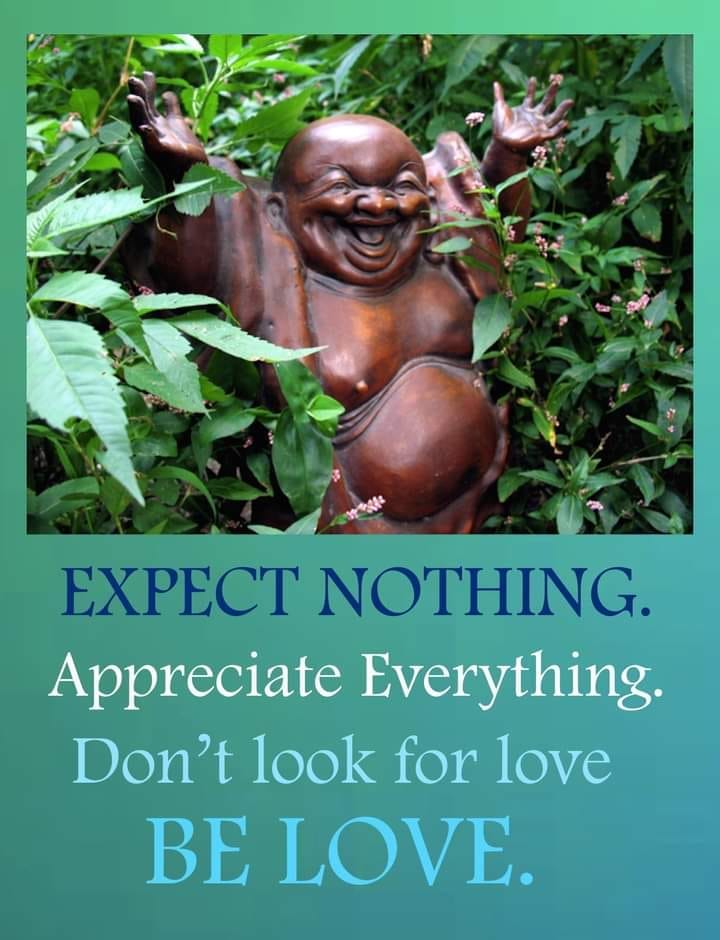
For more on being in the flow of synchronicities, see:
Seth, channeled by Jane Roberts from the mid-1960s to 1984, did not talk about karma much. But he said there was a system of checks and balances in place within our psyche to keep us from using our free will to create extreme levels of reality. That sounds a lot like the definition of karma that I have been discussing in this article.
In this quote, he also discusses the rewards of learning within our physical reality system:
“Within your system, for the “first time”, individualized consciousness is strongly enough organized to do “good or evil”. Before that it was protected, somewhat coddled, with instinctual behavior holding it in bounds [like animals are]. It [was] not able to utilize enough energy to maintain a system of its own, but operate[d] as an adjunct to other stronger systems.
Some of those within your reality are having their first experience with an ego as you think of it. Others are returning to it, the system, in an effort to learn more. There are guardians, so to speak, within your system, reincarnated for the last time to help keep it in some kind of order while the others mature. There are also some, not physical, who keep an eye out over the whole proceedings.
The training is necessary. The results at any given stage may not appear very hopeful. And in your terms, there is indeed what seems to be a cumulative effect. There is a system of checks and balances that do operate. These exist within the inner selves. The system of checks and balances will operate up to a point and maintain some stability.
[…] The horror and the results of mismanagement and the vulnerability are the teaching methods that each consciousness has accepted before entering your system. There is no way out but to learn or to ruin the entire system. In no other field of reality are the terms so drastic. For this reason, the inner self withholds much of its knowledge. There must be no leaning upon the very basic fact that behind and within the system, there is relief. You must believe in the physical reality and accept the vulnerability.
From your system spring some of the most advanced of all identities. They go on and learn from other realities, granted. But yours is the hardest to manage. And those who accept it go off into a certain line of development where the potentials are beyond anything of which you can presently conceive.”
— Seth/Jane Roberts, The Early Sessions, Book 9, session 498, August 25, 1969 (bold added by Alan Lew)
[6] Related Resources
Here are the sources that prompted me to write (and update) this article. I also consulted Wikipedia and other sources in the writing. I expanded on the ideas I came across with my understanding and interpretation of what others said.
- [6.1] ⬇ Bhagwat Geeta, part 3 by Pravrajika Divyanadnaprana (aka Maata Ji), focuses on karma. Her entire series on the Bhagavad Gits is good.
- [6.2] ⬇ The Vedic scholar, Thom Knoles, on What is Karma?:
- [6.3] ⬇ ️and on living in Kriya instead of in Karma:
- [6.4] ⬇ Shunyamurti tells a story about a Buddhist monk that relates karma to synchronicity:
- Note: Shunyamurti has an exceptional intellect. But I very much disagree with his apocalyptic vision for humanity. And although he claims to come from the nonduality lineage of Sri Ramana Maharshi, he still seems to have a pretty big ego (in my opinion, of course).
- [6.5] ⬇ This video by Jason Gregory talks about Synchronicity in different eastern traditions, with a special focus on the Tao. He does not mention karma, but the overall message is similar to my article above.
- [6.6] ⬇ For more Spiritual Explainer Articles, see this collection:
- Note that the articles in that collection are behind the Medium paywall. For paywall-free access to my articles go to www.AlanLew.com, linked below.
Contact
- I am not financially affiliated with any of the people or products discussed in this article.
- I appreciate comments, questions, and typo corrections. - See the About link in my Medium profile for contact information and related articles.
- Written in collaboration with my Energy Group/Higher Self and drawing on others. This is our perspective of the truth and not the whole truth of reality.
My Medium writings are available “paywall free” at www.AlanLew.com:
- follow my Facebook page linked to my Medium writings
- subscribe to My Medium Writings
- become a Medium member to support my writings
Visit and Follow New Earth Consciousness for More Articles like this.
- subscribe New Earth Consciousness NEWS, the occasional newsletter for NEC
- …and join our New Earth Consciousness Group on Facebook


