
Part 2 of a 4-part ‘Guide to Meditation’
Your Life Is Your Meditation (I): Examples of SELF Meditations
My personal review of “Internal Meditation” practices that are part of the 9 basic types of meditation.
This article follows my introductory article: Meditation Explainer: the What, Why & How of Meditating. There is some overlap between the end of that article and the start of this article.
In the introductory article, I identified 3 Forms of Meditation: — [1] Self Meditations — meditating independently of any external influences — [2] Guided Meditations — meditating while listening to an external source — [3] Active Meditations — physically participating in an activity
Each of these Forms has 3 Types, for a total of 9 Types (see my personal list below for those). The What, Why & How article describes each of the 9 types in a general overview.
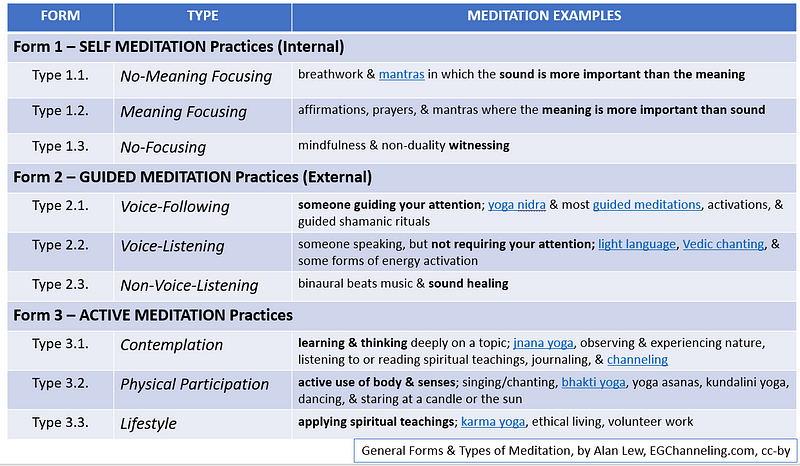
This article is the first in a series of 3 articles that go into more personal and detailed examples of the 9 different types of meditation. I do this by talking about how I meditate.
I am not doing this because I am bragging (at least I hope not). But because I do ALL 9 types of meditation regularly in some way. I did not do this intentionally, it just happened as I followed my interests.
This first article covers the first three types of meditation that fall under the Self Meditation form of practice. I end with a short discussion on “Why Do I Meditate?”.
[1] SELF Meditation Practices (Internal) — The focus of this article
Self Meditation Practices are when the meditator is in complete control of the meditation. They learn a technique, but beyond that, there is no active external help while doing the technique. This is the kind of meditation that most people think of when they hear the word “meditation”.
I also discuss how each of these mediations can be brought into our larger life experience. This type of meditation is particularly suited to doing that.
TYPE 1.1. No-Meaning Focusing — This is a meditation in which there is something that the meditator focuses on to induce the meditation. But that something has no meaning and is only used for its sound quality. Examples include self-guided breathwork and the use of mantras when the sound is more important than the meaning. <Example 1> — A Self, No-Meaning, Mantra Meditation — Transcendental Meditation (TM)
TYPE 1.2. Meaning Focusing — This is a meditation in which there is something that the meditator focuses on to induce the meditation. But that something has a clear meaning and purpose for the meditator. Examples include affirmations, prayers, mantras when the meaning is important, gratitude, and “loving-kindness” meditation when self guided. <Example 2>— A Self, Meaning, Chakra Meditation — This chakra meditation focuses on the meaning of each chakra energy center.
TYPE 1.3. No-Focusing — This is a meditation in which the meditator seeks to not focus on anything as a way of inducing the meditative state. Examples include silent versions of mindfulness and nonduality witnessing. <Example 3> — A No-Focusing, Nonduality Mindfulness Practice — This example is based on Nonduality teachings.
Other Forms of meditation are described in later articles in this series. These include:
[2] GUIDED Meditation Practices (External) — covered in the third article in this series
TYPE 2.1. Voice-Following <Example 4> Channeled Meditation TYPE 2.2. Voice-Listening <Example 5> Activation Meditation TYPE 2.3. Non-Voice-Listening <Example 6> Water Sound Meditation, and — <Example 7> Breathwork Meditation
[3] ACTIVE Meditation Practices — covered in the fourth article in this series
TYPE 3.1. Contemplation <Example 8> Learning Practice, and — <Example 9> Channeling Practice TYPE 3.2. Physical Participation <Example 10> Yoga Practice, — <Example 11> Vocal Healing Meditation, and — <Example 12> Sound Healing Practice TYPE 3.3. Lifestyle <Example 13> Vegan & Organic Diet

[1] EXAMPLES of SELF Meditation Practices (Internal)
Here are three examples of Self Meditation practices — one for each of the 3 types of Self Meditations introduced above.
<Example 1> A Self, No-Meaning, “Mantra” Meditation [Type 1.1]
— 45 minutes, Twice daily, morning & afternoon — Transcendental Meditation
I learned Transcendental Meditation (TM) when I was a freshman in college over 45 years ago (back in the Hippie days). I practiced regularly for most of the first decade and most of the last decade. But I was on and off in between.
This meditation starts with 5 minutes of nadi shodhana pranayama (alternate nostril breathing) breathwork. I then do the mantra meditation for 30 minutes. (The standard is 20 minutes, but you can do more when you’re retired). At the end, I lie down for 5 to 10 minutes, if that is convenient.
Sometimes I fall asleep in meditation or after for anywhere from 10 to 50 minutes. Without the sleep, the whole meditation is about 45 minutes.
TM is a type of effortless meditation. It can be done anywhere and under any conditions. Effortless means we don’t try to meditate — we allow the mantra to happen. (That is the goal, at least.) Mantras are associated with different Hindu gods, but no TM teacher will ever tell you that. For the practice, the sound is key. The meaning is irrelevant.
In TM, distracting thoughts during meditation are good. They are a sign that, through deep relaxation, the meditator is releasing stress from their nervous system and physical body. As it is released, the stress attaches itself to any random thought. So “thoughts” have no value — they are random reflections of the release of physical stress.
TM calls this stress release. I call it karma release. Others call it letting go of the ego, of attachments, and of thoughts. This is what all forms of meditation are meant to do.
Quiet, no-thought, periods are also good. They are a sign of transcending, or near-transcending, our 3rd Dimensional (3D) physical and mental reality. So whatever happens, you can never go wrong.
The standard TM teachings mention, but do not describe in detail, the value of bringing the meditation practice into our everyday life. You are taught to let the thoughts go during meditation — to allow them to arise and pass on their own.
LIFE: The true value of TM is in bringing this attitude toward thoughts, especially “autopilot monkey mind” thoughts, to our waking reality. The more we do this, the less we are attached to our ego thinking, and the more we become our deeper, true self. Manifestations and synchronicities are also more frequent when you are closer to your true self.
See: The Outer Ego & The Inner Ego for more on this.
I have tried many other forms of meditation and have attended Vipassana dharma talks and retreats where I live. For me, TM is by far the easiest Self Meditation to do. Its effects are powerful, especially on retreats. I have manifested most of my biggest desires in life, which I attribute to my TM practice. But I realize it is not for everyone.
(See also the “Why Do I Meditate?” section below.)
⬇️ In this video below, Tom Knoles explains we use a mantra to transcend thoughts. Tom spent 26 years in close association with Maharishi Mahesh Yogi and his Vedic Meditation is the same as TM. (He talks about that a little in this other video on YouTube.)
<Example 2> — A Self, Meaning, Chakra Meditation [Type 1.2]
— 5 minutes, Twice daily, but rarely nowadays
I used to do this one a lot. But I have so many other practices these days that I rarely do it anymore. I liked it because it was short and a good way to enliven my chakras. Maybe I will start it up again.
The meditation involves breathing into and then out of each chakra. The in-breath is an “I” statement, while the out-breath is an “all” statement. The statements relate to the role played by each chakra energy center.
Here is the basic sequence:
Breathe In to your Root (lowest) Chakra — say: I am Safe and Grounded Breathe Out from your Root Chakra — say: All is Safe and Grounded
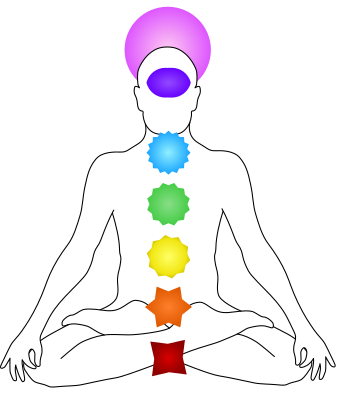
Breathe In to your Sacral Chakra — say: I Create my Reality Breathe Out from your Sacral Chakra — say: All is My Creation
Breathe In to your Solar Plexus Chakra — say: I am My True Self Breathe Out from your Solar Plexus Chakra — say: All is My True Self
Breathe In to your Heart Chakra — say: I am Love (or Bliss) Breathe Out from your Heart Chakra — say: All is Love
Breathe In to your Throat Chakra — say: I Speak to the World Breathe Out from your Throat Chakra — say: The World Speaks to Me
Breathe In to your Third Eye Chakra (center of the head) — say: I See Truth Breathe Out from your Third Eye Chakra — say: All is Truth
Breathe In to your Crown Chakra — say: I am My Higher Self (or God, or All That Is, or Source, or My Soul, or Atman, or the Guru, or the I Am Presence, or something similar) Breathe Out from your Crown Chakra — say: All is My Higher Self
Breathe In to your Whole Body — say: I am One (or Radiant, or Fulfilled, or Perfect, or something else) Breathe Out from your Whole Body — say: All is One
Relax and Feel your Chakras, then your Body, then your Mind, then your Energy Field (the space surrounding your body and mind), and then the World.
LIFE: This practice can enliven and energize your chakras. But the greater impact is to help you to connect your individual self with the larger self that you are. That larger self (or Higher Self) is everything in your awareness. It is all you. This is how you can take the consciousness that this meditation fosters into your life.
The full instructions include 11 different variations on the basic sequence above, along with a brief introduction to each chakra.
<Example 3> A No-Focusing, “Nonduality Mindfulness” Practice [Type 1.3]
— Daily, on and off throughout the day
I have recently become more interested in Nonduality teachings, such as on Nothing Media (YouTube). The fundamental message is that there is an Unreal World of Dualism and there is the Actuality of Nondualism.
DUALITY is what is happening in our experience. Dualistic happenings are practical in that we use them to negotiate physical reality. But these happen without meaning or purpose. There is no purpose, no good or bad, and no better or worse.
We give those kinds of Duality meanings to what happens based on our beliefs. But those beliefs are only ideas that can and do change.
This correlates closely with the idea of the “ego”, or the sense of “I-ness”. A common spiritual teaching is that we are not our ego and that our ego is a phenomenal (experiential) illusion.
What is really happening is only the manifestation of energy that is seemingly contracting and expanding. There is no person, being, entity, or even “awareness”. These are all manifestations of that energy — their existence as something separate is an illusion.
This correlates to the “observer paradox” in quantum physics (and also in other scientific fields). In physics, the quantum thing is either a particle (a separate thing) or a wave (not a separate thing) based on how it is observed. Duality is the same way, except that we tend to see everything as separate, with our ego as the observer.
NONDUALITY (also spelled “non-duality”) is what really exists. But it is impossible to understand from a Dualistic perspective. “Nothing” perhaps comes closest — it is the nothing that encompasses or underlies every illusion. The entire phenomenal/material world (including time and space) is not real from the Nondual perspective. It is only “real” in our beliefs, which themselves exist only in Duality.
The Nondual is nothing and everything. It exists and it does not exist. It is everywhere and it is nowhere. It is infinite, unbounded, eternal, magical, and unknowable. All of this is impossible for our Dualistic mind to comprehend. As soon as we (the “me”) define “it” in any way, we put boundaries on “it”. The Nondual becomes “dualized” and is no longer what “it” is.
Tony Parsons (the “godfather” of contemporary Nonduality thought) says:
When the “me” falls away, when the illusion of the separation falls away, it is absolutely obvious that everything is free and boundless. — Tony Parsons
Unconditional Love is another characteristic of the Nondual. Like the other descriptions above, unconditional love is impossible to describe to someone who has not had it happen in their direct experience.
Nonduality is also defined as the “emptiness” or “silence” beyond that which is not empty and not silent. It is the deep sleep state of consciousness that was there when we were born and continues until we die and leave our body, mind, emotions, and ego behind.
Some form of Nonduality is common in all spiritual teachings. Details can vary and similarities are not always apparent because the words, personalities, and understandings of different teachers vary. (Each person is a different energy that is happening.)
The biggest challenge is that the teachings come from a Duality (ego) and are delivered to a Duality (ego). It is impossible to not do that. This results in different levels or degrees of pure Nonduality.
For example, a widely used teaching says: We are not our body, thoughts, emotions, and ego. They exist in the phenomenal world, but we are more than that. This points to the Nondual. But it is incomplete because it assumes that there is a personalized “me” that is aware of this knowledge. And that “me” is a false illusion.
Another example is in the words “God”, “Source”, and “All-That-Is”. These terms are used by many to make the Nondual more easily understood. They humanize and even anthropomorphize “it”. But in doing so, those terms create a false illusion of what “it” is.
“Its energy is so unbelievable that it does indeed form all universes; and because its energy is within and behind all universes, systems and fields, it is indeed aware of each sparrow that falls, if it IS each sparrow that falls.” — Seth trying to define “God” in ‘The Seth Material’ by Jane Roberts
LIFE: So far, my description of Nonduality is more a form of “Contemplation Meditation” (Type 3.1 in my definitions). That contemplation is almost inseparable from how I practice Nonduality.
There is no “me” and there is no “practice” that a false “I” am doing. There are imaginary “concepts” that arise for the illusory “I”. This is falsely “judged” to be an imagined “Nondual practice” happening sometimes and not happening at other times. Here are some examples of that:
- neti neti (not this, not that) — the Upanishads
- “Not two. Not one.” — Shunryu Suzuki
- “Always want whatever is happening now, then you will always have everything you want.” — anon.
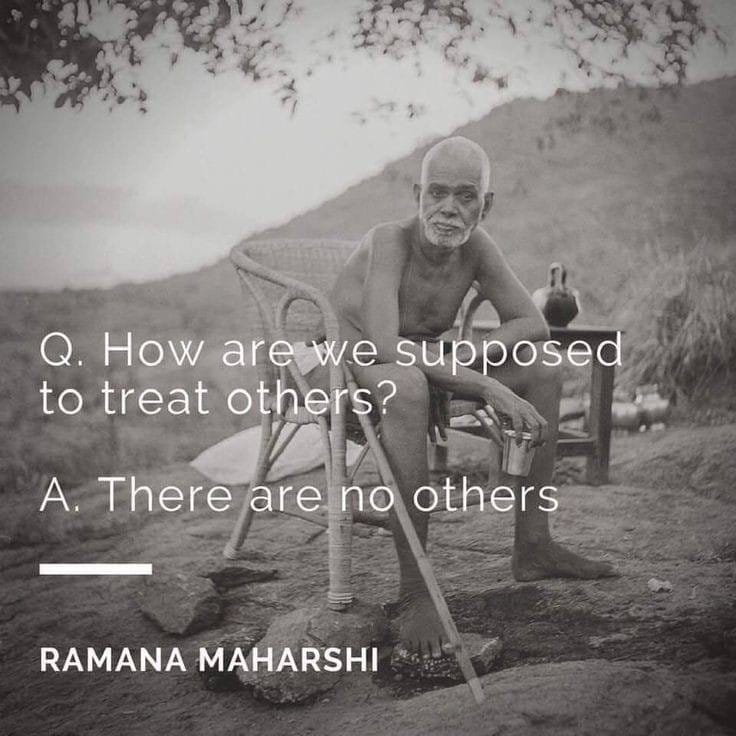
Currently, the energies (teachings) that impact me the most are those that are the more pure “Nonduality” teachings (in the tradition of Ramana Maharshi and Tony Parsons).
In listening to these teachings, I sense my ego-self peeling away, layer by layer, allowing a more pure awareness to become my experience. It is not pure Nonduality, but it is pointing in that direction.
I experience this in my TM practice (Type 1.1, above) a lot. And I experience this on and off throughout the day in my daily life. (See the Hawai’i article below for more on that.) And this is the same message that I try to express in my writings. I am considering updating many of my articles to make this more clear, recognizing the limitations of words.

That is what is currently “happening” for the false “me”. And, of course, as soon as it is described in this way, it will change — as life does.
This article tells of my recent Nonduality-ish trip to Hawai’i.
Why Do I Meditate?
When I first started meditating at age 19, I saw meditation as a drug. I took drugs in my high school years as a form of self-treatment for the challenges of adolescence — at least that is how I justified it.
For me, TM was a drug-free alternative to dealing with the stresses of life. I quickly learned that many of my life problems simply disappeared after I started meditating. (See
A friend of mine back in 1977 learned TM, but soon stopped meditating. He told me he stopped because he did not want to let his problems simply dissolve into nothingness. He wanted to face them and intentionally struggle and clear them from his psyche, which is what another popular awakening practice was teaching at the time. To each his own…

Nowadays, I see my different meditations as different ways of experiencing reality. I am awake, I read, I write, I think, I talk, I eat, I travel, I dream, I sleep, I meditate, and I love. Each opens a different door of perception, awareness, and knowledge.
I do different types of meditations because they open different doors. Each enhances the others in creating the full experience of the illusory me’s current happening (or life).
When I was working, I traveled a lot and to many countries. I loved that. Now that I am retired, my interest in traveling the world has waned. Instead, I now travel in the infinity of my mind — through my different meditation practices.
Other Articles in this Meditation Series Include:
Part 1 of this series is an INTRODUCTION to the What, Why, & How of Meditation
Part 3 of this series is a detailed descriptions of GUIDED MEDITATION practices
Part 4 of this series is a detailed descriptions of ACTIVE MEDITATION practices
- For more on Meditations & Meditating, see this collection of articles:
- Note that the articles in this collection are behind the Medium paywall. For paywall-free access to my articles, go to www.AlanLew.com, linked below.
Contact
- I appreciate comments, questions, and typo corrections. - See the About link in my Medium profile for contact information and related articles.
- Written in collaboration with my Energy Group/Higher Self. This is our perspective of the truth and not the whole truth of reality.
My Medium writings are available “paywall free” at www.AlanLew.com:
- follow my Facebook page linked to my Medium writings
- subscribe to My Medium Writings
- become a Medium member to support my writings
Visit and Follow New Earth Consciousness (NEC) for More Articles like this.
- subscribe to New Earth Consciousness NEWS, the occasional newsletter for NEC
- …and join our New Earth Consciousness Group on Facebook