
Greek sea series
A pink and blue formula cannot fail
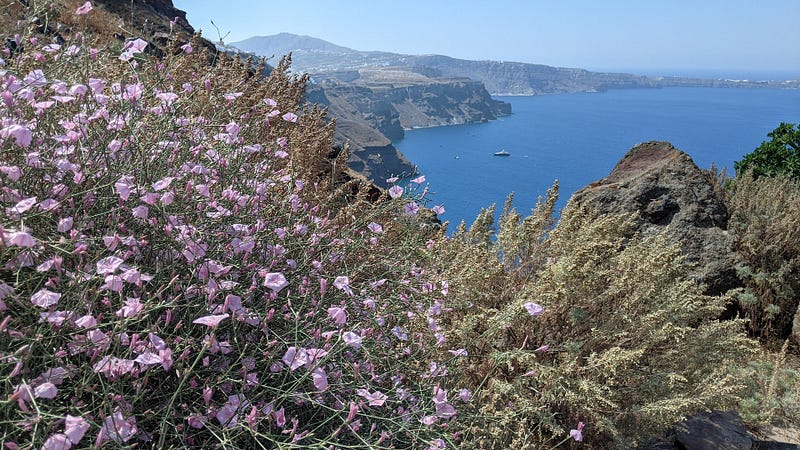
Shots in a wild corner of Santorini, Greece.
I was so lucky to just visit two Greek islands that offer stunning scenography, otherworldly beaches and seawaters, secluded but present wild nature, and history -both human and geological.
I will be sharing content about these islands (Crete and Santorini) in my next stories, which will form my “Greek sea series”.
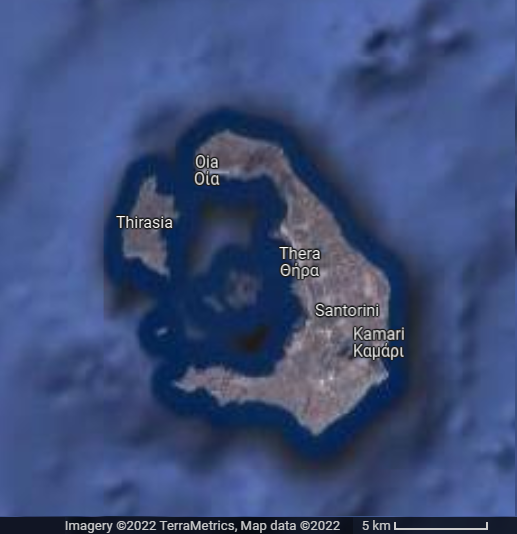
Here’s an opening to this series with shots in Santorini, a stunning group of islands of volcanic origin. Not just another group of volcanic islands: the whole site, of circular shape with a radius of some tens of kilometers, was once the caldera (“mouth”) of a massive volcano, and the current geology was modeled over thousands of earthquakes and eruptions among which was one of the largest volcanic events on Earth in human history: the Minoan eruption.
The shape of the caldera is crystal clear in Google Maps’ satellite view:
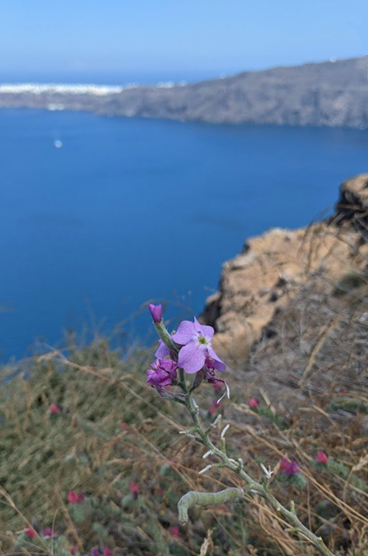
Pink wildflowers meet blue waters at Skaros
Skaros is a rock formation popping out of Santorini’s main island, Thira, towards the inside of the caldera. It hosts a collection of ruins, and was one of the few places where I could find a concentrate of wildflowers:
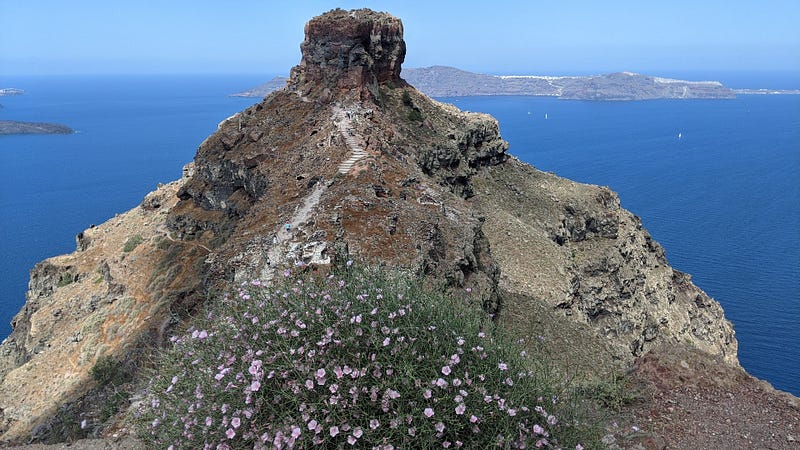
As the title of this article puts forward and you’ve seen above, pink wildflowers contrasted magnificently against the blue sea.
Now here’s a zoom on the pink protagonists:
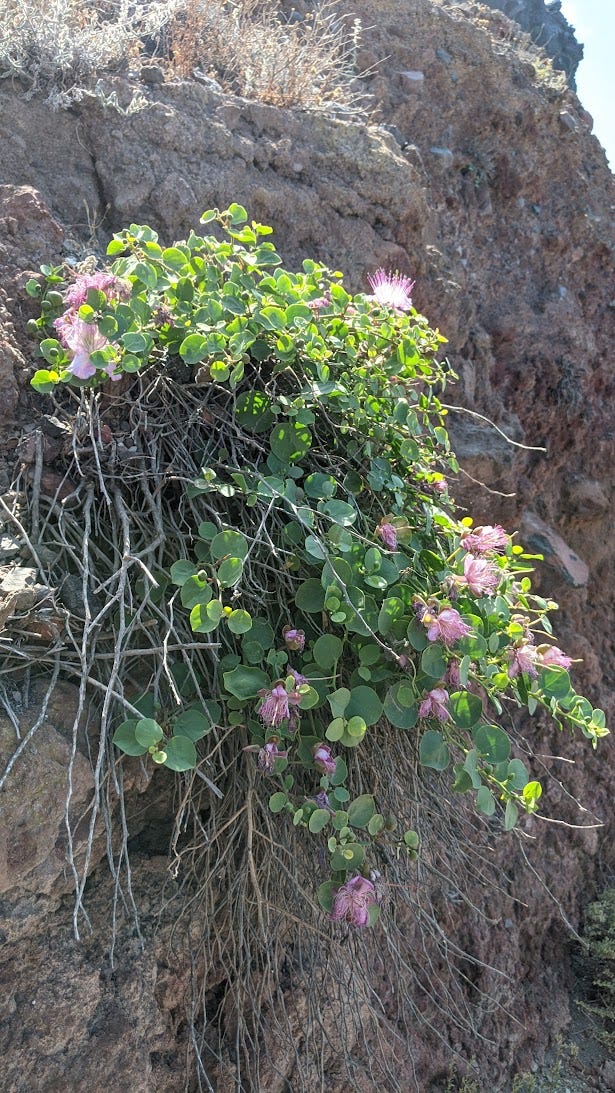
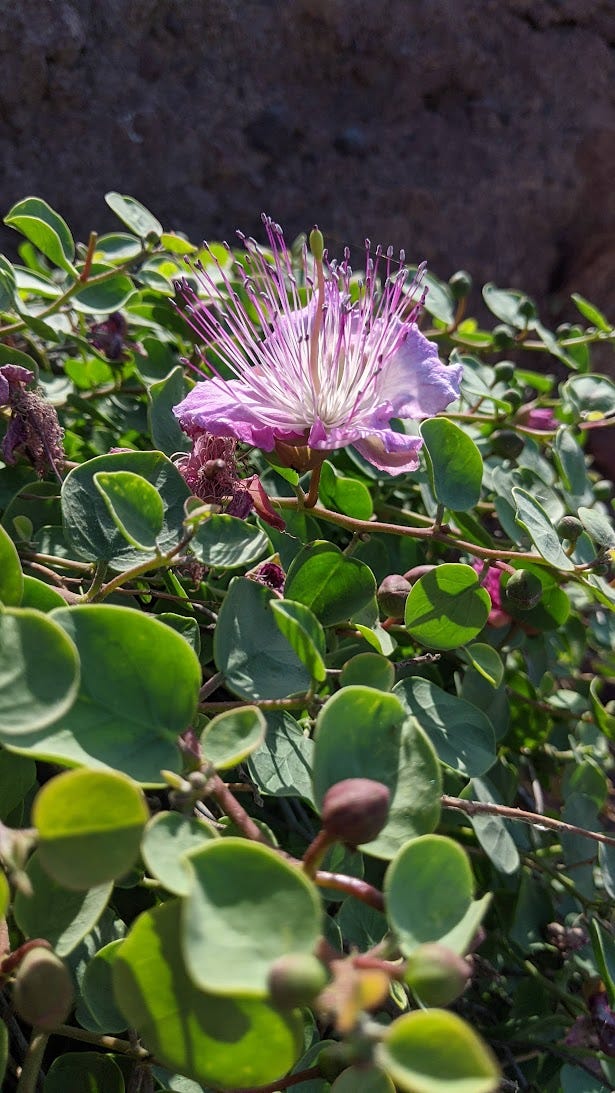
As you see the plants are adapted to the very dry climate, yet bloom quite interesting flowers:
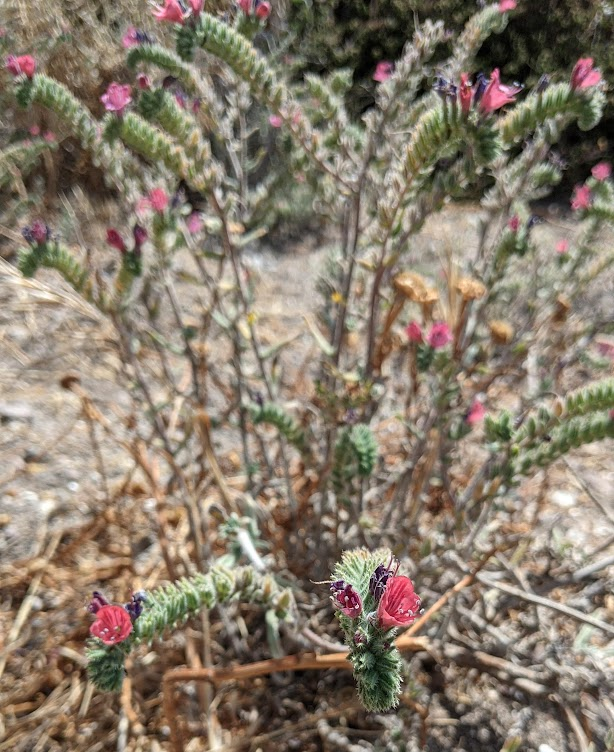
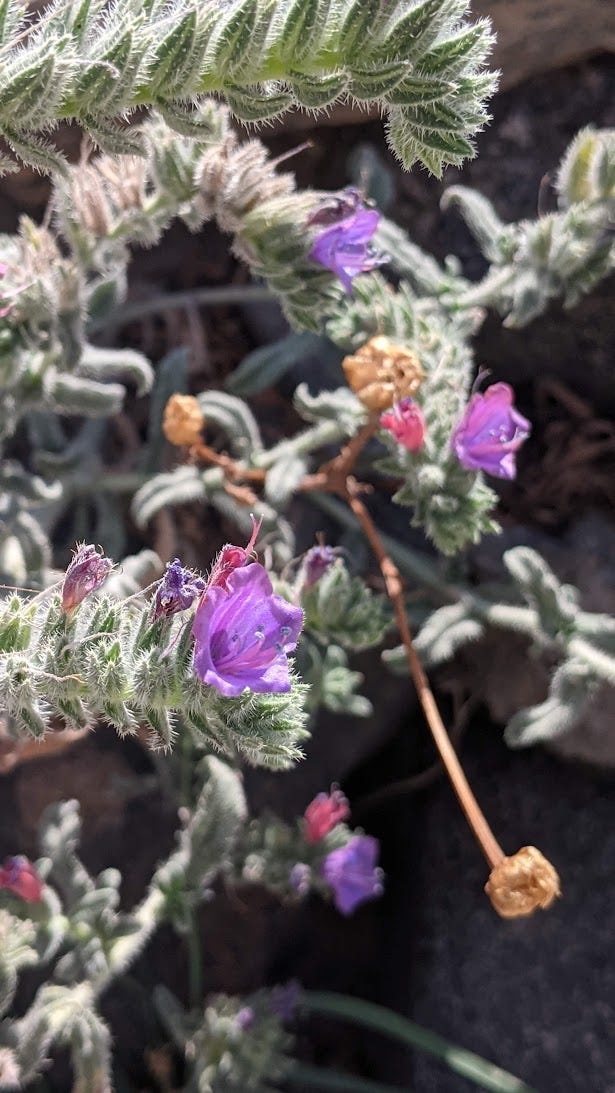
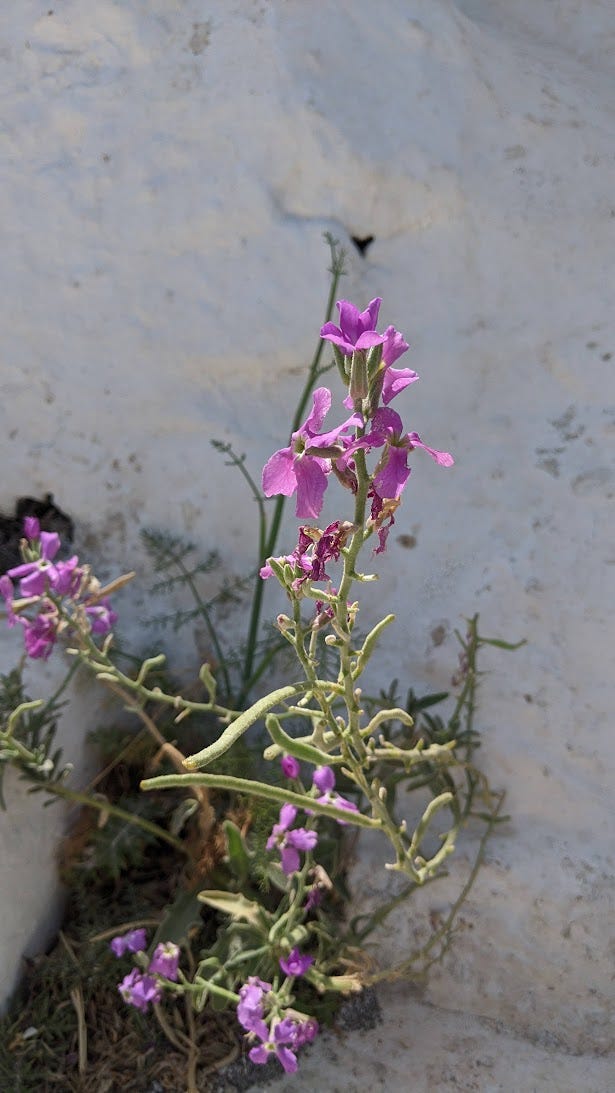
I’ve seen this (I mean stunning flowers despite harsh climates) before:
The star from the lead photo
You saw it in the lead photo and in the shot of Skaros. Now take a closer look at it:
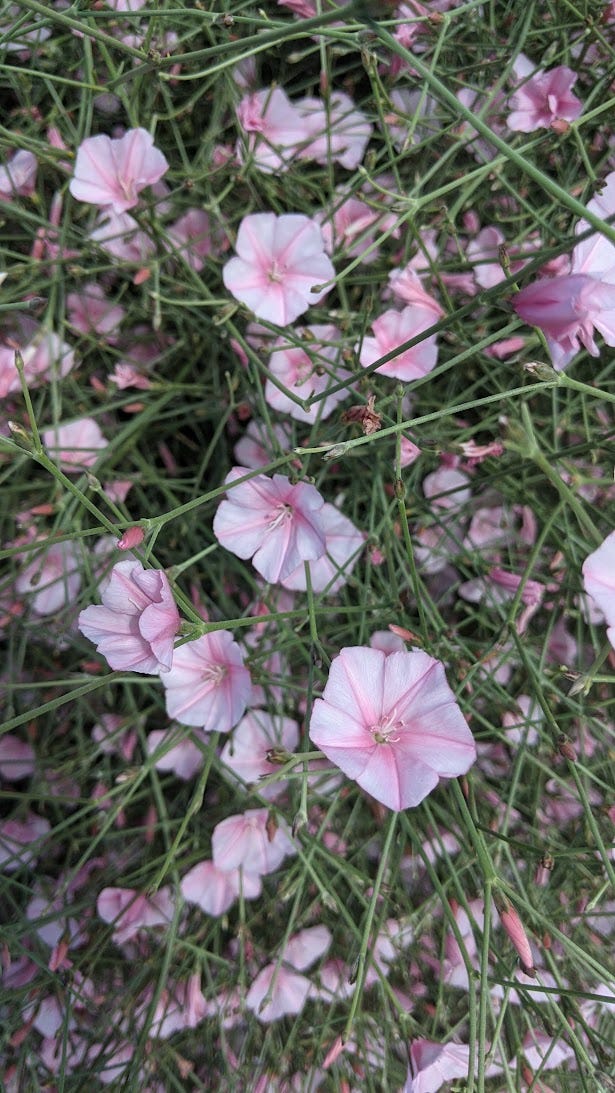
It’s a big bush fully covered in pink. Do you know what plant it is? Searching online doesn’t give me any clear answer…
Related content
If you are into geology or curiosities in general, check this extract I summarized from WikiPedia:
During the Bronze Age, Santorini was the site of the Minoan eruption, one of the largest volcanic eruptions in human history. This eruption was centred on a small island just north of the center of the current caldera. The caldera itself was formed several hundred thousand years ago by the collapse of the centre of a circular island, caused by the emptying of the magma chamber during an eruption. It has been filled several times by material since then, in a process that repeated multiple times. The northern part of the caldera was refilled by the volcano, then collapsed once more during the Minoan eruption. Before the Minoan eruption, the caldera formed a nearly continuous ring.
I also recommend you these two stories:
www.lucianoabriata.com I write and photoshoot about everything that lies in my broad sphere of interests: nature, science, technology, programming, etc. Become a Medium member to access all its stories (affiliate links of the platform for which I get small revenues without cost to you) and subscribe to get my new stories by email. To consult about small jobs check my services page here. You can contact me here.


