
30 days of PyTorch with Projects Series
Vertical series ( One post that will house all the projects as we build/implement them)
Welcome back peeps. Happy to share that we have just finished —
Finished Series —
60 Days of Data Science and Machine Learning with projects Series
We are now starting a new series — 30 days of PyTorch with Projects Series . This series would run in parallel with —
Ongoing Series —
What is PyTorch?
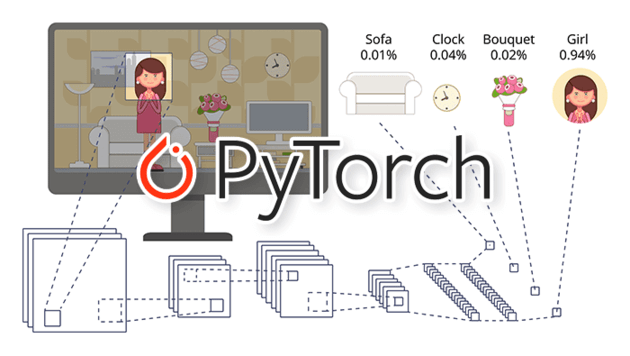
PyTorch, developed by Facebook based on Torch is a deep learning framework used for NLP and AI applications e.g image classification, Handwriting recognition, Text generation, style transfer etc.
Advantages of PyTorch are —
- High speed
- Uses dynamic Computational graphs
- Great debugging capabilities
- Has a rich ecosystem of tools and libraries
- Works well with large datasets
- Has many layers
- Integrated with Python language
- Very popular with research community
- Accessible and better designed
As we move further in this series, we will explore the power of PyTorch.
Goal
Note : Everyday new PyTorch topics and projects will be uploaded/posted here. This is a vertical post so check this post regularly for new topics/projects.
Let’s set a clear objective.
The goal is to develop an intuition and understand (in the depth) the practical side of PyTorch and build projects.
I have created a GitHub repo for this series where we will be maintaining our code.
Tools
We will be using Google Colabs and Jupyter Notebooks.
Prerequisite to this series
Complete 60 days of Data Science and Machine Learning before starting this series ( link below) —
Let’s talk about topics and projects we are going to cover in this series
We will be covering —
PyTorch Basics
What is PyTorch?
Install PyTorch
PyTorch Packages
Basics of PyTorch
PyTorch vs. TensorFlow
Loading Data
Linear Regression
Convolutional Neural Network
Recurrent Neural Network
Datasets
Convent
Introduction to Convents
Training a Convent from Scratch
Feature Extraction in Convents
Visualization
Sequence Processing
Word Embedding
Recursive Neural Networks
Tensors
Introduction to Tensors
1D Tensor
Vector Operation
2D Tensor
Gradient with PyTorch
Linear Regression
Introduction
Gradient Descent
Mean Squared
Custom Module
Loss Function
Perceptron
Introduction to Perceptron
Create Dataset
Model Setup
Training
Testing
Deep Neural Network
Architecture of DNN
Implementation of DNN
Testing of DNN model
Feed Forward Process
Backpropagation Process
CNN
CNN Introduction
CNN Implementation
Training of CNN
Validation of CNN
Testing of CNN
PyTorch Projects (40)
That’s it for now. We will keep updating this post covering above topics.
Let me know if you have questions in the comment section below. Subscribe/ Follow, Like/Clap as it would encourage me to write more in my free time
Stay Tuned and Keep coding!!
Read More —
11 most important System Design Base Concepts
6. Networking, How Browsers work, Content Network Delivery ( CDN)
13. System Design Template — How to solve any System Design Question
System Design Case Studies — In Depth
Design Instagram
Design Netflix
Design Reddit
Design Amazon
Design Messenger App
Design Twitter
Design URL Shortener
Design Dropbox
Design Youtube
Design API Rate Limiter
Design Web Crawler
Design Amazon Prime Video
Design Facebook’s Newsfeed
Design Yelp
Design Uber
Design Tinder
Design Tiktok
Design Whatsapp
Most Popular System Design Questions
Mega Compilation : Solved System Design Case studies
Complete Data Structures and Algorithm Series
Some of the other best Series —
30 days of Data Structures and Algorithms and System Design Simplified
Data Science and Machine Learning Research ( papers) Simplified **
100 days : Your Data Science and Machine Learning Degree Series with projects
Complete Data Visualization and Pre-processing Series with projects
Exceptional Github Repos — Part 1
Exceptional Github Repos — Part 2
Tech Newsletter —
If you are interested, you can join my newsletter through which I send tech interview tips, techniques, patterns, hacks — Software Development, ML, Data Science, Startups and Technology projects to more than 30K readers. You can subscribe to Tech Brew :
For Python Projects —
For complete 60 days of Data Science and ML : Day 1 — Day 60 : Quick Recap of 60 days of Data Science and ML
Follow for more updates.
For other projects, tune to —
Build Machine Learning Pipelines( With Code)
Recurrent Neural Network with Keras
Clustering Geolocation Data in Python using DBSCAN and K-Means
Facial Expression Recognition using Keras
Hyperparameter Tuning with Keras Tuner
Custom Layers in Keras


