
100Hour Challenge — Yoga
Plank.
Chatturanga.
Upward facing dog.
Pull back to down dog.
Take a rest here for five breaths…
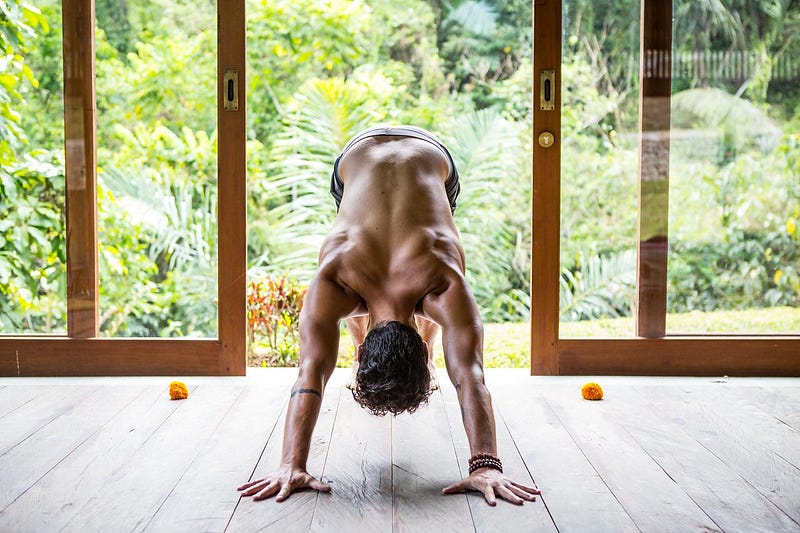
These were the instructions from the yoga teacher walking around the room.
She was the most beautiful, kind and energetic person you can imagine. Closer to a goddess. So not trying your very best, was not an option.
Rest in down dog? I was thinking. Do you really call this rest???
About two or three breaths into the down dog, the sweat was already dripping.
My body was begging for mercy.
Starting out with yoga
Was this really how I wanted to treat my body?
Were all these people just constructed in a different way?
Did they not feel pain?
As en ex-footballer, who hardly ever focused on stretching, these type of weird body positions did not come naturally. Nothing was easy about them.
But staying in Bali, yoga seemed to be the activity that everyone was into.
And after a couple of weeks, although I still found it exhausting, things were already getting a bit easier.
I was starting to feel good after the classes.
I was a bit closer to actually touching my toes.
One of the most challenging phases of learning a skill, is the period when you are just starting out.
In the beginning, you’re honestly, not very good. Especially compared to those around you (who may have been practicing for years).
Practice is difficult, as you are challenging yourself to do movements your body have never experienced before.
And there is a lot of new information to take in.
The best way to go through this period is by not thinking too much.
It’s better to just accept the challenge and be curious about the changes that happen as you go through the learning.
To not have any expectations about becoming good straight away. The harder it is to achieve something, the more rewarding it will be when you get there.
Why practice yoga?
The practice of yoga is an excellent illustration of how you can see yourself grow as a human being and become more than you were before.
It’s a mix of physical, mental, technical and spiritual challenges.
It’s personal, and you can use the practice to get to know yourself on a deeper level.
Every body is different, so what someone else can do, may be way out of reach, while other things will be easier for you.
This means you can stay fully focused on yourself, and not what everyone around you are doing. It’s all about pushing your own limits, and challenge yourself to stretch a little bit further or hold a pose for a few more seconds.
The fun is in the challenge of pushing the boundaries of what is currently possible, and feeling that it’s a little bit easier than last week.
Personally, I know it was a great yoga practice if I was surrounded by incredibly beautiful women, but was so focused on my own breathing and practice that I hardly noticed them.
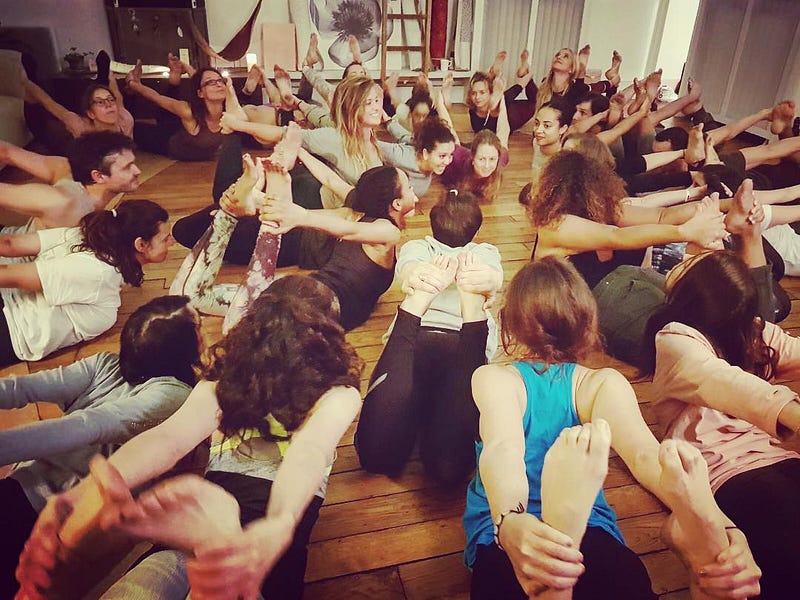
Background
I had tried yoga about 5–10 times a year for the last five years. As I had no consistency in my practice however, the improvements had only been minor.
I found strong poses such as plank or warrior stands easier than flexible poses (especially pigeon pose). My legs are quite strong, while strength in upper body and core is moderate. The flexibility on the other hand, is quite poor in many parts of my body.
So, I decided to start a 100 hour challenge, to see some real improvement.
100 Hour Challenge — Bali
I chose to live in Bali, as it is one of the best places in the world to learn yoga.
The level of the teachers is very high, and you are constantly surrounded by advanced practitioners that inspire you to push further.
The tropical weather warms up your body and makes it easier to stretch deeper.
I mostly went to group classes at Radiantly Alive and the Yoga Barn, which are well known studios here. Their classes are great, with experienced teachers that offer a variety of styles.
There are quite a lot of people in each class, so you don’t get a lot of personal adjustments. But if you are good at listening closely, you can challenge yourself by following the instructions as close as possible.
I also went to a couple of workshops that focused on specific sub skills; twists and arm balances. I find classes that focus on the details of specific poses to be especially good if you want to improve your practice.
Finally, I finished with about 20 hours of online classes after I left Bali, to finish the challenge. Online classes are good if you can’t find the time to go to classes or there are no suitable options where you live. I do however find it a little harder to stay focused and push myself when I’m not surrounded by others.
On average I practiced about four times a week, which gave some time to recover between classes. If you are new to a skill, it can be too intense to straight away practice every day.
I decided to go to physically challenging classes from the beginning, as I felt I could improve faster there. And although I couldn’t always do the full pose, a good good teacher will give you options to perform a less advanced variation.
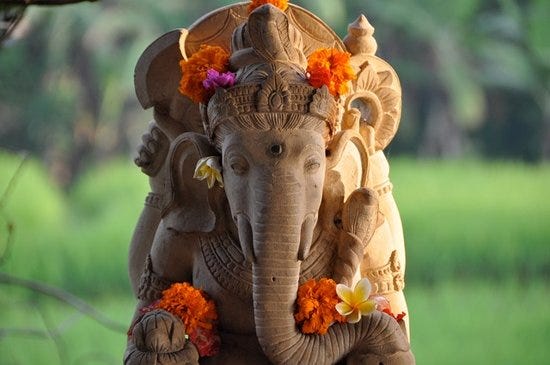
Lessons learned during the challenge:
Find a good teacher
Finding a good teacher is very important; to stay motivated, keep your body safe and help push your boundaries.
A good teacher encourage you to do hard things, often with a soft and motivating voice. You know it’s a good teacher if they make it fun to do a very challenging pose.
They will further give different options for the poses, as any class consists of different bodies and levels of practice.
Great yoga teachers tell you exactly what to focus on, which are often tiny details, to help you challenge yourself and go a little deeper. Picking up these details is key to take your practice to the next level.
Some of my favourite teachers in Bali were Bex Tyrer, Paul Teodo and Geoff Brooks.
They always had interesting sequences, kept you motivated through the whole session and the classes were physically challenging. The clarity of the instructions were impressive. And although the classes were very challenging, I never felt unsafe or that I was doing a movement that the body didn’t like.
Less experienced teachers are sometimes less aware of what poses can feel painful for people.
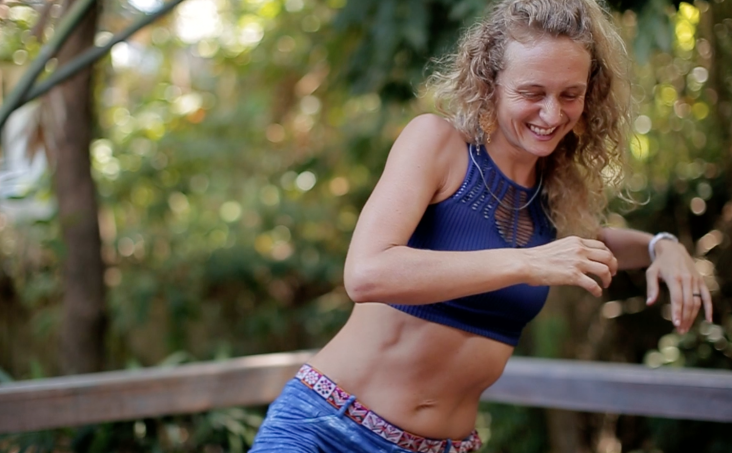
Challenge yourself
Yoga gives you plenty of opportunities to challenge yourself.
Holding a pose even after it starts to hurt, will make you stronger. Not only physically, but also mentally.
By holding challenging poses for longer, you learn to relax your mind in tough situations.
And by focusing on your breath rather than pain, the pose will be easier to endure.
Overall, pushing yourself to stay calm and strong when you are starting to feel some burn, instead of taking a break straight away, will push you to improve faster.
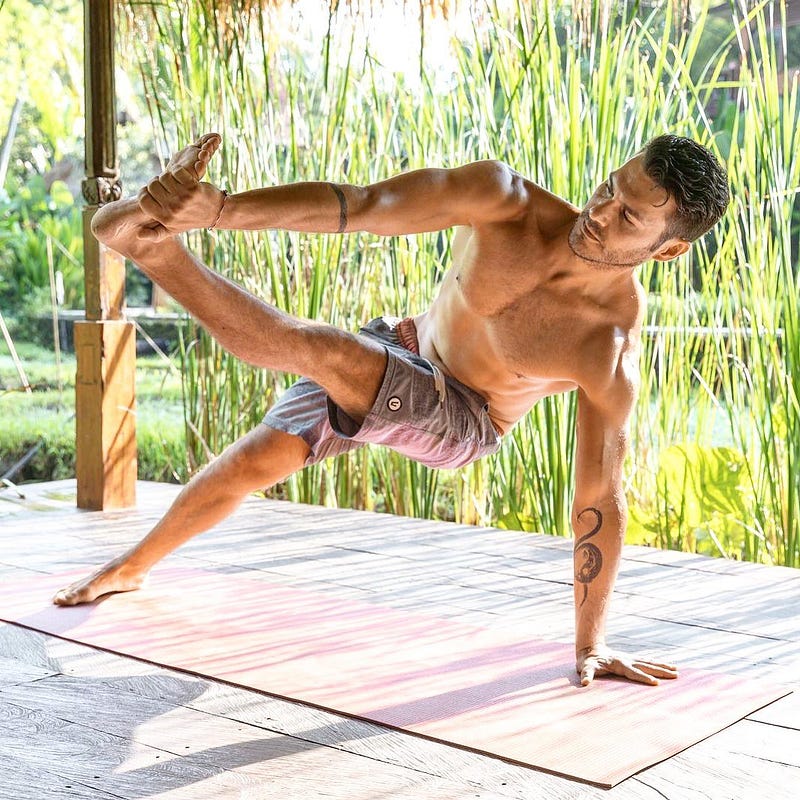
Focus on yourself
I will never be as flexible as most of the yoga girls.
But I can become more flexible than my old self.
Focus on improving and appreciating what you have, rather than on what others can do.
You can still look to others. But look at them with inspiration of what is possible, not with envy of what they can do and you cannot. They probably worked hard to reach that level.
The more you focus during practice, the easier it will become to hold a challenging pose.
By breathing deeply and in symmetry with your movements, your practice will improve.
Listen to your body
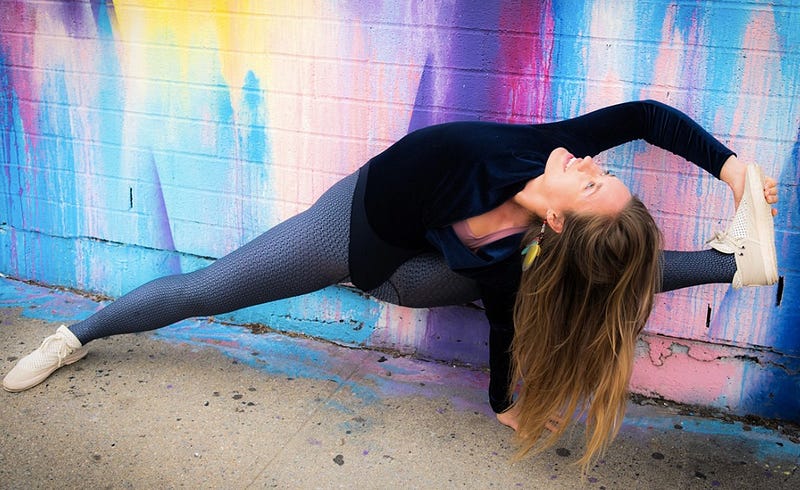
If the body is telling you that something isn’t right, then ease back and listen to it.
Learn to distinguish good pain from bad pain. Holding a plank is rarely dangerous, but after a minute it can start to become demanding.
A sharp pain in the lower back on the other hand, should probably lead you to take action straight away.
Good pain will make you stronger, whereas bad pain will lead to injury.
Going through some good pain, makes it less likely that you will experience bad pain (by making your body stronger and prepared for more challenging situations).
Improve gradually
You can’t go from beginner to expert in a short time.
Trying to push yourself too much, could risk an injury. It’s therefore wiser to improve gradually.
I often felt a small improvement between each session and certainly from week to week. Poses became a bit easier, the balance a bit better, the back a bit straighter and I was gradually a bit closer to reaching my toes.
Even though you cannot always measure an improvement, you feel them. Poses start feeling a bit easier, you can stretch or twist a bit further and you manage to stay calmer during each pose.
Over time, all these small improvements, leads to large improvements.
Focus on the fundamentals
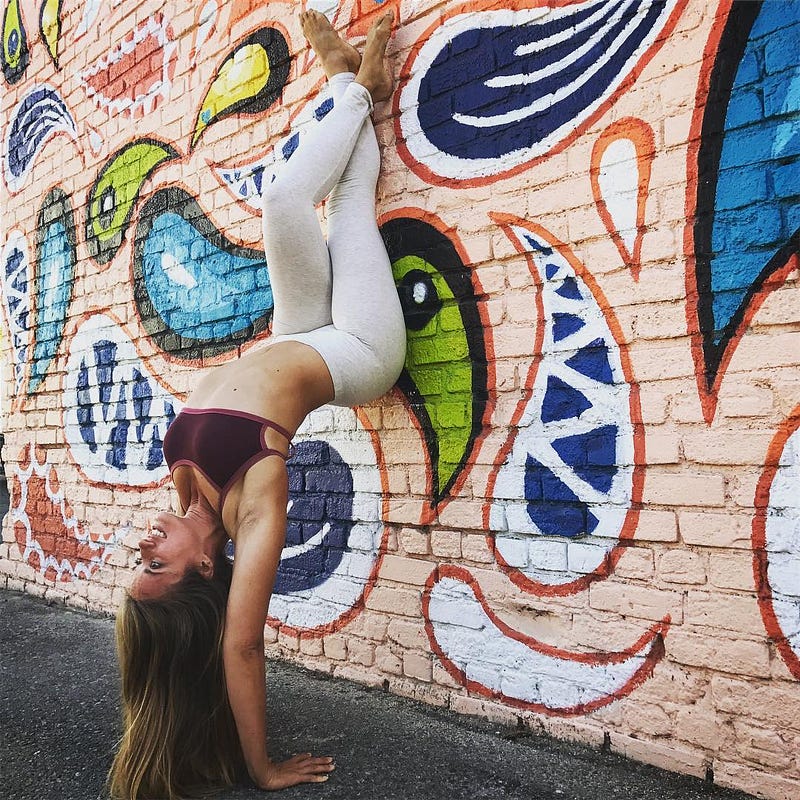
In every skill, learning the fundamentals well is the most important part.
The fundamentals are the most common movement patterns in a skill, that all further progress is based upon
In yoga, the more basic poses are purposely created to help you achieve more advanced poses in the future. It’s therefore beneficial to build really strong foundations.
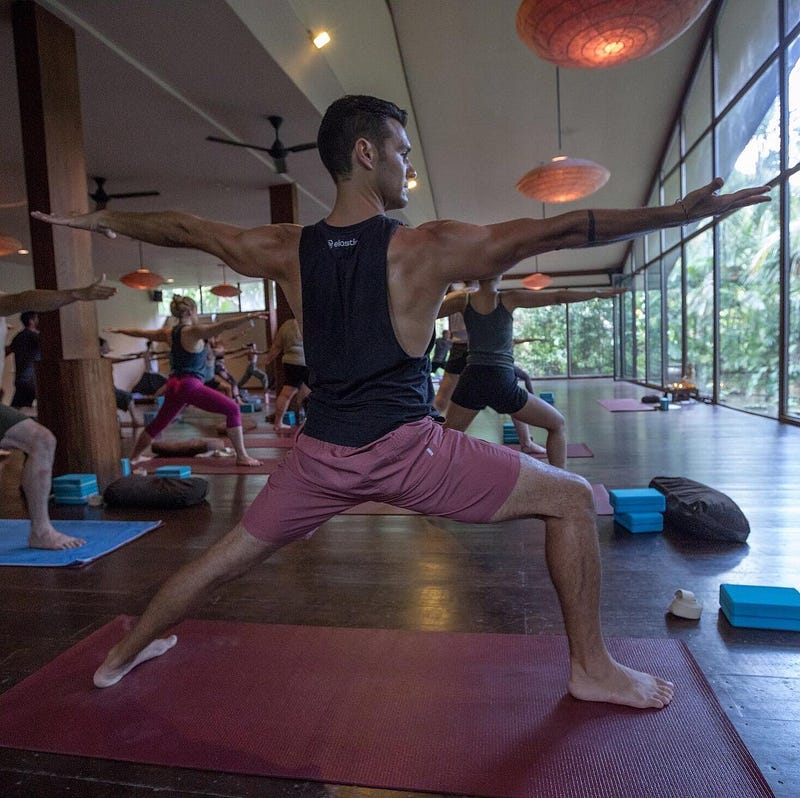
Doing a lot of warrior poses, which strengthens your legs, will for example make it much easier to do various balancing poses at a later stage.
Improving your breath, and synchronising it with your movements will make every posture easier. It can also make other challenging situations you face in life less stressful.
Practice yoga and improve other parts of your life
Practicing yoga leads to both physical and mental improvements.
Improving physically makes it easier to perform other physical tasks in your life. A stronger core protects your back and stronger legs give you better balance.
After I finished the challenge, my legs felt very strong, and I ended up beating a more than 10 year old personal record for a 10km run. This was very surprising, as I hadn’t been practicing running at all (which I used to do back then). Even though my stamina is much lower now, the strong legs made running feel easy, more like floating.
By holding physically challenging poses, you further challenge yourself mentally.
This can improve your ability to stay calm when facing difficult situations in life. By making life a little bit more challenging under controlled circumstances, you actually make it easier when you face real threats or stress.
Everything in life is related and yoga is one of the best ways to practice your mind and body.
365 Day Yoga Challenge
After finishing this 100hour challenge, I took a break from yoga for about a year. But I wanted to get back to it, as I feel very good when I practice regularly.
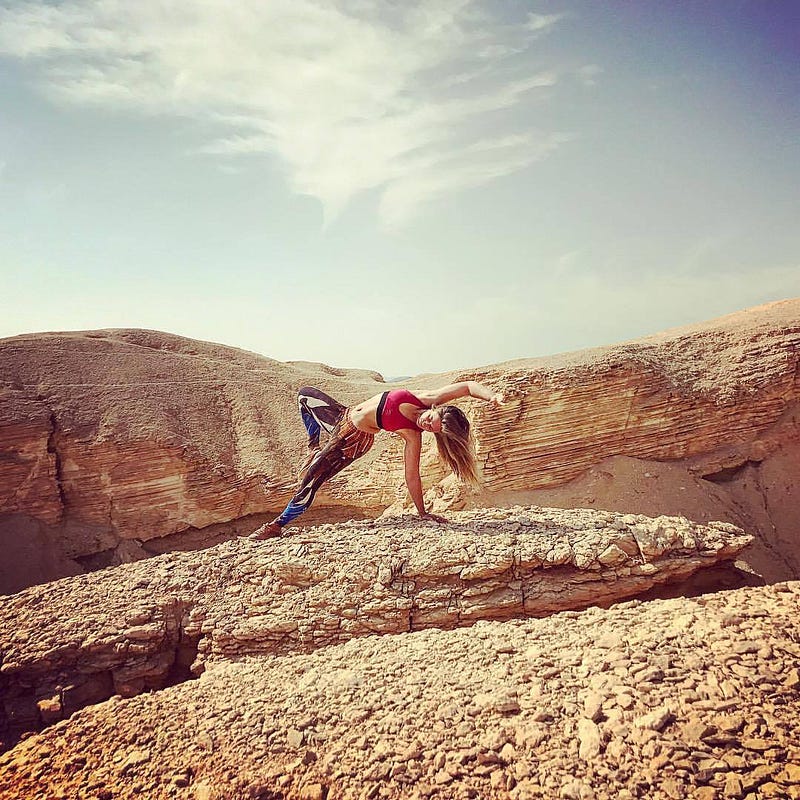
I’m therefore making it my challenge to practice yoga every day in 2020.
I aim for an average practice of one hour per day. With a minimum of 30 minutes. While some days will be longer.
Preparation
Suddenly starting to practice an activity every day, when you haven’t done it for a while, can be quite intense for the body.
I therefore did some preparation. For the last two months of 2019, I practiced yoga about four times a week.
Mostly, there was no problems. But I noticed that I struggle a bit with yin classes, and the classes they call restorative yoga. These classes often involves poses like sitting on the ground and leaning your upper torso down to reach your toes.
The name of these classes indicates that they are easy, but as the flexibility in my lower back is not that good, I actually find them more challenging and a bit dangerous for my lower back.
I took a break for the last two weeks of 2019, and the back now feels good again. But I have learnt to avoid certain poses and how to align the body to avoid feeling pain in the lower back.
When you’re starting a new activity, it is good advice to not start too intensely.
Building up your tolerance gradually will give better results long term.
Best tips for learning yoga
Focus on yourself. In yoga, as in life, it’s better to work with what you have than comparing yourself with someone else.
Every body is unique, listen to it, and challenge your own boundaries.
Find a good teacher, to motivate, explain and inspire.
Challenge your limits. Only by pushing your current capabilities can you change what you can do.
Improve gradually. By improving a little bit every day, you will eventually improve a lot.
Focus on the fundamentals. They are the foundation of all future improvements.
Thanks for reading, following and sharing ! :)
My other 100hour challenges:


