
100Hour Challenge — Salsa Dancing (200Hours)

My first ever salsa class was in Medellin, Colombia.
Diana, a very passionate dancer who I met in the hostel I was staying, taught me the absolute basics, counting from un-dos-tres, cinco-seis-siete.
I quickly got the hang of it, or at least I thought so, and after a few classes I felt ready to go out practicing in the ‘real world’.
We went to Eslabon Prendido, a tiny and packed salsa bar in downtown Medellin. There was a band of 8–10 musicians, in a small room filled with 40-50 dancers. It was fair to say that the music filled the room and way out onto the streets.
The level of dancing was very high, as it’s one of the favourite places to go for the best dancers in town. And we were in Colombia after all.
I felt quite good, and was able to dance reasonably well, especially with Diana, which seemed to understand all my leads.
It took a while to understand that she was the main reason to why I was dancing so well. She is from Cali, one of the salsa capitals of the world, and could basically dance herself into moves, which it felt like you were leading her to do.

Back to basics
I continued taking salsa classes in Antigua, Guatemala.
At first, it was quite frustrating.
In class, I felt I was doing well and that I was improving a lot.
But when I went out dancing, many of the moves just didn’t work, and I didn’t understand why.
Sometimes I couldn’t find the rhythm of the songs, the dancers didn’t follow the lead and there wasn’t much space. This meant that you were bumping into other dancers a lot.
Situations like this, were you put in a lot of effort to learn something, but don’t see the results you are hoping for, can be especially frustrating.
It’s important to remember that this is a common part of the learning process. But it can be hard to remember when you’re in the middle of it. If you’re a bit stuck in a skill you are learning right now, keep pushing through, and you will eventually find a lot of enjoyment on the other side.
In the second month, I was starting to feel more confident, and several moves started to work, even with dancers I had just met.
The ability to dance in cramped spaces improved, which you can only do by actually dancing in such places. After some time you start to become more aware of what is going on around and behind you, and you start to use smaller steps. You also get a feeling for what moves will work.
Also, keep in mind that the moves your teacher shows you, will probably work best with her. Testing the moves with someone else is a step or three up in difficulty.
At this point I had reached about 100 hours of practice. But that’s about the point when it starts to become really fun. So, I decided to keep going, and do a second 100Hour Challenge, to try to get to the next level.
Why did I chose to continue with salsa rather than trying another dance or a new skill?
The most important reason is that I find it more interesting to practice skills when you have reached a certain level. That’s when you’re starting to enjoy the activity more.
And at this point I was living in Medellin again, so it was hard to resist starting another dancing challenge.
Find the right teacher
The most important part when learning to dance is to find the right teacher.
I tried a couple of places, but some teachers were overly critical or not very focused on what you were doing. I’m very motivated to improve, but at the same time I don’t want to learn from someone who takes the fun out of dancing. My aim is to be a social dancer, not to go to competitions.
Furthermore, you should look for a place that provide good conditions for learning. Having a lot of people in the same room, playing different styles of music, and having teachers that are not paying full attention is a bad sign.
Eventually, I went to Santo Baile, a dance school that has full focus on the improvement of their students.
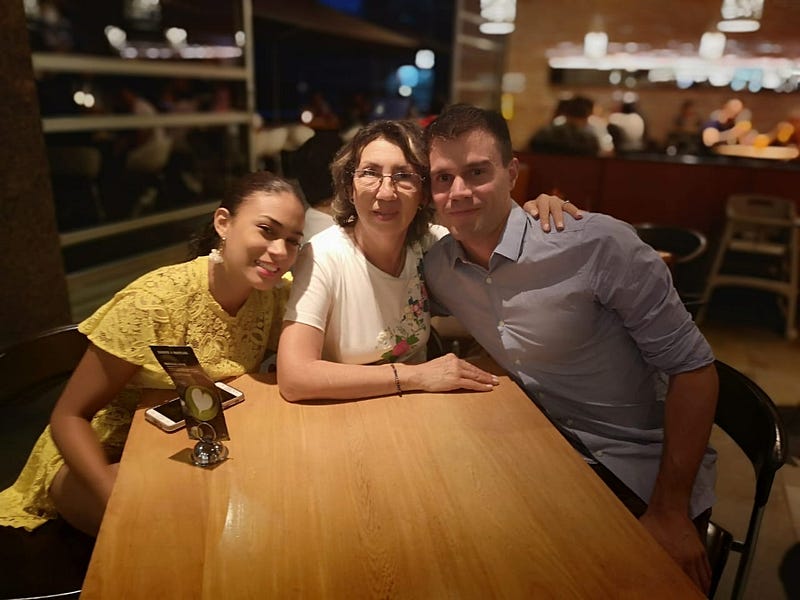
I’ve been taking classes with a few teachers there, and they were all great, but my favourite teacher was Laura.
She is kind, but at the same time very demanding, and will only give you a smile if you are focused and perform at your best level. She gives honest and fair feedback, and you know that if you manage to get a compliment, you actually deserved it. Furthermore, she give you her full and undivided attention. This was a perfect match for my learning style, and she is one of the best teachers I’ve had in any skill.
What is the difference in practice when you’re at 0 and 100hours?
When you learn salsa for the first time, you focus a lot on learning the steps, finding the count in the songs and doing basic turns.
After 100 hours of practice, the practice session consists more of polishing moves and movements rather than just learning new ones. A move will often not work, unless it is performed perfectly, and a tiny difference in how you are holding your hand, can result in a very different move, or just a tangle.
I noticed that I was able to learn new moves quicker than in the past, probably because I had a basic vocabulary of moves in my body.
My footwork is much better than my arms and shoulder work, so we practiced the inclusion of the whole body into the dance. We practiced this by doing exercises that isolate the movements of certain body parts, such as just the shoulders.
Furthermore, we worked quite a lot on shines, which is solo dancing to help you improve your footwork and style as a dancer.
And in general we practiced with faster and more variable songs than when I was a beginner.
How to memorise all these moves?
There are thousands of possibilities when dancing salsa, so one of the main challenges is to remember the moves you have learnt in practice.
It is relatively easy to remember a new move right after you’ve learnt it, as it’s still in your short term and muscle memory. But a day, a week or sometimes just half an hour later, it can all be gone.
The best timing to solidify your learning is to repeat a move just before you forget it. So, if you’ve learnt a move in the beginning of the class, see if you can still remember it after doing something else for ten minutes, then again in the middle of the class, and finally in the end. Try to repeat it again that night and in the class the next day.
The better you remember the move, the longer you can wait before practicing again. Try each move in three days, a week and two weeks for example. Eventually, as you learn something the move well, it will become part of long term memory, and you will be able to use it almost whenever you want to.
Practicing for a show
I was struggling to remember several of the moves I’ve been learning. Often they start out very similar, and minor differences, such as a back-step or a tiny change in your hand positioning, can mess things up.
We therefore decided to make a choreo to a song, where we put several of my new moves into various parts of the song. This can make the different moves and sequences easier to remember.
Yul, the owner of Santo Baile, saw us practicing the sequence and proposed that we could perform the show at a dancing event, in front of about 50 people.
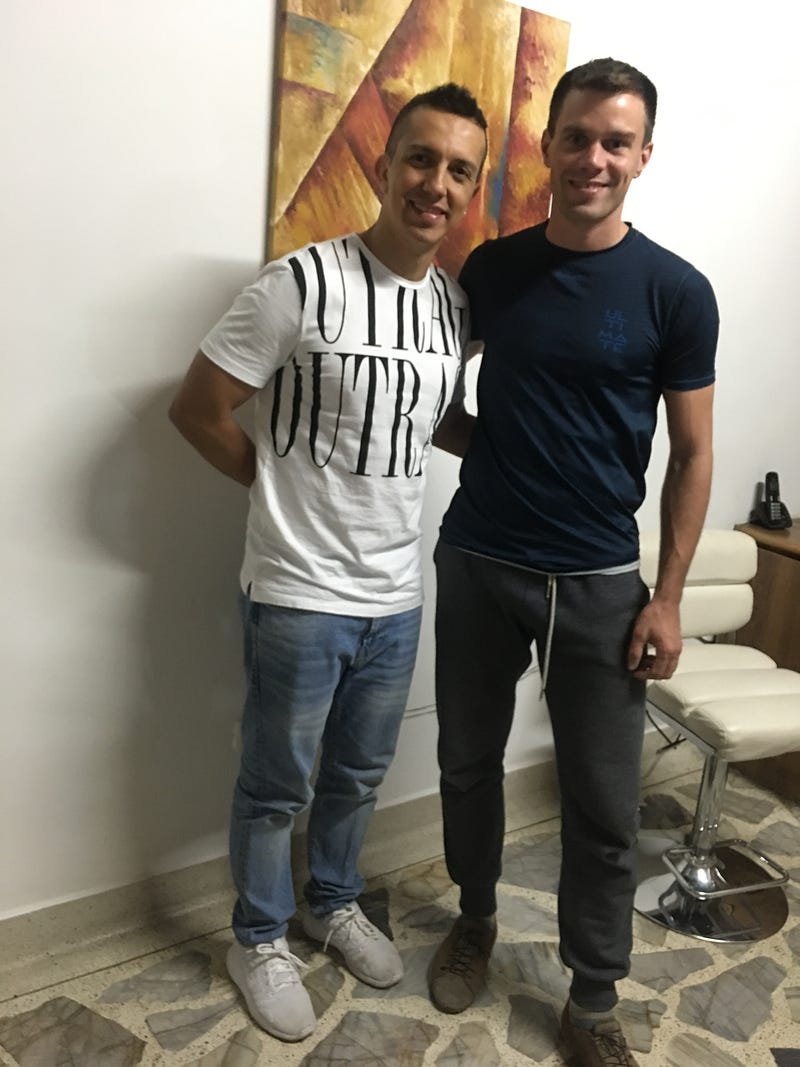
I found this exciting, so we agreed to do it in two weeks. Having a goal to practice towards is a useful way to push yourself to be focused during practice.
A performance is quite different from social dancing, and as you want to entertain an audience, you should dance with much more energy and use larger steps than normally.
You need to interact with the audience and smile to them, especially when facing their direction. This can be quite tricky when you’re focused on remembering your moves.
We (and by we I mean Laura) choreographed the moves so the show would be interesting to watch for people watching from every side of the room. We also turned up the speed of the song, and cut out a part, to make the performance a bit shorter and energetic.
Finally, we dressed up elegantly, so that people would enjoy to watch. The mens clothing is often more neutral (like black), while the girl should shine like a star.
Injury
Unfortunately I injured my ankle playing Ultimate frisbee on the weekend before we were supposed to perform show, landing on top of someone when trying to defend a disc. Nothing was broken, but the ankle was purple and the size of a large orange, so I couldn’t even put on a shoe.
This was super disappointing, as I was very excited about this performance. But hopefully the practice have stuck so well in memory that we can perform it some time in the future after a few hours of relearning.
If you want to see one of the practices before the show, you can find it here. (It’s a fb-group where I post things around my learning challenges).
What is the difference in practice when you’re at 100 or 200 hours?
As you progress you start working on finer and finer details.
You can always memorise more turns, but the most elegant dancers are often those that do the basics really well. So, even after several months of practicing, you should still work on improving the basics.
When I asked Laura what I should work on to keep improving she listed up these things: follow the music very clearly, dominate the lead, control the space around you, have a good relationship with the music and how you interpretate it, learn to improvise, listen to salsa music, and use your personal feelings. This is a direct translation from Spanish, so some meaning may have been lost.
As you dance more, you start to realise that good dancing consists of a lot more than being able to count to eight.
You can add a lot of personal style, play with the music and have a lot of fun. You can dance to different instruments in the songs and interpret it in countless ways.
These are concepts that I wouldn’t even have understood when I first began dancing (and even now I’ve just barely started to scratch the surface of what it means). I used to think that salsa was one rhythm and that everyone followed it in the same way.
This illustrates how salsa dancing, and all other skills for that matter, become much more interesting and rewarding the more you learn.
Examples of mistakes
When you improve as a dancer you need to consistently work on improving small details in what you do. You will probably develop many less than ideal habits along the way, and these have to be removed and improved one by one.
Some of my most common mistakes have been:
Not dancing close enough to the girl. It looks better if you’re dancing closer together.
Using the whole hand to turn the girl. Using one or two fingers while spinning the girl makes it easier for her to turn.
Holding the hand too high over her head when spinning her, this makes it uncomfortable for the girl to do the turn properly.
Leaning down to the girl. You should try to keep a straight posture, even if she is shorter than you.
Best tips for learning to dance salsa
Find a good teacher, someone who is strict but still motivates you and makes it fun.
Dance a lot. You will never know if what you have practiced work before you try it with several different dancers. Don’t be shy, dance a lot even though you know you’re not that good yet.
Be rested before you go to class. If you are tired, you will not be able to perform at your highest level. And to push to the next level, you need to dance near the edge of your current capabilities.
Be attentive to what the teacher tell you. It can sometimes be difficult to understand exactly, especially in a different language, but it helps if you pay close attention.
Do your homework. Get your teacher to show you some steps that you can practice at home. Increasing your speed and precision of different steps is very useful.
Listen to salsa music. Similar musical patterns occur in many songs. Also, some of the most famous songs are being played all the time. If you know the music that is coming, its easier to improvise and dance according to the music. I used to listen to music every day while walking to class, and practiced solo steps at home in the evenings.
Just because you have managed to lead a turn or sequence in class, doesn’t mean you have learned it. In class you had the movement in short-term memory and the teacher expected you to do the move. It is very normal to forget it for the next class or next week, and you may not be precise enough in your lead for it to work with someone who hasn’t seen the move before.
Repeat the move again in the next class and when you are out dancing, with slow and fast songs, tall and short girls. The more variation in circumstances you can manage, the better you have learned it.
Improve one thing at a time. If you or your teacher tries to fix every detail at the same time, it becomes overwhelming and difficult to improve.
Tell the teacher when she is going too fast. She is the expert on salsa, but you are the expert on yourself. Sometimes you need to slow or speed up the class in order to learn optimally. The best teachers will listen to you and adjust their teaching.
Always smile and have fun:)
Thanks for reading, following and sharing ! :)
My other 100hour challenges: