
100Hour Challenge — Ultimate Frisbee
I played Ultimate frisbee for 200 hours.
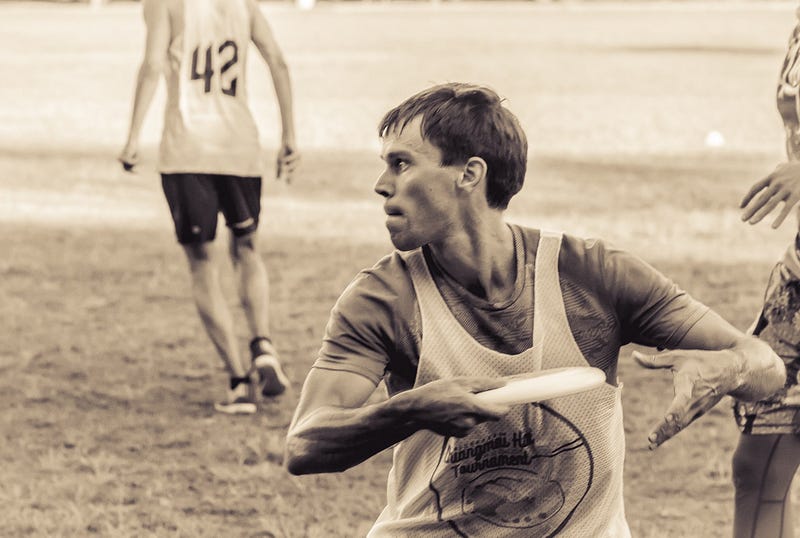
Background: Before I started the 100Hour Challenge in Ultimate frisbee, I had about 20 hours of throwing practice, and 33 hours playing pickup games (where you usually throw a bit in the beginning and then play a quite unstructured game.) Most of this time, I was playing as a cutter, which meant that I was doing a lot of running and catching, and some short throwing.
There are two main positions in Ultimate, handlers and cutters. The handlers usually stay more in the back and pass the disc around. Cutters position themselves further up the field and try to run to get open and eventually score points. If you catch the disc in the end zone, you score a point.
At the start of 2018, I relied on my backhand and didn’t feel very comfortable throwing forehands in game situation. However, I was usually able to throw short passes of 10–15 meters if I wasn’t defended. I had a very shallow understanding of tactics and proper movement patterns from different positions. I was relatively good at getting away from my defender, using speed and seeing where there was open space. But, this was against defenders who mostly didn’t know how to position themselves well. I knew that we were supposed to hold a force by standing on one side of the player we were marking, but I didn’t yet see how this was related to the rest of the defenders on my team.
When the year started, I had minimal experience, except for some recreational games and a bit of throwing practice.
In total, I reached 211,5 hours of practice time in 2018.
When I say practice time, I refer to the actual time where I’m involved in a game, technical practice, or tactic related training. If we have a 1,5-hour practice and spend 10 min jogging, 10 min stretching, 5 min to organise drills and 5 min to drink water; I will only count it as 1 hour of ultimate practise. If I practice throwing for one hour, it counts as a full hour. There is not exact precision to this, and you have to make your own decisions about what counts as quality practice.
Recently, I’ve been practising with a team in Colombia, and it was so well organised that I counted a 1,5-hour team practice as a full 1,5-hours of quality practice. There was almost no time during the practice where we didn’t have a disc in hand. We were also challenged tactically and physically at the same time. A great way to do physical training is to incorporate it into the technical and tactical training. This also makes those situations more similar to a real game, where you are often tired when performing movements and throws.
I started my Ultimate career in Bali in February 2018. The first thing I focused on was to improve my basic backhand and forehand throws. I was learning to throw straight, inside-out and outside-in (different angles of the disc.) When you start a new skill, the most efficient way to improve is usually to try to learn the basics well. That means practising the types of throws and situations that happen most often during a game. Doing simple throws with a high probability of success is usually the best choice. Especially if your level is lower than the opponents you are playing against. Most of my practice in the first two months consisted of throwing with friends.
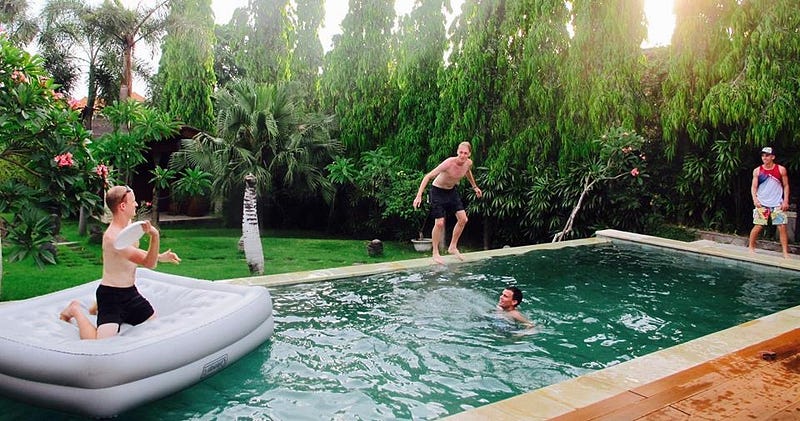
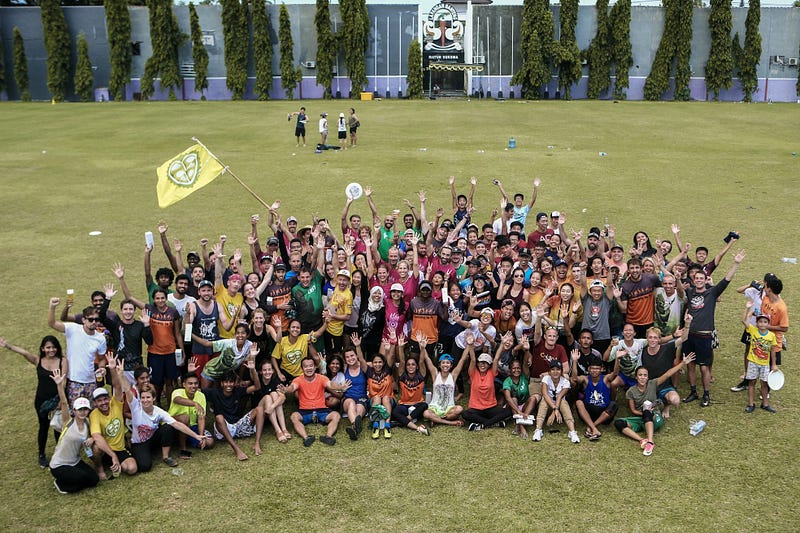
We also created a team that came together for weekly practice. We focused on defensive structure, creating a stack where cuts (runs to get away from your defender) could start from and basic throwing and catching practice. This was the first time I participated in basic throwing drills. We practised weekly for 6–7 weeks leading up to the annual tournament in Bali, the Nusantara Cup. Our team, the Lovehandlers, consisted of some players for which it was their first tournament, and partly of people with more experience who could help to plan strategy and lead the team. Our greatest strength was our team spirit. Everyone worked for each other. The teams we were playing against had much more experience. Most of them were flying in from other countries in Asia, suggesting they had quite a high interest in playing Ultimate.
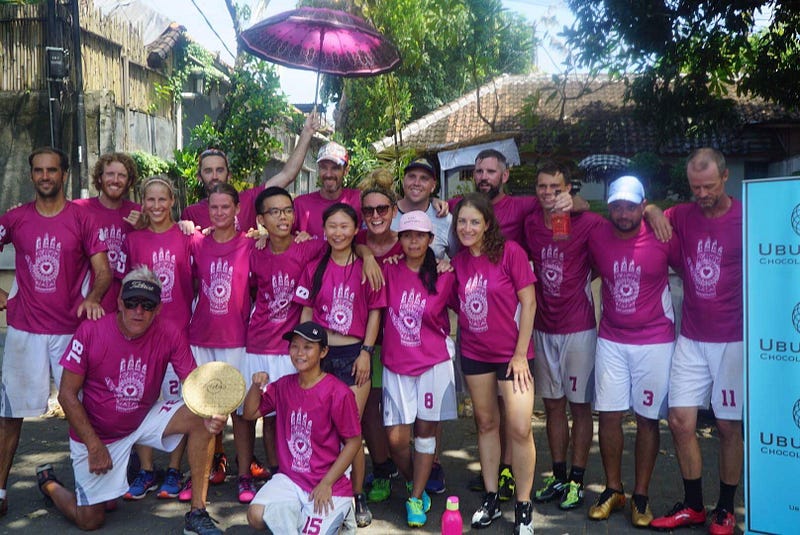
The new players on the Lovehandlers improved fast, and I learned some of my first basic strategy from our team discussions. Another thing that helped us improve was that there was another team in Bali, UB7, who practised on the same field, and at the end of each practice, we played a game against them.
If you want to improve as a team and as a player, it is essential to have a challenging opponent, that can push you to perform better. Of note, we won the last practice game before the tournament against UB7. This made them slightly uncomfortable. So, they reinforced their team with Jimmy Mickle and Chris Kocher (two of the best players in the world) and went on to win the tournament.
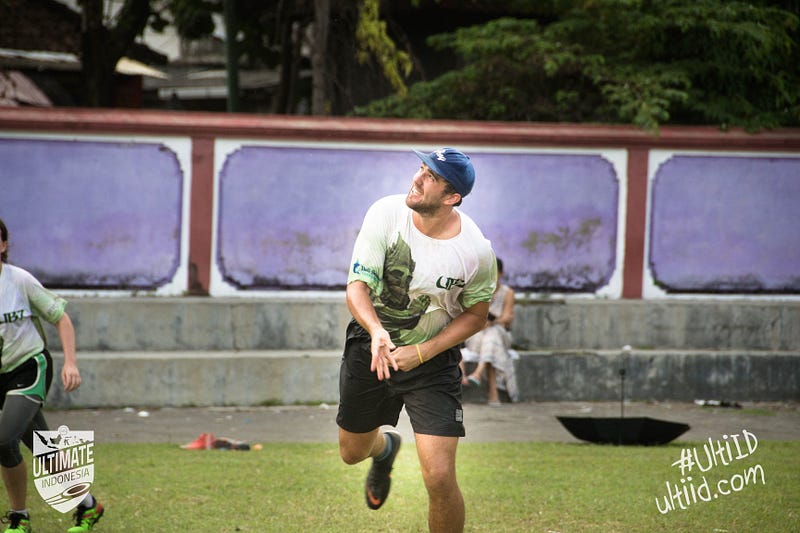
In the tournament, we (The Lovehandlers) went on to win one group game and had two relatively close games, losing by a couple of points. This meant we had to play an early playoff game Sunday morning against a Singaporean team. We were not fully awake and lost the chance of meeting UB7, Mickle and Kocher in the quarter-finals. It would have been a great experience to play against them in our first ever tournament. In the end, we came 9th out of 10 teams but won the award as the most spirited team.
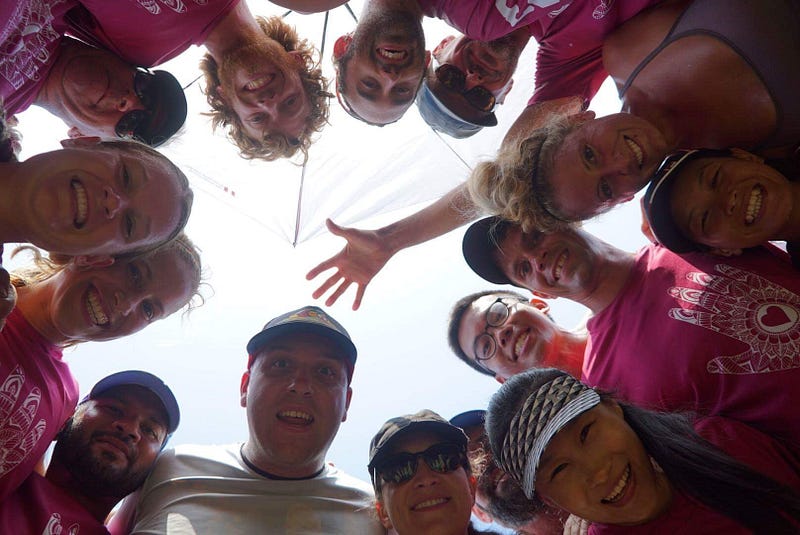
In the 2,5 months I lived in Bali, I practised for 80 hours, the most intense period of my playing time. But this meant I still lacked 20 hours of practice when I moved to Lisboa. I searched for a team and went to a Disc’over Lisboa practice the day after I arrived.
The Disc’over practices were more organised, and it was fun to start learning more about tactics and how to play as a team. We focused on improving decision-making and on physical training to get stronger and to make better decisions late in games when you are tired.
The team has a Colombian coach, Nico, who wants us to do short passes with lots of movement around the disc. And a hard man to man defence. Quite different from what I had seen before. This type of play requires that you are in good shape and also that you have a good tactical understanding of the game.
One of the most valuable learning experiences for me was that I now got to play with better players. To see how they moved and played helped me understand the game better.
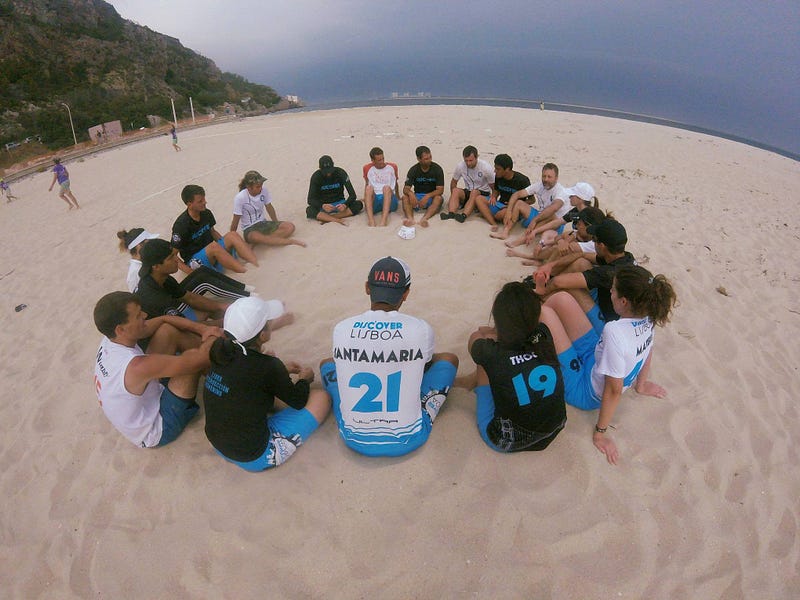
My first games with Disc’over was in the beach league in Figueirinha. The intensity and quality of play was quite high. I played with the Disc’over second team, against the best teams in Portugal. We lost solidly in most of the games, but it was still enjoyable. It was a challenging experience and fun to get a feeling of what it takes to get to the next level.
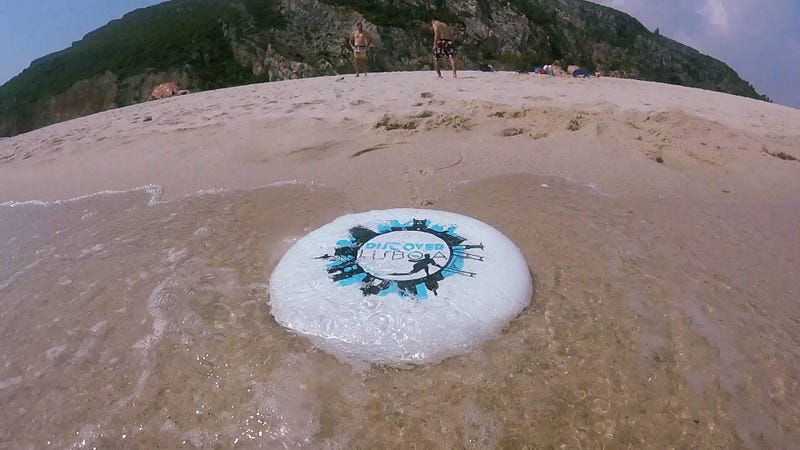
At the end of May, I had reached my goal of 100 hours of practice, but I enjoyed playing so much that I kept practising 1–2 times per week. I mostly focused on other skills at this time (Portuguese and Kizomba).
I planned to leave Lisboa around the end of July, but I liked it so much that I decided to extend the stay. This meant that I could join Disc’over in the regional European Championships Southwest (which includes teams from France, Italy, Portugal, Spain, and Switzerland) at the beginning of September. For this tournament, we started to practice harder physically, as we were going to play seven full games in two days. We also had a weekly practice game against Vira O’Disco, another good team based in the Lisboa area. These games pushed us to play at a higher level. Vira won most of the practice games, so they were a perfect opponent to challenge our ability.
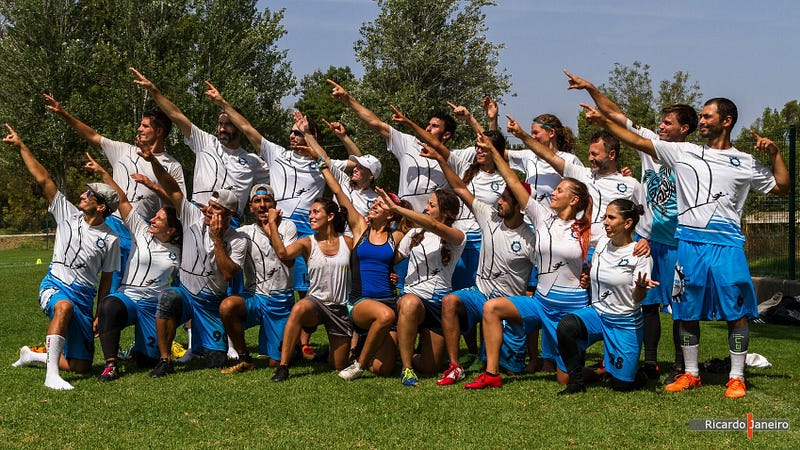
Disc’over also played in the same regional tournament the year before, where they ended up 12th out of 12 teams (losing 4–15 on average per game). So going into the tournament, we didn’t have high ambitions, except for learning and giving our best in every game. In the first game, we quickly went down 1–5 against a Spanish team, and it seemed that the competition would be fierce. But we fought back and won the game on universe point (it’s a draw and the team to score next wins). This was the melody throughout the tournament. We fell behind at the beginning of games, but then played better towards the end, where that physical training made a difference. We were also mentally strong, winning three games on universe point. In the semis, we played a Swiss team and won again. We were in the final, very unexpected.
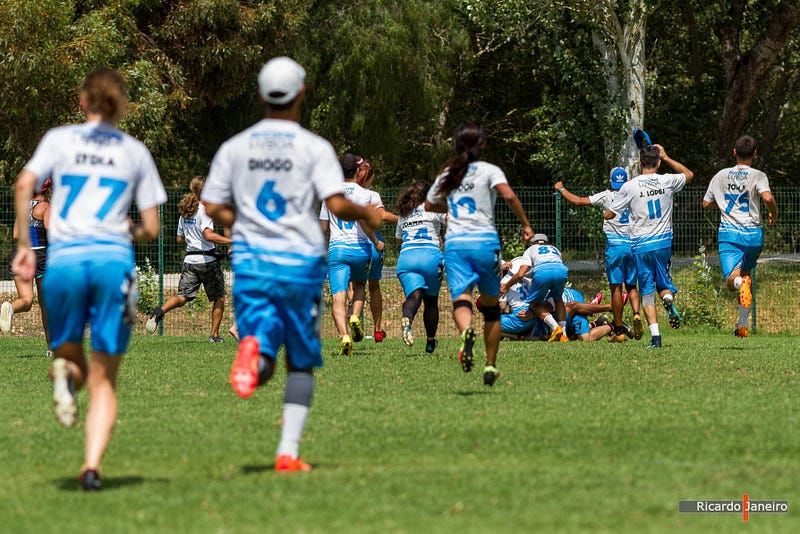
In the final, we met our practice opponents, Vira O’Disco, and they were clear favourites before the game. But we took the lead from the start and held it to the end, winning 12–10. What an incredible win. And such a good feeling after putting in a lot of work.
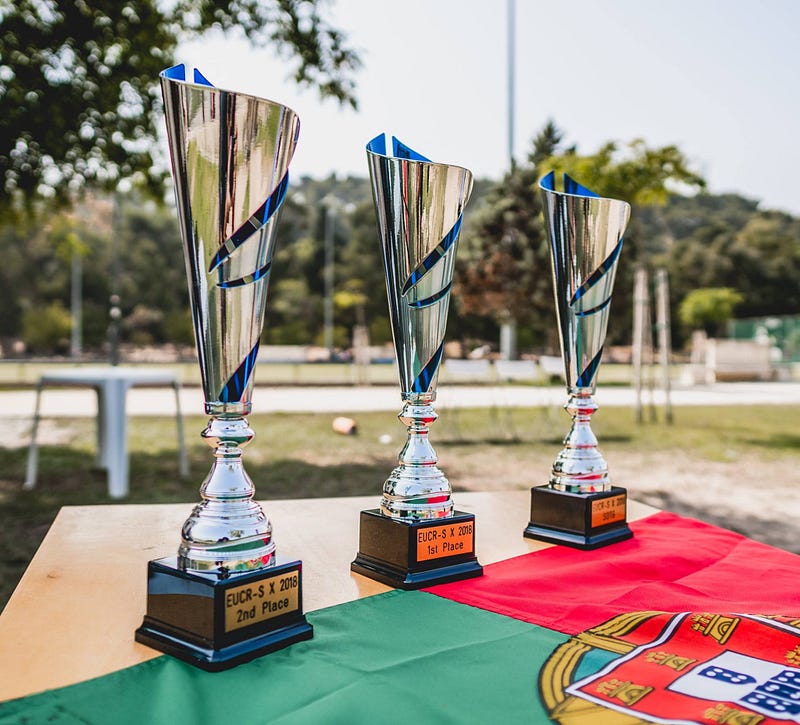
This also meant that we qualified for the European Championships in Wroclaw, Poland; only a month later. But it was so unexpected that we hadn’t made plans of travelling to the tournament. A few days before the tournament deadline, we had only five confirmed players. But Nico made a few calls and convinced the players, and we managed to go with a roster of 13. This is a small number of players for a tournament like this, where we were going to play seven games in three days (but now 90min games instead of 75min). In training, we kept the physical focus but also worked on making correct decisions in situations where we were tired. From August I had started practising more again. About four times a week (two weekly Disc’over practices, then usually a beach practice and a throwing practice). When we played the European Championships at the start of October, I had about 170 hours of training.
I was starting to learn to break the mark with my throws (which means you are trying to pass the disc to the side of the field that your defender is trying to prevent you to throw to). Until now, I had almost always taken the easiest possible option/throw. I also started to understand how and where to make a good cut. And how the team could work together to improve the timing between cuts and passes from the handlers. I also started to see the value of making the first cuts to the break-side, as this can leave the opponent’s defence vulnerable in the next few passes.
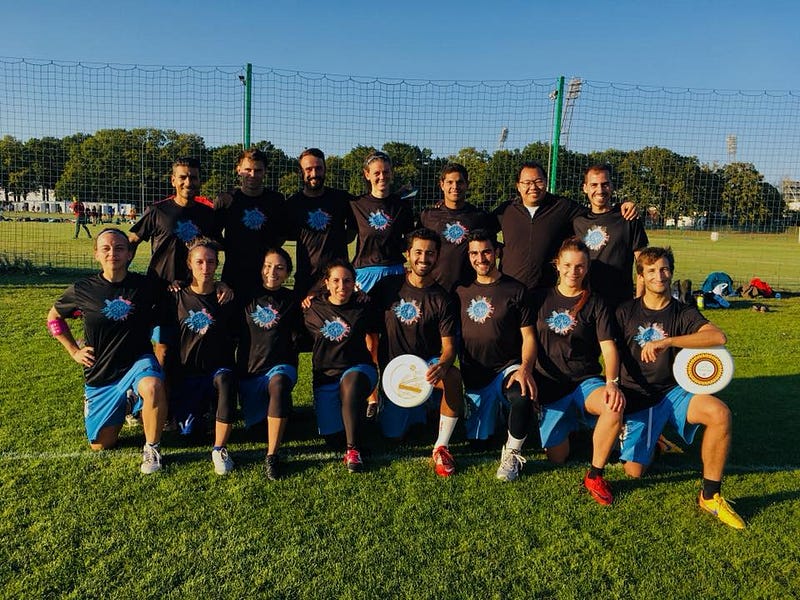
Playing in the European Championships was a great experience. It pushed my limits, as the players were faster and smarter than what I had previously played against. Every game was intense. Again we came into the tournament without any expectations. In the first game, we played Colorado from Germany, the finalist from the year before. We won the game on universe point, an astonishing victory. We went on to win the next game as well, also on universe point, before we were crushed in our third game. But overall we were 2–1. The next day we won our two games, and with 4–1, we won the group and were in the semi-finals. The semi-final was the most epic game so far in Disc’over Lisboa’s history. We were leading 13–12 against the Swedish team SeE6 (who won the tournament), but eventually lost 13–14. In the bronze game we lost against an Irish team we had beaten in the group. But it was still a great success. We came into the tournament without any expectations except for learning and ended up 4th in the European Championships.
This inspired us to keep on training hard, and hopefully, we can come back with an even better result in the future. Another great notice was that I was invited to play for Portugal in the European Beach Championships in May 2019. This will be my highlight so far as a player, and I hope to peak my form at this time. We have started an additional sprint/strength/conditioning workout for this tournament. Playing on the beach is especially tough because you run in the sand, and also you play five against five (instead of seven against seven), so you are more involved in each point.
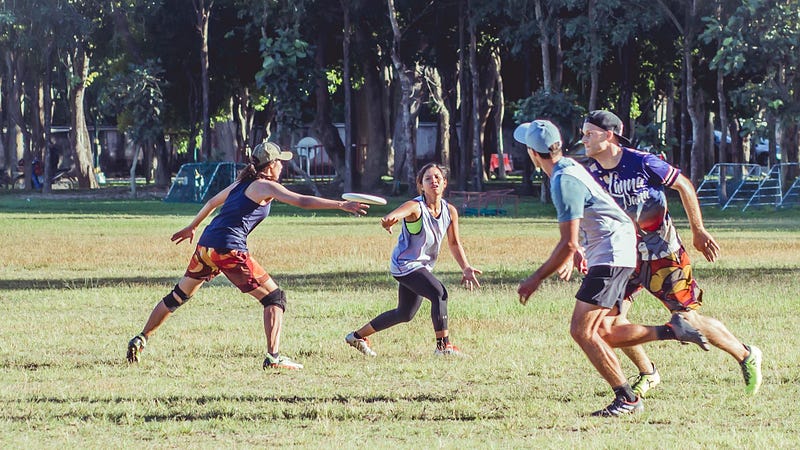
From November I moved to Chiang Mai, Thailand. Here the games are more casual, but still with some excellent players. One day I ended up playing against Sean Keegan (from PoNY, the top team in the world right now), as he was travelling through on his holiday. And I remember thinking how incredibly good these travellers coming into our games were. This is the charm of ultimate. People of vastly different skill can still play together in the same games. It is a great community. Also, it is one of the few team sports where women and men can play together in mixed games.
The games in Thailand were more relaxed, which meant I could play most of the time as a handler. In this position, you get more disc involvement, and will usually develop faster as a player. It was a significant help for me that I had seen how to play the handler position in Lisboa. Two of the things I look most for are the give-and-go pass (you pass the disc to someone, then you make a run to be in a position to get the disc back quickly), and the break-pass (trying to get the pass to a part of the field that your defender is trying to stop you from). I’m still careful with long throws, as I hate when we get a turnover (losing the disc to the other team). Long throws are riskier, as they give the opponent more time to run to the disc and intercept while it is in the air.
Another great experience in Thailand was that we got to play in the first Thai National Ultimate Frisbee Championships. We played as the Chiang Mai team, in Bangkok, and came 2nd in both the Mixed and Men’s division (losing both finals on universe point). But again, it was a great experience and I made a lot of new friends. Ultimate frisbee is by far the activity I’ve done where I’ve made the most friends. It is also a perfect sport for everyone with a nomadic lifestyle, as you can find games in a lot of places around the world. It is also a great way to quickly get a network of friends when you arrive in a new location.
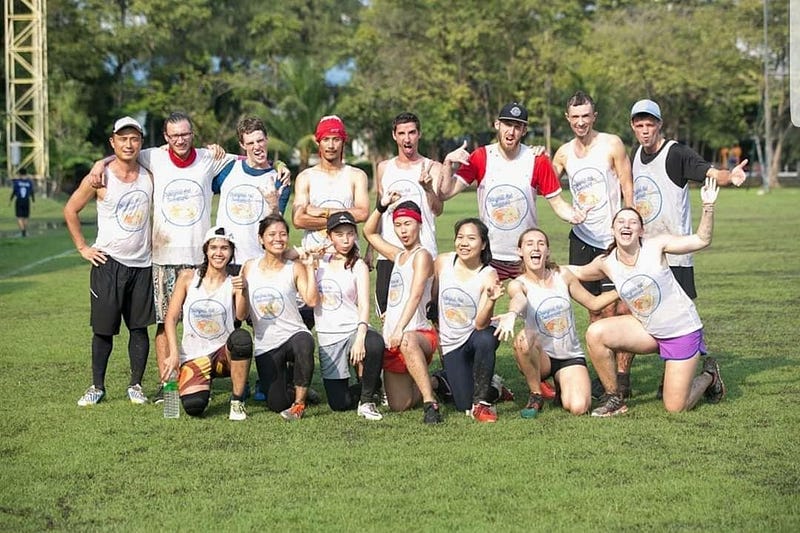
This was the end of 2018, and my total practice time was now 211,5 hours.
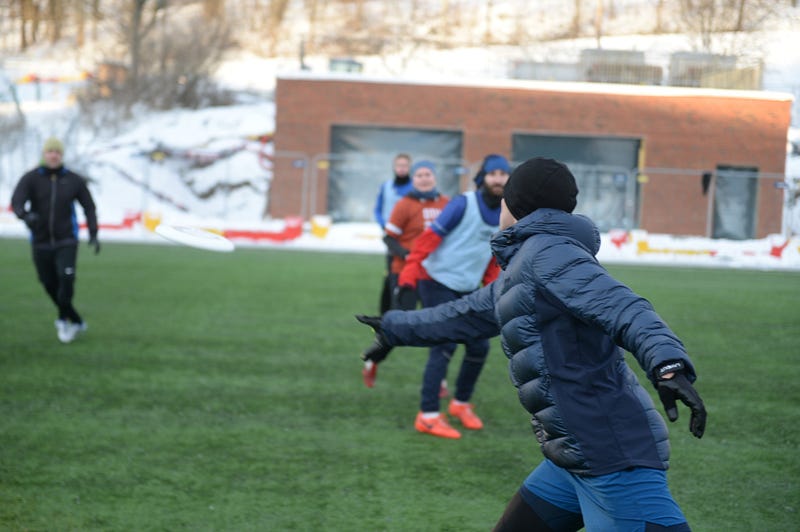
I was now in Stavanger, Norway, to celebrate Christmas. This meant less practice, as there is no team where I’m from (they have a pickup game in summer only). But I did a couple of hours of indoor throwing and some sprint practice. I also found out there was a tryout for the Norwegian team to the European Championships in Hungary next summer. The conditions were slightly different from the 30 degrees conditions I was used to in Thailand. In the bus on the way to the practice, the temperature showed -10. But with a pair of gloves, thermals, a fleece and a down jacket, it went surprisingly well. I made it into the team, so now I have another tournament goal to practice for.
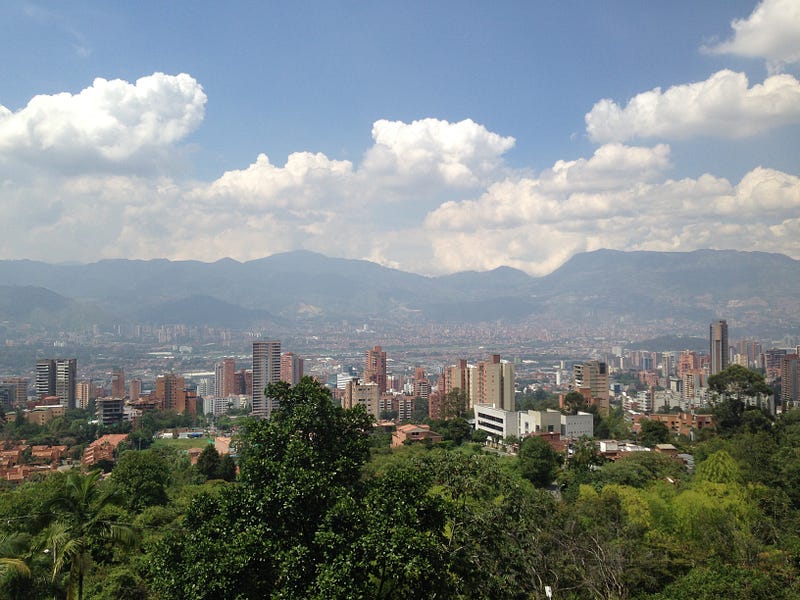
After Norway, I moved to Medellín, Colombia. A beautiful city with a great climate, around 22–29 degrees all year. Colombia also happens to have some very strong Ultimate teams. Nico helped me to join the practice of a men’s club called Kié. Their practices are so far the most intense I’ve been to, and there is a high focus on technical and tactical skills. The players I play with here are really fast, strong and make smart movements. So far this is the highest level I’ve played at. Kié practices twice a week, so I also joined the practice of another team; Medellín Mixed Masters, with coaches that focus on improving the tactical understanding of the players. I’m very excited to be able to practice with these teams ,and hopefully, I can develop a lot during my two and a half months here.
The plan is to keep developing my Ultimate skills to a more advanced level. I aim to reach 300 and 400 hours of total practice this year. Different practice is required when taking your skill to a higher level. It is not enough to just show up at practice and throw a disc around. Each practice should have a specific focus and every time you throw a disc, you should aim to throw it in a certain curve to a specific target. When the person you are throwing to is marked by a good defender, it limits the window of where you can throw, meaning that you must be more precise, quicker and often also pass the disc at a higher speed.
To keep developing requires that you have strong opponents that push you to play at your highest level. Improvement also requires that you build your physical capabilities. Ultimate is quite a demanding sport physically, especially when it comes to sprinting, strength, stamina and agility. Overall, it is an excellent activity for staying in shape when living a nomadic lifestyle. It is quite easy to join a team almost anywhere. And the community is open and welcoming.
Thanks for reading, following and sharing ! :)
My other 100hour challenges:


