
Why White People Need to Stop Calling Our Black Men Thugs
Assessing the use of derogatory terms to dehumanize Black men
To control the narrative on race relations in America, white pundits and politicians use coded-language to describe Black men. Their goal is to instill fear in other white people, to view Black men as monstrous brutes rather than thoughtful humans. As long as white folks portray Black people as unreasonable and savage, they continue to ignore calls to reform discriminatory laws and policies, all the while justifying their reluctance with slander.
Originating in India, the word “thug” described men in organized crime syndicates. Before the British Colonization of India, these men participated in robberies and murders, known for their callous use of cruelty. In every story about colonialism, white people find a hero to justify marginalized people’s slaying, and this story is no different. A British colonist, Lord William Bentinck, eradicated thugs from India in the 1800s. Bentinck and his men imprisoned many of these so-called thugs. They killed and exiled the rest, vowing never to let them rise again.
In the American context, white people use thug as a synonym for the N-word, with many hoping to one day eradicate so-called thuggish Black men from American society.
Racist law-and-order words like “thugs” are used to justify state-sanctioned violence. It is necessary to decode how racist slurs like the n-word have been replaced with crime-based terminology like “thugs” to justify anti-Black occupation-style policing (Kitossa, 2020).
While thug is the term used today, belittling Black men is an American past time. Dehumanization has always been an essential aspect of the Southern strategy. Southerners understood that as long as the general public of white people feared Black men, they could hurt them without consequence. For centuries, white people called Black men “boys,” implying that they are not complete humans but rather mentally inadequate children who merit no authority over their lives. However, Black men are family and community leaders who deserve respect.
In the modern era, white politicians and pundits continue to use the word thug to describe Black men. Just as they attempted to discredit Civil Rights Leaders as violent even as they promoted racial tolerance and equality, they now aim to decimate the Black Power movement by painting Black heroes as villains and Black men as dangerous thugs.
White people use coded language to express bigotry
Manufacturing fear of “the other” is an instrument of authoritarian social control (Kitossa, 2020).
White Americans use coded language to undermine Black people. They understand that if no one listens to Black men speaking out about injustices, their efforts will fall on deaf ears.
Martin Luther King Jr. led a nonviolent movement to encourage white people to see the violent impacts of Jim Crow and systemic racism, urging them to change. However, pundits and white politicians led a counter-movement driven by fear.
White people have long feared the retaliation of freed Black people. Even though Africans wanted freedom, white leaders often portrayed them as villenous subhumans out for blood retribution. Hundreds of years after abolishing slavery, white people no longer anticipate violence, but they pretend they do. Their goal is to maintain white dominance, and they cannot do that without criminalizing Black men, discrediting leaders using baseless claims.
Rather than refighting a lost battle, Nixon appealed to white Southerners by using the language of law and order to indicate his desire to keep Blacks in check through expanded law enforcement powers (Vitale, 2018, p.2015).
When they call Black men thugs, they imply that no one should listen to them or care about the brutality and discrimination they experience. As long as white people view Black people as “the other,” they will feel reluctant to listen and, least of all, to make necessary changes.
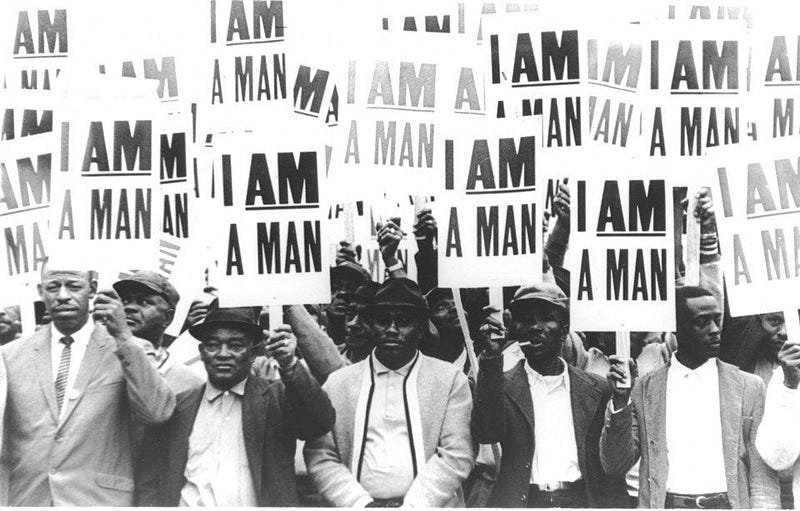
America remains a white-dominated country because most white people do not feel ready to give up their privileges, earned through colonialism. Thus, many of them were already looking for an excuse to ignore Black pain. Instead of them seeing our Black men as leaders who should have a seat at the table, they insist that our Black men are thugs and thus do not deserve an empathetic ear.
White people know they cannot use the n-word without consternation. They use coded language to send dog whistles to other white people without much upheaval, continuing their agenda. Richard Nixon gained power by appealing to white southerners using coded language.
The Nixon campaign in 1968, and the Nixon White House had two enemies: the antiwar left and Black people. You understand why I’m saying? . . . we knew we couldn’t make it illegal to be either against the war or black, but by getting the public to associate the hippies with marijuana and blacks with heroin, and the criminalizing both heavily, we could disrupt these communities. We could arrest their leaders, raid their homes, break up their meetings, and vilify them night after night on the evening news (Vitale, 2018,p.2025).
Coded language is an essential item in the white supremacists’ toolkit because it allows them to express themselves freely without getting called racist. During the past summer, many Americans rose in opposition to extrajudicial killings by police officers and, in the case of Ahmaud Arbery, white vigilantes. Yet, the coded-language came fresh out the gate to discredit Black Lives, Matter protesters. For context, officials characterized 93% of the protests as nonviolent, while the 7% remaining involved isolated instances, never credited to Civil Rights organizers. Despite data revealing the benign nature of the protests, a poll showed that 42% of Americans still viewed them as violent.
After months of hearing that BLM protesters promoted violence, the facts could not make a dent in their interpretation. Over centuries of American politics, white leaders successfully conditioned their constituents to view Black men as violent beasts ready to cause physical harm and property damage. Throughout this past summer, Trump repeatedly described protesters as thugs. His damaging rhetoric shows that white politicians continue to use the word thug to distract from meaningful conversations about systemic reforms.
Coded language, then, allows politicians, media, and members of the public to tap into bigoted ideas while denying that’s what they’re doing (Lopez, 2016).
White people call Black men thugs because they can get away with expressing racist ideals without the backlash from concerned citizens. They can always make a gasp and say, “I am the least racist person in the world. I do not hate Black people.” To justify state-sanctioned violence, white leaders will continue to characterize Black men as sub-humans that lack credibility.
Using this language is a preamble to the stagnation on the issue of race relations. Just as Black men speak about the violence they experience, pundits insist that Black people are violent and no one should listen to their ideas for meaningful reform. This cycle repeats itself in the media, corporate board rooms, churches, and political organizations.
These words paint protesters not as peaceful demonstrators, law-abiding people or patriots who are exercising their first amendment rights, but as an enemy of the state (Ali, 2020).
The more white people call our Black men thugs, the more they feel comfortable portraying them in a negative light. They always talk about violence in urban areas like Chicago, ignoring the correlation between poverty and violence. All impoverished communities have increased crime, and poverty-stricken white spots are just as violent. America’s real problem is poverty, yet as long as pundits criminalize Black men for existing, white people will always see Black people as morally defunct.
Their coded-language produces an unfortunate cycle of blaming the bootless man for not pulling himself up from his bootstraps. Black men have to live in a country that sees them as violent, even when they are innocent. They are more likely to end up behind bars for crimes they did not commit. Also, Black men serve longer sentences; judges are much more likely to deny them bail.
White people normalized the word “thug,” to describe Black men. Given that British colonists bragged about eradicating them, this term is perilously racist and has no place in civil discourse.
Most White people think Black men are savage brutes
Black men are human, yet you would not know this by only studying American rhetoric. White people consistently described Black men as dangerous to justify maintaining widespread control over their families and communities. The word thug is also a synonym for brute, which white people used to describe Black men.
The claim that black brutes were, in epidemic numbers, raping white women became the public rationalization for the lynching of Blacks (Jim Crow Museum, 2020).
White women often falsely accused Black men of rape as a preamble for their torture and deaths — advocates like Ida. B. Wells valiantly disproved the theory that white men lynched Black men as retaliation for raping white women. However, that did not stop white men from portraying them as fundamentally dangerous. They felt satisfaction in lynching Black men, without trials, because they had succeeded in vilifying the Black man so much that white citizens did not care about the facts. They did not believe Black men deserved a trial.
Lynching was not just about hanging someone to death; it involved body mutilation. Most white people want to look away now, but their great grandparents took pride in sharing their photos and making profits from souvenirs. These white men called these murders justice even though they failed to prove these Black men were guilty of anything.
The brute caricature portrays black men as innately savage, animalistic, destructive, and criminal — deserving punishment, maybe death. This brute is a fiend, a sociopath, an anti-social menace. Black brutes are depicted as hideous, terrifying predators who target helpless victims, especially white women (Jim Crow Museum, 2020).
White women, often portrayed as helpless victims of misogyny, took part in Black men’s emasculation and deaths. Carolyn Bryant accused Emmett Till of calling her “baby” and whistling at her. After he was tortured to death, lynched for the entire world to see, she admitted her claims were false. She suffered no consequences for this horrendous crime. White women, using their Karen prowess, destroyed the lives of many Black men. The only reason we know Emmett Till’s name is because his mother decided to show the world what they did to her baby boy.
Coded-language made the routine torture of Black men normal in American culture. Now, much of the violence is state-sanctioned brutality. In the modern era, the majority of white people still oppose anti-lynching legislation. Their opposition is not because lynching is a thing of the past, but instead because it violates their perception of state rights.
Representative Sisson of Mississippi said, “as long as rape continues, lynching will continue. For this crime, and this crime alone, the South has not hesitated to administer swift and certain punishment. We are going to protect our girls and womenfolk from these black brutes. When these black fiends keep their hands off the throats of the women of the South, then lynching will stop (Holden-Smith, 1996, p. 16) (Jim Crow Museum, 2020).
White men have long used slander against Black men to justify their brutality. Even when the facts show that most lynched Black men never were accused of rape, lies and whitewashing continued.
Just as the stats show that most Black Lives Matter protests were nonviolent, white people insist that Black people are still dangerous. Not much has changed, except for the more frequent use of “thug” in place of “brute.”
Each lynching sent messages to blacks: Do not register to vote. Do not apply for a white man’s job. Do not complain publicly. Do not organize. Do not talk to white women. The brute caricature gained in popularity whenever blacks pushed for social equality (Jim Crow Museum, 2020).
Many white people feel afraid of Black men because white leaders conditioned them to think of Black men as threatening. Their line of thinking is ironic since Europeans were the ones who kept Africans in bondage for hundreds of years. White men were the ones who systematically raped Black women to maintain a steady flow of slaves, yet they called Black men serial rapers. Racism blinds white people from the truth — they used brutality to gain white supremacy and had the nerve to characterize Black and Indigenous people as savages, brutes, and thugs.
Calling Black people names is not harmless; it is the excuse to cause bodily harm, to deny humanity and civil liberties. White Americans need to know about their beloved family members’ history, who called Black men savages while committing the most grotesque crimes against humanity. The refusal by many to engage in restorative justice shows just how complacent white Americans have become in their role in destroying Black men, all in the name of some false perception of duty.
The fingers were distributed as souvenirs. The ears…were cut off. Holbert was beaten severely, his skull fractured and one of his eyes, knocked out with a stick, hung by a shred from the socket.” Members of the mob then speared the victims with a large corkscrew, “the spirals tearing out big pieces of…flesh every time it was withdrawn (Holden-Smith, 1996, p. 1) (Jim Crow Museum, 2020).
Many white people claim they are innocent of racism yet still vote for the same conservative, Republican politicians who oppose the Emmet Till Anti Lynching Bill, making brutalizing Black men illegal once and for all. Our Black men are just as worthy of humane treatment as white men, and Americans need to realize there are no two sides to this argument. You cannot be pro-lynching and anti-racist; those characteristics collide.
The fight for Black liberation is justified
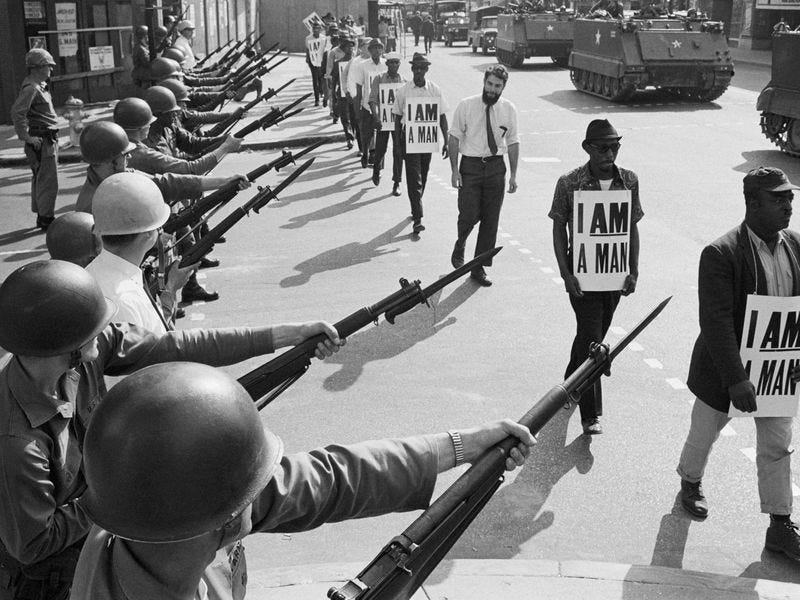
Black people have the right to protest about the brutality they experienced and continue to endure. Yet, white pundits continue to call Black men thuggish to justify their brutality. After a man dies at the hands of law enforcement, they smear his name and record posthumously. They want to seem justified even though nothing can excuse the dehumanization of Black men.
Protesters asking for justice for a man who died as a result of a police officer putting his knee on his neck for almost 8 minutes, have been cast as some kind of threat to the social fabric of society (Ali, 2020).
When white people portray Black men as thugs, they attempt to delegitimize the fight for Black liberation. It is their way of saying, “there is nothing to see here. He is just another Black thug. We are hurting him because we want to keep you safe.”
It’s all about law and order and the damn Negro-Puerto Rican groups out there (Nixon, 1972)(Ali, 2020).
Pundits aimed to portray “defund the police” as a dangerous destabilizing movement because they wanted to justify disproportionate Black death. 1 in 1000, Black men die from state-sanctioned violence. These men never made it to a trial because police officers took the law into their own hands. The lack of consequences for police departments derives from the perception that Black men are brutes and need this level of brutality to keep them in check. It is unfair to view Black men as inherently evil, vile creatures, but that is America’s current sociopolitical climate.
Protesters want Black men and women to live in peace; they are not a threat to our societal fabric; they fight for a better future. Calling Black men thugs is one of the oldest tactics used by white supremacists, and Americans have normalized this vague criminalization.
Where do we go from here?
There’s not a black man alive who hasn’t been viewed as a “thug” at some point or another in his life (Luckerson, 2014).
White people need to stop calling our Black men thugs because it is racist and fails to reflect their character accurately. In our communities, Black men are fathers, grandfathers, uncles, brothers, nephews, sons, boyfriends, husbands, friends, and leaders. They are strong men, not boys. They are lovers, not brutes. They are diplomatic directors in our communities, not thugs. When Black men speak, Americans need to listen. They have every right to voice their opinions, peacefully protest, and show discontent with the whole American experiment.
When white people use their bully pulpits to defame Black men, they send shots to the entire Black community. In delegitimizing Black humanity, they aim to prevent us from making progress. American history shows how dangerous language can be as a political tool, and it is time for white people to strike the word thug from their vocabulary.
Curated Articles about Race, Equality, Women, and History:
References:
Ali, S. (2020, September 28). ‘Not by accident’: False ‘thug’ narratives have long been used to discredit civil rights movements. Retrieved November 29, 2020, from https://www.nbcnews.com/news/us-news/not-accident-false-thug-narratives-have-long-been-used-discredit-n1240509
Jim Crow Museum (Ed.). (2020). The Brute Caricature. Retrieved November 29, 2020, from https://www.ferris.edu/jimcrow/brute/
Kitossa, T. (2020, August 12). ‘Thugs’ is a race-code word that fuels anti-Black racism. Retrieved November 29, 2020, from https://theconversation.com/thugs-is-a-race-code-word-that-fuels-anti-black-racism-100312
Lopez, G. (2016, February 01). The sneaky language today’s politicians use to get away with racism and sexism. Retrieved November 29, 2020, from https://www.vox.com/2016/2/1/10889138/coded-language-thug-bossy
Luckerson, V. (2014, December 05). When You Condemn One Black Man as a ‘Thug’ You Condemn Us All. Retrieved November 29, 2020, from https://time.com/3620678/eric-garner-mike-brown-protests/
Vitale, A. S. (2018). The end of policing. London, UK: Verso.
The author Allison Gaines is the founder of Justice Can’t Wait:


