
The American Healthcare System is Failing Black Infants
Assessing the factors contributing to high infant mortality
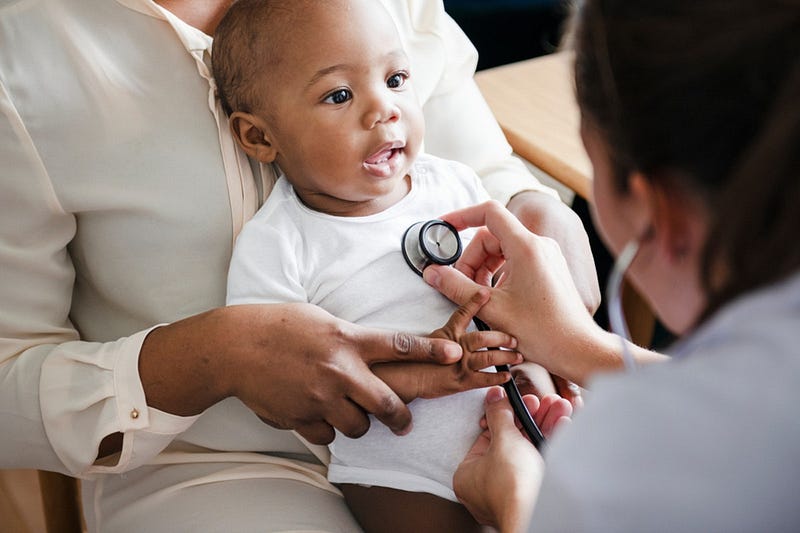
A baby’s birth is typically a joyous occasion. Parents imagine the seemingly boundless potential their baby holds. While some dreams come true, Black and Indigenous families often encounter a dream deferred. Inequities in the American health care system lead to high infant mortality rates. Their innocence does not shield Black babies from the impact of systemic racism.
Black infants have 2.3 times the infant mortality rate as white infants, according to the US Department of Health and Human Services’ Office of Minority Health (Picheta, 2020).
While some people still deny the harmful impacts of systematic racism, the federal government’s research reveals vast differences in Americans’ lived experiences, starting at birth. Each Black baby has the potential to improve the world. However, they need a fair opportunity to do so.
In America, Black people live at the bottom of an enduring caste system. It is essential for parents, advocates, and health care professionals to acknowledge this discrepancy and work together. The healthcare system fails Black babies by disregarding the intersectionality of prejudicial factors they experience.
Why does this disparity exist?
Infant mortality is a wicked problem. It requires us to think about health less as a matter of biology and more as the result of political choices and socioeconomic realities (Carpenter, 2019).
While many people may initially think that the Black infant mortality rate is high because of biological differences, this theory does not hold up to the data. Rather than physical differences, it is the sociopolitical variances that are leading to poor health outcomes. Even if the American healthcare system began to cover all children, they would still be disadvantaged.
While it is true that people with racist beliefs pose a threat to Black people, it is the implicit bias combined with color-blind systems that maintain inequality. Like a game of dominoes, each problem leads to another. If we want to get serious about making reforms, we must consider how to address discriminatory practices.
Are Black mom’s bad mothers?
I could never be the Good Mother; I knew this long before I had a child. Had I not, the experience of parenting my daughter under the appraising eye of whiteness would quickly have disabused me of any illusions that I could be one. From the pediatrician’s office, to the grocery store, to the streets I call my own, it is not the myth of the Good Mother, but that of the Bad Black Mother, that renders my motherhood at turns invisible and suspect (Charlton, 2014).
American culture created many misogynoiristic stereotypes used against Black women. One particularly harmful stereotype is that Black women make bad mothers. This stigma often ignores the hardships Black women historically experienced in America.
During slavery, Black mothers did not traditionally keep custody of their children because slave owners often sold their children to other plantations. Colonists also forced Black women to make children indiscriminately. White people made Black women raise their children and then called them bad mothers. This psychological warfare went on for hundreds of years.
For example, a slave owner forced 5-year old Harriet Tubman to care for her young white infant. This trend was common. During this period, white people forced Black women to live as breeders instead of traditional mothers.
During the Jim Crow period, Black mothers had fewer opportunities than their white counterparts to stay at home with their children. They often took underpaid cleaning jobs, which required long hours. As a result, Black moms would often miss holidays and meaningful family events.
White women and men often stereotyped Black women as bad mothers even though few had the equal opportunity to dedicate large chunks of their time to mothering. Discrimination is a cyclical system designed to reinforce stereotypes. In America, Black mothers get a bad rap. Their babies are not dying from neglect, but rather from a system that discriminates against Black people at every stage of life.
Is poor education to blame?
While many assume that Black infant mortality results from Black women’s poor education, that assumption is unfounded. Black women are the most educated Americans. Despite their educational background, employers do not pay them equal pay for equal work. Even amongst well-educated Black women, their babies are less likely to survive infancy.
A study found that even Black women with advanced degrees — doctors, lawyers, MBAs — were more likely to lose infants than white women who hadn’t graduated from high school (Carpenter, 2019).
Not only are critics wrong when they say the majority of Black women are uneducated, but studies also show that education is not a determining factor in the high rates of Black infant mortality.
The American health care system provides preferential treatment to white women, regardless of their educational or economic background. Under this system, Black women can continue to pursue higher degrees while losing their babies at higher rates than white women.
Stress is a contributing factor
Healthy moms are more likely to give birth to healthy babies. However, policymakers are ignoring the discriminatory factors that contribute to the poor health of Black women.
Black women are also disproportionately subject to various factors — from poor-quality environments in impoverished neighborhoods, to food deserts to a lack of access to health care (Katz, 2020)
If Americans want to rectify these inequities, they must take a holistic approach instead of putting their finger in the proverbial dam. To confront racism, we need mothers and their families to access affordable health care, healthy food options, clean water, and air. These variables cause excessive stress for Black women, which trickles down to their babies.
In failing to address Black communities’ structural problems, America punishes Black moms and their babies, maintaining white supremacy. Black and Indigenous moms love themselves and their families just as much as white ones but have less resources to maintain their health and their families’ health.
Black moms experience increased levels of stress, compared with white women. As modern medicine indicates, excessive stress creates poor health outcomes, particularly in pregnancy.
Chronic stress raises amounts of cortisol, a hormone that at elevated levels triggers labor. It can also cause an inflammatory response that restricts blood flow to the placenta, stunting infant growth (Carpenter, 2019).
Stress can cause a woman to enter labor prematurely or stunt the growth of a baby. Even before a Black baby is born, they face a racist system that harms their mothers and families.
Pro-life advocates who stand against abortion should advocate for solutions to these problems. After all, they want women to choose to have their babies, regardless of the conflicts they experience. It would make sense for them to care about babies’ well-being, especially those whose growth is often stunted by the stress of their mothers’ experience. However, their organizational goals seem to be more driven in promoting birth without consideration for creating and maintaining babies’ health.
It’s pretty hard to call yourself “pro-life” when you’re actively working to:
Stand by while the maternal mortality rates skyrocket and women — especially Black women — die in childbirth (NARAL ,2020).
It seems that society is more focused on controlling women as opposed to helping women. Society teaches young girls to mind what they wear for fear of attracting men who want to abuse them sexually. However, most rape cases go unsolved. The goal is often to put all the responsibility on the woman for her circumstances. Similarly, young mothers are encouraged to carry their babies to terms, yet conservatives do not support providing them with services to provide a safe, loving home to their children. Many people recommend adoption if a woman cannot care for her child. However, this perpetuates the same stereotypes present during slavery — if you cannot afford your baby, give the child away. This perspective is dismissive; living in a racist system causes raised stress levels, but stress alone does not explain high infant mortality.
It’s not just stress during pregnancy that matters. Health experts now think that stress throughout the span of a woman’s life can prompt biological changes that affect the health of her future children (Carpenter, 2019).
Unless we commit to policies that help ensure the health and well-being of Black women from the cradle to the grave, the inequities will persist,
Healthcare inequities
Increased access to healthcare would help decrease the high infant mortality in the Black and Indigenous communities. However, America does not provide universal healthcare to its citizens like other developed nations. Our current health care system, primarily focused on profits, is failing Black and Indigenous babies.
Perhaps one of the first steps to addressing this discrepancy is providing more health care opportunities for marginalized groups of Americans. However, systematic racism is like cancer. Sometimes, administering treatment to one area will not heal the patient. Even if all Americans received healthcare, Black babies would continue to die at a disproportionate rate because racism is a factor.
While many white liberals lament over the current administration’s rejection of Universal Health Care, they fight for their salvation without considering that Black and Indigenous families are still negatively impacted by implicit bias. We need policies that address discrimination as oppose to acting like money will solve everything. Providing health care is a step in the right direction but is not a catch-all problem solver for Black mothers and their babies.
Infant mortality is affected by not only the immediate conditions in which the infant is conceived and born, but also the health status of the mother, and some evidence indicates, the father as well (Carpenter, 2019).
Black fathers, who are disproportionately incarcerated, underpaid, and subject to discrimination, impact the health of their unborn child, according to some modern studies. To save Black babies’ lives, Americans must address systemic inequities holistically, acknowledging the entire family unit’s experiences.
Black babies have poor outcomes with white doctors
While most white doctors do not consider themselves racist, a disproportionate amount of Black babies die under their care. Even though doctors, like most people, do not want to be accused of bigotry, their feelings are not more important than Black lives. Advocates cannot waste time trying to play to their sensitivities. Their implicit bias is undeniably depriving Black babies of a fair chance at life. Pro-life advocates should address the fact that Black babies are less safe in white doctors’ care. The statistics regarding Black infant mortality are appalling.
When cared for by White physicians, Black newborns were about three times more likely to die in the hospital than White newborns, the researchers found. That disparity dropped significantly when the doctor was Black, although Black newborns nonetheless remained more likely than White newborns to die. By contrast, the mortality rate for white babies was mostly unaffected by the doctor’s race (Picheta, 2020).
We should all be concerned that Black newborns are three times more likely to die under white doctors’ care. While Black babies are more likely to die than white babies across the board, statistics show they are safer in Black doctors’ hands. Variances in health cannot explain the disparity since they are not dying under Black doctors’ care. It is time for us to admit that racism is playing a factor in many of these babies’ inability to survive infancy. Only in shining light on this problem will we save the lives of babies.
A growing body of evidence points to racial discrimination rather than race itself as the dominant factor explaining why so many Black babies are dying (Carpenter, 2019).
If white doctors cannot address their own implicit bias in caring for Black newborn babies, they will continue to die. Black women should be able to trust any doctor to deliver and care for her and her baby. However, the statistics show that a woman puts herself and her child at risk when entrusting their healthcare to a white doctor. As a woman with a white Uncle who was a doctor, I do not relish saying this. However, our priority has to be on saving lives, not feelings.
Too often, our system puts the responsibility on the mother to maintain the health of a baby. Doctors often place blame on the mother even when the evidence does not justify the actions. In medicine and life, scientific data can help us discuss these inequities without vitriol, and the science places part of the blame squarely on doctors.
It’s easier to say ‘we need to make women take folic acid’ than to fix racism and poverty (Carpenter, 2019).
Modern doctors know that Black women are socioeconomically and politically disadvantaged. They encourage women to take supplemental vitamins like folic acid and prenatal. However, even Black women who receive proper prenatal care are more likely to lose their babies than white women.
Black women who received prenatal care starting in the first trimester were still loosing children at a higher rate than white women who never saw a doctor during their pregnancies (Carpenter, 2019).
Healthcare only helps if healthcare professionals care about their patients equally. As long as they prefer white babies, they will fight more to protect and safeguard their health. We do not need worse health care for white babies; we need better care for Black babies. It is hard to imagine who would take issue with this, besides those who are overtly racist.
Reducing racial disparities in newborn mortality will also require raising awareness among physicians, nurses, and hospital administrators about the prevalence of racial and ethnic disparities, the researchers added (Picheta, 2020)
Some people think white people have to be members of a hate group like the KKK or the Proud Boys to be racist, which is misleading. Their position of power makes implicit bias dangerous.
Like police officers, doctors have authority over Black lives, and as a result, their perceptions matter. Hospitals should test doctors for implicit bias and recommend Black mothers to use Black doctors first. Unfortunately, Black infants suffer when the system ignores the inequities.
The American health care system fails by subjecting Black babies to the same experiment when we already know the outcome — higher risk for death under white doctors’ care.
COVID is disproportionately impacting Black and brown babies
Racial inequities are exasperated by the Coronavirus pandemic, causing a disproportionate amount of Black babies to contract the virus.
Babies, infants, and children are less likely to die from contracting the Coronavirus. However, amongst the small portion who die, infants of color are fairing worse. The problems in marginalized communities are compounded by years of neglect, underfunding, and discrimination. However, as shown through the statistics, even the inequities cannot account for their deaths. Instead, it is the intersection of systemic inequality and discrimination that is hurting their health outcomes.
Hispanic, Black, and Indigenous children made up 78% of the COVID-related deaths, even though these three ethnic groups account for 41% of the population (Harvard, 2020).
As we rebuild the American economy and public health care system, after COVID, Black babies will still experience discrimination. Americans need to think of how to address these inequities.
As we advance
The infant-mortality gap can’t be closed without addressing broader inequities in employment, education, healthcare, criminal justice, and the built environment — in other words, without ending racial discrimination altogether (Carpenter, 2019).
Black women experience misogynoir in the health care system, and their babies suffer from unchecked discriminatory practices. Those who deny systematic racism are maintaining a system ruled by inequities. Black lives should matter, but under the current system, they don’t.
Progressives who take on the fight for Universal Healthcare or expanded Medicare without addressing our system’s inequities do not help Black and Brown babies. Nor can we accept pro-life advocates in partners to address infant mortality. Our community can not bear any more race-neutral policies. Black babies are dying from the apathy of white doctors, politicians, and citizens, and you cannot help them without also helping Black families. American babies deserve more.
There is a long road ahead, but every solution starts with admitting there is a problem. We need to address systematic inequality and acknowledge that there are enough racist white people in this country to shatter Black babies’ dreams.
Related Curated Articles:
We Don’t Need to Aspire to European Beauty Standards
Women in every culture are beautiful
medium.com
References:
Carpenter, Z. (2019, December 23). What’s Killing America’s Black Infants? Retrieved October 04, 2020, from https://www.thenation.com/article/archive/whats-killing-americas-black-infants/
Charlton, T. (2014, January 21). The Impossibility of The Good Black Mother. Retrieved October 05, 2020, from https://time.com/1311/the-impossibility-of-the-good-black-mother/
Katz, N. (2020, June 20). Who Are the Most Educated Women in America? Black Women. Retrieved October 05, 2020, from https://www.thoughtco.com/black-women-most-educated-group-us-4048763
Picheta, R. (2020, August 20). Black newborns three times more likely to die when looked after by White doctors. Retrieved October 04, 2020, from https://edition.cnn.com/2020/08/18/health/black-babies-mortality-rate-doctors-study-wellness-scli-intl/index.html
Harvard, S. (2020, September 18). Black, Latino Children Are Dying of COVID at Higher Rates. These Doctors Say Medicaid Expansion Can Help. Retrieved October 04, 2020, from https://theamericanonews.com/floricua/2020/09/18/black-latino-children-are-dying-of-covid-at-higher-rates-these-doctors-say-medicaid-expansion-can-help/
NARAL. (2020). The Hypocrisy of the “Pro-Life” Movement. Retrieved October 05, 2020, from https://www.prochoiceamerica.org/campaign/the-hypocrisy-of-the-pro-life-movement/


