
Misogynoir — The Two-Headed Dragon
Exploring the impact of sexism and misogyny in American culture
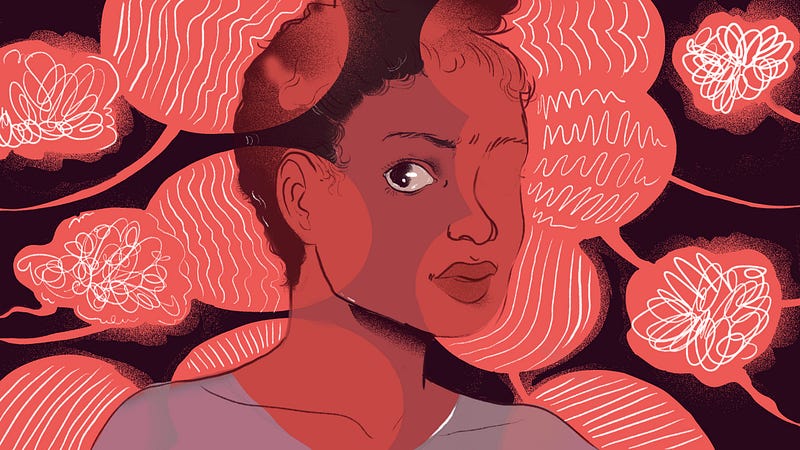
Every Black woman confronts a two-headed dragon; sexism and racism. Unlike a knight in an old heroic tale, she never pursued this fight. Through birth, destiny delivered this upon her. Regardless of whether or not she wants to confront societal expectations, the dragon is coming.
Her brown complexion is the first characteristic that catches your eye; Black women are either loved or hated. Those who feel hatred upon seeing her would not willingly admit this fact. She must consider how the world sees her. Her black crown is a political statement she never consciously made. For too long, Americans gaslit her; men systematically denied the sexism Black women endured while white people denied racism. Only Black women and other women of color understood their burden and lacked the power structure necessary to address these inequities.
Black women face a double whammy of racism and misogyny that impacts them in nearly every facet of their lives (Center, 2020).
Black women collectively felt the heat coming from both margins but never had a term to describe it until the author and feminist scholar-activist, Moya Bailey, coined the term Misogynoir in 2008. It refers to the unique and troublesome lived experience of Black women. Bailey, having lived as a Black woman, understood that Black women experienced much more than misogyny. Creating this term became a powerful tool in addressing this systematic oppression.
For me, the naming was important to describe what it is that we’re looking at and what it actually is that we want to shift and change, Bailey told the Thomson Reuters Foundation in an interview from her home in Boston, Massachusetts (Foundation, 2020).
During slavery, white women forced Black women to breastfeed and raise their babies, clean their homes, and cook their meals. White women turned a blind eye to the rape and inhumanity that Black women endured at the hand of their husbands, brothers, and sons. Still, when they called on us to help them get the right to vote, we did.
Black women often lumped in with white feminists who fought against sexism and misogyny, do not receive acceptance. Although Black women remained committed to the cause, white women were not equally committed.
Historically, white women dropped the ball with Black women when they refused to support the 14th amendment and, once they received the right to vote in the 19th amendment, failed to secure the Black woman’s right to vote.
Black womanhood is routinely and systematically devalued and dismissed in ways that white womanhood isn’t (Boom, 2015).
Even in the modern era, feminism is mostly a white woman’s game. The issues that specifically impact Black women are not part of the mainstream feminist agenda.
Notably, Black women experience police brutality disproportionately and die from maternal mortality at three times the rate of white women. They make less money than any other group of Americans, receive fewer leadership roles, and face harsh comparisons to Europeanized beauty perceptions. Until feminists tackle these issues wholeheartedly, they do not stand with Black women.
Through the third wave of feminism, women are attempting to commit to intersectionality. However, addressing the schism is an important step yet to be taken. White feminists who fight for equal pay seem to separate their fight for equal pay across racial lines. It begs the question, “Do white women view Black women as legitimate women?”
In Sojourner Truth’s powerful speech, “Aren’t I a woman,” she presented a pressing question for white women and society. If Black women are women, then why is it that feminists put Black issues on the back burner. It is problematic that the feminist movement continues to take on race-neutral matters, denying the cries of injustice from Black women and women of color. It seems illogical. White women already make more than Black and Hispanic women. So, unless they address race specifically, they will maintain white supremacy.
The only way to rectify this discrepancy is for white feminists to fight for issues that directly impact Black women and women of color. They must fight for equal pay for equal work. Women must remember this schism because the 19th amendment did not secure the right to vote for all women, but they still went along for the ride.
This remembrance is not about vengeance; this is about redemption. If white women want things to be different, they have the chance. However, they should understand why we doubt their commitment. See, Black women aspire to work for the equal rights for all women, but it’s the show portion of the show-and-tell day.
Common Tropes About Black Women
The Sassy Black Woman
All women have attitude, style, and grit. Yet, when Black women express these feminine attributes, they are criticized or being too sassy. It is a dismissive trope that aims to delegitimize what Black women have to say. If society continues to dismiss Black women as a joke, it makes it easier for people to disregard what they say on screen, in the workplace, at home, and in their communities.
White people need to accept the fact that we are not an endless ream of hilarity for them to giggle and gawp at (Boom, 2015).
The Angry Black Woman
One of the most notorious tropes used to dismiss Black women in society is the Angry Black woman trope. Considering the circumstances Black women find themselves in, they have many reasons to feel angry, disappointed, and frustrated. Yet, when they express this sentiment, they are mocked.
The Angry Black Woman stereotype paints us as irrationally mad (Boom, 2015).
Instead of taking the time to understand why the Black woman is angry, they pretend that her anger is par for the course. It is utterly dehumanizing to dismiss someone’s feelings as inherently invalid. Sadly, every day in our society, Black women are mocked for only having emotions that every other group of people has.
The Strong Black Woman
Black women are strong, and it is not by choice. They are calling Black women inherently strong, which attempts to de-feminize Black women and nullify their pain. Suppose society expects Black women to be abnormally strong. In that case, they can endure any amount of pain and hardship, and Americans will stay neutral towards that pain because they think Black women can handle it by themselves.
It is unjust for society to view Black women as inherently tougher than other women. Like any other group of women, we are strong but not immortal. We need support, respect, and love to thrive.
It’s a cultural narrative that positions Black women as able to withstand any and all emotional difficulty we face without any support (Boom, 2015).
The Over-Sexual Black Woman
The over-sexualization of Black women starts at a very young age. This characterization stems directly from the days of slavery when white people bred Black women like livestock. Because of their shapely bodies and charisma, the world views them as inherently sexualized. In reality, Black women are not more sexualized than any other group of women.
However, by considering Black women as inherently sexual, it opens them up to more sexual abuse. After all, if society views them as willing, it implies that they want sex more, want to be seen as sexual, and want to engage in obscenities. This over-sexualization is a dangerous assumption that leads to increased sexual harassment, abuse, and rape.
Black girls are often viewed as older, more mature, and more sexually advanced than white girls — which causes many people to dismiss allegations involving the sexual abuse of Black girls and teens (Center, 2020).
Having a developed, shapely body is not an invitation for sexual activity. Black women deserve respect and protection. White feminists need to fight against Black women’s over-sexualization, which disproportionately lands them as sexual abuse victims.
How Misogynoir Impacts Black Women
Misogynoir creates stereotypes about Black women that cut off their humanity. Not only does this hurt Black girls and women internally, but it also influences societal perceptions. Society perceives women as inherently sexual, invalidating their cries of mistreatment and assault. The over-sexualization trope also causes harsh evaluations about their body types, with Black women judged for their clothing choices.
Styles that are deemed unacceptable when worn by Black women are celebrated when worn by white women (Center, 2020).
When receiving medical care, the concerns of Black women are often downplayed, dismissed, or ignored. This indifference has negative consequences for the health and well-being of women. To get fair treatment, they need first to be acknowledged as having valid concerns.
Doctors perceive Black woman as having a higher pain threshold, and so they are treated differently (Center, 2020).
If doctors do not believe Black women experience pain, because they are considered so tough, then they continue to suffer. By using the Strong Black Woman trope, medical professionals can alleviate guilt because they think that the Black woman can endure untold amounts of pain — at least more than white women and other groups of people.
Because of the stereotype of the “strong Black women,” many Black women feel that they cannot show any emotion, pain or distress. (Center, 2020).
In Closing
Misogynoir negatively impacts Black women by depriving them of equitable treatment in society. Women will never defeat misogyny without unity, and that unity will never become actualized until feministas commit to combatting misogynoir.
Failure to act only maintains the two-headed dragon. It preserves the same level of injustice, violence, and bigotry Black women experience. From now on, feminists need to stop looking past Black women and the struggles they endure. Look us in the eye and commit to unity.
More Articles Curated in Women, Race, & Equality
We Don’t Need to Aspire to European Beauty Standards
Women in every culture are beautiful
medium.com
References:
Boom, K. (2015, August 04). 4 Tired Tropes That Perfectly Explain What Misogynoir Is – And How You Can Stop It. Retrieved September 13, 2020, from https://everydayfeminism.com/2015/08/4-tired-tropes-misogynoir/
Center, B. (2020, February 12). What Is Misogynoir? Retrieved September 13, 2020, from https://www.blackburncenter.org/post/2020/02/12/what-is-misogynoir
Foundation, T. (2020, June 5). Creator of term ‘misogynoir’ sees power in #hashtag activism. Retrieved September 13, 2020, from https://news.trust.org/item/20200605100134-aozhh


