
All Representation is Not Created Equal
Black stereotypes in American film silence dissent
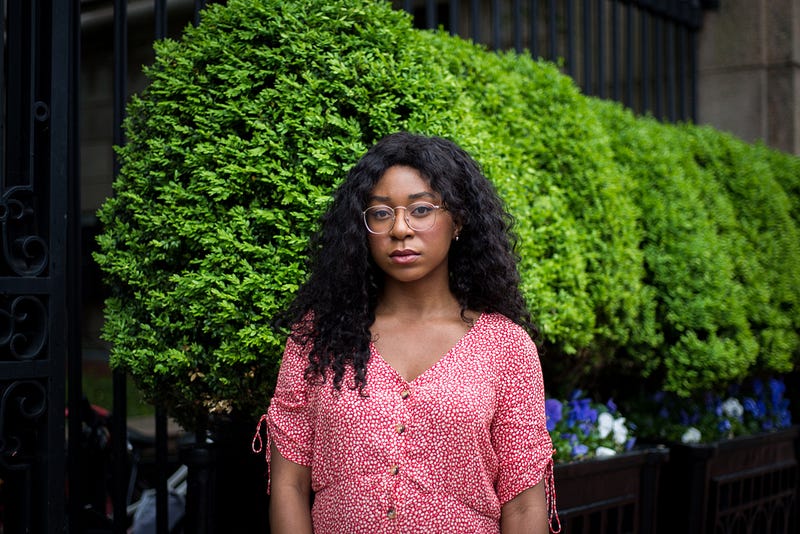
When American art misrepresents Black people and people of color, art does not truly imitate life. Instead, it reflects a white-washed version of our lives, our communities, and our country. Representation has the power to create a narrative about Black people, and the nature of these depictions influences society.
Films are political undertakings that represent, produce and reproduce power relations. Cinemas not only provide entertainment, but also send messages to viewers, helping to shape our values and belief systems (Terry, 2018).
Living as a Black person means that you won’t always see yourself appropriately represented when you leave your friends and family circle. When you turn on your tv, stream series, or attend the local movie theater, you may not see many people with similar lived experiences. And when you see someone who looks like you, they are often portrayed in limited, stereotypical roles.
Studies show that audiences substitute stereotypes they see on screen for reality when they have not had any direct interactions with particular racial groups (Wang Yuen, 2019).
Through the absence of proper representation, white people fill in the blanks with stereotypes created through popular culture; this is detrimental to creating a more inclusive, accepting society. The consistent inaccurate characterizations act to dehumanize Black people, stripping them of their individuality.
In America’s racial reckoning, it is essential to understand that not all representation is equal. While seeing more Black people on film is necessary, the industry should make a more concerted effort not just to show Black people, but provide positive, nuanced depictions.
Youth can internalize these negative and/or stereotypical representations of people within their racial group, which can affect self-esteem and resilience against discrimination and racism (Administrator, 2018).
Far too frequently, Black people, in film, are depicted in negative, stereotypical ways. These characters, in turn, do not inspire the people they represent but rather insult them. In the absence of realistic depictions, poor representation has a negative psychological impact on Black people, inundated with inaccurate and demeaning characterizations of people like them. Stereotypical portrayals are an aspect of systematic racism that furthers a limited interpretation of Black identities.
Black stereotypes in Birth of a Nation
One of the most influential American films, Birth of a Nation (1915), cemented Black people’s stereotypes in popular culture. Throughout the movie, the director portrayed them as inherently unlawful, ignorant, and subhuman. Some white actors wore Blackface throughout the film, committing heinous acts. This film glorified the Ku Klux Klan and aimed to perpetuate white supremacist ideology. It is a prime example of why all representation is not equal — these dehumanizing depictions of Black people on-screen influenced white people’s perceptions.
In the film, white men accused a Black man of raping a white woman. Portrayed as the heroes of the film, the Klan swooped in to lynch the man. White people killed him without a trial. It encouraged the extrajudicial killings of Black people, which were common occurrences. Historians accredit this film with reviving the Klan as a powerful socio-political organization.
The film argues that giving black people rights was a terrible, terrible error, that they did all sorts of horrible things that they didn’t do, and that the noble Ku Klux Klan (KKK) was this wonderful savior that saved America (Brook, 2015).
Birth of a Nation became a widely successful film. President Woodrow Wilson held a private screening of the movie at the White House and thoroughly enjoyed it. The acceptance of Black people’s racist depictions became ingrained in American society, and the government’s upper echelon embraced the film’s depiction of Black people.
In the film, white Americans warned against supporting equal rights for formerly enslaved Africans. The director, D.W. Griffith wanted to ensure that white Americans did not become supportive or empathetic of Black people. His film aimed to make it socially unacceptable to view Black people as entirely human. It aimed to lionize white supremacy, even as support for the Ku Klux Klan diminished.
It [also inaugurated] the use of certain kinds of racial stereotypes which then became repeated again and again, right up until the 1960s and even beyond,” says Rice. (Brook, 2015).
The socio-political role of stereotypes
White slave owners lived in fear of Black freedom. Before abolishing slavery, white colonists abused Black people out of fear for what they would do once free. It is as if they could not believe that Black people wanted liberty for righteous purposes. They told themselves a dangerous lie that if they stopped abusing Black people, they would become America’s oppressed class.
In this system of fear, masters’ dread of insurrection often led them to use even greater brutality, such as torture, dismemberment, and burning at the stake, to assert control after rebellions or even to preemptively quash uprisings that were rumored to be coming (Sharples, 2018 ).
After Reconstruction, white supremacists continued to use fear to justify the creation of Jim Crow Laws and Black Codes. They believed that keeping Black people separated from white people in social settings would maintain white control. This dark period of American history represented the backlash for freedom. Instead of the Black, violent uprising white supremacists warned of; it was the white people within the country that aimed to oppress and continue to abuse formerly enslaved Africans and their descendants. They resented Black freedom since it negatively impacted their pocketbooks and portrayed them as morally deficient.
During the 1960s, Black people and their accomplices fought against Jim Crow laws, wanting to embrace America’s potential for a more inclusive society. While modern Americans celebrate Martin Luther King Jr and his non-violent resistance movement, many white Americans rejected his message during his lifetime.
According to an early 1968 Harris Poll, the man whose half-century of martyrdom we celebrate this week died with a public disapproval rating of nearly 75 percent (Cobb, 2018).
White conservatives aimed to take advantage of Martin Luther King Jr.’s unpopularity. In the summer of 1968, Nixon’s Law-and-Order campaign sought to strike fear in white people’s hearts in response to Black people fighting for their Civil Rights.
The slaying of Martin Luther King Jr inspired uprisings throughout the country. Black people felt heartbroken because a champion for Civil Rights died. Yet, Nixon’s campaign and his white supremacist supporters criminalized this heartbreak.
Following revolts in 125 cities nationwide after the assassination of Martin Luther King Jr. and throughout the mid-1960s, fueled by inequality issues yet to be addressed, Nixon made “law and order” a centerpiece of his platform. “Law and Order” might sound simple, a 1968 TIME cover story on the campaign pointed out, but to some, it was “a shorthand message promising repression of the black community (Waxman, 2020).
Law-and-Order was and always will be a dog-whistle for American racists. It has nothing to do with actual law and order. Instead, it is a commonly used tactic to deny Black anguish legitimacy and disregard Black people as inherently criminal. To make white people safe, Nixon was willing to hurt Black people, sending the police after them as the government’s oppressive arm, simultaneously turning a blind eye to lynching. His law-and-order policy is similar to the oppressive tactics used by slave owners, desperate to suppress Black dissent.
The same dynamic is playing out in 2020 as Trump, white supremacists, and conservatives in America depict the Black Lives Matter movement as a dangerous organization that white people should fear.
At the same time, Black people insist that Black Lives Matter, many white people refuse to utter it. Furthermore, they aim to strike fear in the hearts of anyone willing to profess to Black lives’ value. Trump said that painting “Black Lives Matter” on 5th Avenue would be a symbol of hate. If Black Lives Matter, then why is it hateful to say it?
Over one hundred and five years later, the themes of Black criminality and white fear are still present throughout American society. Every single time Black people try to overcome the oppressive conditions they find themselves in, white people trot out the same old stereotype, describing Black people as dangerous, in an attempt to silence the fight for equal rights and justice under the law.
Negative visual representations of Black people in Birth of A Nation helped to condition white people to fear Black people, maintaining a racist schism amongst Americans.
The mammy stereotype
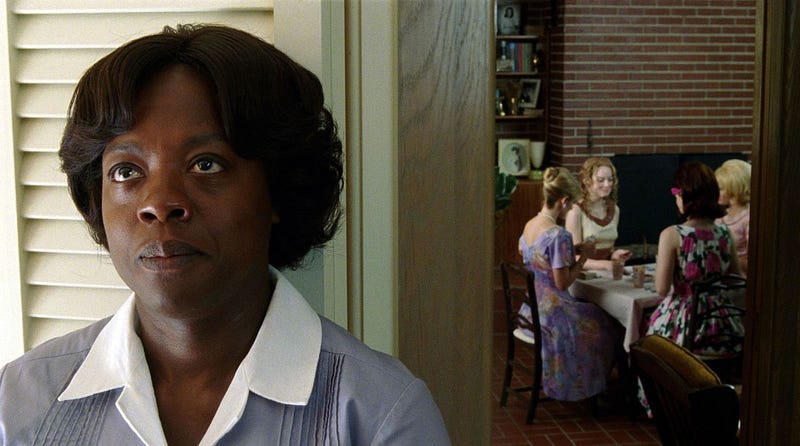
A lot changed since 1915, but America continued to pull from the same themes. In Gone With The Wind (1939), director Victor Fleming portrayed Black people as cheerful slaves. This depiction exhibited a false narrative that Black people did not want freedom. Those who believe that slavery was not that bad would be hard-pressed to participate in restorative justice or support the advancement of Civil Rights. One stereotype, in particular, the mammy, portrayed Black women as jolly and obedient.
Thurber noted, literary depictions of the mammy peaked several decades after slavery, in nostalgic memoirs of the Old South written between 1906 and 1912. Along with other ‘controlling images’ of African-Americans such as the Sambo, the Jezebel and the Sapphire, the mammy was a creation of white supremacy, intended to bolster and legitimize the status quo. Or, put more simply, the US were so desperate to be absolved of the crimes of slavery, that such an absolver — maternal, asexual, ever-loyal and black — had to be invented (Jones, 2019)
Modern Black stereotypes in American film
The film The Help (2011) explored Black women who spent their lives serving affluent white families. In this movie, the white woman is the protagonist. The actress Emma Stone played the character, Skeeter Phelan, a curious young writer who wants to highlight these Black women’s stories. The story demonstrates some of the hardships of their work and portrays the young white woman as a heroic figure. Her actions in the film fit with the “white savior” narrative, where white people absolve themselves of guilt in a film by depicting the few good ones willing to help Black people. It also feeds into a false narrative that Black people need a white person to solve all of their problems.
While the film did not portray these Black women as jolly, it still depicted Black women in this mammy role, subject to white supremacist rule. Most Black actresses have to play at least one mammy role.
Octavia Spencer has played a maid, nurse, or cleaner a total of 21 times, including in two of her three Oscar-nominated performances (Jones, 2019).
Viola Davis, an Academy award-winning Black actress, regrets working on the film, given Black women’s limited film voices. Even while claiming to highlight serious Black struggles, the story’s white protagonist limited Black women’s voices, further perpetuating the Black mammy stereotype.
Why, then, does Davis regret the project? “I just felt that at the end of the day that it wasn’t the voices of the maids that were heard. I know Aibileen. I know Minny [played by Octavia Spencer, who won a best-supporting-actress Oscar]. They’re my grandma. They’re my mom. And I know that if you do a movie where the whole premise is, I want to know what it feels like to work for white people and to bring up children in 1963, I want to hear how you really feel about it. I never heard that in the course of the movie. (Desta, 2018).
Viola Davis, like many Black actresses, must take limited, stereotypical roles to become successful. These mammy roles are demeaning and highlight the need for more nuanced depictions of Black women in American films.
The director, Tate Taylor, based The Help on a real story. The problem is that one of the Black women depicted int the film, Albene Cooper, did not agree with the depictions in the movie and felt quite embarrassed by it. She sued but later lost as a Mississippi judge dismissed her claims as illegitimate. It should not surprise anyone who cries from a Black woman about the injustice of her depiction rejected in a Mississippi court because America fundamentally operates by uplifting white voices while oppressing Black ones.
American film cannot undo the harm it caused to Black people and their depictions in society. However, they can do better going forward. It is time for America to see Black people in positive roles, to combat these stereotypes, engrained in American culture.
Black directors like Spike Lee, Jordan Peele, and Ava DuVernay created films to push past these limited Black identity interpretations. However, there is so much to undo. A film’s message is as popular as the film itself, so Americans will need to support them to amplify these negative stereotypes. It is not something that Americans can undo swiftly. However, if more Black writers, directors, and actors obtain access to the capital necessary to create and promote their films, the narrative will change over time.
White people, even when they attempt to highlight the injustices Black people experience, still rely on telling the story using a white person as the protagonist. When writing about Black people, they should consult with those they have working with them instead of pretending to know everything about the Black experience.
As we advance
In the absence of nuance, Black people are stereotyped in film. Not only do stereotypes negatively impact Black people’s psyche, but they also help to maintain systemic racism.
Movie portrayals of criminal blackness and black people fundamentally change the dynamic of how law enforcement officers treat black people. (Edwards 2019)
Negative stereotypes cause pain and anguish but also puts Black lives in jeopardy. Films are powerful political tools for communicating themes. These themes perpetuate people’s understanding of other racial identities, so it is essential to get these characters right. Stereotypes are not harmless; they destroy lives.
When filmmakers show the nuances of someone’s identity, they help to honor their lived experiences. White writers, directors, and producers should consult Black people in their character development. Americans should support films that depict Black people in positive, nuanced roles. Only then can the healing begin.
Articles Curated in Race, Equality, Women, & Beauty
We Don’t Need to Aspire to European Beauty Standards
Women in every culture are beautiful
medium.com
References:
Administrator. (2018, May 25). Black Panther and the Power of Representation. Retrieved September 06, 2020, from https://psychologybenefits.org/2018/05/02/black-panther-and-the-power-of-representation/
Brook, T. (2015, February 6). The Birth of a Nation: The most racist movie ever made? Retrieved September 08, 2020, from https://www.bbc.com/culture/article/20150206-the-most-racist-movie-ever-made
Cobb, J. (2018, April 04). Even Though He Is Revered Today, MLK Was Widely Disliked by the American Public When He Was Killed. Retrieved September 09, 2020, from https://www.smithsonianmag.com/history/why-martin-luther-king-had-75-percent-disapproval-rating-year-he-died-180968664/
Desta, Y. (2018, September 12). Viola Davis Regrets Making The Help: “It Wasn’t the Voices of the Maids That Were Heard”. Retrieved September 09, 2020, from https://www.vanityfair.com/hollywood/2018/09/viola-davis-the-help-regret
Edwards, B. (2019). Acting Black: An Analysis of Blackness and Criminality in Film. The Aquila Digital Community. Retrieved September 8, 2020, from https://aquila.usm.edu/cgi/viewcontent.cgi?article=1718&context=masters_theses
Jones, E. (2019). From mammy to Ma: Hollywood’s favourite racist stereotype. Retrieved September 09, 2020, from https://www.bbc.com/culture/article/20190530-rom-mammy-to-ma-hollywoods-favourite-racist-stereotype
Mark Peffley, Todd Shields & Bruce Williams (1996) The intersection of race and crime in television news stories: An experimental study, Political Communication, 13:3, 309–327, DOI: 10.1080/10584609.1996.9963120
Sharples, J. T. (2018, November 29). Slavery and Fear. Retrieved September 08, 2020, from https://www.oxfordbibliographies.com/view/document/obo-9780199730414/obo-9780199730414-0308.xml
Terry, B. (2018). The Power of a Stereotype: American Depictions of the Black Woman in Film Media. Loyola ECommons. Retrieved September 7, 2020, from https://ecommons.luc.edu/cgi/viewcontent.cgi?article=4708&context=luc_theses
Wang Yuen, N. (2019, May 22). Why Is Equal Representation In Media Important? Retrieved September 07, 2020, from https://www.forbes.com/sites/quora/2019/05/22/why-is-equal-representation-in-media-important/
Waxman, O. (2020, June 02). The Real History of Trump’s ‘Law and Order’ Rhetoric. Retrieved September 08, 2020, from https://time.com/5846321/nixon-trump-law-and-order-history/