
Karen Embodies White Privilege
It is no longer a just a name — it is an ideology
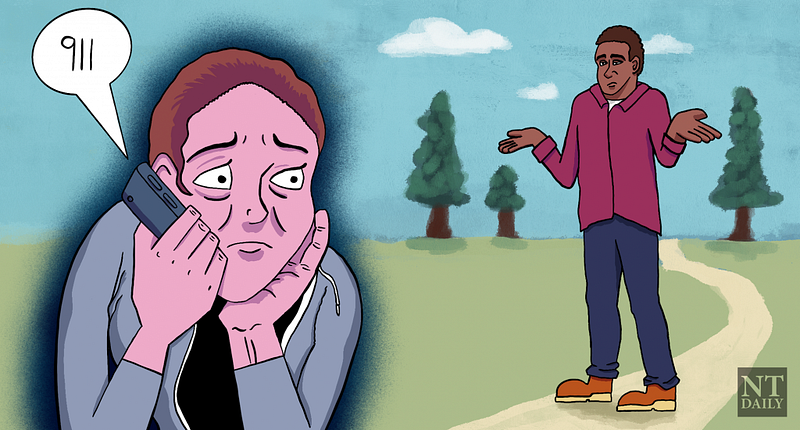
We should have seen it coming. Of course, “Karen” would play the victim in the ideological battle against implicit bias and racism. You cannot make this up. The very women making dangerous, false accusations against Black and Hispanic people are now accusing them of sexism. Ironically, the only women undermined in this scenario are the ones who abuse their white-privilege to wreak havoc on Black people. America needs to stop pretending there are good people on both sides. The truth is, passivity in the face of cruelty is offensive.
“He who passively accepts evil is as much involved in it as he who helps to perpetrate it. He who accepts evil without protesting against it is really cooperating with it.” “In the end, we will remember not the words of our enemies, but the silence of our friends” (Martin Luther King Jr) (Jr, 2018).
All white women are not “Karens,” and every white woman named “Karen” is not a “Karen.” “Karen” is a term used to finally, and at long last, dismiss the illegitimate outcries from white women who use their privilege to hurt Black people. So, what are the “Karens” in the world fighting for? They are fighting to continue to wage attacks on Black people, and if Black people call them out for it, then they divert the blame to them, instead of checking their privilege. Before the term, “Karen” was coined, Black people never had a word that perfectly captured the torture waged against us by white women, all the while purporting to be afraid for their safety or lives.
“A predominant feature of the ‘Karen’ stereotype is that they weaponize their relative privilege against people of colour — for example, when making police complaints against black people for minor or even — in numerous cases — fictitious infringements” (Nagesh, 2020).
We live in an American society where white men are dominant. However, historians often skim past the role white women played in perpetuating white supremacy. In modern society, Karenness is their most relentless tool. Just like every other group, white women have valid concerns and should not be dismissed or ignored. However, when the motive is to alienate, marginalize, and terrorize Black people, why jump in to save her? And then, to call it sexism is a step too far. Why should anyone attempt to defend the indefensible?
In what ways are Karens undermined by not acknowledging their racist false police calls and attempt to reign supreme over Black people? This opposition to the term is not about sisterhood; this is about repressing voices. The cries from white women who feel offended by the name are so disingenuous. These same women do not show outrage at the harm caused by women who follow the Karen ideology.
My First Karen Experience
My mother raised my sister, brother, and me in a mixed-income neighborhood. We lived in the same cul-de-sac as white people. However, we never lived far from impoverished communities. In that way, we saw it all. In my high school, there were a handful of white students who were friendly. However, we always presumed that they did not show prejudice because they were the minority. They tried to fit into our culture, talk like us, listen to our music, and even rise through our high school hierarchy. Now, years after high school, I still respect these white students. One, in particular, still advocates for Black people. His experiences made him appreciate us, and through these experiences, I understood that not all white people were overtly racist.
I wanted to believe that the white people who lived in our closed community were similar to the white boy from school, liked Black people, or felt neutral. Why else would they live amongst us? Still, no one talked to us about micro-aggressions back then. You just internalized it. Like a slap in the face, it stung without warning.
A nice-sized pool, accessible to all the residents, sat directly across from my mother’s home. A gate protected it, and you needed a key to get in. All of the residents had a key, so everyone should have had equal access to the pool and the community areas. Still, white community members targeted my brother, sister, and me for using this pool. Sometimes, when the white people in the neighborhood left town for the holidays, they put a pad-lock on the pool. They claimed it was for safety, but I knew it was to keep the few other Black people and us out of the pool.
Keep in mind, I was a lifeguard, knew how to swim, and even knew how to save a life. They put the pad-lock on the pool despite the fact the housing association locked it to non-residents.
This micro-aggression is challenging to talk about because the white people acting so passive-aggressively pretend that race has nothing to do with it. When white people mistreated me, they claimed or purported that race was not a part of it. Now that I am grown, I know better. Your abuser will never admit the abuse they inflict upon you.
My neighborhood had multiple “Karens,” not because they were white, but because they felt threatened by our presence. My mother worked hard and bought a home in a more diverse neighborhood than some of my classmates. Didn’t our family deserve the same respect as the other people living there? The micro-aggressions escalated as my siblings, and I grew older and started to invite our friends over. Most teenagers, who have access to a pool, do the same thing. But, our Blackness made our attempts to have fun inherently criminal.
In one instance, my brother and I asked my older sister for the key to the pool. She wanted us to stay out of trouble, so she gave a stern look but gave us the key. We jumped for joy, getting dressed, grabbing towels, a radio, some snacks, and called our friends over. Each resident was allowed two guests at the pool, and since my sister was there, we were allowed to have six guests. With us, that makes eight black people in total using the pool. No one was using the pool at the time. My mom was working, but my sister talked to her about us using the key, so we had her permission. That’s all a teenager should need- the consent of their parents and their compliance under the law.
We laughed, listened to the radio, ate food, and jumped in and out of the pool. We swam laps, played games, and tried to stay at the bottom of the pool and practice holding our breath. My brother and his friends participated in a little rough-housing. However, they were smiling, and no one was in danger. My lifeguard skills gave me the confidence to look after them. I saw a white woman drive by. She started to slow down. My brother made a joke, “Look, it might be a drive by.” We all laughed. We did not feel threatened by her, but we knew that this was a one-way street.
Once she parked her car, she came outside and spoke with another white woman on her lawn. They pointed at us. I became frightened, as a teenager, and a Black one at that. I knew we did nothing wrong, but I knew that she was angry. Her hands, on her hips, showed the body language of someone who wanted to express some deep resentment. I looked at my brother and, with his joyous spirit, told me, “It’s okay sis. We did nothing wrong”. But, I knew that it did not matter. I was about one-hundred steps from the front door of my mother’s home, but I felt that we might need to run if we had to.
They continued to watch us and seemed outraged. This “Karen” thought we did not belong there and called the police. I did not know that initially. However, when they showed up a few minutes later, my fears were fully realized. They had their lights on as if they were responding to some heinous crime. I told my brother and his friends to get out of the pool and sit on the side. The officer asked, “What are you kids doing in this pool?” I told him, “We live right there,” pointing to our house. He said, “Really, you live there?” I said, “Yes, that’s my mom’s house.” The officer did not leave, and he spoke on his radio inside his car. My sister looked uncomfortable and began to walk home. I told my brother, his friends, and mine that we should go inside where it is safe. We could play video games or find something else to do.
At the time, I did not know this was a micro-aggression. I just knew how bad it hurt to be bullied out of the pool by this white woman who did not want Black kids in her sight. Also, I knew she would never admit it. It was something I had to come to terms with because no one could change this harsh reality. We relented and rarely used the pool over my years growing up. If my mom were there, we would feel better, but alone; it was scary.
If I had this term at the time, my brother, sister, and friends would have said, “She is a Karen,” we would have understood the intricate methods white women used to oppress Black people.
This scenario played out several times while I grew up, but this Karen was the first, and I will never forget her drive-by.
Historic “Karens”
“One of the most prominent groups to participate in the preservation and purification of the failed white supremacist regime was the United Daughters of the Confederacy, founded in 1894. The Daughters worked alongside organizations like the Klan to grow white supremacist frameworks in the South” (Jackson, 2020).
Throughout American history, there are many examples of white women using their privilege to cause harm to Black people. They treated Black men brutally, getting them beaten, arrested, and even lynched for minor infractions and falsehoods. You can easily find pictures of young white girls smiling under a Black man lynched in a tree or burnt alive. I will never forget their faces or the Black people they hurt, nor will I forget the joy on the faces of those white people. They treated lynchings like a party and denied Black people’s humanity, selling off photos of the murder and body parts. It is time for us to stop pretending that white men were the only ones to blame; white women were more than along for the ride. They enjoyed hurting Black people. Until Americans can understand this, they will never end racism in all its forms.
I cannot brush aside this hatred, and just as some say, “get over it.” These white people smiling at lynchings are the grandmothers and grandfathers of white people in power today. Trump’s father was a proud member of the Ku Klux Klan, who marched in Washington DC and got arrested for his participation. Coincidently, these are the same white people who oppose reparations and any attempts to close the race-wealth gap.
American history shows a mixed relationship between white women and the Black community. After white women won the right to vote, they shut down their woman’s suffrage offices and refused to help Black women gain that right.
White women benefited from a white supremacist system and still do. For these racist women, sexual attraction was often a game. Sure, they felt attracted to Black men, but if they got caught looking, they grin or chuckle, and the Black men would be beaten or killed. Imagine being a Black man, not feeling empowered to say no to a white woman’s sexual advances, and when they consented to these relationships would be killed. Enslaved Africans did not have the right to choose their spouse.
For example, white slave owners forced Harriet Tubman to leave the first love of her life with whom she had a child and marry a man she did not love. She bore him five children and never saw her first child again. During this era, white women did not own property, yet they ruled over their families plantations alongside the slave-owners. Years after the abolition of slavery, white women continued to exert this privilege and play upon the white man’s hatred for Black men.
The most famous example of a Karen in the modern era is Carolyn Bryant Donham, the woman responsible for the death of Emmet Till.
“While visiting family in Money, Mississippi, 14-year-old Emmett Till, an African American from Chicago, is brutally murdered for allegedly flirting with a white woman four days earlier.
His assailants — the white woman’s husband and her brother — made Emmett carry a 75-pound cotton-gin fan to the Tallahatchie Riverbank and ordered him to take off his clothes. The two men then beat him nearly to death, gouged out his eye, shot him in the head, and then threw his body, tied to the cotton-gin fan with barbed wire, into the river” (History.com Editors).
Emmet Till was a teenager, young, and innocent. He never hurt anyone and the woman, Carolyn Bryant Donham admitted that her accusation against him was false. So, I guess his torture was for what — entertainment?
Because of their fear, white people criminalized the very idea of Black people. They knew that their treatment of Black people was cruel; their hatred stems from an inherent fear that the chickens will come to roost. The truth is, Black people are not in this fight for some seedy revenge — this is about equal rights and justice in a representative republic.
Why “Karen” is an Embodiment of White Privilege
A “Karen” is someone who uses her privilege as a weapon. This type of woman smiles while calling the police on a group of kids or actively works to discredit the voices of Black people. Feminists, who believe in equality, should not defend the dishonorable actions of any women. That is the type of sideline acceptance that immortalizes bigotry in American culture.
San Francisco pushed forth some legislation to address racially-motivated police calls. If successfully implemented, Black lives can be spared from unnecessary encounters with police officers.
“The “CAREN Act” (Caution Against Racially Exploitative Non-Emergencies) was introduced on Tuesday at a San Francisco Board of Supervisors meeting by Supervisor Shamann Walton” (Ebrahimji, 2020).
Claiming that, “Karen” is a sexist trope is a horrible attempt to silence Black people’s cries of injustice and prejudice. The white women waging critiques of the term should be harsh on those amongst them who abuse their privilege, not the Black people trying to create a more just union. We need unity. If you believe that all people should be treated with dignity, then do not feed into the attempts to undermine the movement towards equality.
We Don’t Need to Aspire to European Beauty Standards
Women in every culture are beautiful
medium.com
References:
Ebrahimji, A. (2020, July 08). San Francisco official proposes ‘CAREN Act,’ making racially biased 911 calls illegal. Retrieved August 26, 2020, from https://edition.cnn.com/2020/07/08/us/caren-act-911-san-francisco-trnd/index.html
History.com Editors (Ed.). (2010, February 09). Emmett Till is murdered. Retrieved August 26, 2020, from https://www.history.com/this-day-in-history/the-death-of-emmett-till
Jackson, J. M. (2020). Women Have Always Been a Part of White Supremacy. Retrieved August 25, 2020, from https://www.teenvogue.com/story/women-white-supremacy-history-america
Jr., B. (2018, January 12). 17 Inspirational Quotes From Martin Luther King Jr. About Speaking Up When It Matters. Retrieved August 26, 2020, from https://www.inc.com/bill-murphy-jr/17-inspirational-quotes-by-martin-luther-king-jr-about-speaking-up-when-it-matters.html
Nagesh, A. (2020, July 31). What exactly is a ‘Karen’ and where did the meme come from? Retrieved August 25, 2020, from https://www.bbc.com/news/world-53588201


